

Why Do Fish Die Just Before Sunrise? The Science Behind Overnight Oxygen Crashes
The deadliest hour for your pond is 5:00 AM. Do you know why? When the sun goes down, your plants stop making oxygen and start consuming it. Without active aeration, your pond is a ticking time bomb by sunrise.
This biological phenomenon creates a critical window of vulnerability for aquatic life. Monitoring dissolved oxygen (DO) levels reveals a predictable but dangerous decline in oxygen concentration during nocturnal hours. To maintain a stable ecosystem, understanding the mechanics of gas exchange and the metabolic demands of a pond is necessary.
Pond management relies on balancing the Passive Oxygen Drain with Active Life Support systems. When natural diffusion fails to meet the biological oxygen demand (BOD) of fish, plants, and aerobic bacteria, mechanical intervention becomes the only variable preventing a total system collapse. This article analyzes the technical aspects of oxygen depletion and the engineering solutions required to mitigate these risks.
Why Do Fish Die Just Before Sunrise? The Science Behind Overnight Oxygen Crashes
The primary driver of pre-dawn oxygen crashes is the transition from photosynthesis to cellular respiration. During daylight, chlorophyll-bearing organisms—including algae, floating plants, and submerged macrophytes—utilize solar energy to convert carbon dioxide and water into glucose and oxygen. This process often leads to oxygen supersaturation during peak sunlight hours, where DO levels may exceed 100% saturation.
Atmospheric exchange and biological production provide a surplus of oxygen during the day. However, once the sun sets, photosynthesis ceases entirely. The ecosystem shifts into a state of pure respiration. Fish, macro-invertebrates, and the plants themselves begin consuming the stored dissolved oxygen. Simultaneously, nitrifying bacteria in the biofilter consume oxygen to process ammonia and nitrite.
Temperature serves as a critical multiplier in this equation. As water temperature increases, its physical capacity to hold dissolved gases decreases. Concurrently, the metabolic rate of ectothermic organisms, such as koi or goldfish, increases with temperature. A fish at 80°F (27°C) requires significantly more oxygen than at 60°F (15°C), yet the water at 80°F holds roughly 20% less oxygen at saturation. This inverse relationship creates a narrow margin for error during summer months.
The "5:00 AM" phenomenon occurs because the cumulative oxygen consumption has reached its maximum duration without any replenishment from photosynthesis. The DO level hits its lowest point just before the sun returns to trigger new oxygen production. If the concentration drops below 3.0 mg/L, most pond fish experience acute hypoxia. Below 2.0 mg/L, mass mortality events are highly probable.
Mechanisms of Gas Exchange and Aeration Physics
Effective aeration is governed by the principles of gas solubility and surface area interaction. Henry's Law states that the amount of dissolved gas in a liquid is proportional to its partial pressure above the liquid. To increase oxygen levels, a system must maximize the interface between atmospheric air (containing approximately 21% oxygen) and the water column.
Passive gas exchange occurs at the pond surface. This process is limited by the total surface area and the degree of surface tension. Active aeration systems overcome these limitations through two primary methods: surface agitation and subsurface diffusion. Both methods aim to break surface tension and facilitate the movement of oxygen-depleted water from the bottom to the surface.
Subsurface aeration utilizing fine-bubble diffusers is mathematically superior in terms of Standard Oxygen Transfer Rate (SOTR). When air is pumped to the bottom of a pond and released through a diffuser, it creates thousands of micro-bubbles. As these bubbles rise, they transfer oxygen through their surface membranes into the water. Smaller bubbles provide a higher surface-area-to-volume ratio, increasing the efficiency of the transfer.
The rising column of bubbles also creates a "laminar lift." This mechanical movement draws deoxygenated water from the pond floor and pushes it toward the surface. This vertical mixing prevents thermal stratification and ensures that the entire volume of the pond remains oxygenated, rather than just the top few inches.
Operational Benefits of Mechanical Aeration Systems
Implementing a high-efficiency aeration system provides measurable improvements in water chemistry and fish health. Beyond simple survival, consistent DO levels optimize the metabolic efficiency of aquatic organisms. Fish exhibit better growth rates and stronger immune responses when DO levels remain stable between 6.0 mg/L and 8.0 mg/L.
Aeration also supports the nitrogen cycle. Nitrifying bacteria (Nitrosomonas and Nitrobacter) are obligate aerobes. They require oxygen to oxidize toxic ammonia into nitrate. In low-oxygen environments, these bacteria slow down or die, leading to ammonia spikes that further stress the fish. Continuous aeration ensures that the biofilter operates at peak capacity 24 hours a day.
Another advantage is the reduction of anaerobic zones. In stagnant ponds, the bottom layer often becomes anoxic (devoid of oxygen). This allows anaerobic bacteria to thrive, which produce toxic byproducts like hydrogen sulfide and methane. By circulating oxygenated water to the bottom, these toxic gases are vented out and the formation of "muck" or organic sludge is slowed through aerobic decomposition.
Challenges and Common Engineering Failures
The most frequent failure in pond aeration is under-sizing the equipment. Many off-the-shelf pumps are rated for "gallons of water" without accounting for fish load, depth, or organic debris. A pond with a high stocking density requires a significantly higher Cubic Feet per Minute (CFM) air delivery than a decorative water feature of the same volume.
Improper diffuser placement can also negate the benefits of an aeration system. Placing a diffuser too shallow limits the "hang time" of the bubbles, reducing the oxygen transfer efficiency. Conversely, placing a diffuser in the deepest part of a stratified pond during a heatwave can sometimes cause a "turnover" event, where cold, deoxygenated bottom water is mixed too rapidly with the surface, causing a sudden DO crash and killing fish.
Mechanical maintenance is a technical requirement often overlooked. Diaphragm pumps and rocking piston compressors have wearable parts. Over time, diaphragms stretch or tear, and air filters clog with dust. A system operating at 70% efficiency may be sufficient at noon but will fail to protect the pond during the 5:00 AM crisis. Regular pressure testing and component replacement are essential for system reliability.
Limitations and Environmental Constraints
Mechanical aeration has physical limits. It cannot compensate for extreme overstocking indefinitely. Every pond has a "carrying capacity"—the maximum biomass the environment can support. While aeration increases this capacity, it does not make it infinite. Eventually, the waste production (BOD) will exceed the system's ability to process it, regardless of oxygen levels.
Power dependency is a significant vulnerability. Because the 5:00 AM window is so critical, a power outage during a summer night can result in total fish loss within hours. Systems without battery backups or automated generators remain susceptible to external grid failures. In professional aquaculture, DO sensors are often linked to alarm systems to alert operators of a drop in concentration.
High altitudes also affect aeration efficiency. As atmospheric pressure decreases at higher elevations, the partial pressure of oxygen also drops. This makes it physically more difficult to dissolve oxygen into the water. Systems designed for sea-level ponds must be up-sized when installed in mountainous regions to achieve the same DO saturation levels.
Comparison of Aeration Methodologies
| Feature | Surface Aeration (Fountains) | Subsurface Diffusion (Bottom Air) |
|---|---|---|
| Oxygen Transfer Efficiency | Moderate (Surface only) | High (Full water column) |
| Vertical Mixing | Poor | Excellent |
| Energy Cost per CFM | Higher | Lower |
| Noise Level | High (Splashing) | Low (Submerged) |
| Maintenance Interval | Frequent (Pump clogging) | Infrequent (Compressor care) |
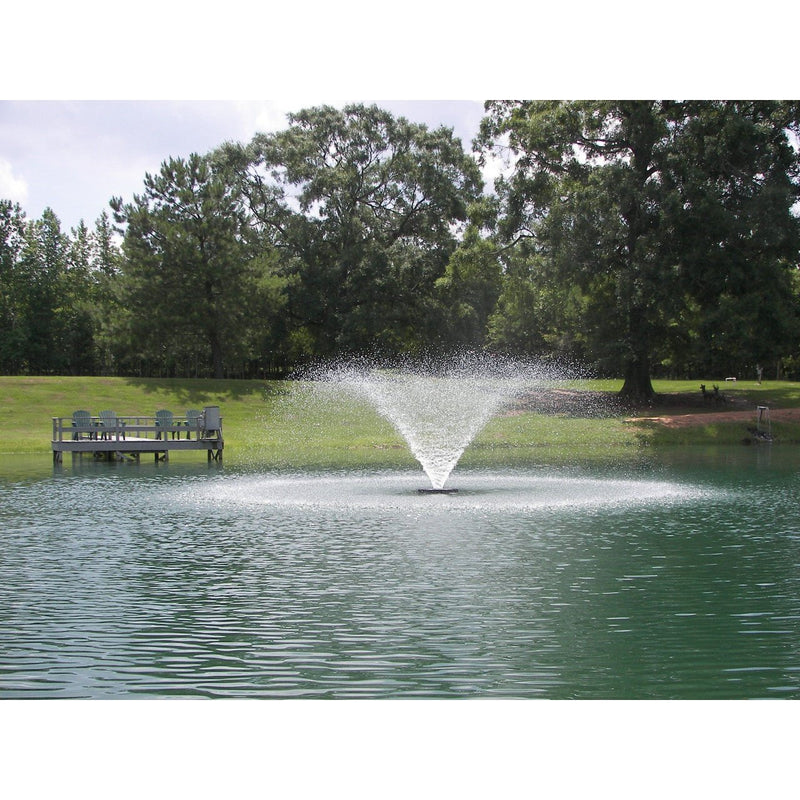
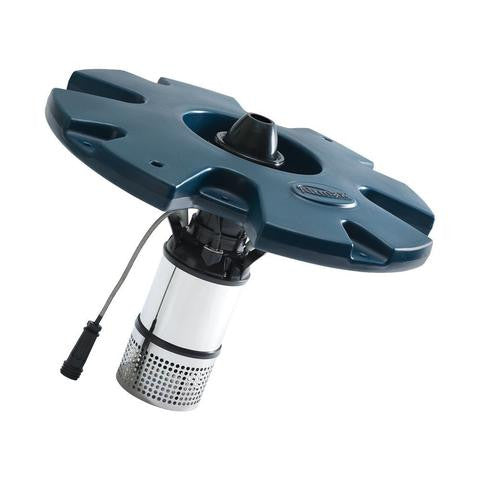
Surface aeration is often preferred for aesthetic reasons, but for deep ponds (greater than 4 feet), subsurface diffusion is more effective. Fountains primarily aerate the top layer of water and can leave the bottom stagnant. Subsurface systems move more water per watt of electricity, making them the superior choice for life support applications.
Practical Tips for Optimizing Pond Oxygenation
To maximize the efficiency of an aeration system, consider the following technical adjustments. First, ensure the air stones or diffusers are positioned to cover the widest area possible. In rectangular ponds, placing diffusers at opposite ends creates a rolling circulation pattern that eliminates dead zones where debris collects.
Check the micron rating of your diffusers. Fine-pore EPDM (Ethylene Propylene Diene Monomer) diffusers produce smaller bubbles than traditional ceramic air stones, resulting in a higher SOTR. However, fine-pore diffusers require more pressure to operate, so ensure your compressor is rated for the specific "cracking pressure" of the diffuser.
Monitor the water temperature daily during the summer. If the temperature exceeds 85°F (29°C), consider supplemental aeration or a partial water change with cooler water. Reducing feeding during heatwaves also helps, as digestion consumes a significant amount of oxygen and increases the waste load on the system.
Clean your air filters monthly. A restricted air intake causes the compressor to run hotter, which shortens the lifespan of the motor and decreases the volume of air delivered to the pond. A cool, unrestricted air supply is the most cost-effective way to maintain system performance.
Advanced Considerations: Calculating Oxygen Demand
Professional pond management involves calculating the SOTR required to offset the BOD. The BOD consists of the sum of fish respiration, microbial respiration (in the water and the sediment), and chemical oxidation. For a heavily stocked koi pond, a general rule of thumb is to provide at least 40-80 mg of oxygen per hour per pound of fish at 80°F.
The Standard Aeration Efficiency (SAE) is another metric used to evaluate performance, measured in pounds of oxygen per horsepower-hour (lb O2/hp-hr). Diffused aeration systems typically achieve an SAE of 2.0 to 4.0, while surface splashers range from 1.5 to 2.5. Selecting a system with a higher SAE reduces long-term operational costs.
System designers must also account for friction loss in the airlines. Long runs of small-diameter tubing create backpressure, which reduces the CFM output of the pump. Using 3/8-inch or 1/2-inch weighted tubing instead of standard 1/4-inch vinyl tubing can significantly improve air delivery in larger installations.
Example Scenario: Managing a 5,000-Gallon System
Consider a 5,000-gallon pond stocked with 20 mature koi, each weighing approximately 5 pounds. The total biomass is 100 pounds. At 75°F, these fish require approximately 4,000 mg of oxygen per hour just for basic metabolism. When adding the oxygen demand of the biofilter and the organic sludge on the pond floor, the total demand may exceed 10,000 mg/hr.
A standard small aquarium pump delivering 0.5 CFM (approximately 14 liters per minute) might provide enough oxygen under ideal conditions. However, during a summer night when saturation drops, this output becomes insufficient. An industrial-grade linear piston pump delivering 2.0 to 3.0 CFM through two 9-inch disc diffusers would provide a safety margin of 300%, ensuring DO levels remain above 6.0 mg/L even during the 5:00 AM peak consumption period.
By measuring the DO levels at 4:00 PM and again at 6:00 AM, the pond owner can calculate the "diurnal swing." If the swing is greater than 3.0 mg/L, it indicates that the organic load is too high or the aeration is insufficient. Adjusting the system to minimize this swing is the key to long-term stability.
Final Thoughts
The biological demand for oxygen is a non-negotiable metric in pond ecology. The 5:00 AM oxygen crash is a predictable result of the cessation of photosynthesis and the continuous metabolic requirements of the pond's inhabitants. Relying on passive diffusion is an invitation to systemic failure, particularly in managed environments with high stocking densities.
Data-driven management requires the use of active aeration systems sized appropriately for the volume, depth, and biological load of the pond. Subsurface diffused aeration offers the highest efficiency for vertical mixing and oxygen transfer. By prioritizing mechanical reliability and understanding the physics of gas exchange, practitioners can eliminate the "deadly hour" and maintain a stable, thriving aquatic environment.
Success in pond keeping is measured by the stability of the invisible variables. While water clarity is often the focus of beginners, the serious practitioner understands that dissolved oxygen is the primary limiting factor for life. Continuous monitoring and robust engineering remain the best defenses against the overnight oxygen crash.