

Why Clear Water Doesn't Always Mean Healthy Water
Your pond shouldn't look like Windex. We've been conditioned to think 'clear' is 'good.' In a pond, too much clarity often means the base of the food chain has been wiped out. Find out what a truly healthy 'wild' pond looks like.
Why Clear Water Doesn't Always Mean Healthy Water
Visual transparency is a physical property that does not necessarily correlate with biological stability. A crystal-clear pond often indicates an oligotrophic state, where nutrient levels are so low that primary productivity is suppressed. While aesthetically pleasing to some, this state represents a biological desert. In many managed environments, this clarity is artificially forced through the use of copper-based algaecides or ultraviolet (UV) sterilization, which eliminates the microscopic foundation of the aquatic food web.
Healthy aquatic ecosystems require a specific level of turbidity caused by phytoplankton. These microscopic organisms are the primary producers that convert solar energy into chemical energy. A pond with zero visibility of its bottom at three feet is often more stable than a transparent one, provided the turbidity is biological rather than suspended sediment. Toxic compounds such as ammonia (NH3) and nitrite (NO2) are entirely colorless and odorless. A pond can appear pristine while maintaining lethal concentrations of nitrogenous waste that compromise the immune systems of fish and invertebrates.
How the Pond Ecosystem Functions
The mechanical foundation of a wild pond is the nitrogen cycle. This process facilitates the conversion of toxic organic waste into inert or beneficial compounds. It begins with the accumulation of organic matter—fish waste, decaying plant tissue, and windblown debris. Heterotrophic bacteria decompose these solids into ammonia.
Nitrification occurs in two distinct stages. First, aerobic bacteria such as Nitrosomonas oxidize ammonia into nitrite. Second, Nitrobacter or Nitrospira species convert nitrite into nitrate (NO3). Nitrate is significantly less toxic and serves as the primary macronutrient for aquatic plants and phytoplankton. In an optimized system, this cycle operates in a continuous loop, ensuring that toxic spikes are mitigated before they reach threshold levels for aquatic fauna.
Dissolved oxygen (DO) is the most critical variable in this system. Oxygen enters the water through atmospheric diffusion and as a byproduct of photosynthesis. During daylight hours, phytoplankton and submerged macrophytes produce oxygen, often reaching supersaturation levels. At night, the process reverses as these same organisms consume oxygen through respiration. A healthy pond manages this diurnal fluctuation through balanced biomass density.
Benefits of a Biologically Active Pond
A pond with a 'living tinge'—typically a light olive or tea color—offers several measurable advantages over sterile systems. Biological productivity at the microbial level supports higher trophic levels, including zooplankton, macroinvertebrates, and fish. This reduces the requirement for supplemental feeding in recreational fisheries.
Stability is the primary technical advantage. A biologically active pond acts as a buffer against environmental shifts. Beneficial bacteria colonies residing in the benthos (bottom sediment) and on submerged surfaces provide a high surface area for waste processing. This natural filtration capacity reduces the mechanical load on external pumps and filters, lowering energy consumption and maintenance requirements. Furthermore, the presence of established phytoplankton populations limits the niche availability for invasive blue-green algae (cyanobacteria), which can produce hepatotoxins and neurotoxins.
Challenges and Common Mistakes
The most frequent error in pond management is the pursuit of 'The Sterile Blue' through excessive chemical intervention. Over-application of algaecides creates a feedback loop of instability. When algae are killed en masse, their decomposition consumes massive amounts of dissolved oxygen. This often leads to a hypoxic event, resulting in fish kills. Additionally, the sudden release of nutrients from dead algae provides the fuel for the next, often more aggressive, bloom.
Another common mistake involves the misidentification of turbidity. Managers often confuse planktonic blooms (healthy) with suspended clay or silt (detrimental). Suspended solids can clog fish gills and prevent sunlight from reaching beneficial plants, but they do not contribute to the food chain. Correcting this requires flocculants or mechanical filtration rather than chemical sterilants.
Limitations and Environmental Constraints
A wild, biologically active approach is not ideal for all scenarios. Small ornamental ponds with high fish stocking densities (such as koi ponds) often lack the volume to self-regulate. These systems require aggressive mechanical and biological filtration to handle the nitrogenous load. In these cases, achieving the 'living tinge' might lead to a rapid escalation into a eutrophic state due to the limited water volume.
Environmental boundaries also dictate success. Ponds located in areas with high agricultural runoff are prone to hypereutrophication. The influx of phosphorus and nitrogen from fertilizers can overwhelm the natural cycle, leading to excessive weed growth and oxygen depletion regardless of management efforts. In such environments, nutrient sequestration via physical harvesting of plants or chemical binding (using lanthanum-modified clay) becomes necessary.
Comparison: Chemical Management vs. Biological Balance
Management strategies generally fall into two categories: reactive chemical control and proactive biological optimization. The following table highlights the technical differences between these approaches.
| Feature | Chemical Management (Sterile Blue) | Biological Optimization (Living Tinge) |
|---|---|---|
| Primary Control | Algaecides, Dyes, UV Clarifiers | Bacteria, Phytoplankton, Macrophytes |
| Stability | Low (prone to spikes) | High (self-regulating) |
| Oxygen Levels | Unstable (risk of crashes) | Consistent (diurnal cycles) |
| Maintenance Cost | High (recurring chemical purchases) | Moderate (initial setup and aeration) |
| Biodiversity | Minimal | Extensive |
Practical Tips for Monitoring Pond Health
The Secchi disk is the standard tool for measuring water clarity and plankton density. It consists of an 8-inch disk with alternating black and white quadrants. To use it, lower the disk into the water until it disappears, then raise it until it reappears. The average of these two depths is the Secchi depth.
A healthy, productive pond should maintain a Secchi depth of 18 to 24 inches. If the reading is greater than 24 inches, the pond is likely nutrient-deficient, and primary production is low. If the reading is less than 12 inches, the pond is at risk of an oxygen crash due to excessive biomass. Measuring this weekly allows for precision adjustments in aeration or nutrient management.
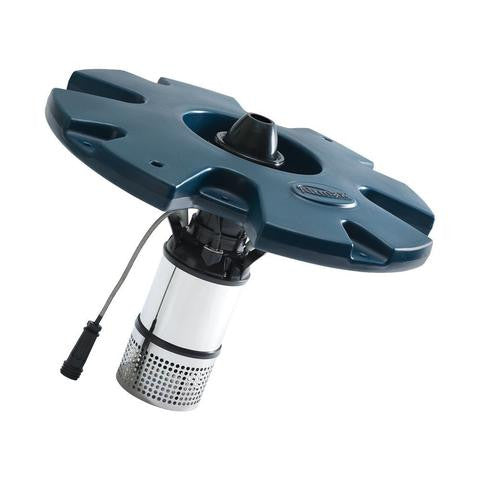
Installation of diffused aeration systems is recommended to maintain the living tinge. Surface fountains are primarily aesthetic; diffused aerators placed at the bottom move more water and ensure that the entire water column stays oxygenated. This supports aerobic bacteria in the sediment, which are responsible for the most efficient decomposition of organic matter.
Advanced Considerations: Trophic State Index (TSI)
Serious practitioners utilize Carlson's Trophic State Index to classify the productivity of a water body. TSI is calculated using three parameters: chlorophyll-a concentration, total phosphorus, and Secchi depth. The formulas convert these measurements into a scale of 0 to 100.
TSI values below 40 indicate oligotrophic conditions (low productivity, high clarity). Values between 40 and 60 represent mesotrophic conditions, which are ideal for a balanced 'wild' pond. Values above 60 indicate eutrophic conditions, where management intervention is required to prevent system failure. Understanding the TSI allows a manager to move beyond visual guesswork and into data-driven ecology.
Redox potential (ORP) is another advanced metric. It measures the water's ability to cleanse itself through oxidation. In a healthy pond, ORP should range between 250mV and 400mV. Low ORP suggests an accumulation of organic waste and a lack of dissolved oxygen, signaling that the biological engine is stalling.
Scenario: Remediating a Chemically Dependent Pond
Consider a one-acre pond that has been treated with blue dye and copper sulfate for five years. The water is clear to the bottom (8 feet), but fish growth has stagnated, and the bottom is covered in a thick layer of undecomposed muck.
The remediation process begins by ceasing all algaecide applications and dye additions. This allows natural sunlight to penetrate the water column. Next, a high-output diffused aeration system is installed to increase DO levels at the sediment-water interface. Beneficial aerobic bacteria are then inoculated to begin digesting the muck layer. Over the course of one season, the water will likely transition through a murky phase as nutrients are released and consumed by a new phytoplankton bloom. Eventually, the system stabilizes at a Secchi depth of 20 inches, with a natural olive tinge indicating the restoration of the primary food chain.
Final Thoughts
A healthy pond is a functioning machine, not a static picture. The transition from a sterile, 'Windex-blue' environment to a living ecosystem requires a shift in priorities from aesthetic transparency to biological efficiency. By monitoring Secchi depth and supporting the nitrogen cycle, managers can create a self-sustaining habitat that requires fewer inputs and offers greater ecological resilience.
Success is found in the 'Living Tinge.' When the water holds a slight color, it means the base of the food chain is active, oxygen is being produced, and waste is being processed. This technical approach to pond management ensures long-term stability and a robust environment for all aquatic life. Experiment with reducing chemical inputs and focus on the metrics of productivity to see the true potential of a wild pond.