

How Much Electricity Does a Pond Aerator Actually Use?
Your pond's 'lungs' shouldn't cost as much as your air conditioner. Are you paying for bubbles or for show? We compare the monthly costs of different aeration methods to save you hundreds.
The mechanics of aquatic life support are often obscured by marketing jargon, yet the underlying economics are governed by rigid physical laws. Every milligram of dissolved oxygen (DO) introduced into a water body requires a specific quantity of energy. Identifying the delta between aesthetic "fountains" and mechanical "aeration" is the first step in optimizing operational overhead. This analysis breaks down the electrical demand, mechanical efficiency, and thermodynamic variables that dictate your monthly utility bill.
How Much Electricity Does a Pond Aerator Actually Use?
Electricity consumption in pond management is measured in kilowatt-hours (kWh), which is the product of power (watts) and time. A standard pond aerator operates on a continuous duty cycle, meaning it runs 24 hours a day, 365 days a year, unless managed by a timer. To determine the consumption, the amperage of the motor must be multiplied by the voltage of the circuit. For instance, a small linear piston compressor drawing 1.0 Amp on a 115V circuit consumes 115 Watts of power.
In real-world terms, this 115-Watt device consumes approximately 2.76 kWh per day. Using the United States national average electricity rate of $0.16 per kWh, this equates to roughly $0.44 per day, or $13.20 per month. However, this is a baseline figure for a small system. Large-scale surface aerators or high-pressure rocking piston compressors can draw significantly more. A 1/2 HP surface aerator may draw 5.0 Amps at 115V (575 Watts), resulting in a monthly cost exceeding $66.00 at the same electrical rate.
Environmental factors also influence these numbers. Compressors must overcome back-pressure, which increases with depth. For every foot of water depth, the compressor must overcome approximately 0.433 PSI of head pressure. As back-pressure rises, the motor works harder, often increasing the amperage draw and reducing the mechanical life of the components. Understanding this relationship between depth, pressure, and power is essential for calculating true operational costs.
The Mechanics of Oxygen Transfer and Energy Efficiency
Aeration efficiency is scientifically quantified through the Standard Aeration Efficiency (SAE) metric. SAE measures the pounds of oxygen transferred per horsepower-hour (lb O2/hp-hr). This metric allows for a direct comparison between different mechanical approaches, such as diffused air and surface splashing.
Diffused aeration systems utilize a shore-mounted compressor to pump air through weighted tubing to membrane diffusers located at the pond bottom. These systems rely on the "chimney effect" or synergistic lift. As millions of tiny bubbles rise, they displace water, forcing deoxygenated water from the bottom to the surface where gas exchange occurs naturally. Because these systems focus on moving air rather than heavy water, they are categorized under Passive Efficiency models. Fine-bubble diffusers typically achieve an SAE of 6.0 to 10.0 lb O2/hp-hr, making them the most energy-efficient choice for deep-water applications.
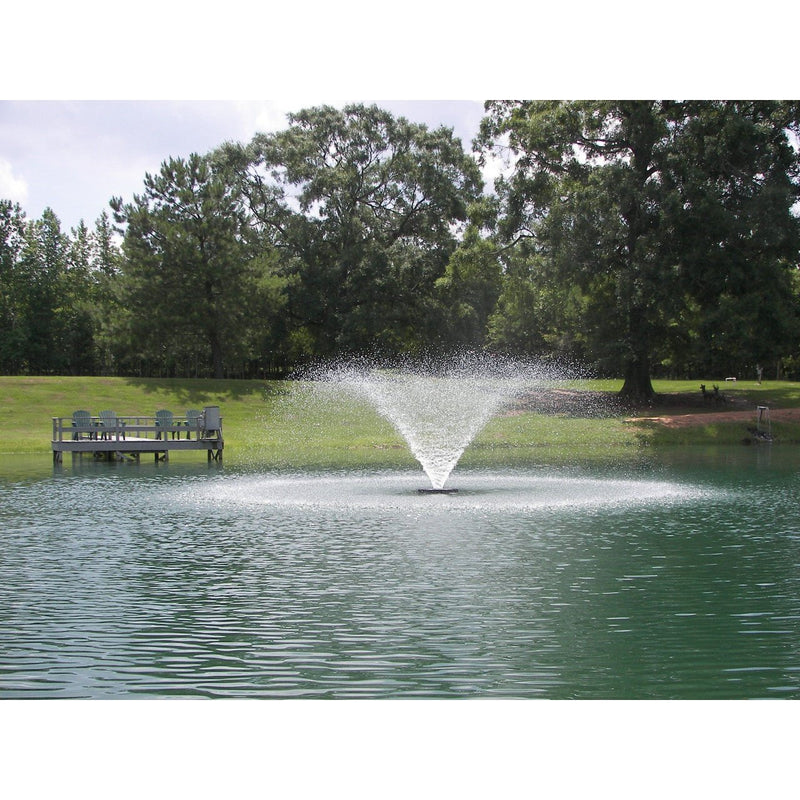
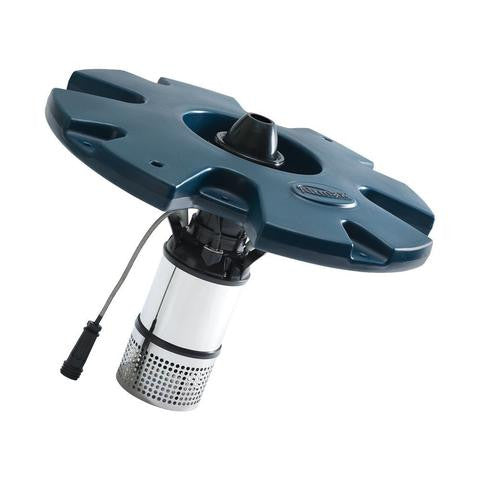
Surface aerators and fountains represent the Active Power Guzzler category. These units use a motor and impeller to physically throw water into the atmosphere. While this facilitates rapid gas exchange at the surface, it requires immense energy to lift the mass of the water. Fountains, which prioritize the height and shape of the spray pattern, often have the lowest SAE, ranging from 1.5 to 2.5 lb O2/hp-hr. High-volume surface aerators perform better, typically reaching an SAE of 2.6 to 3.2, but they remain less efficient than diffused air for ponds deeper than 6 to 8 feet.
Benefits of High-Efficiency Diffused Aeration
Selecting a system with a high SAE provides measurable advantages beyond the monthly utility bill. Efficiency in aeration translates directly to the ecological stability of the pond.
1. Thermal De-stratification
Efficient diffused systems break the thermocline—the barrier between the warm, oxygen-rich surface layer and the cold, anaerobic bottom layer. By circulating the entire water column, the system prevents the buildup of toxic gases like hydrogen sulfide and ammonia, which occur in stagnant environments.
2. Enhanced Nutrient Processing
Aerobic bacteria, which decompose organic "muck" and fish waste, require high levels of dissolved oxygen to function. An efficient aerator maintains these levels at the sediment interface, accelerating the breakdown of organic matter and reducing the need for expensive chemical treatments or physical dredging.
3. Mechanical Longevity
Systems designed for efficiency often run at lower RPMs or utilize higher-quality components like carbon vanes or specialized diaphragms. These components dissipate heat more effectively. Heat is the primary cause of motor failure; therefore, an efficient system that stays cool will inherently have a longer service life and lower lifetime maintenance costs.
Challenges and Common Mistakes in System Sizing
A frequent error in pond management is the installation of an undersized compressor. When a compressor is too small for the depth or surface acreage, it fails to provide adequate "turnover"—the number of times the entire volume of the pond is circulated within 24 hours. Most biologists recommend at least one full turnover per day for healthy ecosystems.
Another mistake involves ignoring friction loss in the airline. If the compressor is located far from the pond, the air must travel through hundreds of feet of tubing. If the tubing diameter is too small, the compressor must work against significant internal resistance. This is known as "frictional head loss." It increases the operating temperature of the compressor and raises the amperage draw, effectively turning an efficient motor into a power guzzler.
Furthermore, pond owners often fail to account for seasonal oxygen fluctuations. In the summer, water holds less dissolved oxygen due to higher temperatures. If a system is sized for spring conditions, it may fail during a summer heatwave, leading to a "fish kill" event. Over-sizing slightly or utilizing a multi-stage compressor setup can mitigate this risk without significantly inflating the monthly bill.
Limitations of Aeration Methods
While aeration is a powerful tool, it is subject to atmospheric and physical constraints. Standard Oxygen Transfer Efficiency (SOTE) is measured in clean water at sea level. In real-world pond conditions, variables such as altitude, salinity, and dissolved solids can reduce the actual transfer rate by 40% to 70%.
Depth is a critical limitation for certain compressor types. Linear diaphragm compressors are highly efficient and quiet but can rarely handle depths exceeding 10 feet. Forcing a linear compressor to work at 15 feet will result in diaphragm rupture within weeks. Conversely, rocking piston compressors can handle depths up to 50 feet but are louder and consume more power per CFM (Cubic Feet per Minute) of air produced.
Solar and wind-powered systems offer the ultimate "passive" efficiency but suffer from intermittent reliability. A solar aerator without a battery backup will cease operation at night—the exact time when dissolved oxygen levels are at their lowest due to plant respiration. Relying solely on passive weather-dependent systems in a heavily stocked koi pond is a high-risk strategy that often necessitates a secondary grid-tied backup.
Comparing Active vs. Passive Aeration Costs
The following table compares the estimated monthly operating costs for different aeration methods based on a 1-acre pond with a depth of 10 feet. These figures assume an electrical rate of $0.16/kWh and continuous 24/7 operation.
| Aeration Method | Avg. Wattage | Monthly kWh | Monthly Cost (USD) | O2 Transfer (SAE) |
|---|---|---|---|---|
| Diffused (Rocking Piston) | 250W | 180 kWh | $28.80 | High (6.0 - 10.0) |
| Surface Aerator (1/2 HP) | 575W | 414 kWh | $66.24 | Medium (2.6 - 3.2) |
| Decorative Fountain (1 HP) | 1100W | 792 kWh | $126.72 | Low (1.5 - 2.5) |
| Solar (Direct Drive) | 0W* | 0 kWh | $0.00 | Variable (Weather) |
*Note: Solar systems have significantly higher upfront capital costs ($3,000 - $6,000) compared to electric units ($500 - $1,500).
Practical Tips for Optimizing Aeration Efficiency
Optimizing a system requires attention to the small mechanical details that contribute to overall resistance and power draw.
- Use Large Diameter Airlines: For runs exceeding 100 feet, switch from 3/8-inch to 1/2-inch or even 5/8-inch weighted tubing. This reduces friction loss and keeps the compressor running cooler.
- Clean Diffuser Membranes: Algae and calcium deposits can clog the tiny pores in a diffuser. This increases back-pressure. Cleaning diffusers every 6–12 months can drop the operating PSI and lower the amperage draw.
- Install a Pressure Gauge: A simple liquid-filled pressure gauge at the compressor outlet is a diagnostic essential. If the PSI begins to creep up, it indicates a clog in the line or diffuser. If it drops, there is a leak. Both scenarios waste energy.
- Utilize Timers in Low-Risk Ponds: If your pond has a low fish load, you can run the aerator only during the night (10 PM to 8 AM). This targets the period of lowest DO levels while cutting your electricity bill by 60%.
Advanced Considerations: Fluid Dynamics and Pressure
Serious practitioners must understand the relationship between the "Compressor Curve" and the "System Curve." Every compressor has a performance curve that shows how many CFM of air it can produce at various PSI levels. As depth increases, the PSI increases, and the CFM output drops.
The point where the compressor curve intersects with the system’s total back-pressure is the operating point. If this point is too far to the right on the curve, the motor is under-loaded and inefficient. If it is too far to the left, the motor is over-loaded, leading to excessive heat. Selecting a compressor that operates in its "sweet spot" (typically 30% to 70% of its maximum pressure rating) ensures the highest electrical-to-mechanical energy conversion.
Voltage drop is another advanced concern. If you run a long extension cord to a pond, the voltage may drop from 115V to 105V by the time it reaches the motor. To compensate for the lower voltage, the motor will pull more amperage to maintain the same wattage, leading to overheating and wasted energy. For remote locations, installing a 230V circuit is often more efficient as it allows for longer wire runs with less voltage drop.
Scenario: The 1-Acre Farm Pond Case Study
Consider a 1-acre farm pond with an average depth of 8 feet and a maximum depth of 12 feet. The owner is deciding between a 1/2 HP decorative fountain and a 1/4 HP rocking piston diffused aeration system.
The 1/2 HP fountain draws 670 Watts. Running 24/7 at $0.16/kWh, the fountain costs $77.18 per month. However, because it only pulls water from the top 4–6 feet, the bottom 6 feet of the pond remains stagnant and anaerobic. To fix the stagnation, the owner would need to run the fountain longer or add more units, further increasing costs.
The 1/4 HP diffused system draws 240 Watts. Running 24/7 at the same rate, it costs $27.65 per month. Because it is placed at the 12-foot maximum depth, it circulates the entire 1-acre volume effectively. The owner saves $49.53 every month, or nearly $600 per year, while achieving superior ecological results. Over a five-year period, the diffused system pays for itself entirely through electricity savings alone.
Final Thoughts
Calculating the monthly cost of pond aeration is a straightforward exercise in electrical math, but optimizing those costs requires an understanding of mechanical efficiency. The choice between an "Active Power Guzzler" and "Passive Efficiency" depends on whether your primary goal is aesthetics or biological health. While fountains provide a visual centerpiece, they are often the most expensive and least effective way to oxygenate deep water.
Diffused aeration remains the gold standard for those seeking to maximize dissolved oxygen while minimizing the impact on the monthly utility bill. By paying attention to compressor curves, airline diameters, and diffuser maintenance, you can ensure that your pond's "lungs" operate at peak efficiency.
Investing in a high-quality, properly sized system may involve a higher upfront cost, but the long-term savings in electricity and maintenance are substantial. Experimenting with timers and monitoring pressure gauges will further refine your setup, allowing you to maintain a thriving aquatic ecosystem without overpaying for "bubbles" that don't perform.