

Why Bubble Size Matters in Pond Aeration
Big bubbles look cool. Tiny bubbles actually clean the water. Large bubbles have very little surface area relative to their volume. Fine bubbles maximize gas exchange and stay submerged longer, giving your pond the 'wild' oxygen levels it needs to thrive. Don't settle for the 'hot tub' effect.
Why Bubble Size Matters in Pond Aeration
Pond aeration efficiency is fundamentally dictated by the physical characteristics of the air bubbles introduced into the water column. In technical terms, the primary objective of any aeration system is to maximize the Standard Oxygen Transfer Efficiency (SOTE). SOTE measures how effectively oxygen molecules migrate from the gaseous phase inside a bubble into the dissolved state in the surrounding fluid.
Large bubbles, often produced by coarse diffusers or simple perforated pipes, typically exceed 5 millimeters in diameter. These bubbles possess a low surface-area-to-volume ratio and high buoyancy, causing them to rise rapidly to the surface. This rapid ascent limits the contact time between the air and the water, resulting in an SOTE that often falls below 1% per foot of depth.
Fine bubble aeration utilizes diffusers that produce bubbles between 1 and 3 millimeters in diameter. These microbubbles create a massive cumulative surface area for a given volume of air. Because they are smaller, they experience higher drag relative to their buoyancy, leading to a much slower rise velocity. This combination of increased surface area and extended residence time allows fine bubble systems to achieve an SOTE of 2% or higher per foot of water depth.
Real-world applications of fine bubble technology are found in municipal wastewater treatment plants and intensive aquaculture where energy efficiency and high dissolved oxygen (DO) levels are critical. In these environments, maximizing the oxygen transfer rate (OTR) per kilowatt-hour of electricity is the baseline metric for operational success.
How Fine Bubble Aeration Works
The process of fine bubble aeration begins at the compressor, where atmospheric air is pressurized and moved through a delivery system to submerged diffusers. The efficiency of this system relies on the interplay between mechanical pressure, friction loss, and membrane technology.
Diffusers are the critical component where air is sheared into microbubbles. Most modern systems use EPDM (Ethylene Propylene Diene Monomer) rubber membranes. These membranes are precision-perforated with thousands of tiny slits. When the internal pressure exceeds the surrounding hydrostatic pressure, the membrane expands, opening the slits and releasing air. When the pressure stops, the elastic nature of the EPDM causes the slits to close, preventing water from entering the air lines.
Physical laws such as Henry’s Law and Fick’s Law of Diffusion govern the actual gas exchange. Henry’s Law states that the amount of dissolved gas in a liquid is proportional to its partial pressure above the liquid. Fick’s Law explains that the rate of diffusion is proportional to the surface area available. Fine bubbles optimize both parameters by maintaining high pressure at depth and providing a vast interface for oxygen transfer.
Systems must also account for friction loss within the tubing. Weighted tubing is standard for pond applications to ensure the lines stay at the bottom without the need for external weights. The internal diameter of the tubing must be sized correctly to the compressor's Cubic Feet per Minute (CFM) output to prevent excessive backpressure, which can lead to premature compressor failure and reduced airflow.
The Mechanics of Oxygen Transfer
Oxygen transfer occurs across the boundary layer of the bubble. As a bubble rises, the concentration gradient between the oxygen-rich air inside and the oxygen-depleted water outside drives the transfer. Fine bubbles maintain a more stable boundary layer than turbulent coarse bubbles, which allows for more predictable and efficient gas transition.
Compressor Selection and Integration
Choosing a compressor requires balancing depth, volume, and pressure requirements. Linear diaphragm compressors are highly efficient for shallow ponds (under 8 feet) because they use electromagnetic oscillation to move air with very low power draw. Rocking piston compressors are necessary for deeper applications as they can generate the high Pounds per Square Inch (PSI) required to overcome the hydrostatic pressure at depths up to 40 or 50 feet.
Benefits of Fine Bubble Aeration Systems
Higher Standard Oxygen Transfer Efficiency (SOTE) is the most immediate benefit. Since fine bubble systems transfer more oxygen per unit of air, they require smaller compressors and less electricity than coarse systems to maintain the same Dissolved Oxygen (DO) levels. This results in significant long-term energy savings.
Improved bottom-to-top circulation is another technical advantage. While fine bubbles are optimized for gas exchange, the collective lift of a "bubble plume" creates a laminar flow that pulls cold, oxygen-poor water from the pond floor to the surface. This process, known as destratification, eliminates the thermocline and ensures that the entire water volume is habitable for aerobic organisms.
Biological benefits are profound. High DO levels at the sediment-water interface support aerobic bacteria, which are far more efficient at decomposing organic matter (muck) than anaerobic bacteria. Aerobic decomposition prevents the buildup of hydrogen sulfide and methane, which are toxic to fish and contribute to foul odors.
Nitrification is also enhanced. The nitrogen cycle relies on aerobic bacteria to convert toxic ammonia into nitrite and then into relatively harmless nitrate. This process requires approximately 4.6 pounds of oxygen for every pound of ammonium oxidized. Fine bubble aeration provides the consistent oxygen levels necessary to sustain these bacterial colonies during peak loading periods.
Challenges and Common Mistakes
Incorrect compressor sizing is a frequent error. Operators often focus on CFM (flow) without considering PSI (pressure). Every 2.31 feet of water depth adds 1 PSI of backpressure. If a compressor is rated for 5 PSI but the diffusers are placed at 15 feet (6.5 PSI), the compressor will overheat, the diaphragms or seals will fail, and the airflow will drop significantly.
Neglecting maintenance on diffuser membranes is another pitfall. Over time, calcium carbonate scales or biological films can clog the micro-perforations. This increases backpressure and reduces oxygen transfer efficiency. Regular inspection and cleaning, often using a weak acid solution or mechanical brushing, are required to maintain system performance.
Inadequate tubing selection leads to system inefficiencies. Using standard poly pipe instead of weighted tubing often results in "floating lines" that are unsightly and susceptible to damage from boat propellers or UV degradation. Furthermore, undersized tubing diameters create excessive friction loss, forcing the compressor to work harder and reducing the effective air delivery to the diffusers.
Limitations and Environmental Constraints
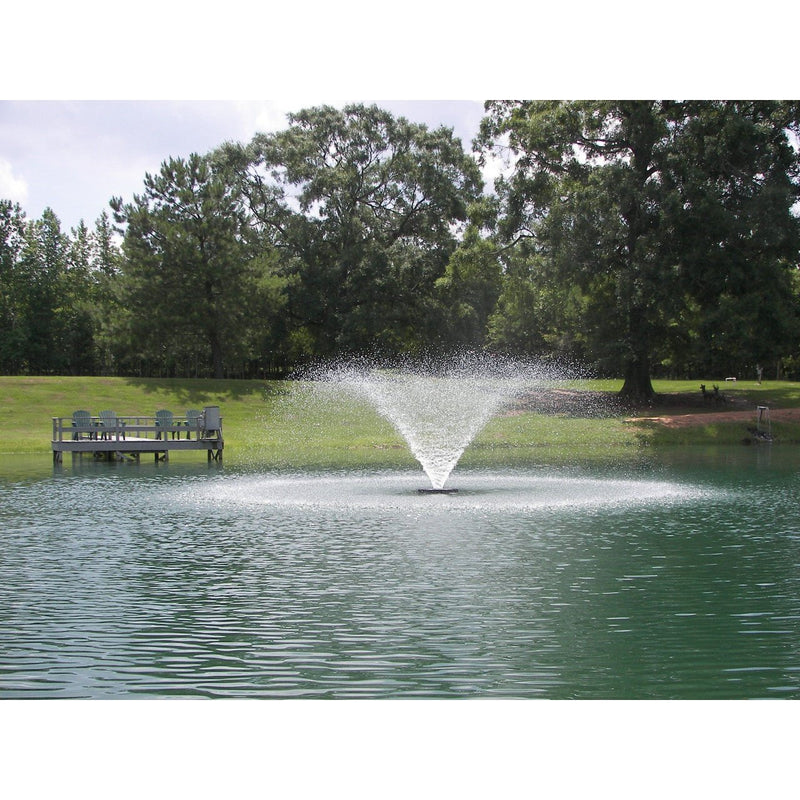
Shallow water significantly limits the efficiency of fine bubble systems. In water less than 4 feet deep, the bubbles reach the surface too quickly to transfer a meaningful amount of oxygen. In these scenarios, surface aerators or fountains may be more effective because they physically agitate the water surface to facilitate gas exchange.
High solids concentrations can pose a challenge. In environments with extremely high levels of suspended solids or heavy sludge, fine bubble diffusers are more prone to clogging than coarse bubble systems. Industrial wastewater applications sometimes use coarse bubbles specifically for their mixing power to keep solids in suspension, even if it means sacrificing oxygen transfer efficiency.
The "Alpha Factor" must be considered in non-clean water environments. The Alpha factor represents the ratio of oxygen transfer in process water versus clean water. In ponds with high levels of surfactants, oils, or heavy biological loads, the oxygen transfer rate can be reduced by 20% to 50% compared to lab-tested clean water specifications.
Comparison: The Industrial Churn vs. The Natural Mist
Aeration strategies can be categorized into two philosophies: high-volume mixing (The Industrial Churn) and high-efficiency gas transfer (The Natural Mist). The following table outlines the technical differences between these approaches.
| Feature | Coarse Bubble (Industrial Churn) | Fine Bubble (Natural Mist) |
|---|---|---|
| Bubble Size | 5mm to 20mm | 1mm to 3mm |
| Oxygen Transfer Efficiency (SOTE) | < 1% per foot | 2% - 3% per foot |
| Primary Function | Mixing and solids suspension | Maximum oxygenation |
| Energy Consumption | High (per lb of O2) | Low (per lb of O2) |
| Clogging Resistance | Very High | Moderate (requires maintenance) |
Measured by Standard Aeration Efficiency (SAE), fine bubble systems are almost always the superior choice for pond management where biological health and cost control are the primary goals. Coarse bubble systems remain relevant only in specialized industrial tanks where mixing is more important than oxygen levels.
Practical Tips for System Optimization
Positioning diffusers at the deepest point of the pond is essential. Depth increases the residence time of the bubbles and the hydrostatic pressure, both of which improve oxygen transfer. However, avoid placing diffusers directly in the deepest "muck" layer; use a base or a stand to keep the diffuser 6-12 inches above the sediment to prevent the intake of debris.
Install a pressure gauge at the compressor outlet. This provides a baseline reading for the system's operating pressure. A sudden increase in pressure indicates a blockage in the lines or clogged diffusers, while a drop in pressure suggests a leak in the tubing or a failing compressor component.
Monitor Dissolved Oxygen (DO) levels during the early morning hours. DO is at its lowest just before sunrise because photosynthesis has stopped and respiration has continued throughout the night. If morning DO levels fall below 3 mg/L, the aeration system may need to be expanded or the runtime increased.
Advanced Considerations in Aeration Design
Serious practitioners should calculate the Actual Oxygen Requirement (AOR) based on the Biological Oxygen Demand (BOD) and Nitrogenous Oxygen Demand (NOD) of the pond. BOD is the amount of oxygen required by bacteria to break down organic waste, while NOD is the oxygen needed for nitrification.
Accounting for elevation is critical for high-altitude ponds. Atmospheric pressure decreases as altitude increases, which reduces the saturation point of dissolved oxygen in the water. This means a system designed for a pond at sea level will transfer significantly less oxygen if installed at 5,000 feet above sea level.
The "Heat of Compression" is a factor in high-pressure systems. As air is compressed, it generates heat. In rocking piston systems, the discharge air can reach temperatures that exceed the rating of standard vinyl tubing. Using a short section of heat-resistant "cool down" hose or a metal heat sink between the compressor and the main airline can prevent tubing failure.
Example Scenario: One-Acre Pond Aeration
Consider a 1-acre pond with an average depth of 10 feet. To calculate the aeration requirement, we first determine the total water volume, which is approximately 3.26 million gallons. For a pond with moderate fish loading, a target of 1.0 to 1.5 volumes of water moved per day is often recommended.
A rocking piston compressor producing 2.5 CFM at 10 feet of depth is selected. Using two fine bubble disk diffusers, the system provides a cumulative surface area that allows for high OTR. At a depth of 10 feet, the fine bubble system achieves an OOTE (Overall Oxygen Transfer Efficiency) of approximately 20%.
Operational data shows that this system can maintain DO levels above 5 mg/L even during mid-summer peak temperatures. The electricity cost for running a 1/4 HP rocking piston compressor 24/7 is approximately $15-$25 per month, depending on local rates. This setup effectively prevents thermal stratification and ensures a healthy aerobic environment for the entire water column.
Final Thoughts
Fine bubble aeration represents the pinnacle of efficiency for subsurface pond management. By focusing on the physics of gas transfer rather than the visual impact of surface agitation, operators can achieve superior biological results with lower energy expenditures. The transition from large, coarse bubbles to fine microbubbles significantly increases the available surface area for oxygen exchange, supporting the aerobic processes essential for water clarity and fish health.
Success with these systems requires a technical approach to sizing and maintenance. Understanding the relationship between depth, pressure, and membrane integrity allows for the design of a system that is both durable and effective. Avoiding common pitfalls like undersized compressors and neglected diffusers ensures that the pond ecosystem remains stable and productive over the long term.
Practitioners who master these concepts will find that their ponds respond with improved clarity, reduced muck, and higher carrying capacities for aquatic life. Experimenting with diffuser placement and monitoring DO levels can provide the data needed to fine-tune the system for the specific environmental variables of any given site.