

The Most Common Pond Aeration Mistakes Pond Owners Make
Pond aeration is one of the most useful tools we have for improving dissolved oxygen, circulation, and overall pond health. But simply putting an aerator in a pond doesn't guarantee good results.
After working with pond aeration systems for many years, we've found that most problems aren't caused by aeration itself. They're caused by choosing the wrong type of aerator, sizing it incorrectly, placing diffusers poorly, or expecting the system to accomplish something it wasn't designed to do.
Here are some of the most common pond aeration mistakes—and how to avoid them.
1. Sizing an Aerator by Acreage Alone
One of the first questions pond owners ask is:
"What size aerator do I need for a one-acre pond?"
Acreage is a good starting point, but it doesn't tell us enough by itself.
Consider two one-acre ponds.
One is roughly round and 14 feet deep. The other is long and narrow with several shallow coves and a maximum depth of only 7 feet.
Those ponds may contain very different amounts of water and require completely different diffuser layouts.
When sizing a pond aeration system, we look at several factors:
-
Surface acreage
-
Average and maximum depth
-
Pond shape
-
Diffuser locations
-
Fish population
-
Organic load
-
Water quality problems
-
The owner's goals for aeration
Depth is especially important with bottom-diffused aeration because it affects both compressor performance and the amount of water a rising bubble plume can circulate.
A properly designed system isn't simply about putting enough horsepower beside the pond. It's about moving water effectively throughout the pond.
2. Assuming More Air Is Always Better
It's easy to assume that if 2 CFM of airflow is good, 4 or 5 CFM must be better.
That's not necessarily true.
Every diffuser has a useful operating range. Once you push enough air through a diffuser, increasing the airflow further may produce diminishing returns.
This is why we pay attention not only to the compressor's total CFM but also to how that airflow is distributed among the diffusers.
For example, if a compressor produces around 3 CFM, forcing all of that air through a small single diffuser may not be the most efficient way to use it. Depending on the diffuser design, spreading the airflow across additional membrane area can sometimes produce better bubble distribution and water movement.
The goal isn't to create the most impressive-looking boil on the surface.
The goal is to circulate the pond efficiently.
3. Using Too Few Diffuser Locations
Another common mistake is assuming one diffuser will circulate an entire pond simply because the aeration system produces enough air.
Pond shape matters.
A relatively round pond with good depth near the center may circulate very effectively with one properly positioned diffuser station.
But consider a pond shaped like this:
long main basin → narrow section → shallow cove
Water doesn't necessarily circulate efficiently from one end of that pond to the other.
Irregular, elongated, or divided ponds may need multiple diffuser locations to create good circulation throughout the water body.
This is one reason we ask customers for pond dimensions, depth information, and sometimes even an aerial image when sizing an aeration system.
We're not just sizing the compressor.
We're designing the circulation pattern.
4. Ignoring Pond Depth
Depth affects bottom-diffused aeration in two important ways.
First, the compressor must generate enough pressure to push air down to the diffuser.
The deeper the diffuser, the greater the pressure the compressor must overcome. Different compressor technologies also have different pressure capabilities, which is why a system designed for an 8-foot pond isn't necessarily the right choice for a 20-foot pond.
Second, depth affects water movement.
As bubbles rise through the water column, they create an upward-moving plume that carries surrounding water toward the surface. In deeper water, that plume has more vertical distance over which to develop.
That's one reason bottom-diffused aeration generally becomes less effective as ponds become extremely shallow.
For shallow ponds, additional diffuser stations, surface aeration, circulators, or a combination of methods may provide better results.
5. Choosing the Wrong Type of Aeration
Not every pond needs the same kind of aerator.
Bottom-diffused aeration is particularly useful when the goal is circulating deeper water and reducing thermal and oxygen stratification.
Surface aerators move and oxygenate water near the surface and can be especially valuable in shallow ponds or when rapid surface oxygenation is needed.
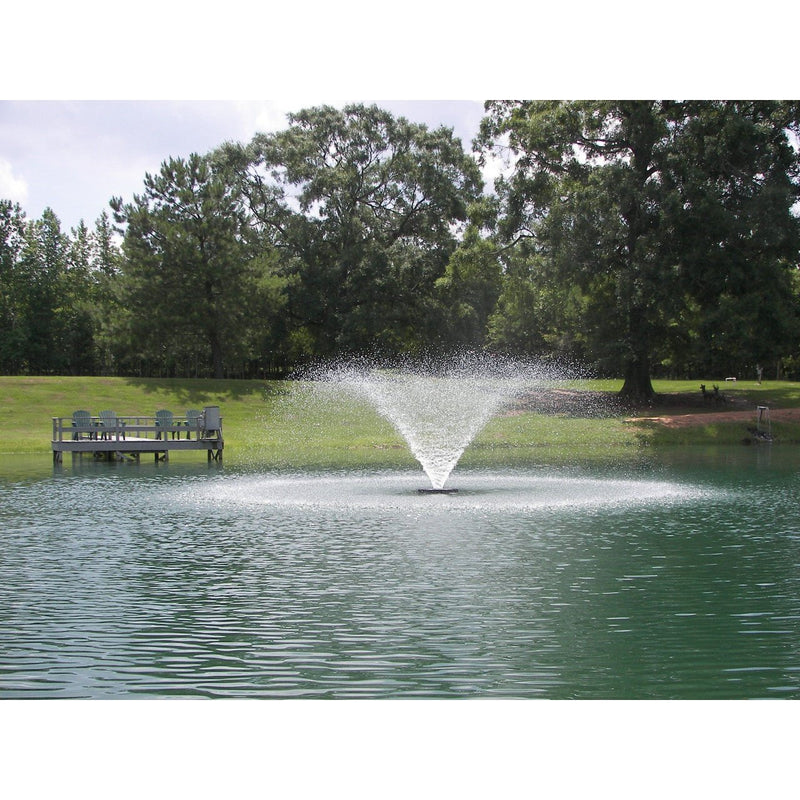
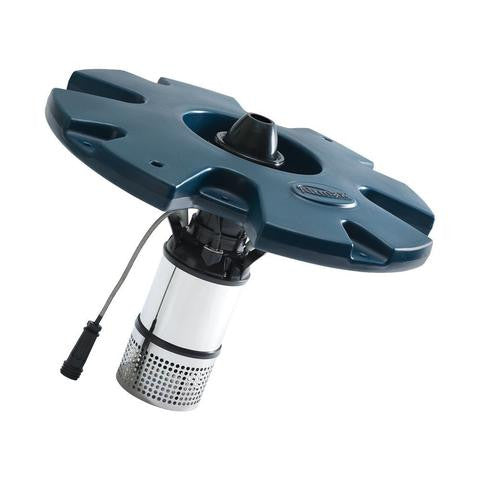
Pond fountains provide circulation and aeration while also adding an attractive display. They can be an excellent choice for residential, commercial, municipal, resort, and other ponds where appearance is an important part of the project.
The mistake is expecting one type of equipment to perform exactly like another.
A decorative fountain and a bottom-diffused system move water differently. Neither is automatically "better." The right choice depends on the pond and what you're trying to accomplish.
In some situations, using more than one type of aeration can make sense.
6. Starting Bottom Aeration Too Quickly in a Stratified Pond
This is one of the most important mistakes to avoid.
A deep pond that hasn't been circulating during warm weather may develop distinct layers.
The warmer upper water generally contains more oxygen, while deeper water may become oxygen depleted. Organic material decomposing near the bottom can make those deeper conditions even worse.
If a powerful bottom-diffused system is suddenly started and allowed to run continuously, it can rapidly mix that poor-quality bottom water throughout the pond.
In a pond containing fish, that's something we want to avoid.
When starting bottom aeration in an established, strongly stratified pond, we generally recommend a gradual startup schedule. Run the system for a short period initially and increase the operating time over several days.
The exact startup schedule should depend on the pond, season, depth, fish population, and severity of stratification.
If fish are already showing signs of oxygen stress, the situation should be treated differently. Immediate surface aeration may be needed to provide an oxygenated refuge while the underlying problem is addressed.
7. Forgetting About Airline Size and Distance
The compressor may be hundreds of feet from the pond.
That's usually not a problem—if the airline is sized correctly.
Air moving through tubing encounters friction. The longer the airline and the greater the airflow, the more important tubing diameter becomes.
Trying to push substantial airflow through a very small airline over a long distance can waste pressure before the air ever reaches the diffuser.
This is particularly important with remote installations.
One advantage of diffused aeration is that the compressor doesn't necessarily have to sit at the water's edge. In some situations, we can locate the compressor near an electrical source and run airline a considerable distance to the pond.
But long runs need to be designed correctly.
Saving a few dollars by using undersized tubing can compromise the performance of an otherwise excellent aeration system.
8. Ignoring Diffuser and Compressor Maintenance
Aeration systems are relatively simple, but they aren't maintenance-free.
Air filters become dirty. Compressor components wear. Diffuser membranes can accumulate mineral deposits or biological growth. Airlines can develop leaks.
One of the most useful things a pond owner can do is simply become familiar with how the system normally operates.
Pay attention to:
-
The bubble pattern at each diffuser
-
Compressor sound
-
Operating pressure, if the system has a gauge
-
Airflow differences between diffuser stations
-
Compressor temperature
-
Condition of the intake filter
A gradual increase in operating pressure can indicate increasing resistance somewhere in the system. Reduced airflow at one diffuser may indicate a restriction, damaged airline, or diffuser problem.
Catching these changes early is much easier than discovering the problem after the compressor fails.
Follow the maintenance recommendations for the particular compressor and diffuser system rather than relying on a universal replacement schedule.
9. Expecting Aeration to Solve Every Algae Problem
Aeration can be extremely helpful for pond health, but it isn't a magic algae-control device.
Excessive algae is usually connected to nutrients entering or recycling within the pond.
Those nutrients can come from:
-
Fertilizer runoff
-
Livestock or waterfowl
-
Fish waste
-
Leaves and grass clippings
-
Decaying aquatic vegetation
-
Nutrient-rich sediment
-
Runoff from the surrounding watershed
Aeration can improve circulation, support aerobic decomposition, and improve conditions near the pond bottom. In some ponds, those changes can help reduce conditions that favor excessive algae.
But aeration doesn't make incoming nutrients disappear.
If a pond continually receives excessive phosphorus and nitrogen from its watershed, installing an aerator doesn't eliminate the source of the problem.
The best pond-management programs address both water circulation and nutrient inputs.
10. Thinking Bubble Size Is the Whole Story
Fine bubbles are useful because they provide a large amount of surface area relative to the volume of air being released.
But bubble size isn't the only thing that matters.
For most recreational ponds, one of the major benefits of bottom-diffused aeration comes from the water movement created by the rising bubble plume.
The bubbles rise.
Water is carried upward with them.
Additional water is pulled into the plume.
Water reaching the surface spreads outward and eventually circulates back downward.
That circulation is what allows a relatively small compressor to influence a surprisingly large volume of pond water.
So when comparing diffusers, don't evaluate them simply by asking which one makes the smallest bubbles.
We also need to consider airflow, diffuser area, operating depth, backpressure, durability, and—most importantly—how effectively the system moves water.
11. Installing Aeration and Never Looking at It Again
A pond changes throughout the year.
Water temperature changes. Rainfall changes. Plant growth changes. Organic material accumulates. Fish populations grow. Diffusers age.
An aeration system that was properly installed five years ago may still be working perfectly—but it's worth checking.
Walk around the pond periodically and look at the diffuser boils.
Has one become noticeably weaker?
Is the pond developing stagnant areas that weren't present before?
Has the fish population increased substantially?
Has the pond accumulated considerably more muck?
These observations don't necessarily mean the aeration system needs to be replaced. Sometimes a diffuser needs cleaning, a compressor needs servicing, or the layout needs to be adjusted.
Good aeration is something we manage, not something we simply install and forget.
The Biggest Pond Aeration Mistake: Buying Before Understanding the Pond
Most aeration mistakes can be prevented before the equipment is purchased.
Know the pond's approximate acreage.
Measure its depth.
Consider its shape.
Think about what you're trying to accomplish.
A pond being aerated primarily to protect a valuable fishery may require a different approach than a shallow decorative pond where appearance is the main priority.
Likewise, a 15-foot-deep one-acre pond shouldn't automatically receive the same system as a one-acre pond averaging only 4 feet deep.
That's why we don't believe pond aeration should be reduced to:
"One acre = this aerator."
Those recommendations can be useful starting points, but good system design goes further.
The best pond aeration system is the one that puts the right amount of air in the right locations to create effective water movement for that particular pond.
Get those fundamentals right, and aeration can be one of the most reliable long-term tools available for maintaining a healthier pond.