Why Aeration Helps Reduce Pond Smells
That 'rotten egg' smell isn't just mud—it's toxic gas trapped by stagnant water. Smelly ponds are a sign of 'Anoxia.' Aeration breaks the surface tension and lets the toxins out while bringing the life in.
In any body of stagnant water, a predictable chemical progression occurs. Organic matter, such as dead algae, leaf litter, and fish waste, sinks to the benthos. Without active circulation, the oxygen in the lower water column is rapidly consumed by aerobic bacteria during decomposition. Once the dissolved oxygen (DO) falls below 2.0 mg/L, the environment becomes hypoxic. When it reaches 0 mg/L, it is anoxic.
In these anoxic zones, specialized microorganisms known as sulfate-reducing bacteria (SRB) begin their metabolic processes. These bacteria utilize sulfate as an electron acceptor in place of oxygen, producing hydrogen sulfide (H2S) as a metabolic byproduct. This gas is highly soluble in water but remains trapped at the bottom due to thermal stratification. When the water column is eventually disturbed, or when the gas concentration reaches a saturation point, the H2S is released into the atmosphere, creating the characteristic malodor and posing a significant toxicity risk to aquatic life.
Why Aeration Helps Reduce Pond Smells
Aeration serves as the primary mechanical intervention to disrupt the biochemical conditions that lead to malodors. The presence of a "rotten egg" odor is a diagnostic indicator of a failed aerobic cycle. To understand why aeration is the solution, one must examine the relationship between gas solubility, bacterial metabolism, and the physical properties of the water column.
The odor itself is primarily composed of hydrogen sulfide, but it can also include methane (CH4) and ammonia (NH3). These gases are products of anaerobic decomposition—the breakdown of organic matter by bacteria that thrive in the absence of oxygen. In a stagnant pond, the water often separates into layers based on temperature, a process called thermal stratification. The top layer (epilimnion) is warmed by the sun and stays oxygenated through surface contact. The bottom layer (hypolimnion) remains cold, dense, and isolated from the atmosphere.
Aeration helps reduce these smells through three distinct mechanisms:
First, it facilitates **gas stripping**. As air is pumped to the bottom of the pond and released through diffusers, the resulting bubbles rise through the water column. This process creates a massive increase in the air-water interface area. According to Henry's Law, the solubility of a gas in a liquid is proportional to its partial pressure. By introducing air bubbles, the partial pressure of H2S within the bubble is initially zero, allowing the dissolved H2S in the water to diffuse into the bubble and be carried to the surface for atmospheric release.
Second, aeration promotes **chemical oxidation**. When dissolved oxygen is introduced into the anoxic zones, it reacts directly with hydrogen sulfide. This chemical reaction converts the toxic gas into elemental sulfur (which is an odorless solid) or sulfate (which is an odorless dissolved ion). Oxygen acts as a chemical "scrubber" that neutralizes the odor-causing compounds before they can reach the surface.
Third, it shifts the **microbial population**. Aerobic decomposition is significantly more efficient than anaerobic decomposition. By maintaining DO levels above 2.0 mg/L at the sediment interface, aeration encourages the growth of aerobic bacteria. these organisms break down muck and organic debris much faster than their anaerobic counterparts and do not produce odorous gases as waste. Instead, their primary byproducts are carbon dioxide and water, both of which are odorless and benign in typical pond concentrations.
The Mechanics of Gas Transfer and Destratification
The efficacy of an aeration system is measured by its ability to move water and transfer oxygen. This is not merely a matter of "blowing bubbles" into a pond; it is an engineering challenge involving fluid dynamics and mass transfer.
The Role of Diffused Aeration
Diffused aeration systems are generally considered the gold standard for odor control in ponds deeper than six feet. These systems consist of an onshore compressor, weighted tubing, and a diffuser placed at the deepest point of the pond. The compressor pushes atmospheric air through the tubing to the diffuser, which breaks the air into millions of tiny bubbles.
As these bubbles rise, they perform two functions: oxygenation and circulation. Oxygenation occurs across the surface of the bubble. Fine-bubble diffusers are more efficient than coarse-bubble diffusers because they create a higher total surface area for a given volume of air. For every meter of depth, a fine-bubble system can achieve a Standard Oxygen Transfer Efficiency (SOTE) of approximately 6.9%.
Destratification and Vertical Mixing
Circulation is perhaps more important for odor control than direct oxygenation. As the bubbles rise, they drag cold, anoxic water from the bottom toward the surface. This is known as "airlift pumping." Once this bottom water reaches the surface, it comes into direct contact with the atmosphere, allowing H2S to escape and O2 to be absorbed.
This vertical mixing eliminates the thermocline—the sharp temperature boundary that keeps the stagnant bottom water isolated. By equalizing the temperature and oxygen levels throughout the entire water column, the system prevents the formation of the "sulfur trap" at the bottom.
Benefits of Active Pond Aeration
Implementing a high-efficiency aeration system provides measurable improvements to the aquatic ecosystem and the surrounding environment. These benefits extend beyond simple odor mitigation.
* Reduction of Organic Silt (Muck): Aerobic bacteria are up to 20 times more efficient at decomposing organic matter than anaerobic bacteria. Continuous aeration can reduce the depth of the "muck" layer by several inches per year by facilitating rapid mineralization.
* Protection of Fish Populations: Hydrogen sulfide is toxic to fish at concentrations as low as 0.002 mg/L. By stripping H2S and maintaining high DO levels, aeration prevents "summer kills" and "winter kills" caused by gas toxicity and oxygen depletion.
* Phosphorus Sequestration: In anoxic conditions, phosphorus is released from bottom sediments into the water column, where it fuels algae blooms. Aeration keeps the sediment-water interface oxygenated, which allows iron to bind with phosphorus, sequestering it in the mud and limiting algal growth.
* Improved Water Clarity: By reducing the nutrient load (nitrogen and phosphorus) through enhanced bacterial activity and sequestration, aeration indirectly limits the growth of suspended solids and planktonic algae.
Challenges and Common Pitfalls
Designing and operating an aeration system requires technical precision. Errors in sizing or timing can lead to sub-optimal results or even catastrophic ecological failure.
The Turnover Trap
The most dangerous mistake a pond owner can make is turning on a powerful aeration system in the middle of a hot summer in a pond that has been stagnant for months. If the pond is heavily stratified, the bottom layer is likely a concentrated "soup" of hydrogen sulfide and zero-oxygen water.
Rapidly mixing this layer into the top layer can cause a "turnover" event. The sudden influx of H2S and the immediate consumption of available oxygen by the rising anaerobic gasses (high Biochemical Oxygen Demand) can drop the DO levels to zero across the entire pond in minutes. This often results in a total fish kill. In such cases, a "slow start" procedure is mandatory, where the system is run for only 15–30 minutes on the first day, gradually increasing the runtime over two weeks to slowly vent the toxins.
Undersizing the Compressor
Inadequate airflow is a frequent cause of persistent odors. A common baseline for pond aeration is 1.0 to 1.5 Cubic Feet per Minute (CFM) per surface acre. However, this figure assumes a relatively clean pond. For ponds with heavy muck accumulation or high nutrient loading, requirements can exceed 2.5 CFM per acre. If the compressor cannot move the entire volume of the hypolimnion at least once every 24 hours, stratification will persist, and odors will remain.
Limitations of Aeration
Aeration is a powerful tool, but it is not a panacea for all pond issues. Understanding its limits is crucial for realistic management.
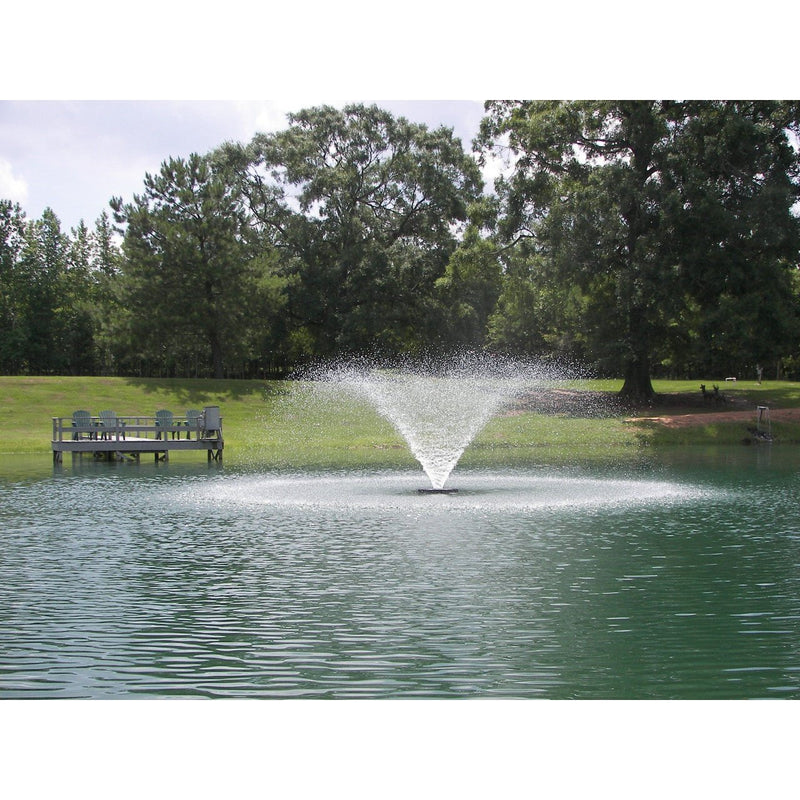
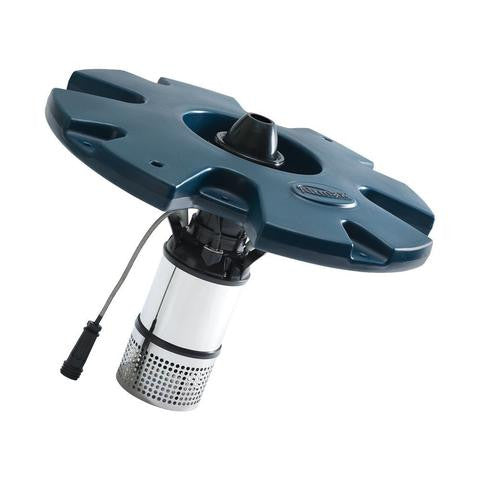
In very shallow ponds (less than 3 or 4 feet deep), diffused aeration is remarkably inefficient. The bubbles do not have enough "residence time" in the water column to transfer significant oxygen or create a strong vertical current. In these environments, mechanical surface aerators or fountains are often more effective at breaking surface tension and facilitating gas exchange.
Additionally, aeration cannot compensate for extreme external nutrient loading. If a pond is receiving constant runoff from fertilized lawns, agricultural fields, or failing septic systems, the "Oxygen Demand" will eventually exceed the "Oxygen Supply" of any reasonably sized mechanical system. In these scenarios, source control is the only long-term solution.
Static: The Sulfur Trap vs. Dynamic: The Fresh Flow
It is helpful to visualize the pond as a chemical reactor. In a **Static System** (The Sulfur Trap), the pond acts as a closed vessel where waste accumulates and decomposes in a low-energy state. This leads to a build-up of potential energy in the form of toxic gases.
In a **Dynamic System** (The Fresh Flow), aeration adds kinetic energy to the water. This energy facilitates a continuous exchange of matter (gasses) with the atmosphere. The following table compares the two states:
| Metric | Static (Stagnant) | Dynamic (Aerated) |
|---|---|---|
| Dissolved Oxygen (Bottom) | 0.0 - 1.0 mg/L | 4.0 - 8.0 mg/L |
| Dominant Bacterial Type | Anaerobic (SRB) | Aerobic |
| Waste Byproducts | H2S, Methane, Ammonia | CO2, H2O, Sulfates |
| Muck Decomposition Rate | Negligible | High (Mineralization) |
| Redox Potential | Negative (Reducing) | Positive (Oxidizing) |
Practical Tips for Optimizing Aeration
To maximize the efficiency of an aeration system and eliminate pond smells effectively, practitioners should follow these best practices:
* Position Diffusers at the Deepest Point: The deeper the diffuser, the more water it can move. A diffuser at 10 feet will create a much wider "cone" of circulation than one at 5 feet.
* Monitor Backpressure: Use a pressure gauge on your compressor. If the PSI rises above the manufacturer's recommended range, your diffusers may be fouled with biofilm or calcium deposits. Clean diffusers annually to maintain airflow.
* Run the System 24/7: While it is tempting to run aeration only during the day to save electricity, oxygen levels actually drop to their lowest point at night when photosynthesis stops. For odor control, continuous operation is essential to prevent the reformation of anaerobic zones.
* Calculate CFM at Depth: Be aware that a compressor's CFM rating drops as depth increases. A pump rated for 4.0 CFM at the surface may only deliver 2.5 CFM at 12 feet due to the weight of the water column. Always size based on your specific depth.
Advanced Considerations: The Chemistry of H2S and pH
For serious practitioners, understanding the chemistry of hydrogen sulfide is vital. H2S exists in water in a pH-dependent equilibrium with the hydrosulfide ion (HS-). At a pH of 7.0, approximately 50% of the sulfide is in the gaseous H2S form (the smelly and toxic part), and 50% is in the HS- form.
If the pond water is acidic (pH < 6.0), nearly 100% of the sulfide exists as H2S gas, making the smell much more intense and the water more toxic. Aeration helps here as well, as stripping CO2 from the water often causes a slight rise in pH, which shifts the chemical equilibrium away from the toxic gas and toward the less harmful dissolved ions.
Example Scenario: The 1-Acre Retention Pond
Consider a 1-acre retention pond with an average depth of 8 feet and a significant history of "rotten egg" odors every August. The pond has approximately 2,600,000 gallons of water.
To fix the odor, a professional installer chooses a 1/2 HP rocking piston compressor capable of delivering 4.5 CFM at 8 feet of depth. Two dual-disc diffusers are placed in the deepest basins.
Within the first 48 hours of operation (following a cautious "slow-start" ramp-up), the system begins moving approximately 2,500 gallons of water per minute from the bottom to the surface. Over the course of 24 hours, the entire volume of the pond is circulated 1.4 times. The H2S that had accumulated over the spring is stripped into the atmosphere in small, manageable amounts. Within 10 days, the redox potential at the bottom shifts from -200 mV to +400 mV, and the odor is completely eliminated as aerobic bacteria take over the decomposition of the benthic muck.
Final Thoughts
Pond odors are not a permanent condition, but a symptom of a stalled nitrogen and sulfur cycle. When the bottom of a pond becomes anoxic, it ceases to function as a living ecosystem and begins to function as a septic tank. Aeration is the mechanical intervention required to reset this balance.
By understanding the physics of gas stripping and the biology of aerobic decomposition, pond managers can transform a stagnant, smelly hazard into a healthy, clear, and oxygenated environment. The investment in high-quality compressors and fine-bubble diffusers pays dividends in reduced muck, healthier fish, and the complete removal of toxic gases.
Success in pond management is achieved through consistency. Maintaining a dynamic, aerated state ensures that the "sulfur trap" never has the opportunity to form, keeping the water fresh and the ecosystem resilient against the stresses of heat and organic loading.