

Pond Turnover Explained In Simple Terms
When your pond's hidden layers collide, the results can be deadly. Pond turnover isn't just a science term; it’s a critical seasonal event that can shock your ecosystem. Here is how to spot it before it happens.
Understanding the mechanics of water density and thermal stratification is essential for any land manager or aquatic specialist. This process dictates the distribution of dissolved oxygen and nutrients, which directly impacts the survival of aerobic organisms. Without active intervention, a pond remains subject to the volatile shifts between Stagnant Strata and Dynamic Circulation, often with catastrophic consequences for fish populations.
Pond Turnover Explained In Simple Terms
Pond turnover is the vertical mixing of water layers that have been separated by temperature and density. During most of the year, deep ponds do not maintain a uniform temperature from surface to bottom. Instead, they form distinct thermal layers in a process called stratification. The upper layer, known as the epilimnion, is warmed by solar radiation and remains oxygenated through atmospheric diffusion and photosynthesis.
Beneath the epilimnion lies the thermocline or metalimnion, a transitional zone where temperature drops rapidly with depth. The bottom layer, the hypolimnion, remains cold and isolated. Because this bottom layer is cut off from the atmosphere and sunlight, it becomes anoxic, meaning it lacks dissolved oxygen. Turnover occurs when the temperature of the surface water matches the temperature of the bottom water, causing the density to equalize. At this point, even a slight wind can cause the entire water column to mix, bringing the oxygen-depleted, toxin-heavy bottom water to the surface.
How It Works: The Physics of Density and Stratification
The primary driver of pond turnover is the unique physical property of water density. Unlike most substances, water reaches its maximum density at 3.98°C (approximately 40°F). As water cools toward this point, it becomes heavier and sinks. As it cools below this point toward freezing (0°C), it becomes less dense and floats.
In the summer, the sun heats the epilimnion, making it less dense than the cooler hypolimnion. This density difference acts as a physical barrier, preventing the layers from mixing. During this period, organic matter like dead algae, fish waste, and leaf litter settles into the hypolimnion. Anaerobic bacteria decompose this material, consuming any remaining oxygen and releasing metabolic byproducts such as hydrogen sulfide (H2S), methane (CH4), and ammonia (NH3).
When autumn arrives, air temperatures drop and cool the epilimnion. As the surface water approaches the temperature of the hypolimnion, the density barrier weakens. Once the layers reach a uniform temperature—typically around 10°C to 15°C depending on the specific pond profile—the stratification breaks. Wind energy then facilitates a complete vertical circulation. This event is the "Fall Turnover." A similar process occurs in the spring after ice melt, as surface waters warm to match the deep water, known as "Spring Turnover."
Benefits of Controlled Circulation
While natural turnover can be dangerous, controlled circulation and destratification offer significant advantages for pond health. Maintaining a state of continuous mixing prevents the formation of a toxic hypolimnion.
Continuous circulation ensures that dissolved oxygen is distributed throughout the entire volume of the pond. This expands the habitable zone for fish and beneficial aerobic bacteria. When oxygen is present at the pond floor, aerobic bacteria can efficiently decompose organic "muck." This reduces the accumulation of sediment and prevents the buildup of noxious gases.
Furthermore, regular mixing disrupts the lifecycle of certain cyanobacteria (blue-green algae), which often thrive in stable, stratified environments. By moving these organisms through different light intensities and temperatures, managers can reduce the frequency and severity of harmful algal blooms.
Challenges and Common Mistakes
The most significant risk associated with pond turnover is a sudden fish kill. When a pond turns over rapidly—often triggered by a cold autumn storm or a heavy summer rain—the anoxic water from the bottom mixes with the oxygenated water at the top. The resulting average dissolved oxygen (DO) level across the pond can fall below the critical threshold for fish survival, which is typically 3.0 mg/L for most warm-water species.
A common mistake is the improper startup of an aeration system in a stratified pond. If a high-powered bottom diffuser is turned on for the first time in mid-summer, it can force an artificial turnover. This immediately brings toxic gases and low-oxygen water to the surface, killing fish within hours.
Another error involves undersizing the aeration equipment. If the system cannot move the entire volume of the pond at least once every 24 to 48 hours, it may only partially destratify the water. This can create "dead zones" where organic matter continues to accumulate, leading to localized oxygen depletion.
Limitations of Natural Turnover Mitigation
Pond turnover is highly dependent on pond geometry and environmental factors. Shallow ponds, typically those less than 6 to 8 feet deep, may not stratify strongly because wind action can reach the bottom. These ponds are less likely to experience a catastrophic turnover but are more susceptible to rapid temperature fluctuations and summer fish kills due to high water temperatures.
Conversely, very deep ponds (over 20 feet) or those protected from the wind by dense forest or steep topography are prone to extreme stratification. In these cases, natural turnover may not occur completely, leading to a permanent "dead zone" at the bottom. Environmental limitations also include the Biological Oxygen Demand (BOD) and Sediment Oxygen Demand (SOD). If the load of organic waste is too high, even a perfectly timed turnover might not provide enough oxygen to counteract the demand of the decaying matter.
Aeration Systems Comparison: Surface vs. Diffused
When selecting a system to manage turnover, the choice between surface aeration and diffused aeration depends on the depth and goals of the project.
| Feature | Surface Aeration | Diffused Aeration |
|---|---|---|
| Optimal Depth | 0 to 6 feet | 8+ feet |
| Oxygen Transfer Rate | High at the surface | High throughout the column |
| Mixing Efficiency | Localized | Total volume circulation |
| Maintenance | Higher (moving parts in water) | Lower (compressor on land) |
| Aesthetics | Visual spray/fountain | Subtle bubbles at surface |
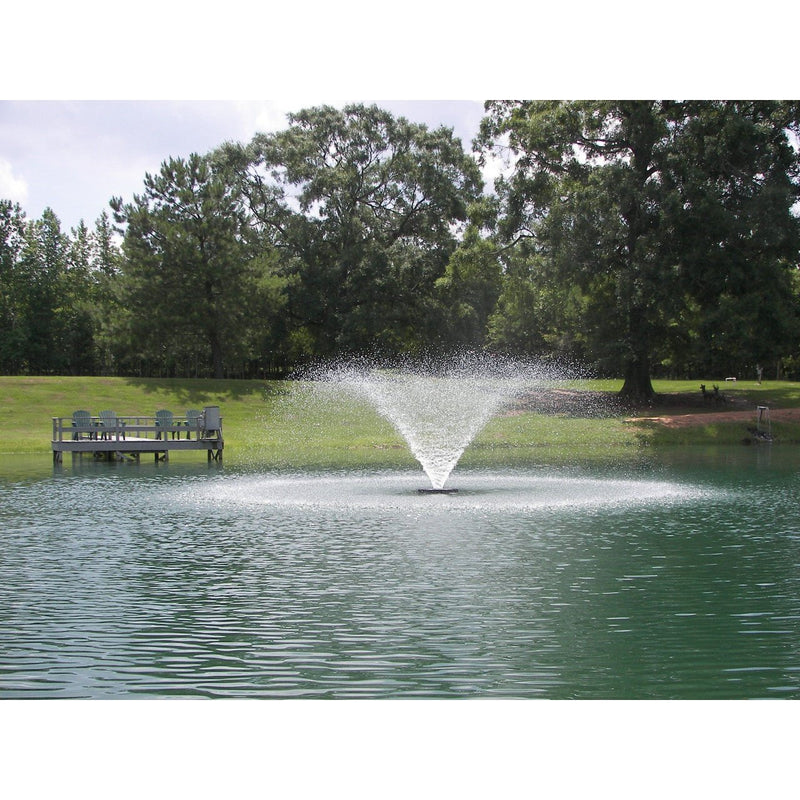
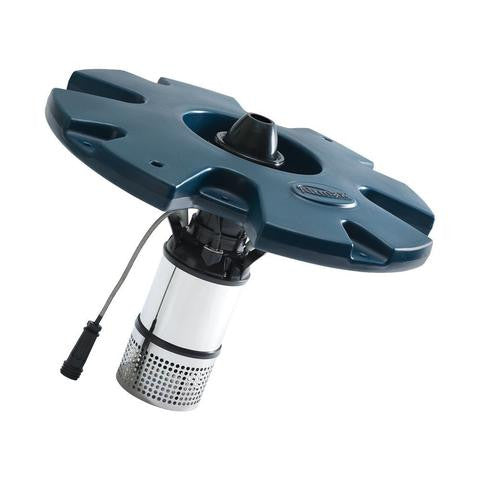
Surface aerators are effective for shallow ponds and emergency situations where rapid oxygen infusion at the surface is required. However, they do little to circulate the deep water in stratified ponds. Diffused aeration systems use a land-based compressor to pump air to diffusers on the pond floor. The rising bubbles create a "laminar flow" that pulls the cold, dense water to the surface for atmospheric gas exchange.
Practical Tips for Managing Turnover
Effective management requires a proactive approach to monitoring and equipment operation. Implementing these best practices can mitigate the risks of seasonal turnover.
- Monitor Temperature Profiles: Use a thermistor to measure water temperature at 2-foot increments. If the temperature difference between the surface and the bottom exceeds 3°C, the pond is stratified.
- Gradual Aeration Startup: When installing a new system in a stratified pond, run the compressor for only 15 minutes the first day, 30 minutes the second, and double the time each day until it runs 24/7. This prevents a sudden, lethal turnover.
- Install a Dissolved Oxygen (DO) Meter: Regular testing, especially in the early morning hours when DO is at its lowest, provides an early warning of impending crises.
- Reduce Nutrient Loading: Limit the amount of fertilizer, grass clippings, and leaves entering the pond. Less organic matter results in a lower Sediment Oxygen Demand.
Advanced Considerations: Calculating Turnover Rates
Serious practitioners must calculate the turnover rate to ensure the aeration system is sufficient. The goal is typically to move the entire volume of the pond (Total Gallons) through the aeration cycle 1 to 2 times every 24 hours.
To calculate the volume of a pond, use the following formula:
Volume (Gallons) = Surface Acres × Average Depth × 325,851.
Once the volume is known, the capacity of the diffuser system must be matched. Diffusers are rated by their "lifting rate," which is the amount of water they move from the bottom to the surface per minute. This rate is affected by the depth of the diffuser; deeper placement increases the volume of water entrained by the rising bubble column. For example, a single diffuser at a depth of 10 feet might move 2,000 gallons per minute (GPM), while the same diffuser at 15 feet could move 3,500 GPM due to the longer contact time and larger bubble plume.
Scenario Analysis: A Standard 1-Acre Pond
Consider a 1-acre pond with an average depth of 8 feet and a maximum depth of 15 feet located in a temperate climate. During a hot July, the surface water reaches 28°C while the bottom remains at 14°C. The pond is heavily stratified.
An unmanaged pond in this scenario is at high risk. A sudden cold front drops 2 inches of rain at 15°C. This cold rain is denser than the warm surface water and sinks rapidly, displacing the anoxic hypolimnion. Within 4 hours, the pond turns over. The hydrogen sulfide from the bottom is released, creating a "rotten egg" smell. The dissolved oxygen drops from 8.0 mg/L at the surface to a pond-wide average of 1.5 mg/L. Within 12 hours, the manager finds a total kill of the largemouth bass and bluegill population.
Conversely, if this same pond had a properly sized 1/2 HP diffused aeration system installed in the spring, the water would have been kept in constant circulation. The temperature would have remained a uniform 22°C from top to bottom throughout the summer. When the cold front arrived, there would have been no anoxic layer to "turn over," and the oxygen levels would have remained stable, protecting the ecosystem.
Final Thoughts
Pond turnover is a deterministic physical process governed by the laws of thermodynamics. While it is a natural occurrence, the intensification of organic loads in modern ponds often turns this event into a biological disaster. Managing the transition from Stagnant Strata to Dynamic Circulation is not a matter of aesthetic preference but a requirement for maintaining a viable aquatic environment.
By monitoring the thermal profile and implementing appropriately sized aeration technology, managers can eliminate the risks associated with stratification. Understanding the calculations of oxygen demand and volume turnover allows for a scientific approach to pond health that moves beyond guesswork.
The key takeaway is that prevention is significantly more cost-effective than remediation. Once a turnover begins and fish mortality starts, there are very few emergency actions that can counteract the massive oxygen debt of the bottom sediments. Consistent, year-round management is the only reliable method to ensure that your pond's hidden layers do not become a deadly liability.