What Hydrogen Sulfide Gas Does To Ponds And How Aeration Helps
That rotten egg smell is a warning sign of a dying pond. Hydrogen sulfide is a silent killer in stagnant ponds. Aeration turns a 'Dead Zone' of toxic muck into a 'Living' ecosystem by stripping out gases and fueling aerobic bacteria. Breathe life back into your water.
Aquatic health depends on a delicate balance of dissolved gases and microbial activity. When a pond loses its oxygen supply, the biological processes shift from aerobic respiration to anaerobic fermentation. This transition creates a hostile environment where toxic gases accumulate, primarily hydrogen sulfide (H2S).
Understanding the mechanical and chemical mechanisms behind gas accumulation is essential for any pond manager. Strategic aeration provides a physical and chemical remedy to these "Dead Zones." Mechanical intervention restores the water column's integrity by facilitating gas exchange and promoting oxidative reactions that neutralize toxins.
What Hydrogen Sulfide Gas Does To Ponds And How Aeration Helps
Hydrogen sulfide is a colorless, highly toxic gas produced during the anaerobic decomposition of organic matter. It originates in the benthic zone—the very bottom of the pond—where oxygen is absent. Sulfate-reducing bacteria, such as those in the Desulfovibrio genus, utilize sulfate as an electron acceptor in place of oxygen, releasing H2S as a metabolic byproduct.
This gas represents a significant physiological threat to aquatic life. At a molecular level, hydrogen sulfide interferes with cytochrome c oxidase, an enzyme critical for mitochondrial respiration. This effectively prevents fish and other organisms from utilizing oxygen, even if dissolved oxygen levels in the upper water column appear adequate. Toxicity occurs at remarkably low concentrations; levels as low as 0.002 mg/L can cause chronic stress, while concentrations exceeding 0.1 mg/L are often lethal to sensitive species like trout and koi.
Aeration addresses this threat through two primary mechanisms: physical stripping and chemical oxidation. Physical stripping occurs when air bubbles rise through the water column, creating turbulence that allows dissolved gases to escape into the atmosphere. Chemical oxidation occurs as the increased dissolved oxygen (DO) levels react with H2S to form non-toxic sulfate (SO4). Without mechanical aeration, these gases remain trapped in the hypolimnion—the cold, bottom layer of a stratified pond—creating a ticking biological time bomb.
The Chemistry of Sulfur Reduction and Gas Stripping
The formation of hydrogen sulfide is a predictable result of a low redox potential. In a healthy "Living Breath" ecosystem, the oxidation-reduction potential (ORP) remains positive, ensuring that aerobic bacteria dominate. When the ORP drops below -150 mV, sulfate reduction begins. This process is most aggressive in ponds with high organic loads, such as those with significant leaf litter or fish waste accumulation.
Water chemistry dictates the toxicity and volatility of the sulfide present. Hydrogen sulfide exists in a pH-dependent equilibrium between H2S (gas), HS- (bisulfide ion), and S2- (sulfide ion). At a pH below 7.0, the majority of the sulfide exists as toxic H2S gas. As the pH rises above 7.0, the equilibrium shifts toward the non-toxic bisulfide ion. Aeration indirectly influences this balance by stripping out carbon dioxide (CO2), which naturally raises the pH and reduces the immediate toxicity of the remaining dissolved sulfides.
Mechanical aeration systems utilize the principles of Henry's Law to remove these gases. Henry's Law states that the amount of dissolved gas in a liquid is proportional to its partial pressure above the liquid. By constantly introducing fresh air (low in H2S) into the water via bubbles, the system forces the dissolved H2S to move from the liquid phase to the gas phase within the bubble, where it is then carried to the surface and released.
Benefits of Mechanical Aeration in Toxic Environments
Implementing a high-efficiency aeration system provides measurable improvements to the pond's internal chemistry. The most immediate benefit is the elimination of thermal stratification. By breaking the thermocline, the aerator ensures that oxygen-rich surface water reaches the bottom, effectively "turning off" the sulfate-reducing bacteria responsible for H2S production.
Aerobic digestion of organic muck is another critical advantage. Aerobic bacteria are approximately 20 times more efficient at breaking down organic matter than their anaerobic counterparts. The introduction of oxygen allows these bacteria to consume the "sludge" layer at the bottom, reducing the fuel source for toxic gas production. This process is often referred to as "biological dredging."
Stabilizing the ecosystem also prevents sudden fish kills during seasonal turnover. In non-aerated ponds, the "Dead Zone" of toxic gas and zero oxygen can mix suddenly with the rest of the pond during heavy rains or temperature shifts. This event, known as pond turnover, can deplete oxygen across the entire water column in minutes. A consistent aeration system keeps the water mixed year-round, eliminating the risk of a catastrophic turnover event.
Challenges and Common Mistakes in Aeration Design
Undersizing the compressor is the most frequent error in pond management. Many users choose a system based solely on surface acreage without considering the average depth or the biological oxygen demand (BOD). A pond with a high nutrient load requires significantly more airflow to overcome the constant consumption of oxygen by decomposing organic matter.
Improper diffuser placement can lead to "dead spots" where toxic gases continue to accumulate. Placing a diffuser too shallow prevents it from circulating the bottom-most layer of water, leaving the most dangerous H2S-producing zones untouched. Conversely, placing a diffuser directly in the deepest silt without a base stand can cause the system to stir up excessive sediment, temporarily increasing turbidity and nutrient release.
Ignoring the "startup shock" is a dangerous oversight when treating a pond that is already heavily stratified. If an aeration system is turned on for 24 hours a day in a pond with high H2S levels, it may bring too much toxic gas to the surface too quickly. This rapid mixing can overwhelm the fish. A staged startup—running the system for 30 minutes the first day, 1 hour the second, and doubling it daily—is the standard protocol for safely transitioning a dead pond back to a living state.
Limitations of Aeration Systems
Aeration is not a universal cure for ponds with extreme external nutrient loading. If a pond receives constant runoff from agricultural fertilizers or faulty septic systems, mechanical aeration may only manage the symptoms rather than the cause. In such cases, the system must work much harder, leading to higher electricity costs and increased wear on components.
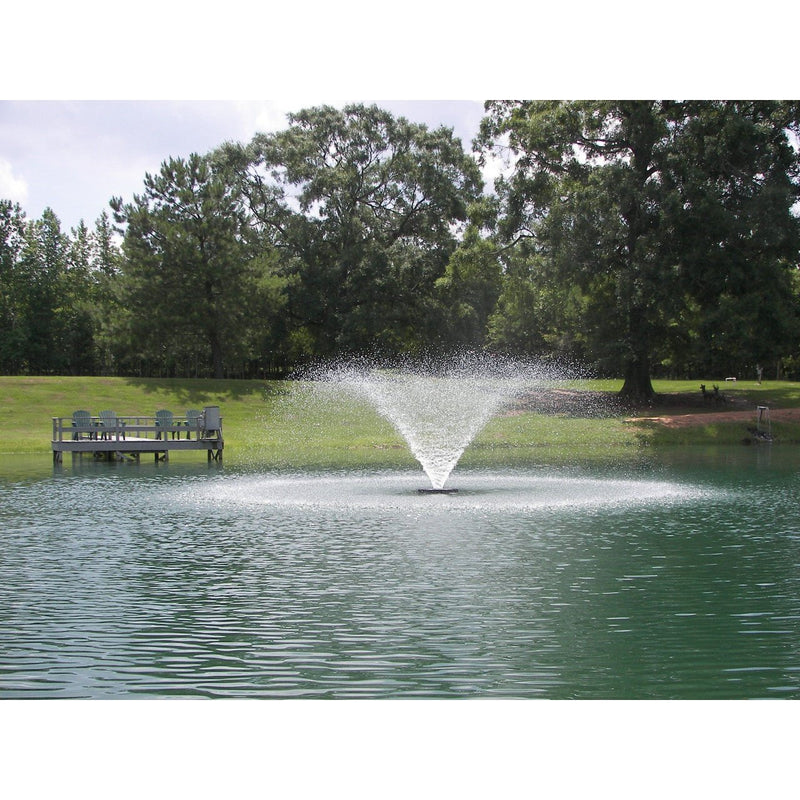
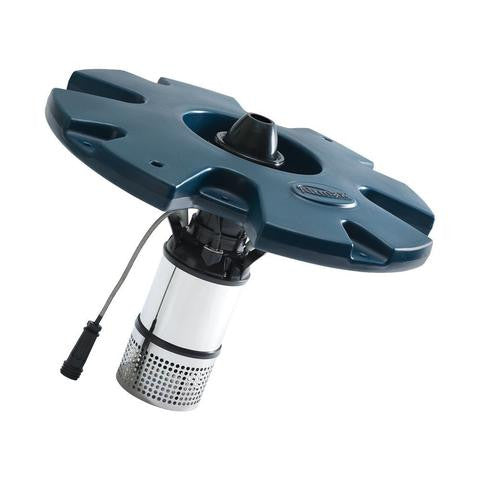
Very shallow ponds (under 4 feet) present a physical limitation for diffused aeration. The "rising column" of bubbles needs depth to create the necessary "lift" to move large volumes of water. In shallow environments, the oxygen transfer efficiency (OTE) is low because the bubbles reach the surface too quickly. For these ponds, surface aerators or fountains may be more effective than subsurface diffusers.
Extreme water temperatures also affect the efficiency of the process. Cold water holds more dissolved oxygen than warm water, but biological activity slows down. In contrast, warm summer water has a lower saturation point for oxygen while fish and bacteria have a much higher demand. This creates a "summer squeeze" where the aerator must operate at peak efficiency to maintain safe levels.
Surface Aerators vs. Subsurface Diffused Systems
Choosing the correct hardware depends on pond geometry and the specific goal of the treatment. The following table compares the two primary mechanical approaches:
| Feature | Surface Aerator (Fountain) | Subsurface Diffused Aeration |
|---|---|---|
| Primary Mechanism | Surface splashing and gas exchange | Bottom-up circulation via bubble lift |
| H2S Removal | Effective for surface gases; poor at depth | Highly effective; strips gas from the source |
| Efficiency (Operating Cost) | Higher (high HP required) | Lower (low CFM per acre-foot) |
| Ideal Depth | 0 - 6 feet | 6 - 40+ feet |
| Maintenance Level | Moderate (motor in water) | Low (compressor on shore) |
Practical Tips for Optimizing Aeration Efficiency
Calculating the required airflow (CFM) is the first step in optimization. The industry standard for diffused aeration is approximately 1.5 CFM per acre-foot of water. This ensures that the entire volume of the pond is turned over at least twice every 24 hours. Failure to meet this turnover rate allows anaerobic pockets to persist.
Monitoring the Oxidation-Reduction Potential (ORP) provides real-time data on the effectiveness of the system. An ORP reading above +200 mV indicates an oxidizing environment where H2S cannot survive. If the reading drops toward zero or becomes negative, the aeration intensity must be increased or the organic load must be reduced through enzymatic treatments.
Managing backpressure is vital for the longevity of the air compressor. For every 2.31 feet of water depth, the system encounters 1 PSI of backpressure. A diffuser placed at 10 feet deep creates roughly 4.3 PSI of resistance. Using larger-diameter weighted tubing (e.g., 1/2 inch vs. 3/8 inch) reduces friction loss and ensures the compressor delivers its rated CFM at the pond floor.
Advanced Considerations for Large-Scale Pond Management
Serious practitioners should consider the Standard Oxygen Transfer Rate (SOTR) when selecting equipment. This metric defines how many pounds of oxygen the system can transfer per hour under standard conditions. In highly eutrophic ponds with significant H2S issues, calculating the exact oxygen deficit helps in choosing between rocking piston compressors and rotary vane systems.
Diffuser membrane technology also impacts the stripping rate. Fine-bubble diffusers produce bubbles less than 3mm in diameter. These small bubbles have a higher surface-area-to-volume ratio, which maximizes oxygen transfer and creates a more powerful "updraft" for gas stripping. Coarse bubbles are less efficient at transferring oxygen but can be used in specific industrial applications for high-intensity mixing.
Synergistic treatments can enhance the results of mechanical aeration. Introducing specialized aerobic bacteria strains alongside the aerator accelerates the removal of nitrogen and sulfur compounds. This "bio-augmentation" works in tandem with the "Living Breath" of the aeration system to fundamentally change the sediment composition from black anaerobic muck to healthy, oxygenated soil.
Example Scenario: Aerating a 1-Acre Farm Pond
Consider a 1-acre pond with an average depth of 8 feet and a maximum depth of 12 feet. The pond owner notices a strong rotten egg smell during the summer and observed a minor fish kill after a heavy storm. This indicates a significant "Dead Zone" in the hypolimnion.
The total volume is 8 acre-feet. Based on the 1.5 CFM per acre-foot rule, the pond requires a total of 12 CFM. However, for a standard residential or farm pond with moderate fish load, a turnover rate of twice per day is usually sufficient. This can often be achieved with a high-quality 1/2 HP rocking piston compressor delivering approximately 4.5 to 5.0 CFM, distributed through two or three diffuser plates.
Placing three diffusers at the 10-foot depth mark allows the system to circulate approximately 1.5 million gallons of water every few hours. Within 14 days of a staged startup, the H2S levels typically drop below detectable limits as the ORP shifts from -200 mV to +150 mV. The odor disappears because the sulfate-reducing bacteria are outcompeted by the aerobic microbes fueled by the new oxygen supply.
Final Thoughts
Hydrogen sulfide management is a matter of mechanical and chemical discipline. The presence of the "rotten egg" odor is a clear metric of system failure, indicating that anaerobic processes have dominated the benthic zone. Transitioning from a "Dead Zone" to a "Living" ecosystem requires a sustained commitment to oxygenation and circulation.
The technical success of an aeration project depends on precise sizing, appropriate hardware selection, and a staged implementation strategy. By maintaining a positive redox potential and a high turnover rate, pond managers can eliminate the biological risk of H2S while simultaneously improving water clarity and reducing muck accumulation. Constant monitoring and adjustment ensure the pond remains a productive, life-sustaining environment.