

The Most Important Pond Water Test Most Owners Never Run
Clear water can be 'dead' water. Your water looks great, so why are the fish dying? Clarity is not the same as health. This one test reveals the 'breath' of your pond that you cannot see. While aesthetic transparency is often the primary goal for pond owners, it frequently masks a critical failure in the invisible vitals of the ecosystem. Visual clarity suggests the absence of particulate matter but provides zero data regarding the chemical capacity of the water to support aerobic life.
Aquatic environments rely on a delicate balance of dissolved gases. High visual transparency is often achieved through aggressive mechanical filtration or UV sterilization, which effectively removes algae and solids but does not necessarily correlate with gas exchange efficiency. Understanding the distinction between the illusion of clarity and the invisible vitals is the first step in professional pond management.
The following analysis examines the mechanical and chemical parameters of Dissolved Oxygen (DO), the most critical and frequently ignored metric in pond health. Data-driven management requires moving beyond visual inspection and adopting rigorous testing protocols to ensure the biological stability of the system.
The Most Important Pond Water Test Most Owners Never Run
Dissolved Oxygen (DO) represents the volume of oxygen gas ($O_2$) that is dissolved in the water column. It is measured in milligrams per liter (mg/L) or parts per million (ppm), which are functionally equivalent in freshwater contexts. In a pond ecosystem, DO is the primary limiting factor for both fish survival and the efficiency of the nitrogen cycle. Nitrifying bacteria, specifically Nitrosomonas and Nitrobacter, are obligate aerobes; they require significant oxygen to oxidize toxic ammonia into nitrite and subsequently into nitrate.
Low DO levels are a leading cause of unexplained fish mortality in clear ponds. While pond owners regularly monitor ammonia, nitrite, and pH, the DO level is often assumed to be sufficient if the water is clear and the pump is running. However, clear water can hold dangerously low levels of oxygen, particularly in high-temperature environments or systems with high biological oxygen demand (BOD).
The real-world application of DO monitoring is standard in industrial aquaculture and wastewater treatment. In these sectors, oxygen levels are treated as a volatile variable that fluctuates based on temperature, pressure, and organic load. For a pond owner, failing to run this test is equivalent to operating a mechanical system without monitoring its cooling or lubrication levels. The system may appear functional until a critical threshold is crossed, resulting in rapid biological collapse.
How Dissolved Oxygen Mechanics Work
The concentration of oxygen in a pond is governed by the laws of physics, specifically Henry's Law, which states that the amount of dissolved gas in a liquid is proportional to its partial pressure in the gas phase. In practical terms, oxygen enters the pond via two primary mechanisms: atmospheric diffusion at the surface and photosynthetic byproduct from aquatic plants or algae.
Atmospheric diffusion is the most reliable source of oxygen. Oxygen molecules move from the high-pressure environment of the atmosphere into the lower-pressure environment of the water. This process is highly dependent on the surface-area-to-volume ratio of the pond. Agitation, such as that provided by waterfalls, fountains, or air diffusers, increases the contact area and accelerates the rate of diffusion.
Photosynthesis provides significant oxygen during daylight hours. Algae and plants use sunlight to convert carbon dioxide into energy, releasing $O_2$ as a byproduct. This often leads to supersaturation, where DO levels exceed 100% of the normal atmospheric limit. However, this process reverses at night. During the dark hours, plants and algae switch to respiration, consuming oxygen and releasing carbon dioxide. This diurnal cycle creates a dangerous "oxygen sag" in the early morning hours, typically between 2:00 AM and 6:00 AM, which is when most fish kills occur.
How to Perform the Test: Methods and Accuracy
Measuring DO requires specialized equipment, as standard colorimetric reagent kits used for pH or ammonia are often too imprecise for critical oxygen monitoring. There are three primary methods for determining the oxygen content of pond water.
1. Winkler Titration
The Winkler Method is the traditional chemical standard for measuring dissolved oxygen. It involves "fixing" the oxygen in a water sample using a series of reagents—manganese sulfate, alkali-iodide-azide, and sulfuric acid—to form a titration-ready solution. The final titration with sodium thiosulfate provides a highly accurate measurement of DO. While precise, this method is labor-intensive and difficult to perform accurately in a field environment. It is also prone to human error during the sample collection phase, as exposing the sample to air can instantly alter the results.
2. Electrochemical Sensors (Clark-Cell)
Electrochemical probes, such as the Clark-cell, utilize a cathode and an anode submerged in an electrolyte solution, separated from the pond water by a semi-permeable membrane. Oxygen diffuses through the membrane and is reduced at the cathode, creating an electrical current proportional to the oxygen concentration. These sensors are common but require a constant flow of water across the membrane because the sensor itself consumes oxygen during the measurement process. They also require frequent calibration and membrane replacement.
3. Optical Dissolved Oxygen (RDO) Sensors
Optical sensors represent the current state-of-the-art in oxygen monitoring. These devices use a luminescent dye that glows when exposed to blue light. Oxygen molecules "quench" this luminescence. By measuring the time it takes for the glow to fade, the sensor can calculate the oxygen concentration with extreme precision. Optical sensors do not consume oxygen, require no water flow, and are largely immune to fouling or chemical interference. For serious practitioners, an optical DO meter is the most efficient tool for long-term data collection.
Benefits of Maintaining High Dissolved Oxygen Levels
Maintaining DO levels between 7 mg/L and 9 mg/L provides measurable advantages for the pond ecosystem. These benefits extend beyond simple fish survival and impact the overall efficiency of the biological mechanical systems.
High DO levels optimize the Feed Conversion Ratio (FCR) in fish. When oxygen is abundant, metabolic processes are efficient, allowing fish to utilize nutrients for growth and tissue repair rather than struggling for basic homeostasis. Research indicates that koi and other pond fish exhibit stronger immune responses and higher growth rates when DO levels remain consistently above 6 mg/L.
Furthermore, high oxygen levels promote the dominance of aerobic bacteria over anaerobic species. Anaerobic environments produce toxic byproducts such as hydrogen sulfide ($H_2S$) and methane ($CH_4$). Aerobic environments ensure that decomposition of organic matter proceeds through the nitrogen cycle efficiently, reducing the accumulation of sludge and preventing the "rotten egg" odors associated with stagnant water. In terms of mechanical optimization, an oxygen-rich environment allows biological filters to operate at their maximum theoretical capacity.
Challenges and Common Mistakes in Oxygen Management
The most frequent error in pond management is relying on water clarity as a proxy for health. A pond can be chemically "suffocating" while remaining visually clear. This occurs most often during the transition from spring to summer. As water temperature increases, its physical capacity to hold dissolved oxygen decreases. At 0°C, freshwater can hold 14.6 mg/L of oxygen at saturation; at 30°C, that capacity drops to approximately 7.5 mg/L.
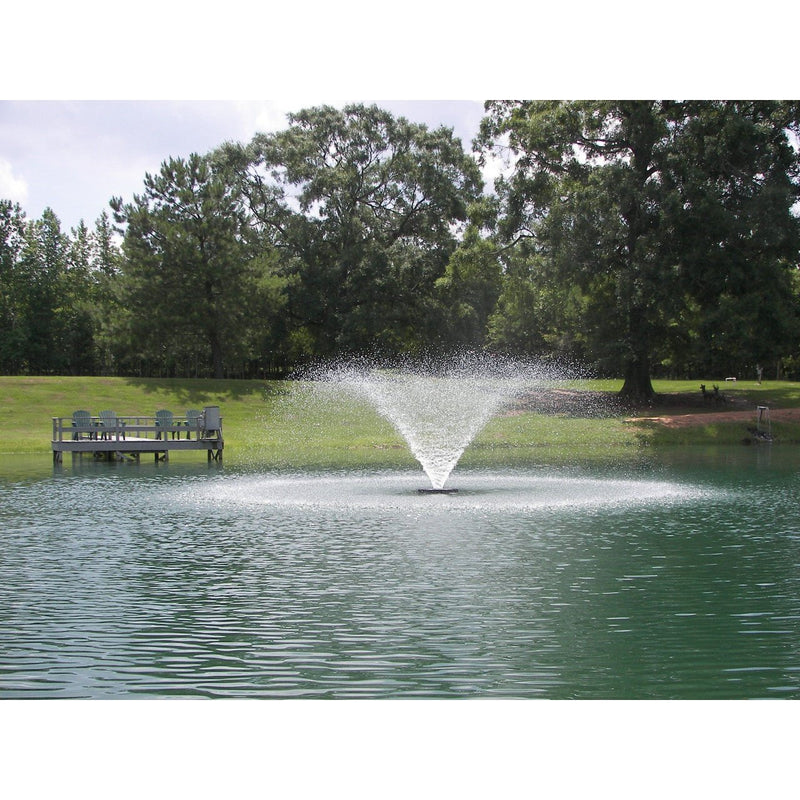
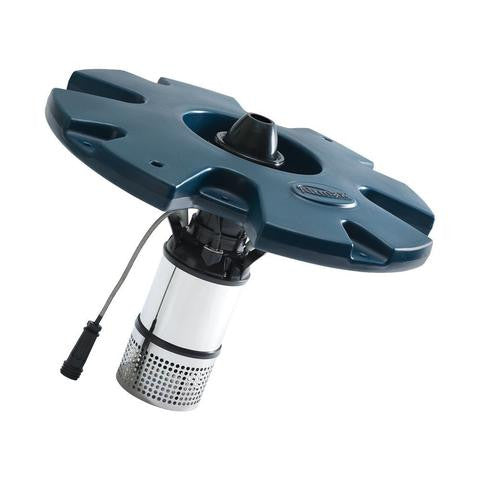
Mistakes often occur in the sizing of aeration equipment. Many owners install decorative fountains, assuming they provide sufficient aeration. However, decorative units often use energy to create high-altitude displays rather than maximizing gas exchange. Surface agitators or sub-surface diffusers are significantly more efficient at transferring oxygen per watt of power consumed.
Overstocking and overfeeding represent another major challenge. Every gram of fish waste and uneaten food adds to the Biological Oxygen Demand (BOD). Bacteria consuming this waste use the same oxygen that the fish need. In a high-BOD environment, the oxygen "bank account" is depleted faster than it can be replenished, leading to a crash during the nighttime respiration peak.
Limitations of Oxygen Saturation and Environmental Boundaries
Environmental constraints limit the maximum possible oxygen level in a pond. Beyond temperature, two other physical factors dictate oxygen solubility: altitude and salinity.
Altitude reduces the partial pressure of oxygen in the atmosphere. At higher elevations, the "driving force" that pushes oxygen into the water is weaker. A pond at 5,000 feet above sea level will have a saturation point roughly 15-20% lower than a pond at sea level at the same temperature. Management strategies in high-altitude regions must compensate for this physical limitation with increased mechanical aeration.
Salinity also impacts solubility. While most koi and ornamental ponds are freshwater, the addition of salt for therapeutic purposes (at concentrations of 0.3% to 0.5%) slightly reduces the oxygen-carrying capacity of the water. While the impact is minor compared to temperature, it becomes significant when combined with other stressors like summer heatwaves.
Comparison: Measurement Technology and Efficiency
The choice of measurement technology depends on the required precision and the operational scale. The following table compares the three primary methods of testing dissolved oxygen.
| Feature | Winkler Titration | Electrochemical (Clark) | Optical (LDO/RDO) |
|---|---|---|---|
| Accuracy | High (Lab Standard) | Moderate to High | Very High |
| Ease of Use | Low (Complex) | Moderate | High |
| Maintenance | High (Reagents) | High (Membranes) | Low (Sensor Cap) |
| Flow Dependent | No | Yes | No |
| Initial Cost | Low | Moderate | High |
| Long-term Stability | N/A (Batch) | Prone to Drift | Excellent |
For the serious practitioner, the optical sensor's lack of flow dependence and resistance to calibration drift make it the superior choice for identifying the "invisible vitals" of the pond.
Practical Tips and Best Practices
Optimizing a pond's oxygen levels requires a mechanical approach to aeration and biological management. Implementing the following best practices will ensure a stable environment regardless of seasonal changes.
- Run Aeration 24/7: Never turn off aerators or pumps at night. The nighttime hours are when the oxygen demand is highest due to plant respiration.
- Position Diffusers Properly: Place air diffusers in the deepest part of the pond. As bubbles rise, they create a "columns of water" effect, pulling oxygen-poor water from the bottom to the surface for gas exchange.
- Monitor During Heatwaves: Increase aeration when water temperatures exceed 25°C (77°F). Warm water not only holds less oxygen but also increases the metabolic rate of the fish, meaning they need more oxygen precisely when the water can provide less.
- Manage the Bio-Load: Regularly remove organic debris such as fallen leaves and sludge. Reducing the organic load directly reduces the Biological Oxygen Demand (BOD), leaving more oxygen available for the fish.
Utilizing a diffused air system is generally more efficient than surface splashing. Fine-bubble diffusers create a higher surface-area-to-volume ratio for the air being injected, resulting in a higher Standard Oxygen Transfer Efficiency (SOTE).
Advanced Considerations: Total Gas Pressure and Super-Saturation
While low oxygen is the most common threat, excessive gas levels can also be hazardous. Total Gas Pressure (TGP) measures the sum of all dissolved gases (oxygen, nitrogen, argon, and $CO_2$) relative to atmospheric pressure. When TGP exceeds 103-110%, the water becomes "super-saturated."
Super-saturation can occur when air is trapped in a high-pressure pump line or when massive algae blooms produce excessive oxygen during peak sunlight. If fish are exposed to these levels, they can develop Gas Bubble Disease (GBD), a condition similar to "the bends" in human divers. Micro-bubbles form in the fish's bloodstream and tissues, leading to embolisms, exophthalmia (pop-eye), and death.
Serious practitioners use a tensionometer to monitor TGP in high-performance systems. Ensuring that water is adequately degassed before entering the pond is critical, especially when using high-pressure sand filters or venturi injectors that might entrain excess air.
Example Scenario: Calculating Oxygen Demand
Consider a 5,000-gallon pond at 25°C with a high stocking density of koi. At this temperature, the 100% saturation point is approximately 8.3 mg/L. If the pond has a high organic load (sludge), the BOD might consume 2 mg/L over the course of the night. If the algae and plants consume another 3 mg/L through respiration, the DO levels could drop from 8.3 mg/L to 3.3 mg/L by 5:00 AM.
A DO level of 3.3 mg/L is critical. Fish will begin gasping at the surface (piping) or huddling near the waterfall. If the owner only tests the water at 2:00 PM, they may see a "healthy" reading of 9 or 10 mg/L due to daytime photosynthesis, completely missing the lethal sag that occurred a few hours earlier. This highlights why clarity and daytime testing are insufficient for professional-grade management.
Final Thoughts
Mastering the invisible vitals of a pond requires a shift in perspective. Visual clarity is a byproduct of filtration, but biological stability is a product of gas exchange. Dissolved oxygen is the most volatile and critical parameter in the ecosystem, and its management must be prioritized over aesthetic considerations.
Utilizing precise measurement tools like optical DO sensors allows for the identification of patterns—such as the diurnal oxygen sag—that are invisible to the naked eye. By addressing the physical constraints of temperature, altitude, and BOD, a pond owner can transition from a reactive "crisis management" style to a proactive, data-driven optimization of the environment.
The goal is to create an environment where the biological capacity of the water exceeds the demands of its inhabitants. Achieving this balance ensures long-term health, maximized growth, and a resilient ecosystem that can withstand environmental fluctuations without catastrophic failure. Regular testing and mechanical optimization of aeration systems are the only reliable ways to ensure your water is truly 'alive.'