

The Best Time of Year to Install Pond Aeration
What Is the Best Time of Year to Install Pond Aeration?
If you're planning to add an aeration system to your pond, spring is generally the best time to install it.
But that doesn't mean you should wait until next spring if your pond needs aeration now.
A pond aeration system can be installed successfully during spring, summer, fall or even winter. What changes with the season is how the system should be started and operated.
For most pond owners, the better rule is simple:
Install aeration before you have an oxygen problem—not after one develops.
Here's what to consider during each season.
Spring: The Best Overall Time to Install Pond Aeration
Spring is usually our first choice for installing a new bottom-diffused aeration system.
As the pond warms, it hasn't yet developed the strong thermal layers that commonly occur during summer. Water temperatures are relatively moderate, and dissolved oxygen conditions are generally more favorable.
Starting aeration during this period allows the system to begin circulating the pond before summer conditions become established.
That's important because deeper ponds often stratify as temperatures rise.
Warm water forms near the surface while colder, denser water remains below. Once these layers become established, they don't readily mix.
The upper layer receives oxygen from photosynthesis and contact with the atmosphere.
The deeper layer is isolated from those oxygen sources while fish, bacteria and decomposition continue consuming oxygen.
Over time, that deeper water can become severely oxygen depleted.
A properly designed bottom-diffused aeration system helps prevent strong stratification by continually moving deeper water toward the surface.
Installing the system in spring means you can establish this circulation gradually rather than trying to correct a strongly stratified pond in the middle of summer.
Summer: You Haven't Missed Your Chance
Summer is probably when many pond owners first realize they need aeration.
Algae becomes more noticeable. Water temperatures rise. Fish may appear stressed. Odors can develop. Aquatic vegetation becomes heavier. Or someone finally notices that the deeper part of the pond has very little oxygen.
If that's when you decide to install an aeration system, don't wait until fall just because spring would have been better.
You can install pond aeration during summer.
You simply need to be more careful about starting it.
Why Summer Startup Requires More Care
By midsummer, a deeper pond may already be strongly stratified.
The surface water can be warm and oxygenated while deeper water is colder and contains very little dissolved oxygen.
That bottom water may also contain accumulated carbon dioxide and other compounds produced as organic matter decomposes under low-oxygen conditions.
If a powerful bottom-diffused aeration system is installed and immediately operated continuously, it can rapidly bring that poor-quality bottom water into the upper portion of the pond.
Instead of improving conditions immediately, you can temporarily reduce dissolved oxygen throughout a much larger volume of water.
In a severely stratified pond, that can stress fish and potentially contribute to a fish kill.
That's why we generally recommend a gradual startup procedure when beginning bottom aeration in an established pond during warm weather.
How to Start a New Aeration System During Summer
Rather than turning the system on and leaving it running continuously from the first day, begin with short operating periods and gradually increase the runtime.
A typical startup might begin with a short period on the first day and progressively increase operating time over several days.
The exact schedule depends on the pond.
A shallow pond with relatively good water quality may require very little acclimation.
A deep pond that has been stagnant for years may need a much more conservative startup.
Pay attention to the pond while you're doing this.
If you notice strong odors, very dark water being brought to the surface, or fish showing signs of stress, slow the process down.
The objective is to gradually mix the water column rather than abruptly turning over a large volume of oxygen-poor bottom water.
Once the pond has been safely circulated, the system can normally move into its regular operating schedule.
Why Summer Is When Aeration Can Matter Most
Summer creates some of the most challenging oxygen conditions of the year.
Warm water naturally holds less dissolved oxygen than cold water.
At the same time, fish, bacteria and other organisms are more active and consume more oxygen.
Long periods of hot weather, dense algae blooms, several cloudy days, heavy organic matter and sudden algae die-offs can make the situation worse.
That's why low-oxygen fish kills are particularly associated with warm summer conditions.
So while summer may not be the easiest time to start a new bottom-diffused aeration system, it can be one of the most important times to have one operating.
Fall: Another Good Time to Install Aeration
Fall is also an excellent time to install a pond aeration system.
As air and water temperatures decline, the temperature difference between surface and deeper water becomes smaller.
Eventually, the pond naturally begins to mix.
Installing aeration during this transition can make startup relatively straightforward compared with installing a system in a strongly stratified pond during July or August.
It also gives you an opportunity to get the system installed and operating before winter.
For pond owners who didn't get around to aeration in spring, there's usually no reason to wait another six months.
Fall can be a very good installation window.
What About Fall Turnover?
You may have heard about ponds "turning over" during fall.
Turnover is the natural mixing that occurs as surface water cools and becomes similar in temperature and density to deeper water.
In a pond that has been strongly stratified all summer, deeper water may contain very little oxygen.
When the pond mixes naturally, that oxygen-poor water is redistributed through the water column.
Usually this happens gradually and doesn't cause a problem.
Under certain conditions, however, rapid mixing associated with strong winds, cold rain or sudden temperature changes can contribute to an oxygen decline.
Maintaining circulation with a properly designed aeration system throughout the warm season helps prevent the pond from developing such dramatically different surface and bottom layers in the first place.
Winter: Aeration Has a Different Purpose
You can install and operate aeration during winter, but the objective changes.
During spring and summer, bottom-diffused aeration is generally used to circulate much of the pond and reduce thermal stratification.
In winter, you may not want to completely mix the pond from top to bottom.
Water is unusual because it reaches its maximum density at about 39°F. During winter, slightly warmer water can remain in the deeper portions of the pond while colder water and ice remain at the surface.
That deeper water can provide an important winter refuge for fish.
Running a diffuser continuously from the deepest point can mix that somewhat warmer water upward and cool more of the water column.
For that reason, winter aeration is often accomplished by moving a diffuser into shallower water, suspending it above the deepest portion of the pond, or operating only part of a multi-diffuser system.
The objective is often to maintain an area of open water for gas exchange without unnecessarily circulating the entire pond from its deepest point.
Does Every Pond Need Aeration?
No.
Many ponds function perfectly well without mechanical aeration.
The need for aeration depends on factors such as:
-
pond depth and surface area
-
fish population
-
organic muck accumulation
-
nutrient levels
-
algae and aquatic vegetation
-
water clarity
-
pond shape
-
history of low oxygen or fish kills
-
the owner's management goals
A lightly stocked pond with good water quality may have no significant oxygen problems.
A heavily stocked, nutrient-rich pond with substantial organic matter may benefit considerably from improved circulation.
Aeration should solve a problem or support a management objective—not simply be added because every pond supposedly needs it.
Fountains, Surface Aerators and Bottom-Diffused Aeration
The type of aeration system also matters.
Bottom-diffused aeration uses a compressor on shore to send air through tubing to diffusers located underwater. The rising bubbles create a lifting action that circulates water toward the surface.
These systems are particularly useful when the objective is to circulate deeper water and reduce stratification.
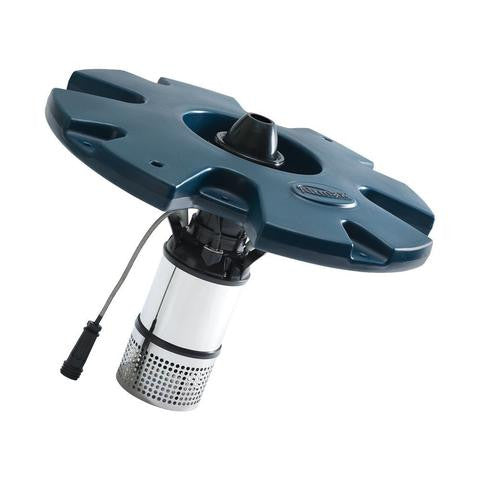
Surface aerators aggressively move and splash surface water. They can be extremely effective when rapid oxygen transfer is the primary objective, including during low-oxygen emergencies.
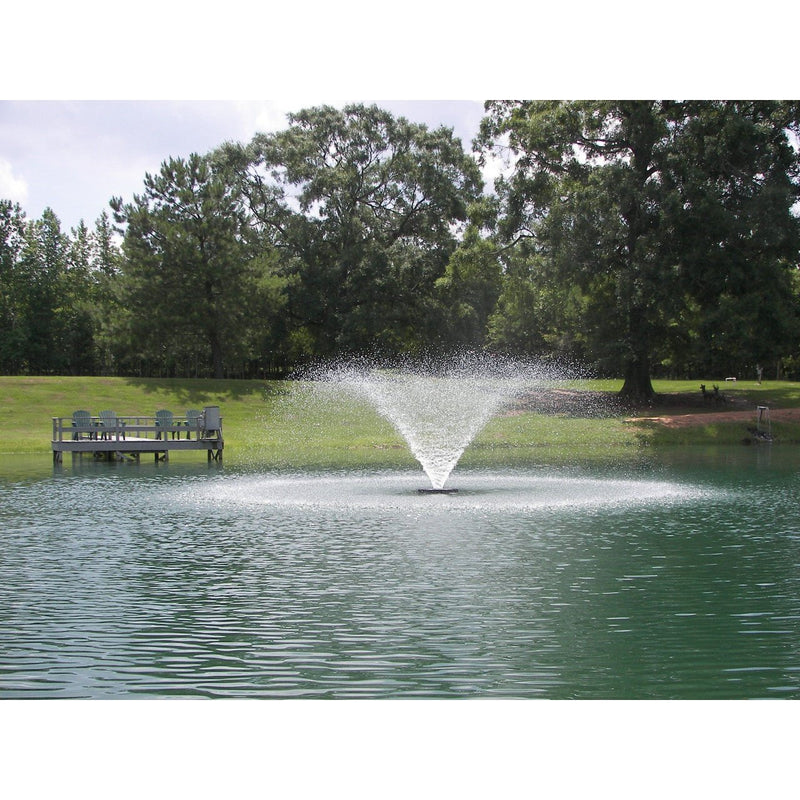
Fountains provide circulation and aeration while also adding an attractive display.
The right choice depends on the pond and your goals.
A decorative pond near a home, resort or commercial property may benefit from the appearance and circulation of a fountain.
A deep farm pond where the primary goal is moving bottom water may be better suited to bottom-diffused aeration.
And some ponds benefit from using both.
Don't Wait Until Fish Are Gasping
One of the worst times to begin thinking about aeration is when fish are already at the surface gasping for oxygen.
At that point, you're dealing with an emergency rather than pond management.
If fish are actively gasping, immediate surface agitation may be more important than installing a permanent bottom-diffused system.
Anything that aggressively mixes water and air can help create an oxygenated refuge while the emergency is occurring.
A permanent aeration system can then help reduce the likelihood of similar problems developing in the future.
Size the System for the Pond, Not Just the Acreage
When you're ready to install aeration, choosing the correct season is less important than choosing the correct system.
Two one-acre ponds can require very different aeration systems.
A one-acre pond that's 7 feet deep and nearly round is very different from a one-acre pond that's 18 feet deep and 600 feet long.
Depth affects compressor pressure requirements.
Shape affects how many circulation zones may be needed.
Diffuser design and airflow affect how much water each bubble plume can move.
That's why we look at surface area, depth, shape and the pond owner's objectives when sizing an aeration system.
Simply knowing the acreage isn't always enough.
So, When Should You Install Pond Aeration?
If you're planning ahead, spring is generally the best overall time.
You'll get the system running before summer stratification and the year's most challenging oxygen conditions develop.
But spring isn't your only opportunity.
Spring: Ideal for getting ahead of summer stratification.
Summer: Absolutely possible, but a new bottom-diffused system may require a gradual startup.
Fall: Another excellent installation period as water temperatures cool and natural mixing begins.
Winter: Possible, but diffuser placement and the purpose of aeration are different.
The season determines how you approach aeration.
It doesn't necessarily determine whether you should install it.
The Bottom Line
The best time to install pond aeration is before your pond develops a serious oxygen problem.
If you're planning ahead, spring gives you the advantage of establishing circulation before summer heat and stratification arrive.
But if it's July and your pond would benefit from aeration, waiting until next April usually doesn't make sense.
Install the system and start it correctly.
If it's fall, there's no reason to assume you've missed the season either.
And if winter oxygen is your concern, aeration can still be useful when the system is configured appropriately for cold-water conditions.
Ultimately, proper sizing, diffuser placement and operation matter more than the date on the calendar.
A well-designed aeration system should be matched to your pond and your goals—and then operated in a way that makes sense for the season.