

The Most Common Pond Aeration Mistakes Pond Owners Make
Stop paying for friction and start using physics. Buying the biggest pump isn't the answer. Avoid these 5 common mistakes that kill pumps and keep ponds dirty. Achieving optimal water quality requires an understanding of fluid dynamics and gas transfer rather than simply increasing horsepower. Expensive gear often fails when misapplied, while physics-based optimization provides superior results at lower operational costs.
The Most Common Pond Aeration Mistakes Pond Owners Make
Pond aeration is the process of increasing dissolved oxygen (DO) levels and promoting gas exchange within a water body. This mechanism is critical for supporting aerobic bacteria that decompose organic waste and for maintaining the health of aquatic organisms. In many instances, pond owners implement aeration systems that are mechanically mismatched for the specific environment, leading to premature equipment failure and poor oxygenation.
Mechanical efficiency in aeration is often compromised by a lack of consideration for Total Dynamic Head (TDH) and back pressure. When a compressor is forced to operate outside its intended pressure range, the energy is converted into heat rather than airflow. This heat degrades internal components such as diaphragms, piston seals, and gaskets. Understanding the relationship between pressure, flow, and oxygen solubility is the first step toward a stable pond ecosystem.
Real-world applications of these principles are seen in municipal wastewater treatment and commercial aquaculture. These industries do not rely on "oversizing" but on calculated Standard Aeration Efficiency (SAE). Applying these professional standards to a residential or farm pond ensures that every watt of electricity contributes to the removal of hydrogen sulfide and the addition of life-sustaining oxygen.
Mechanics of Gas Exchange and Oxygen Transfer
The primary goal of aeration is to satisfy the biological oxygen demand (BOD) of the pond. This is achieved through two main pathways: surface turbulence and bubble diffusion. Standard Oxygen Transfer Rate (SOTR) measures the amount of oxygen added to water per hour under controlled conditions. This metric is a more accurate representation of performance than simple air volume (CFM) because it accounts for how much oxygen actually dissolves into the water column.
Fine bubble diffusers are superior to coarse bubble systems due to the surface area-to-volume ratio. A single 1-inch bubble has significantly less surface area than the thousands of tiny bubbles that would occupy the same volume. Increased surface area provides more opportunities for oxygen molecules to cross the gas-liquid interface. This phenomenon is governed by Henry’s Law, which states that the amount of dissolved gas in a liquid is proportional to its partial pressure above the liquid.
Depth plays a critical role in the efficiency of bubble diffusers. As a bubble rises through the water column, it remains in contact with the water for a longer duration, increasing the transfer time. Furthermore, the hydrostatic pressure at greater depths increases the partial pressure of the oxygen within the bubble, further driving the gas into solution. Consequently, a diffuser placed at 15 feet is mathematically more efficient at transferring oxygen than the same diffuser placed at 5 feet, provided the compressor can overcome the back pressure.
Friction Loss: The Silent Efficiency Killer
Friction loss, also known as head loss, is the reduction in pressure that occurs as air travels through tubing. Every foot of airline and every fitting creates resistance. This resistance forces the compressor to work harder, increasing the PSI (pounds per square inch) at the pump head. If the tubing diameter is too small for the required flow rate, the friction becomes the primary consumer of the pump's energy.
Calculations for friction loss are based on the Darcy-Weisbach equation, though most practitioners use standardized charts. For a flow of 5 CFM (Cubic Feet per Minute), 1/2-inch ID (Inside Diameter) tubing is often insufficient for runs exceeding 100 feet. Upgrading to 3/4-inch or 1-inch tubing reduces the velocity of the air, which exponentially decreases the friction loss. Reducing this resistance allows the compressor to run cooler and last longer.
Total back pressure is the sum of hydrostatic pressure and friction loss. Hydrostatic pressure is constant at approximately 0.433 PSI per foot of water depth. Friction loss is variable and controllable. By minimizing the friction through proper pipe sizing, you maximize the "free" physics of depth-based oxygen transfer without increasing the load on your motor.
Benefits of Optimized Aeration Systems
Optimized systems provide measurable improvements in water clarity and nitrogen cycle efficiency. When dissolved oxygen levels are maintained above 5 mg/L, aerobic bacteria can rapidly process ammonia into nitrites and then nitrates. This prevents the accumulation of toxic gases like methane and hydrogen sulfide, which are common in anaerobic (low oxygen) environments at the pond bottom.
Reduced electrical consumption is a direct benefit of matching the compressor to the application. Using a high-pressure rocking piston compressor in a shallow pond is inefficient because these units draw more current than a linear diaphragm pump. Conversely, using a linear pump in a deep pond leads to frequent diaphragm ruptures. Selecting the right technology based on depth ensures the highest SAE, or pounds of oxygen per horsepower-hour.
Longer equipment lifespans result from lower operating temperatures. Heat is the enemy of mechanical seals and rubber components. A system with minimal back pressure allows the compressor to operate within its design parameters, often extending the service interval from months to years. This reliability is essential for ponds with high fish stocking densities where an aeration failure can result in a total fish kill within hours.
Challenges and Common Pitfalls
A frequent error is the use of "weighted tubing" that has an internal diameter too small for the distance required. While weighted tubing is convenient for keeping lines on the pond floor, its high resistance often creates a bottleneck. Practitioners should consider using large-diameter PVC for the long run from the compressor to the water’s edge, then transitioning to weighted tubing for the final submerged section.
Inadequate diffuser maintenance is another common challenge. Over time, calcium deposits or biofilm can clog the micro-perforations in EPDM or ceramic diffusers. This clogging increases back pressure significantly. Regular cleaning or the use of "self-cleaning" flexible membrane diffusers is necessary to maintain the system's Standard Aeration Efficiency (SAE). Monitoring the system's pressure gauge can provide early warning of clogging before it damages the pump.
Improper placement of diffusers can lead to "dead zones." If diffusers are placed only in the shallow areas, the deep pockets of the pond may remain anaerobic. This can lead to a phenomenon known as a pond turnover during heavy rains or seasonal temperature shifts, where the deoxygenated bottom water mixes with the surface water, suddenly dropping the overall oxygen level and killing fish. Diffusers must be placed in the deepest parts of the pond to ensure a complete vertical thermocline break.
Limitations and Environmental Constraints
Aeration has physical limits dictated by water temperature and altitude. As water temperature increases, its ability to hold dissolved oxygen decreases. At 60°F, freshwater can hold roughly 10 mg/L at saturation, but at 85°F, that capacity drops to approximately 7.5 mg/L. Aeration cannot force more oxygen into the water than the temperature-defined saturation point without using pure oxygen injection systems, which are rarely practical for pond owners.
Altitude affects the atmospheric pressure and, consequently, the partial pressure of oxygen. Ponds located at high elevations have lower oxygen transfer rates than those at sea level. Engineers must account for this when sizing systems for mountain environments. A compressor that is adequate for a one-acre pond in Florida may be insufficient for a one-acre pond in Colorado due to these atmospheric differences.
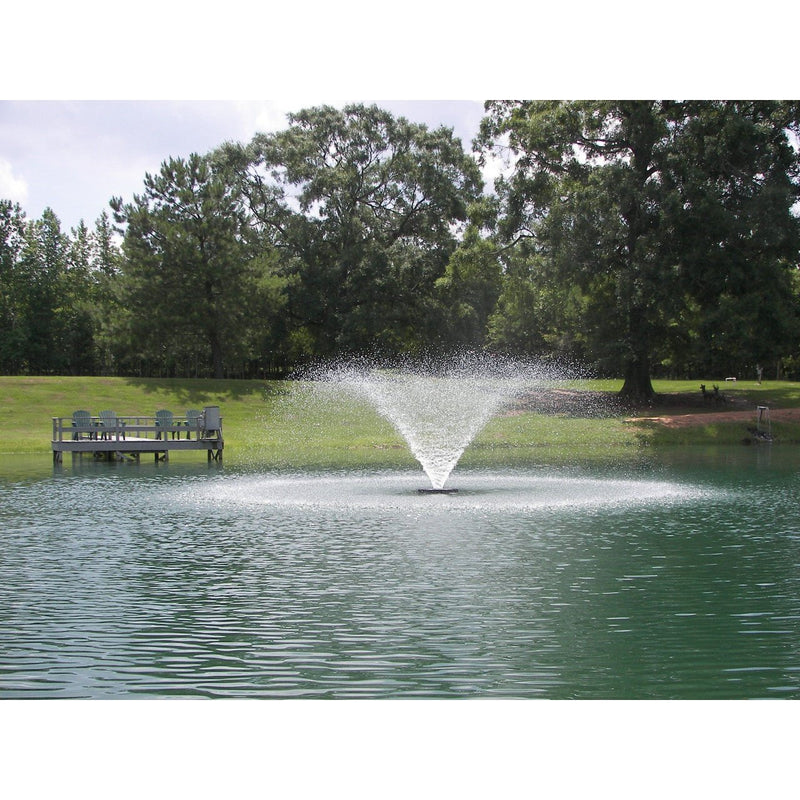
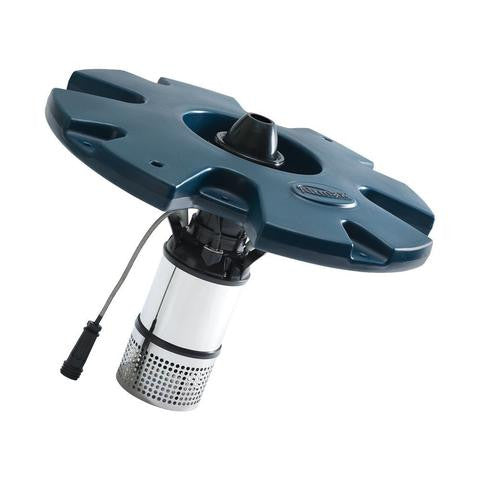
Extremely shallow ponds (less than 4 feet deep) do not benefit as much from diffused aeration. The bubble rise time is too short for significant oxygen transfer to occur during the ascent. In these environments, surface aerators or fountain-style units are often more effective because they utilize atmospheric contact and splashing to facilitate gas exchange. Understanding the "effective depth" of your gear is vital for a successful setup.
Compressor Technology Comparison
Different mechanical designs are optimized for specific pressure and flow profiles. Choosing the wrong type is the most common cause of "Expensive: Wrong Gear" scenarios. The table below outlines the performance characteristics of the three most common types of pond compressors.
| Compressor Type | Optimal Depth | Max PSI | Noise Level | Energy Efficiency |
|---|---|---|---|---|
| Linear Diaphragm | 0 - 8 Feet | 4 - 7 PSI | Very Low (35-45 dB) | Excellent (Low Watts) |
| Rocking Piston | 8 - 40 Feet | 30 - 50 PSI | Moderate (55-65 dB) | Good (Higher Watts) |
| Rotary Vane | 0 - 18 Feet | 10 - 15 PSI | High (65-75 dB) | Moderate (High Volume) |
Practical Tips for System Optimization
Install a pressure gauge at the compressor outlet. This is the single most important diagnostic tool for any aeration system. A sudden increase in PSI indicates a clog in the diffuser or a kink in the line. A decrease in PSI often indicates a leak in the tubing or failing compressor seals. Knowing your baseline operating pressure is essential for preventative maintenance.
Use smooth-wall pipe for long horizontal runs. Corrugated tubing creates significantly more turbulence and friction than smooth-wall PVC or HDPE. If the compressor is located 500 feet from the pond, running 1.5-inch PVC to the water’s edge and then transitioning to smaller tubing will save significant energy and wear on the pump.
Verify your diffuser depth before finalizing the pump selection. Many pond owners estimate depth incorrectly. Use a weighted string or a depth finder to find the deepest point. If your pond is 12 feet deep, a linear diaphragm pump is a poor choice regardless of its CFM rating, as it will be operating near its maximum pressure limit, leading to heat-induced failure.
Advanced Considerations for Large-Scale Aeration
For large lakes or commercial operations, the focus shifts to the Standard Aeration Efficiency (SAE) of the entire system. SAE is calculated by dividing the SOTR by the power input (kilowatts or horsepower). High-efficiency systems often achieve 3.0 to 4.0 lbs of O2 per hp-hour. Achieving these numbers requires precise matching of the blower's curve to the diffuser's pressure requirements.
Nitrification and de-nitrification cycles are deeply affected by aeration patterns. In some advanced designs, intermittent aeration is used to create alternating aerobic and anoxic zones. This strategy can help in removing excess nitrates from the water, which are a primary food source for algae. While complex for backyard ponds, this level of management is common in high-density koi systems and commercial aquaculture.
The use of Variable Frequency Drives (VFDs) on larger compressors allows the system to adjust airflow based on real-time dissolved oxygen sensors. During the night, when plants and algae consume oxygen rather than produce it, the VFD can increase the compressor speed to compensate. During the day, when photosynthesis is providing ample DO, the system can throttle back to save electricity. This data-driven approach is the pinnacle of using physics to minimize cost.
Example Scenario: The Half-Acre Pond
Consider a half-acre pond with a maximum depth of 12 feet. The owner initially buys a high-volume linear diaphragm pump because it is quiet and cheap. The pump is rated at 4.0 CFM. However, at 12 feet of depth, the hydrostatic pressure is 5.2 PSI (12 x 0.433). Adding 1.5 PSI for friction loss in 100 feet of 3/8" tubing brings the total back pressure to 6.7 PSI.
The linear pump is rated for a maximum of 6 PSI. Because it is operating at 6.7 PSI, the diaphragm stretches excessively on every stroke, and the internal temperature of the pump head rises to 180°F. The pump fails in three months. The "expensive gear" of a $600 rocking piston compressor would have been the cheaper option, as it is designed for 30+ PSI and would operate at 6.7 PSI with virtually no mechanical stress.
Upgrading the tubing to 1/2-inch ID in this scenario would drop the friction loss from 1.5 PSI to roughly 0.4 PSI. This simple change in "physics" would reduce the total load to 5.6 PSI. While still high for a linear pump, it demonstrates how pipe diameter directly impacts the mechanical health of the system. In this specific scenario, a 1/4 HP rocking piston compressor with 1/2-inch tubing is the technically correct optimization.
Final Thoughts
Effective pond aeration is a matter of mechanical engineering and fluid dynamics rather than brute force. Successful systems prioritize minimizing friction and maximizing the natural efficiency of bubble rise time and depth-based gas transfer. By understanding metrics like SOTR and SAE, pond owners can move beyond guesswork and implement solutions that are both reliable and cost-effective.
Focus on the total system design, from the internal diameter of the tubing to the specific pressure capabilities of the compressor. Regularly monitor operating pressure and maintain diffusers to ensure the system continues to perform at its peak. This objective, technical approach ensures that your pond remains a healthy, aerobic environment for years to come.
Investigating the specific dissolved oxygen requirements of your fish species and the nutrient load of your water can further refine your aeration strategy. Experimenting with different diffuser placements and monitoring the resulting clarity will provide the data needed to master the physics of your specific pond environment.