Diffused Aeration vs Surface Aerators: Which Works Better For Your Pond?
Which is more efficient: Splashing the top or lifting the bottom? Surface aerators are great for shallow water, but diffused aeration is the king of the deep. Which one does your pond need?
Determining the appropriate aeration strategy for a managed water body requires an objective analysis of depth, volume, and oxygen demand. Selecting the wrong mechanical system leads to inefficient energy consumption and inadequate dissolved oxygen (DO) levels at the benthic interface.
Effective aeration is a matter of fluid dynamics and gas-to-liquid transfer rates. Understanding the mechanical differences between active surface churn and passive rising columns is essential for maintaining a healthy aquatic ecosystem.
Diffused Aeration vs Surface Aerators: Which Works Better For Your Pond?
Pond aeration systems are categorized by their method of oxygen transfer: mechanical surface agitation or submerged diffusion. Both systems aim to increase the dissolved oxygen levels to support aerobic bacteria and aquatic life, but they utilize different physical principles to achieve this goal.
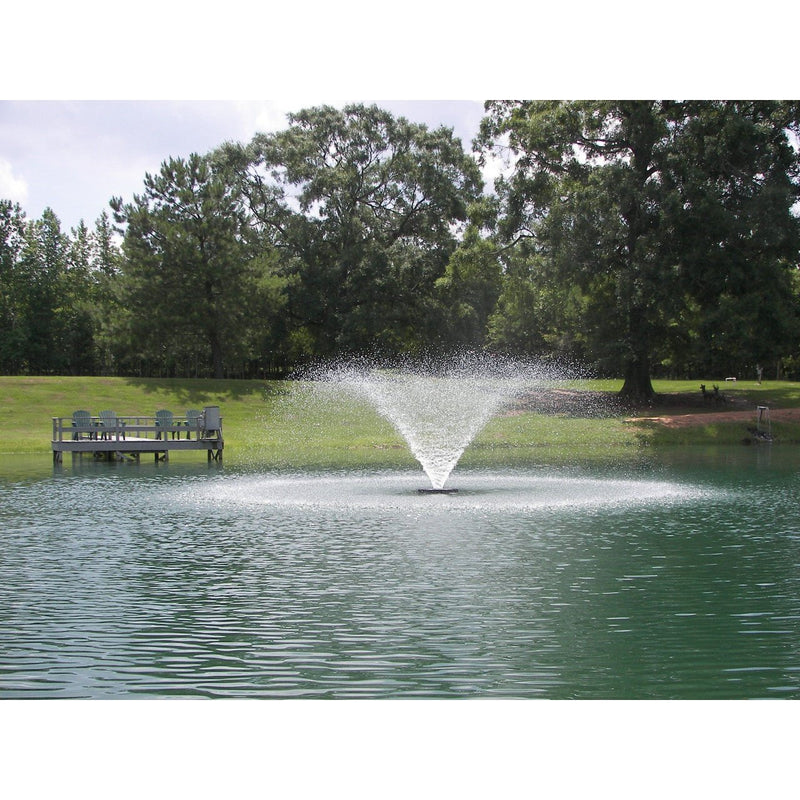
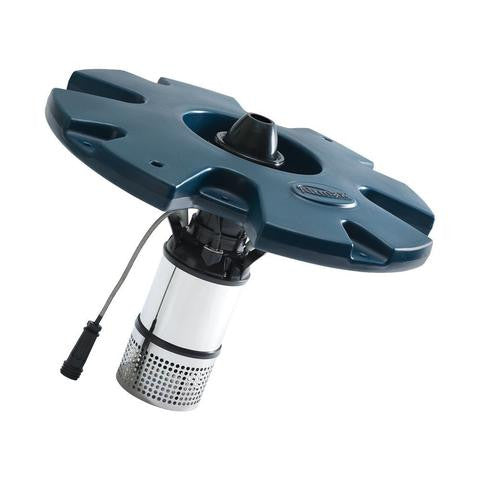
Surface aerators utilize a motor-driven impeller to physically displace water into the atmosphere. This creates a high-velocity splash pattern that maximizes the air-water interface at the surface. These systems are classified as "active" because they rely on mechanical shear to break water into droplets, facilitating immediate gas exchange.
Diffused aeration systems, conversely, utilize a shore-based compressor to pump air through weighted tubing to submerged membrane diffusers. These diffusers release a constant stream of micro-bubbles that rise through the water column. This "passive" transfer relies on the residence time of the bubbles as they travel from the bottom to the surface.
In real-world applications, surface aerators are typically deployed in shallow basins, such as commercial aquaculture ponds or wastewater lagoons with a depth of less than 6 feet. Diffused systems are the preferred choice for deep-water lakes and reservoirs where thermal stratification occurs. The choice between them depends entirely on the basin's bathymetry and the specific biological oxygen demand (BOD) of the system.
The Mechanics of Oxygen Transfer and Fluid Dynamics
The efficiency of any aeration system is measured by its Standard Oxygen Transfer Rate (SOTR) and Standard Aeration Efficiency (SAE). SAE is expressed as the pounds of oxygen transferred per horsepower-hour (lb O2/hp-hr).
Surface aerators operate on the principle of increasing the surface area of the water. By splashing water into the air, the system exposes thousands of small droplets to atmospheric oxygen. This method is highly effective for localized oxygenation but lacks the ability to move water from deeper strata. Mechanical surface aerators typically achieve an SAE of 1.5 to 2.5 lb O2/hp-hr.
Diffused aeration relies on the physics of the "rising column." As bubbles emerge from the diffuser, they create a localized area of low density, which induces an upward current of water. This process, known as airlift, pulls oxygen-depleted water from the pond bottom toward the surface. The efficiency of a diffused system is directly proportional to the depth of the diffuser; deeper placement allows for a longer residence time and greater hydrostatic pressure, which increases the rate of oxygen dissolution.
Fine-bubble diffusers are significantly more efficient than coarse-bubble counterparts. A fine-bubble system can achieve an SAE of 3.0 to 4.5 lb O2/hp-hr in optimal conditions. This efficiency gain is due to the increased surface-area-to-volume ratio of smaller bubbles, which slows their ascent and provides more opportunity for gas transfer.
Benefits of Diffused Aeration and Surface Systems
The primary advantage of diffused aeration is its ability to eliminate thermal stratification. In deep ponds, water often separates into layers: the warm, oxygen-rich epilimnion at the top and the cold, oxygen-depleted hypolimnion at the bottom. By lifting water from the bottom, diffused systems ensure that the entire water column remains oxygenated, preventing the buildup of toxic gases like hydrogen sulfide.
Diffused systems also offer superior energy efficiency in deep water. Because the compressor is located on shore, maintenance is simplified, and there is no risk of electrical components being submerged in the water body. This reduces the risk of electrical shock and extends the lifespan of the mechanical components.
Surface aerators excel in shallow applications where a diffused system would lack sufficient depth to be effective. In water depths of 4 feet or less, a rising bubble column does not have enough "travel time" to transfer significant amounts of oxygen. In these scenarios, the mechanical splashing of a surface aerator provides a higher OTR.
Furthermore, surface aerators provide excellent surface agitation, which helps to discourage the growth of floating aquatic plants like duckweed and watermeal. The visible movement of water also provides an aesthetic benefit for some pond owners, though this is a secondary consideration to mechanical performance.
Challenges and Common Mechanical Failures
One of the most common mistakes in aeration design is under-sizing the system for the pond's surface area or depth. A system that cannot move the total volume of the pond at least once every 24 hours will leave "dead zones" of stagnant water where anaerobic conditions persist.
Surface aerators face significant mechanical challenges due to their exposure to the elements. Constant contact with water can lead to seal failure, motor burnout, and mineral scaling on the impeller. In colder climates, surface aerators are also prone to ice buildup, which can unbalance the float or damage the motor.
Diffused systems, while more robust, are susceptible to membrane fouling. Over time, calcium carbonate deposits or biological films can clog the pores of the diffuser, increasing backpressure on the compressor. If the system's PSI (pounds per square inch) exceeds the manufacturer's recommended operating range, the compressor will overheat and fail. Regular inspection of the pressure gauge is a mandatory maintenance task for diffused systems.
Installation errors also lead to premature failure. For diffused systems, using the wrong gauge of airline for the length of the run can cause excessive friction loss, forcing the compressor to work harder than necessary. For surface systems, improper anchoring can allow the unit to drift, leading to tangled power cords or damage to the shoreline.
Limitations and Environmental Constraints
Surface aerators are limited by their "zone of influence." A single unit can only oxygenate the area immediately surrounding the splash pattern. In large ponds, multiple units are required, which significantly increases energy costs. They are also less effective in ponds with high levels of organic sediment at the bottom, as they do not provide the vertical mixing necessary to facilitate aerobic decomposition at the floor.
Diffused aeration becomes inefficient in shallow water. If a pond is less than 5 feet deep, the bubbles reach the surface too quickly, resulting in poor Standard Oxygen Transfer Efficiency (SOTE). In these shallow environments, the energy required to compress the air often exceeds the oxygenation benefit provided.
Environmental factors such as altitude and water temperature also impact performance. Oxygen is less soluble in warm water and at higher elevations. A system that works perfectly in a cold-water trout pond may fail to maintain DO levels in a warm-water catfish pond during the peak of summer. Engineers must calculate the oxygen demand based on the specific species and organic load of the water body.
Comparing Efficiency Metrics: SAE and SOTE
When comparing these two technologies, technical practitioners focus on measurable efficiency. The following table illustrates the typical performance metrics for both systems in a standard 10-foot depth scenario.
| Metric | Surface Aerator (High Speed) | Diffused Aeration (Fine Bubble) |
|---|---|---|
| SAE (lb O2/hp-hr) | 1.5 - 2.5 | 3.0 - 4.5 |
| SOTE (% per ft of depth) | N/A (Surface limited) | 1.5% - 2.0% |
| Mixing Capability | Localized / Surface only | Total water column (Lifting) |
| Energy Consumption | High | Low to Moderate |
This data demonstrates that for depths exceeding 6 feet, diffused aeration provides nearly double the oxygen transfer per unit of energy consumed. However, the surface aerator remains the only viable option for ultra-shallow basins where bubble residence time is insufficient.
Practical Tips for System Optimization
To maximize the efficiency of a diffused aeration system, diffusers should be placed at the deepest point of the pond. This maximizes the hydrostatic pressure and travel time of the bubbles. If the pond has multiple deep basins, a manifold system should be used to distribute air to each area.
For surface aerators, placement should take into account the prevailing wind direction. Positioning the unit upwind allows the wind to help distribute the oxygenated surface water across the pond. Additionally, using a timer to operate the unit during the early morning hours (when DO levels are naturally at their lowest) can optimize energy usage.
Practitioners should also monitor the "boil" on the surface of a diffused system. A steady, vigorous boil indicates proper airflow, while a weak or non-existent boil suggest a leak in the airline or a clogged diffuser. Installing a pressure relief valve and a pressure gauge at the compressor cabinet is a best practice for protecting the mechanical longevity of the system.
Regular maintenance is non-negotiable. For diffused systems, this includes replacing the air intake filter every 3–6 months and installing a compressor rebuild kit (vanes or diaphragms) every 18–24 months. For surface units, the motor seals and power cord should be inspected annually for signs of wear or UV damage.
Advanced Considerations in Gas Solubility
Advanced practitioners must account for the "Oxygen Saturation Point." Water can only hold a certain amount of dissolved oxygen based on its temperature and salinity. Attempting to aerate water that is already at 100% saturation is a waste of energy. High-efficiency systems often incorporate DO sensors that automatically activate or deactivate the aerators based on real-time water quality data.
Another critical factor is the "alpha factor," which accounts for the difference in oxygen transfer between clean water and pond water containing surfactants, oils, and organic matter. Pond water typically has an alpha factor of 0.6 to 0.9, meaning that the actual oxygen transfer in the field will be lower than the manufacturer's laboratory ratings.
The "rising column" in diffused aeration also facilitates the off-gassing of carbon dioxide and methane. In heavily stocked aquaculture systems, the removal of CO2 is often as important as the addition of O2, as high CO2 levels can stress fish and lower the pH of the water. Diffused systems are superior for this gas exchange process because they interact with the entire volume of water.
Example Scenario: Deep Pond Remediation
Consider a 2-acre pond with an average depth of 12 feet. In the summer, this pond develops a thermocline at 6 feet, leaving the bottom 6 feet of water completely anoxic (zero oxygen).
If a 1-HP surface aerator is installed, it will effectively oxygenate the top 3 feet of water. However, the anoxic water at the bottom remains untouched. The organic muck at the bottom continues to rot anaerobically, releasing nutrients that fuel algae blooms. The system consumes roughly 746 watts of power but fails to address the root cause of the pond's decline.
If a 1/2-HP diffused aeration system is installed instead, it uses 50% less electricity while providing more total oxygen. The diffusers placed at 12 feet deep pull the cold, anoxic water to the surface where it can release gases and absorb oxygen. Over time, the aerobic bacteria at the bottom are "reawakened," and they begin to digest the organic muck, improving water clarity and reducing nutrient loading.
This example illustrates why depth is the deciding factor. The diffused system is not just more efficient; it is functionally superior for the specific geometry of the basin.
Final Thoughts
Selecting between diffused aeration and surface aerators is a technical decision that must be based on the physical dimensions of the water body. Surface aerators are specialized tools for shallow-water agitation, whereas diffused aeration represents the most energy-efficient method for deep-water management and destratification.
Engineers and pond managers should prioritize systems that provide the highest SAE for their specific depth requirements. By focusing on the mechanics of oxygen transfer rather than the visual appeal of splashing water, practitioners can reduce operational costs and ensure a stable, oxygen-rich environment for aquatic ecosystems.
Applying these principles allows for a data-driven approach to pond management. Whether the goal is to prevent fish kills, reduce algae, or manage wastewater, understanding the efficiency of the "rising column" versus "surface churn" is the key to long-term success.