

The Best Time of Year to Install Pond Aeration
Why wait for a disaster to act? The best time to install is before you need it. Installing aeration during an algae bloom is like buying a fire extinguisher while the house is burning. Plan for order, not chaos.
Effective pond management relies on proactive mechanical intervention rather than reactive crisis management. A planned installation ensures the system is calibrated for the specific hydrological and biological demands of the water body. When pond owners wait until a fish kill occurs or an algae bloom covers the surface, the biological load often exceeds the immediate restorative capacity of a newly installed system.
Aeration systems function as the primary engine for gas exchange and thermal destratification. These systems use mechanical compressors to deliver compressed air to diffusers located at the pond bottom. This process facilitates the movement of oxygen-depleted bottom water to the surface, where atmospheric gas exchange occurs. This technical guide outlines the optimal installation windows and the mechanical principles governing efficient pond aeration.
The Best Time of Year to Install Pond Aeration
The optimal window for installing a pond aeration system is during the shoulder seasons—specifically early spring or late fall. During these periods, water temperatures are moderate, and dissolved oxygen (DO) levels are typically more stable than during the extremes of summer or winter. Installing a system when the water column is relatively uniform in temperature minimizes the risk of sudden turnover, which can be catastrophic for aquatic life.
In technical terms, "The Best Time of Year to Install Pond Aeration" is defined by the thermal profile of the water. In the spring, before the thermocline establishes itself, the water is naturally mixing due to seasonal turnover. Introducing mechanical aeration at this stage assists the natural process and prevents the formation of a stagnant, anaerobic hypolimnion (the bottom layer of water).
Late fall is another high-efficiency window. Installing before ice cover allows the system to maintain an open hole in the ice for gas exchange. This prevents the buildup of toxic gases like hydrogen sulfide and methane, which are byproducts of anaerobic decomposition. In both scenarios, the goal is to establish a stable aerobic environment before environmental stressors—such as high heat or total ice cover—reach their peak.
Mechanical Operation and Installation Logic
Pond aeration systems operate on the principle of air lift. A shore-mounted compressor pumps air through weighted tubing to a diffuser plate located at the deepest point of the pond. As bubbles rise, they create a "chimney effect," pulling water from the bottom to the surface. This mechanical circulation is measured by the number of "turns" or total volume exchanges per 24-hour period.
To install a system correctly, technical specifications must match the pond’s morphology. The depth of the pond determines the required PSI (pounds per square inch) of the compressor. For every 2.31 feet of water depth, 1 PSI of pressure is required to overcome the head pressure of the water. Therefore, a 10-foot deep pond requires a compressor capable of consistently delivering over 4.33 PSI, accounting for friction loss in the tubing.
Diffuser placement is critical for maximizing the Standard Oxygen Transfer Rate (SOTR). Diffusers should be placed at the maximum depth possible to increase the "hang time" of the bubbles. Smaller bubbles, or fine-pore diffusion, provide more surface area for oxygen transfer compared to large bubbles. During installation, the weighted tubing must be laid flat along the pond floor to prevent interference with boat motors or recreational activities.
Technical Benefits of Proactive Aeration
The primary measurable benefit of pond aeration is the maintenance of high dissolved oxygen levels throughout the entire water column. In a non-aerated pond, the bottom layer often becomes anoxic (zero oxygen). This shifts the decomposition process from aerobic to anaerobic, which is significantly slower and produces foul-smelling gases.
Aerobic bacteria are approximately 20 times more efficient at breaking down organic matter (muck) than anaerobic bacteria. By maintaining an aerobic environment at the pond floor, the system accelerates the reduction of organic sludge. This process, often referred to as "biological dredging," can measurably reduce muck depth over several seasons.
Another critical metric is the reduction of nutrient cycling. In anoxic conditions, phosphorus—which is typically bound to iron in the sediment—is released back into the water column. This internal loading of phosphorus fuels cyanobacteria blooms. Continuous aeration keeps the sediment-water interface oxygenated, locking phosphorus in the sediment and limiting the fuel available for algae growth.
Challenges and Common Installation Errors
One frequent error in pond management is "sudden startup" during mid-summer. If a system is installed in a stratified pond during July or August, the sudden mixing of anoxic bottom water with oxygenated surface water can result in an immediate DO crash. This phenomenon happens because the bottom water has a high Chemical Oxygen Demand (COD) and Biological Oxygen Demand (BOD), which instantly strips the available oxygen from the surface layer.
To avoid this, a "startup procedure" must be followed. This involves running the system for increasing increments—30 minutes the first day, one hour the second, and doubling the time daily until the system runs 24/7. This slow integration allows the biology of the pond to adjust without a catastrophic turnover.
Sizing errors are another significant challenge. Using an undersized compressor for a large acreage pond results in insufficient turnover rates. If the system cannot turn the entire volume of the pond at least once every 24 hours, dead zones will persist. Technical calculations must include total acre-feet of water, maximum depth, and the specific oxygen demand of the existing biomass.
Limitations and Environmental Constraints
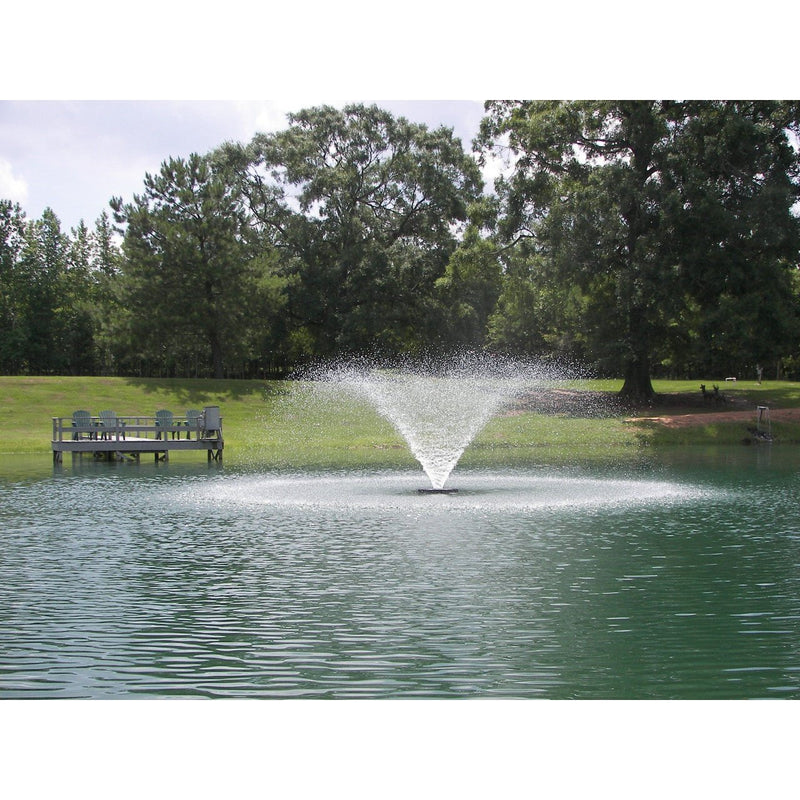
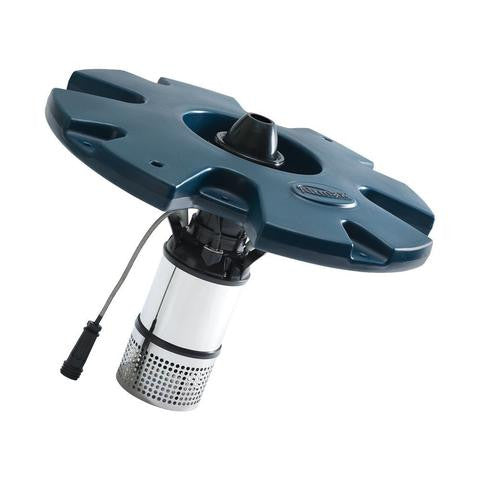
Aeration is not a universal solution for every pond condition. In very shallow ponds (less than 4-5 feet deep), bottom-diffused aeration is less effective because the bubbles do not have enough vertical travel time to create a significant lift. In these environments, a surface aerator or a "fountain" style unit may be more efficient at inducing gas exchange, though they provide less bottom-to-top circulation.
Environmental limitations also include the "noise footprint" of the compressor. While mechanical efficiency is the priority, the proximity of the compressor to residential structures must be considered. Using sound-dampening cabinets and high-quality vibration mounts is necessary in high-density areas. Furthermore, systems relying on solar power are limited by battery capacity and sun exposure; they may struggle to maintain DO levels during extended periods of cloud cover or short winter days.
Planned Order vs. Mid-Summer Chaos
The distinction between a planned off-season installation and a mid-summer emergency installation is quantifiable in terms of cost and biological risk.
| Metric | Planned Off-Season (Order) | Mid-Summer Panic (Chaos) |
|---|---|---|
| Installation Cost | Standard rates; equipment in stock. | Expedited shipping; emergency labor fees. |
| Biological Risk | Minimal; water is naturally mixed. | High; risk of turnover and fish kill. |
| System Calibration | Precise sizing based on survey. | Rushed; often uses "off-the-shelf" kits. |
| Efficiency | High; system is optimized before peak load. | Low; system struggles to catch up. |
Practical Tips for System Optimization
Maximizing the lifespan and efficiency of an aeration system requires adherence to a strict maintenance schedule. Air filters on the compressor should be inspected monthly and replaced at least twice a year. A clogged filter increases the internal temperature of the compressor, leading to premature diaphragm failure or piston wear.
Diffuser maintenance is equally vital. Over time, calcium carbonate scale or bio-films can clog the fine pores of the diffuser membranes. Pulling the diffusers once a year to clean them with a weak acid solution or a stiff brush ensures the SOTR remains high. Monitoring the system pressure gauge is a simple way to track health; a rise in PSI usually indicates a clog in the diffusers, while a drop in PSI suggests a leak in the airline.
Placement of the compressor should be in a cool, dry, and well-ventilated area. Heat is the primary enemy of mechanical compressors. If the unit is housed in a cabinet, ensure the cooling fan is operational and the air intakes are not obstructed by vegetation.
Advanced Considerations: SAE and SOTR
For large-scale pond management, understanding Standard Aeration Efficiency (SAE) is necessary. SAE measures the pounds of oxygen transferred per horsepower-hour (lb O2/hp-hr). High-efficiency systems utilize rocking piston compressors which provide higher PSI for deeper water, whereas rotary vane compressors are better for shallower applications requiring high CFM (cubic feet per minute) at lower pressures.
Determining the oxygen demand of a pond involves calculating the BOD of the organic sediments. In "old" ponds with heavy muck, the oxygen demand is significantly higher than in newly dug ponds. In these cases, increasing the number of diffuser stations—rather than just increasing the compressor size—is more effective. Spreading the air across multiple points increases the efficiency of the "lift" and ensures no dead zones remain in irregular-shaped ponds.
Electrical considerations must also be addressed. Running long distances of AC power to the pond's edge can result in voltage drop. Using the correct wire gauge is essential to prevent motor burnout. Alternatively, remote manifold systems allow the compressor to be placed near a power source, with long runs of air tubing leading to the pond, which is often a more cost-effective solution.
Practical Application: A 1-Acre Case Study
Consider a 1-acre pond with a maximum depth of 12 feet and an average depth of 6 feet. The total volume is approximately 6 acre-feet, or nearly 2 million gallons of water. To achieve one full turnover per day, the aeration system must move 1,388 gallons per minute (GPM).
Installing a 1/2 HP rocking piston compressor with two dual-disc diffusers in the fall allows the system to establish a baseline of 8 mg/L of dissolved oxygen before the winter freeze. By the time spring arrives, the aerobic bacteria have already begun processing the previous season's leaf fall. This proactive approach prevents the 2 PM "oxygen dip" common in summer, where high water temperatures and plant respiration deplete DO to dangerous levels.
If this same pond were fitted with aeration in the middle of a July algae bloom, the 12-foot depths would likely be anoxic. A sudden startup would mix that 0 mg/L water with the 4-5 mg/L surface water, potentially dropping the entire pond to below 2 mg/L—the threshold for fish distress—within hours.
Final Thoughts
The technical success of pond aeration is determined by timing, mechanical sizing, and consistent maintenance. Installing a system during the off-season ensures that the infrastructure is in place and calibrated before the biological system is under peak stress. This proactive approach prioritizes long-term ecological stability over short-term emergency fixes.
A well-engineered system does more than just blow bubbles; it manages the chemical and biological lifecycle of the water body. By focusing on metrics like DO levels, turnover rates, and SAE, pond managers can ensure an efficient and durable installation.
Applying these principles leads to a predictable, manageable environment. Whether the goal is muck reduction, fish health, or water clarity, the mechanical intervention must be timed for maximum efficiency. Avoid the chaos of reactive management and implement a planned, technically sound aeration strategy.