

The Best Pond Aeration Setup For Ponds With Heavy Algae Problems
Turn your green eyesore into a blue oasis. Algae is a nuisance caused by low oxygen and high nutrients. Optimizing your aeration setup turns that green mess into a valuable property asset. Clear water is just a few bubbles away.
Aquatic ecosystems with high nutrient loads, specifically phosphorus and nitrogen, frequently experience uncontrolled algal proliferation. This condition, known as eutrophication, often results in a feedback loop where decaying organic matter consumes dissolved oxygen (DO), triggering further nutrient release from bottom sediments. Implementing a robust aeration strategy is the primary mechanical method for breaking this cycle.
The Best Pond Aeration Setup For Ponds With Heavy Algae Problems
A high-output bottom-diffused aeration system represents the most effective configuration for addressing severe algal issues in deep-water environments. This setup utilizes a shore-based compressor to pump atmospheric air through weighted tubing to diffusers located on the pond floor. These diffusers release millions of micro-bubbles that initiate a process called "synergistic lift."
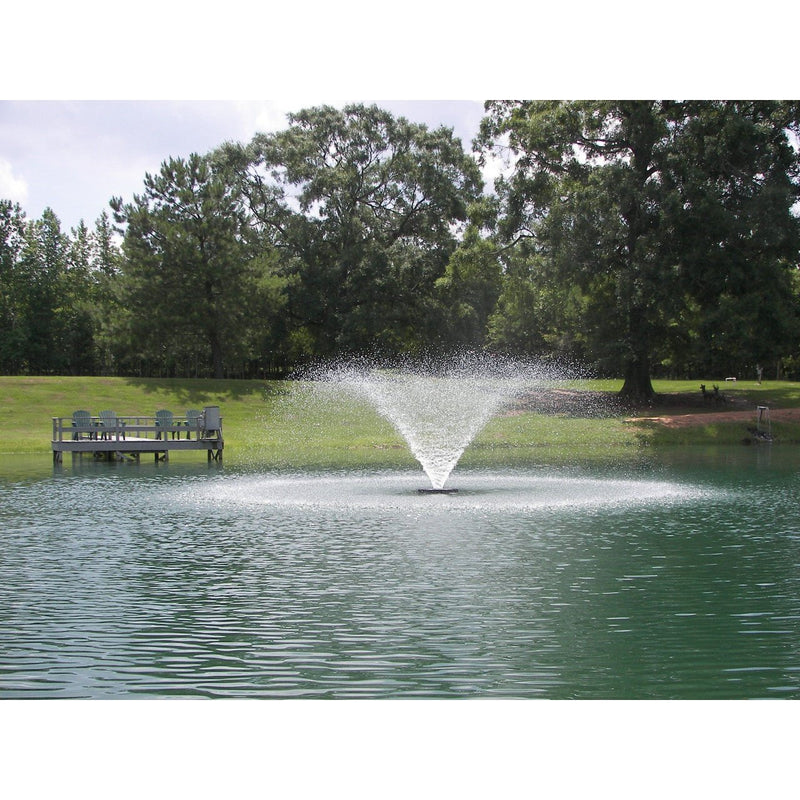
Unlike surface fountains, which primarily provide aesthetic value and localized oxygenation, bottom-diffused systems target the hypolimnion—the bottom layer of water where oxygen depletion is most critical. This is the specific zone where nutrient sequestration occurs. Maintaining aerobic conditions at the sediment-water interface prevents the chemical reduction of trivalent iron (Fe3+) to divalent iron (Fe2+). This chemical shift is vital because only the trivalent form of iron effectively binds phosphorus, preventing it from fueling algal blooms in the upper water column.
Real-world applications of this setup include large recreational lakes, irrigation ponds, and wastewater lagoons. In these settings, the goal is not merely to add oxygen but to achieve total water column mixing. This eliminates thermal stratification, which otherwise traps nutrient-rich, anoxic water at the bottom. Effective aeration systems are sized based on turnover rates, with heavy-algae scenarios requiring at least one to two complete water rotations every 24 hours.
Mechanical Principles and System Implementation
Implementation of a diffused aeration system requires precise calculation of pond volume and compressor capacity. The process begins with mapping the pond’s bathymetry to identify the deepest points and potential stagnant zones. Diffusers must be placed strategically to ensure that the rising columns of air move the maximum volume of water possible.
Compressor selection is the next critical step. For ponds with depths exceeding 15 feet, rocking piston compressors are mandatory. These units generate the high pressures (measured in PSI) necessary to overcome the "head pressure" exerted by the water column. In shallower ponds (10 to 15 feet), rotary vane compressors offer higher volumes of air (measured in CFM) per horsepower, which maximizes horizontal circulation.
Installation involves connecting the compressor to a manifold that distributes air to the weighted diffusers. Use of "self-weighted" airline is recommended to ensure the tubing remains on the bottom without the need for unsightly weights or anchors. Once activated, the system should be started gradually. A "slow-start" protocol prevents the sudden turnover of anoxic water, which can otherwise lead to immediate fish kills due to the rapid displacement of toxic gases like hydrogen sulfide.
Technical Benefits of High-Rate Aeration
The primary advantage of bottom-diffused aeration is the stimulation of aerobic bacterial activity. Aerobic bacteria decompose organic "muck" up to ten times faster than anaerobic bacteria. This process physically reduces the depth of the sediment layer over time, removing the "fuel" that algae requires to thrive.
Another measurable benefit is the stabilization of pH levels. Massive algal blooms cause extreme diurnal fluctuations in pH, which stresses aquatic life and alters nutrient solubility. Continuous aeration facilitates the off-gassing of carbon dioxide (CO2), which helps maintain a more neutral and stable pH environment. This stability further assists in the precipitation of nutrients out of the water column.
Total water column mixing also eliminates the "dead zone" or thermocline. In a stratified pond, the bottom several feet of water are often completely devoid of oxygen. Aeration ensures that the entire volume of the pond is habitable for fish and beneficial organisms. This increase in habitable volume expands the ecosystem’s capacity to process nutrients naturally through the food chain rather than through algal pathways.
Operational Challenges and Common Pitfalls
Undersizing is the most frequent mistake made when designing an aeration system for algae control. Many users select a system based on surface acreage alone, failing to account for the nutrient load. A pond with heavy algae requires significantly more "lift" than a clean pond. Sizing a system for 1.5 to 2.0 turnovers per day is necessary to see a visible reduction in filamentous algae or cyanobacteria.
Improper diffuser placement represents another significant challenge. If diffusers are clustered in one area or placed too shallow, large pockets of the pond will remain stagnant. These stagnant zones continue to release nutrients, which are then distributed to the rest of the pond by the active aeration, potentially worsening the bloom in the short term. Diffusers must be spaced to cover the entire basin, especially "dead-end" coves or deep holes.
Failing to maintain the compressor is a technical error that leads to premature system failure. Air filters must be replaced at least twice per year to prevent dust from entering the cylinders. Furthermore, the internal seals and cups in rocking piston compressors require replacement every two to three years to maintain optimal PSI. A drop in pressure results in smaller, less effective bubble plumes and reduced water movement.
Limitations and Environmental Constraints
Aeration is not a "magic bullet" for every pond environment. In extremely shallow ponds—those under five feet deep—diffused aeration loses its efficiency. Bubbles in shallow water have very little "hang time," meaning they do not stay in contact with the water long enough to transfer significant oxygen or create a powerful lift. In these scenarios, high-volume surface aerators or horizontal circulators are often more effective.
Environmental factors such as high external nutrient loading can also limit success. If a pond receives constant runoff from fertilized lawns, agricultural fields, or septic systems, aeration alone may not be able to process the incoming phosphorus fast enough. In these cases, aeration must be paired with nutrient binders like lanthanum-modified clay or alum to achieve desired clarity.
Seasonal temperature variations affect oxygen solubility. Warm water holds less oxygen than cold water, yet biological activity is highest in the summer. This means that the system must be sized for the peak of summer (the "worst-case scenario") rather than average annual conditions. A system that works well in April may be insufficient in August when water temperatures exceed 80 degrees Fahrenheit.
Compressor Technology Comparison
The following table compares the three primary compressor types used in pond aeration systems based on technical performance metrics.
| Metric | Linear Diaphragm | Rotary Vane | Rocking Piston |
|---|---|---|---|
| Maximum Depth | 8 Feet | 18 Feet | 35+ Feet |
| Pressure (PSI) | Low (4-7 PSI) | Medium (10-15 PSI) | High (30-50 PSI) |
| Air Volume (CFM) | Moderate | High | Moderate |
| Operational Noise | Very Low (Quiet) | Moderate | Moderate to High |
| Maintenance Frequency | High (Annual) | Low (3-5 Years) | Moderate (2-3 Years) |
Selecting the wrong compressor type for the specific depth of a pond results in mechanical strain and inefficient oxygen transfer. Practitioners should prioritize PSI capability over CFM when dealing with depths over 20 feet.
Practical Best Practices for Optimization
Continuous operation is the most important best practice for algae-prone ponds. Running a system only during the day or only during the night allows the pond to re-stratify and DO levels to drop. Keeping the system active 24/7 ensures that the sediment-water interface remains oxygenated at all times, preventing the "phosphorus pump" from activating.
Monitoring the Oxidation-Reduction Potential (ORP) provides a data-driven way to tune the system. ORP measures the "cleansing power" of the water. High ORP readings (above 250mV) indicate that the water is efficiently breaking down organic matter. If ORP remains low despite aeration, it is a clear signal that the system is undersized or that nutrient inputs are too high.
Utilizing fine-bubble diffusers is superior to coarse-bubble diffusers for algae control. Smaller bubbles (0.5 to 2.0 mm) have a higher surface-area-to-volume ratio, which maximizes oxygen transfer. Additionally, fine bubbles rise more slowly, which creates a more efficient "chimney effect" for pulling water from the bottom to the surface for atmospheric exchange.
Advanced Considerations for Large-Scale Remediation
Scaling an aeration system for a multi-acre lake requires a decentralized approach. Instead of one massive compressor, using multiple smaller units allows for shorter airline runs and more granular control over different zones. Long airline runs result in friction loss, which reduces the effective PSI delivered to the diffuser. Minimizing this loss ensures that each diffuser operates at its engineered capacity.
Power efficiency is a significant factor for serious practitioners. Modern rocking piston compressors are available in 1/4, 1/2, and 3/4 HP configurations. Choosing a 230V system over a 115V system can reduce amperage draw and lower long-term utility costs, especially for systems running multiple compressors. Integrating variable frequency drives (VFDs) can also allow for seasonal adjustments to motor speed, though this is typically reserved for industrial-grade systems.
Thermal imaging or DO profiling can be used to verify the "influence radius" of each diffuser. By measuring dissolved oxygen at various depths and distances from the bubble plume, operators can map out exactly where circulation is occurring. This data allows for the fine-tuning of diffuser positions to eliminate any remaining "dead zones" where algae might find refuge.
Example Scenario: 2-Acre Deep Pond
Consider a 2-acre pond with a maximum depth of 22 feet and a history of heavy blue-green algae blooms. This pond contains approximately 12 million gallons of water. To achieve a turnover rate of 1.25 times per day, the system must move 15 million gallons every 24 hours.
A standard 1/2 HP rocking piston system with four diffusers might be rated to move 2.5 million gallons per day per diffuser in deep water. In this scenario, four diffusers provide 10 million gallons of movement, which is insufficient for the high nutrient load. Increasing the setup to a 3/4 HP compressor with six diffusers provides the necessary 15 million gallons of lift.
Placement would involve two diffusers in the deepest basin (22 feet) to maximize synergistic lift and four diffusers spread across the secondary depths (12-15 feet). This configuration ensures that no part of the pond floor remains anoxic, effectively locking phosphorus in the sediment and starving the algae of its primary food source.
Final Thoughts
Technical success in pond management depends on understanding the relationship between oxygen and nutrient chemistry. Bottom-diffused aeration is the most reliable tool for reversing the effects of eutrophication and heavy algae growth. By maintaining high dissolved oxygen levels at the sediment-water interface, the system reinforces the natural chemical barriers that prevent nutrient recycling.
Successful remediation requires a commitment to proper sizing and continuous operation. Short-term or undersized solutions often lead to frustration and wasted capital. Accurate calculations of pond volume, depth, and turnover requirements are the only path to achieving lasting water clarity and a healthy aquatic ecosystem.
Experimenting with different diffuser configurations and monitoring ORP levels will help refine the system over time. As the organic muck layer decreases and nutrient levels stabilize, the reliance on chemical algaecides will diminish. This transition represents the shift from reactive maintenance to proactive ecosystem management.