

Save Money On Pond Maintenance
You can either be a customer of the chemical industry or a producer of your own clean ecosystem. If you are buying bottles every month, you don't have a pond—you have a biological debt. Investing in aeration infrastructure turns your pond into a producer of clean water, healthy fish, and natural beauty without the recurring bill.
Effective pond management requires a fundamental shift in strategy from reactive chemical application to proactive atmospheric gas exchange. The reliance on algaecides and herbicides addresses only the symptoms of an underlying hypoxic environment. In contrast, mechanical aeration targets the root cause of water quality degradation: the lack of dissolved oxygen (DO) necessary for aerobic decomposition.
This article provides a technical analysis of how aeration systems function, the economic advantages of biological management over chemical dependence, and the engineering principles required to size a system for maximum efficiency. Understanding these variables allows a practitioner to transition from a constant consumer of industrial chemicals to an oxygen producer maintaining a self-sustaining aquatic environment.
Save Money On Pond Maintenance
Cost reduction in pond maintenance is achieved by replacing expensive, recurring chemical inputs with a high-efficiency electrical infrastructure. Algaecides such as copper sulfate provide a temporary kill of filamentous algae but leave behind dead organic matter that contributes to the nutrient load. This creates a feedback loop where more chemicals are required as the internal nutrient cycle accelerates.
Mechanical aeration breaks this cycle by fostering an aerobic environment where beneficial bacteria can thrive. These bacteria consume the organic sludge, also known as muck, which serves as the primary fuel for algae blooms. Aeration systems typically involve a one-time capital expenditure for hardware and a predictable, low monthly electricity cost, often ranging from $8.00 to $30.00 depending on the horsepower and local utility rates.
In comparison, a seasonal chemical program for a one-acre pond can exceed $1,500 annually. Over a five-year horizon, the total cost of ownership (TCO) for a diffused aeration system is significantly lower than a chemical-only approach. The primary economic driver is the reduction in labor and the elimination of the "biological debt" incurred when dead organic matter accumulates at the pond bottom.
How It Works: Technical Fundamentals of Aeration
Aeration operates on the principle of gas transfer between the atmosphere and the water column. This process is governed by the gas transfer equation: dC/dt = KL(A/V)(Cs – Cm). Here, the rate of oxygen transfer depends on turbulence, the ratio of surface area to water volume, and the saturation deficit.
Diffused aeration systems utilize a shore-based compressor to pump air through weighted tubing to diffusers positioned at the pond's deepest point. These diffusers release thousands of fine bubbles, typically 1–3 mm in diameter. As these bubbles rise, they create an airlift current that moves water from the hypoxic bottom to the oxygen-rich surface.
Atmospheric oxygen enters the water through two primary mechanisms. First, a small percentage of oxygen dissolves directly from the bubbles into the water as they rise. Second, and more importantly, the rising bubbles break the surface tension and facilitate a massive exchange of gases at the air-water interface. This continuous circulation prevents thermal stratification and ensures that the entire water column remains aerobic.
Benefits of Aerated Aquatic Ecosystems
The primary measurable benefit of aeration is the stabilization of dissolved oxygen levels above 5.0 mg/L. Stable DO levels are critical for the health of teleost fish and the metabolic efficiency of aerobic microbes. Maintaining an aerobic environment at the sediment-water interface prevents the release of sequestered phosphorus and nitrogen into the water column.
Data from independent studies indicate that 90 days of continuous aeration can lead to a 90% reduction in phosphorus and nitrogen levels. This nutrient plummeting directly inhibits the growth of nuisance vegetation. Furthermore, Biological Oxygen Demand (BOD) significantly improves as the increased oxygen supply allows bacteria to decompose organic matter up to 20 times faster than anaerobic processes.
Aerobic decomposition also eliminates the production of toxic byproducts associated with hypoxia. In an anaerobic environment, bacteria produce methane and hydrogen sulfide, which cause foul odors and can be lethal to fish. Aeration strips these gases from the water, resulting in clearer water and a more resilient ecosystem.
Challenges and Common Technical Mistakes
Undersizing the aeration system is the most frequent error made by practitioners. An undersized compressor cannot move enough water to achieve a full "turnover" of the pond volume within a 24-hour period. If the system fails to reach the critical turnover rate, portions of the pond will remain stagnant and hypoxic, negating the investment.
Starting a system in the middle of a hot summer without a proper "start-up" schedule is a dangerous mistake. Deep ponds that have been stagnant for months will have a cold, anaerobic bottom layer filled with toxic gases. Turning an aerator on full-time immediately can cause a sudden "turnover" that mixes this toxic water with the surface layer, leading to an immediate fish kill.
Improper diffuser placement also compromises efficiency. Diffusers must be placed at the deepest points of the pond to maximize the length of the bubble column. If the diffusers are placed in shallow water, the volume of water moved per cubic foot of air is significantly reduced, leading to wasted energy and poor circulation in the depths where oxygen is needed most.
Limitations of Aeration Technology
Power availability is a primary constraint for many pond sites. Running electrical lines to a remote pond can be prohibitively expensive, sometimes exceeding the cost of the aeration system itself. While solar-powered aeration systems exist, they often lack the 24/7 consistency required for high-load environments without expensive battery backup systems.
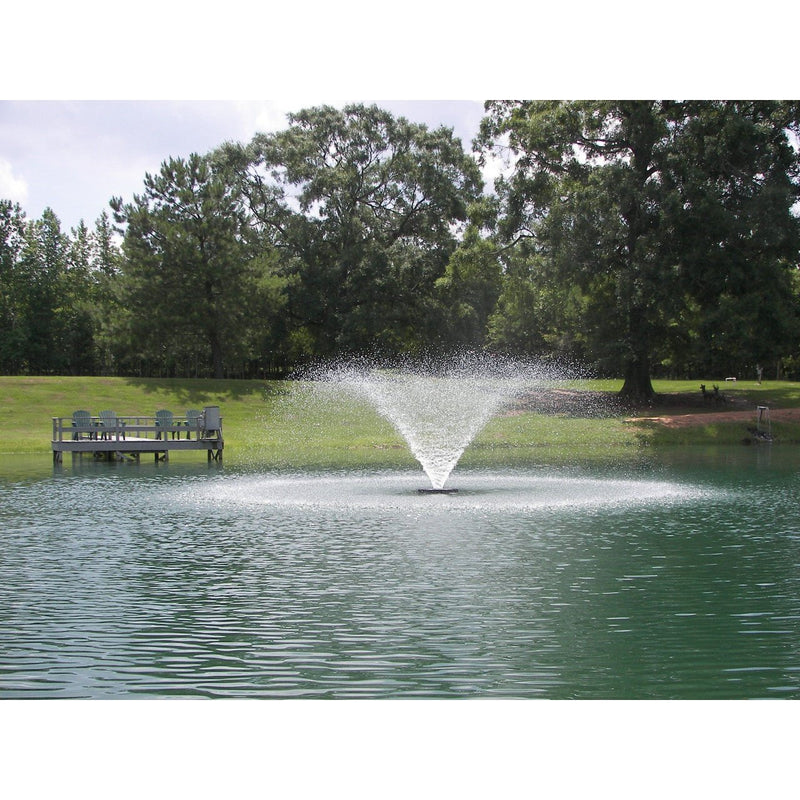
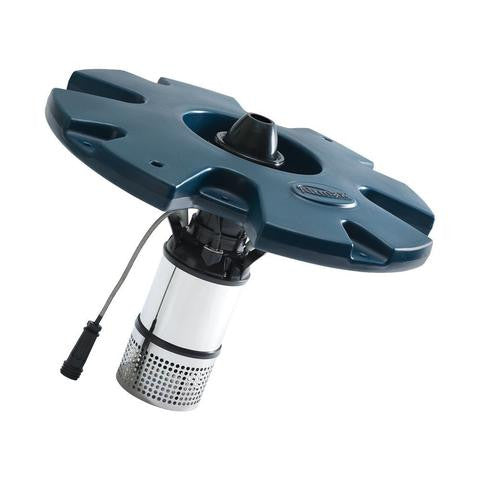
Depth also dictates the effectiveness of different aeration methods. Surface aerators, such as fountains, are generally ineffective for ponds deeper than 6 feet because they do not circulate the bottom water. Conversely, diffused aeration systems struggle in very shallow water (less than 4 feet) because the bubbles do not have enough "rise time" to create a significant water current.
Environmental scale represents a practical boundary. For extremely large lakes, the horsepower required to achieve a single daily turnover may be logistically and financially unfeasible. In such cases, aeration must be used as a localized tool rather than a total system solution.
Constant Consumer vs Oxygen Producer
Transitioning from a chemical-dependent strategy to an aeration-led strategy can be quantified through several metrics, including cost, labor, and ecological stability.
| Metric | Constant Consumer (Chemicals) | Oxygen Producer (Aeration) |
|---|---|---|
| Recurring Cost | High (Monthly Purchase) | Low (Electricity Bill) |
| Labor Requirement | Manual Application Needed | Automated/Continuous |
| Ecological Impact | Accumulates Biological Debt | Reduces Nutrient Load |
| Long-term Stability | Fragile / Subject to Crashes | Resilient / Self-Sustaining |
Practical Tips for System Optimization
Calculating the required air flow is the first step in a successful setup. A general rule of thumb for pond aeration is to provide at least 1.0 to 1.5 Horsepower per surface acre. However, a more technical approach involves calculating the Standard Oxygen Transfer Rate (SOTR) needed to overcome the pond's specific Biological Oxygen Demand.
Selecting the right compressor technology is vital for energy efficiency. For ponds deeper than 8 feet, a rocking piston compressor is the most efficient choice as it can push air against higher back-pressure (PSI). For shallower ponds, a diaphragm compressor may be more cost-effective but will have a shorter lifespan if forced to work at its pressure limit.
Maintain the system by cleaning the air filters every 3 to 6 months. A clogged filter forces the compressor to work harder, increasing heat and reducing the lifespan of the internal seals. Additionally, inspect the diffusers annually for mineral buildup or "bio-fouling," which can increase the back-pressure and reduce the Standard Oxygen Transfer Efficiency (SOTE).
Advanced Considerations: Henry's Law and SOTR
Serious practitioners must account for the impact of temperature and pressure on oxygen solubility. Henry's Law states that the amount of dissolved gas in a liquid is proportional to its partial pressure above the liquid. In practical terms, this means that as water temperature rises, its ability to hold dissolved oxygen decreases.
For instance, water at 0°C can hold 14.6 mg/L of oxygen at saturation, while water at 25°C can only hold 8.3 mg/L. This temperature-solubility relationship makes summer the most critical period for aeration. The Standard Oxygen Transfer Rate (SOTR) provided by manufacturers is typically measured in clean water at 20°C and 0 mg/L DO.
Actual Oxygen Transfer Rate (AOTR) in a field environment will always be lower than the SOTR. Factors such as salinity, altitude, and existing organic loading (alpha factor) reduce the efficiency of the system. Engineers often apply a safety factor of 1.5 to 2.0 when sizing compressors to ensure the Actual Oxygen Request (AOR) of the pond is met even during the hottest summer months.
Technical Case Study: One-Acre Eutrophic Pond
Consider a one-acre pond with an average depth of 8 feet and a history of heavy muck accumulation. The calculated volume is approximately 2.6 million gallons. To achieve a single turnover every 24 hours, the aeration system must move roughly 1,800 gallons per minute.
Installing a 1/2 HP rocking piston compressor with two fine-bubble diffusers provides approximately 4.5 Cubic Feet per Minute (CFM) of air. At a depth of 8 feet, this system will easily exceed the required turnover rate. The electrical draw of this 1/2 HP motor at 115V is roughly 4.1 amps.
The monthly operating cost at $0.12/kWh would be approximately $34.00. Within the first year, this system can be expected to reduce the muck layer by 4 to 6 inches if supplemented with aerobic bacteria. This transformation physically removes several hundred pounds of nitrogen and phosphorus from the cycle, fundamentally altering the pond's trophic state.
Final Thoughts
Transitioning from a chemical-based maintenance routine to a mechanical aeration infrastructure represents a move toward ecological and financial autonomy. By focusing on the underlying metrics of dissolved oxygen and nutrient cycling, a pond owner can stop the cycle of biological debt. The data clearly shows that fostering an aerobic environment is the most efficient way to manage a water body over the long term.
Investing in high-quality compressors, fine-bubble diffusers, and proper system sizing ensures that the pond remains a producer of clean water rather than a drain on resources. This technical approach allows for predictable results and a resilient ecosystem that thrives without constant chemical intervention.
Practitioners are encouraged to measure their current dissolved oxygen levels and calculate their pond's turnover requirements before purchasing equipment. Applying these engineering principles will result in a healthier aquatic environment and a significant reduction in long-term maintenance costs.