

Precision Pond Aeration For Fish Health
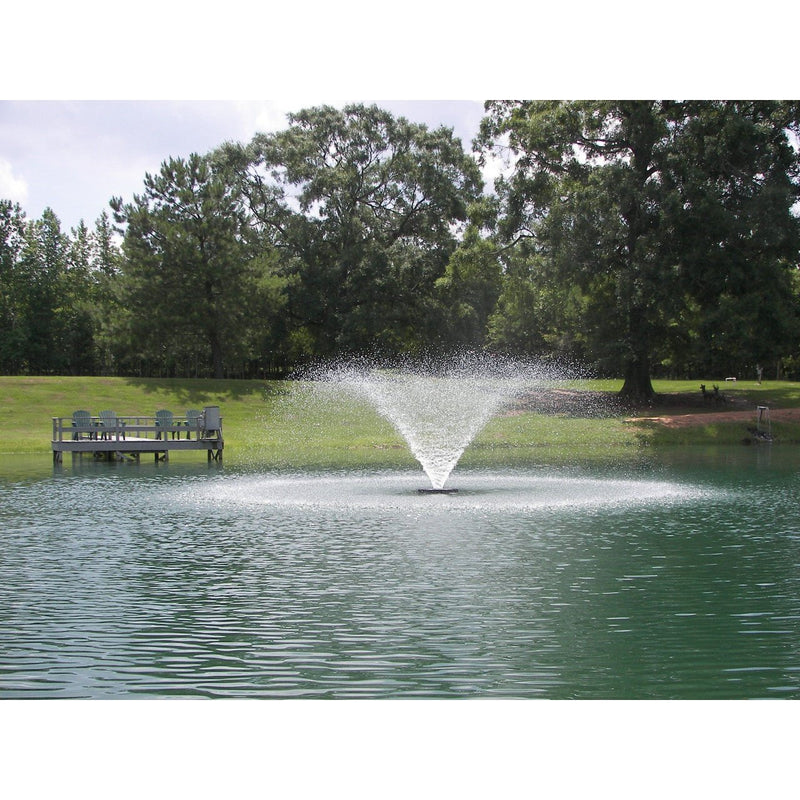
Splashing the surface does nothing for the fish at the bottom where oxygen is actually needed. Surface fountains are for aesthetics; precision bottom diffusers are for life. In the heat of summer, oxygen can't reach the bottom where fish hide from the sun. Precision aeration breaks the thermal barrier, turning your entire pond into a livable zone.
Managing a pond ecosystem requires a departure from visual appeal toward mechanical efficiency. Surface agitation provides localized gas exchange but fails to address the volume of the water column. This results in a stratified environment where the bottom layers become anoxic and toxic. Precision aeration utilizes subsurface diffusion to induce vertical mixing and direct oxygenation where biological demand is highest.
Atmospheric oxygen transfer at the surface is limited by the surface area to volume ratio. In deep or stagnant ponds, this ratio is insufficient to sustain high biomass. Subsurface systems move the entire volume of the pond through a cycle of atmospheric exposure. This process ensures that dissolved oxygen levels remain stable from the surface to the substrate.
Effective management focuses on the Standard Aeration Efficiency (SAE) and the Standard Oxygen Transfer Rate (SOTR). These metrics define the success of an aeration strategy. Understanding the mechanics of gas transfer and fluid dynamics allows for a system design that optimizes fish health and prevents catastrophic die-offs during thermal extremes.
Precision Pond Aeration For Fish Health
Precision pond aeration refers to the engineered delivery of compressed air to the pond floor via fine-pore diffusers. This method targets the hypolimnion—the cold, dense, and typically oxygen-depleted bottom layer of a stratified pond. By introducing micro-bubbles at the lowest point, the system initiates a laminar flow that carries deoxygenated water to the surface.
Dissolved oxygen (DO) is the primary limiting factor in aquatic biological productivity. Warmwater species such as Largemouth Bass and Bluegill typically require a minimum DO level of 5.0 mg/L to maintain metabolic health and growth rates. Coldwater species, including Rainbow Trout, require higher concentrations, often exceeding 6.5 mg/L. When levels drop below 3.0 mg/L, fish enter a state of hypoxia, leading to suppressed immune systems and reduced caloric intake.
Thermal stratification acts as a physical barrier to oxygen distribution. During summer, solar radiation heats the upper layer (epilimnion), making it less dense than the cooler bottom layer (hypolimnion). The transition zone, or thermocline, prevents the two layers from mixing. Without mechanical intervention, the hypolimnion becomes a "dead zone" where organic matter decomposes anaerobically, releasing hydrogen sulfide and methane.
Precision aeration solves this by destratifying the water column. The rising column of bubbles creates an "airlift" effect, pulling thousands of gallons of water per minute toward the surface. This allows for the venting of harmful gases and the absorption of atmospheric oxygen. The result is a thermally uniform environment where fish can utilize the entire depth of the pond for thermal regulation and foraging.
Mechanical Principles and System Architecture
A precision aeration system consists of three primary mechanical components: the compressor, the transport tubing, and the diffuser assembly. Each component must be sized according to the pond’s depth and volume to overcome hydrostatic pressure and friction loss. Failure to match these variables leads to premature mechanical failure or insufficient oxygen transfer.
Compressors are categorized by their pressure-handling capabilities. Linear diaphragm compressors are highly efficient for shallow applications, typically under 8 feet of depth. They operate quietly and provide high CFM (Cubic Feet per Minute) at low PSI. However, they lack the torque to push air against the high backpressure found in deep lakes.
Rocking piston compressors are the industry standard for ponds exceeding 8 feet in depth. These units utilize a piston-driven mechanism to generate the 10 to 30 PSI required to reach the bottom of deep reservoirs. While they consume more energy and generate more heat than diaphragm units, their ability to maintain flow at depth is necessary for large-scale destratification.
The diffuser is the point of gas exchange. Modern precision systems utilize EPDM (Ethylene Propylene Diene Monomer) or PTFE-coated membranes. These membranes are laser-perforated with thousands of microscopic slits. As air enters the diffuser, these slits expand to release "fine bubbles," which maximize the surface area for oxygen transfer and increase the lift capacity of the rising air column.
- Compressor Selection: Match PSI to maximum depth (0.433 PSI per foot of water).
- Tubing Specifications: Use weighted poly-tubing to prevent buoyancy and entanglement.
- Diffuser Placement: Situate at the deepest point to maximize the volume of the "boil" or plume.
- Friction Loss: Account for the length of the run between the compressor and the pond.
Quantifiable Benefits of Subsurface Diffusion
The most significant measurable benefit of precision aeration is the increase in Standard Aeration Efficiency (SAE). Surface aerators often achieve an SAE of 2.6 to 3.2 lbs of oxygen per horsepower per hour. In contrast, well-designed subsurface systems can reach an SAE of 4.0 in deep water. This efficiency stems from the longer "hang time" of bubbles as they travel from the bottom to the surface.
Chemical stratification is eliminated alongside thermal stratification. By moving bottom water to the surface, the system facilitates the oxidation of sediment-bound nutrients like phosphorus. In anoxic conditions, phosphorus is released into the water column, fueling algae blooms. Aerobic conditions at the substrate allow beneficial bacteria to sequester phosphorus, improving water clarity.
Fish growth rates are directly correlated with stable DO levels. Fluctuating oxygen levels, common in non-aerated ponds during the "morning dip" (just before sunrise), force fish to expend energy on respiration rather than growth. Precision aeration stabilizes DO levels 24 hours a day, providing a consistent environment for weight gain and reproductive success.
Winter survival is another critical advantage in colder climates. In freezing temperatures, the rising air column maintains an opening in the ice. This "breathing hole" allows for the continued venting of toxic gases produced by decomposition. Without this vent, gases accumulate under the ice, leading to winter-kill—a common cause of total population loss in small ponds.
Implementation Challenges and Mechanical Risks
The primary challenge in precision aeration is managing backpressure. Backpressure is the cumulative resistance the compressor must overcome, including hydrostatic pressure (water depth) and friction loss within the tubing. Excessive backpressure causes the compressor to run hot, leading to the hardening of diaphragms or the failure of piston seals.
Biological fouling of the diffuser membranes is a frequent maintenance issue. Over time, calcium carbonate, algae, and bacterial slime can clog the micro-slits. This increases backpressure and reduces oxygen transfer efficiency. Using PTFE-coated membranes reduces the rate of fouling, but annual cleaning with a mild acid solution is still required for optimal performance.
System sizing errors are a common pitfall. Many operators underestimate the CFM required to "turn over" the pond volume. A standard benchmark for healthy fish populations is one total pond turnover every 24 to 48 hours. If the compressor is undersized, the plume will not have enough energy to reach the surface, resulting in incomplete mixing and the persistence of anoxic pockets.
Sudden start-up in a highly stratified pond can be lethal. If a pond has been stagnant for months, the bottom water is likely filled with toxic gases and zero oxygen. Turning on a high-power aeration system all at once can "flip" the pond, mixing the toxins into the surface layer and killing the fish. A phased start-up schedule—running for 30 minutes the first day, 1 hour the second, and doubling daily—is required to safely destratify the water.
Environmental and Structural Limitations
Precision aeration is not a universal solution. In very shallow ponds (less than 4 feet deep), the air column does not have enough vertical travel time to create a significant "boil" or induce meaningful circulation. In these environments, surface splashers or horizontal circulators are often more effective at introducing oxygen and moving the water.
High sediment loads can also limit system efficacy. If the pond floor is covered in several feet of loose muck, a diffuser placed directly on the bottom will stir up sediment rather than water. This increases turbidity and can cause gills to become clogged with debris. Diffusers must be mounted on "muck stands" or sleds to keep them 6 to 12 inches above the silt layer.
Electrical distance is a practical boundary for many pond owners. While air tubing can be run for hundreds of feet to avoid running power lines to the water's edge, the friction loss over long distances requires a more powerful compressor. Systems located more than 1,000 feet from a power source may face prohibitive costs for specialized high-torque motors.
Extremely high biological oxygen demand (BOD) can overwhelm even the best aeration systems. If a pond is heavily overstocked or receives massive amounts of organic runoff (such as agricultural waste), the rate of oxygen consumption by bacteria may exceed the rate of mechanical transfer. In these cases, aeration must be combined with nutrient management and sediment removal.
RANDOM SPLASH vs TARGETED FLOW: Comparative Metrics
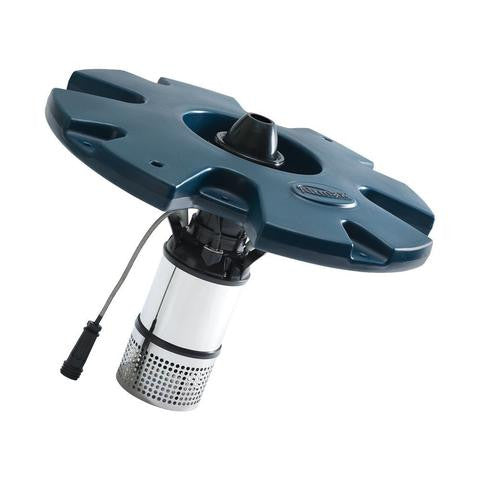
The choice between surface fountains and bottom-up diffusers should be based on technical requirements rather than visual preference. The following table highlights the performance differences across key operational categories.
| Feature | Surface Fountains (Random Splash) | Bottom Diffusers (Targeted Flow) |
|---|---|---|
| Primary Function | Aesthetics & Surface Gas Exchange | Full Water Column Destratification |
| Operating Depth | Ideal for < 5 feet | Ideal for 8–50 feet |
| Energy Efficiency | Low (High HP/Low O2 Transfer) | High (Low HP/High O2 Transfer) |
| Circulation Pattern | Horizontal / Localized | Vertical / Pond-Wide |
| Fish Health Impact | Limited to surface species | Supports bottom-dwelling & deep species |
| Maintenance | Frequent (Clogs in intake/motor) | Minimal (Annual membrane cleaning) |
| Winter Performance | Risk of freezing / damage | Keeps ice open / vents toxic gas |
Operational Best Practices and Tuning
To maximize the lifespan of a precision aeration system, the compressor must be housed in a ventilated cabinet. Heat is the primary enemy of compressor components. Cabinets should include cooling fans and be situated in a shaded area. This ensures that the air being pumped into the pond is as cool as possible, which slightly improves the saturation potential of the gas.
Fine-tuning the air distribution is necessary for irregular pond shapes. If a pond has multiple coves or "fingers," a single diffuser will not suffice. Manifolds with adjustable valves allow the operator to balance the flow between multiple diffusers. This ensures that even the most stagnant corners of the pond receive adequate circulation.
Regular pressure monitoring is an essential part of system maintenance. Installing a pressure gauge at the compressor outlet allows for the detection of leaks or clogs. If the pressure rises above the manufacturer’s recommended PSI, it indicates a clogged diffuser. A drop in pressure usually indicates a leak in the airline or a failing compressor seal.
- Venting: Ensure the compressor cabinet has at least 50 square inches of ventilation.
- Leveling: Place diffusers on level ground to ensure even bubble distribution across the membrane.
- Timing: Run the system 24/7 during the summer months to prevent re-stratification.
- Inspection: Check air filters monthly; a dirty filter forces the compressor to work harder, increasing heat.
Advanced Aerodynamic and Hydrodynamic Considerations
Serious practitioners should understand the physics of bubble rise velocity. Smaller bubbles rise more slowly than larger bubbles. This increased residence time in the water column allows for more oxygen to dissolve into the water before the bubble reaches the surface. This is why "fine-pore" diffusion is technically superior to "coarse-pore" systems.
The "entrainment ratio" is a critical metric for destratification. As bubbles rise, they create a friction-based drag that pulls surrounding water upward. A high-efficiency diffuser can move approximately 10 to 20 times more water by volume than the volume of air it releases. Optimizing the CFM-to-depth ratio ensures that the entrainment flow is strong enough to break the surface tension of the thermocline.
Henry’s Law states that the amount of dissolved gas in a liquid is proportional to its partial pressure. In deeper water, the pressure is higher, which means oxygen is forced into the water more efficiently at the bottom than at the surface. By releasing air at 15 or 20 feet of depth, you are leveraging hydrostatic pressure to maximize the concentration of dissolved oxygen.
Fick’s Law of Diffusion also applies here. The rate of gas transfer is proportional to the surface area of the gas-liquid interface. Thousands of tiny bubbles provide exponentially more surface area than a single large splashing fountain. This is the scientific basis for the superiority of precision aeration in high-biomass fish ponds.
Technical Scenarios and Sizing Calculations
Consider a 1-acre circular pond with a maximum depth of 12 feet. To determine the necessary equipment, we first calculate the volume of the pond in acre-feet. If the average depth is 6 feet, the pond contains 6 acre-feet of water. To achieve one turnover every 24 hours, the system must move approximately 2 million gallons of water per day.
A single rocking piston compressor producing 1.5 CFM at 10 PSI, connected to a high-efficiency diffuser at the 12-foot mark, can typically move 1,500 to 2,000 gallons of water per minute via entrainment. Over a 24-hour period, this system would move approximately 2.1 to 2.8 million gallons. This fulfills the turnover requirement and ensures a stable DO environment for a high-density fish population.
If the same pond were only 5 feet deep, the entrainment flow per CFM would drop significantly because the bubbles have less time to pull water upward. In this scenario, the operator would need multiple diffusers and a higher CFM output to achieve the same turnover rate. This demonstrates why depth is a friend to the efficiency of subsurface aeration.
For a pond with a high "fish load" (exceeding 500 lbs of fish per acre), the sizing should be increased by 25-50%. Large populations of fish and the resulting waste increase the biological oxygen demand. In these cases, 2.0 to 2.5 CFM per acre is a safer technical target to prevent "crashes" during hot, windless summer nights.
Final Thoughts
Precision pond aeration represents the bridge between hobbyist pond management and professional limnology. While surface fountains provide a visual benefit, they are functionally limited in their ability to sustain high-density fish populations in deep water. By focusing on the mechanics of destratification and fine-pore diffusion, you address the root cause of pond stagnation and hypoxia.
The data clearly supports the use of bottom-up systems for ponds deeper than 8 feet. The increase in Standard Aeration Efficiency and the stabilization of dissolved oxygen levels throughout the water column provide a measurable return on investment through healthier fish and reduced algae growth. Proper sizing, mechanical maintenance, and a cautious start-up procedure are the keys to long-term success.
Implementing a precision system requires an understanding of your pond's specific geometry and biological needs. By applying the principles of laminar flow and gas transfer, you can transform a stagnant, stratified pond into a productive and thermally uniform ecosystem. Continuous monitoring and technical tuning will ensure the system remains efficient for years to many come.