

Fish Stocking Secrets For Small Ponds
Your pond's size doesn't limit your fish—its oxygen level does. Standard pond owners stock fish and hope for the best, usually ending up with stunted growth and 'gasping' fish. Pro managers know that aeration is the cheat code for carrying capacity. By doubling the oxygen, you can double the fish and triple the growth rate. Don't just build a puddle; build a high-performance habitat.
Fish Stocking Secrets For Small Ponds
Fish stocking is often viewed as a simple calculation of surface area, but professional managers treat it as a mass balance problem involving dissolved oxygen (DO) and nutrient loading. The fundamental constraint of any small pond is its carrying capacity, which is the maximum biomass of fish a body of water can sustain without crashing. In a standard, non-aerated pond, this limit is dictated by the natural diffusion of oxygen at the surface and the oxygen produced via photosynthesis during daylight hours.
Carrying capacity is measured in pounds of fish per acre. A typical unmanaged pond in temperate climates might support 100 to 400 pounds of fish per acre depending on its fertility. When you exceed this density, the biological oxygen demand (BOD) from fish respiration and the decomposition of waste exceeds the pond's ability to replenish DO. This leads to chronic stress, which manifests as reduced immune response, slow growth, and eventually, mass mortality during a "summer kill" or "winter kill" event.
Technical stocking success relies on understanding the relationship between feeding and oxygen. Every pound of high-protein fish food added to a system requires a specific amount of oxygen to process—both by the fish and by the nitrifying bacteria that break down the resulting ammonia. Pro habitats bypass these natural limits by using mechanical aeration to maintain DO levels at or near 100% saturation regardless of the biological load.
The Mechanics of High-Performance Aeration
Aeration works through two primary mechanisms: oxygen transfer at the air-water interface and the elimination of thermal stratification. Standard ponds often suffer from a thermocline, where a layer of warm, oxygen-rich water sits on top of a cold, anoxic (oxygen-depleted) bottom layer. This effectively cuts the usable habitat of your pond in half. Mechanical systems eliminate this barrier, circulating the entire water column and exposing all water to the atmosphere.
Sub-surface diffusion is the preferred method for ponds deeper than six feet. This system uses an onshore compressor to pump air through weighted tubing to a diffuser plate on the pond floor. As the bubbles rise, they create a "laminar flow" that pulls cold, bottom water to the surface. Fine-bubble diffusers are significantly more efficient than coarse-bubble systems because they increase the total surface area of the air-water interface, allowing for a higher Standard Oxygen Transfer Rate (SOTR).
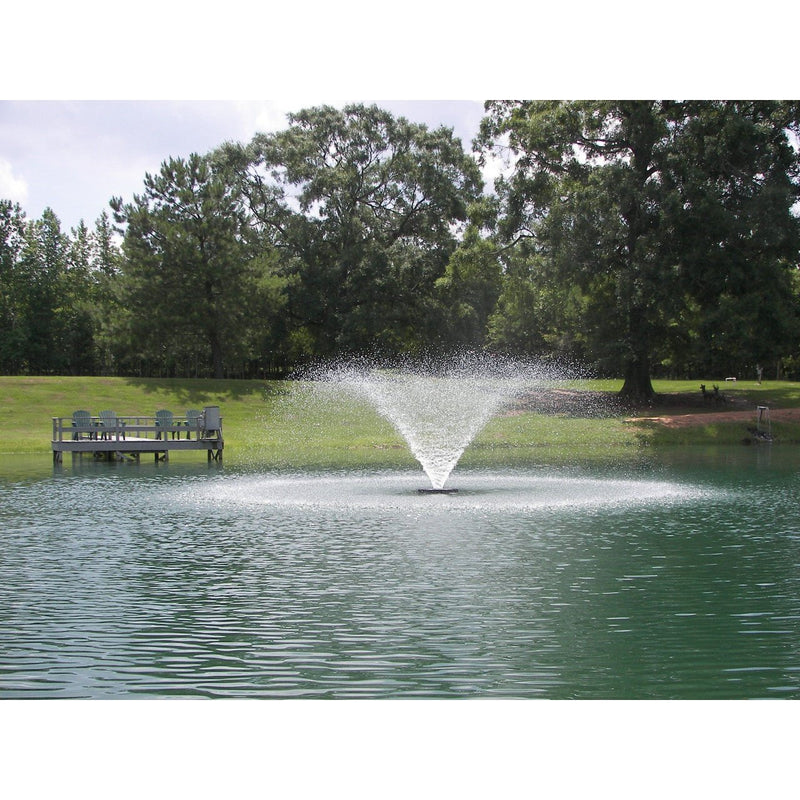
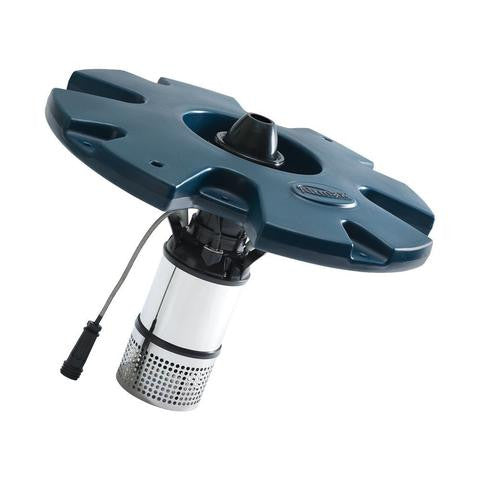
Surface aeration, such as paddlewheels or floating fountains, is more effective in shallow water (under six feet). These units work by splashing water into the air, creating high-velocity droplets that absorb oxygen rapidly. Data shows that a 1-HP paddlewheel can transfer between 1.5 and 2.5 pounds of oxygen per hour. This mechanical injection of DO allows for intensive stocking densities that are impossible in a natural state.
Advantages of Managed Carrying Capacity
The primary benefit of a pro habitat is the dramatic improvement in Feed Conversion Ratio (FCR). Research indicates that fish maintained in high-DO environments (above 5 mg/L) convert food into body mass more efficiently. In a study of Nile Tilapia, systems with fine-bubble aeration achieved an FCR of 1.18, compared to 1.46 in lower-oxygen systems. This means you use less food to grow more fish, reducing both cost and nutrient waste.
Growth rates, or Specific Growth Rate (SGR), are significantly higher in aerated environments. When DO levels drop below 3 mg/L, most warm-water species like Largemouth Bass and Bluegill stop feeding. They enter a metabolic maintenance mode where all energy is spent simply staying alive. Constant aeration ensures fish remain in an anabolic (growth) state 24 hours a day, potentially tripling the growth rate of your stock in a single season.
Water quality stability is a secondary but critical advantage. Aeration supports aerobic bacteria that oxidize toxic ammonia (NH3) into nitrite (NO2) and then into relatively harmless nitrate (NO3). High-performance systems can maintain ammonia levels below 0.32 mg/L even in heavily stocked ponds. This chemical stability prevents the "yo-yo" effect of algae blooms and crashes that plague standard puddles.
Common Pitfalls and Management Mistakes
Under-sizing the aeration system is the most frequent error. A rule of thumb for pro-level management is roughly 1.5 horsepower of aeration per surface acre. Using a small, decorative fountain for a high-density fish pond is a recipe for disaster. Decorative units move very little water from the bottom, meaning the majority of the pond volume remains stagnant and dangerous to your fish.
Abruptly starting a bottom aeration system in an established pond can cause a "turnover" kill. If a pond has been stagnant for years, the bottom layer is full of toxic gases like hydrogen sulfide. Turning on a powerful diffuser pulls those toxins to the surface all at once, stripping the oxygen and killing the fish within minutes. Professionals use a "startup schedule," running the system for only 30 minutes the first day and doubling the time daily until it runs 24/7.
Over-feeding is the next major mistake. Even with high-performance aeration, there is a limit to how much organic matter a system can process. Excess food that goes uneaten sinks to the bottom and consumes vast amounts of oxygen as it rots. You must monitor fish behavior; if they aren't aggressively feeding at the surface, you should stop adding nutrients regardless of what the stocking chart says.
Environmental and Physical Limitations
Temperature is the ultimate physical limit of oxygen solubility. Warm water holds less oxygen than cold water. At 52°F, water can hold approximately 40% more oxygen than at 80°F. This is why most fish kills happen in late summer; the water's capacity to hold oxygen is at its lowest just when the fish's metabolic demand is at its highest. Aeration can only push DO to 100% saturation; it cannot change the physical laws of solubility.
Altitude also plays a role in aeration efficiency. Ponds at higher elevations have less atmospheric pressure, which reduces the rate at which oxygen can be forced into the water. If you are managing a pond at 5,000 feet, you may need 20% more aeration capacity than a manager at sea level to achieve the same result. You must account for these geographic variables when sizing your compressors and diffusers.
Power reliability is a critical constraint for pro habitats. When you stock a pond to its maximum aerated capacity, you are "oxygen dependent." If the power goes out for more than a few hours on a hot summer night, the biomass of fish will consume the remaining oxygen rapidly, leading to a total loss. Serious practitioners often invest in battery backups or automated alarms to alert them to power failures.
System Comparison: Standard Puddle vs. Pro Habitat
| Metric | Standard Puddle (Natural) | Pro Habitat (Managed) |
|---|---|---|
| Typical Carrying Capacity | 100 - 400 lbs / acre | 1,000 - 2,500+ lbs / acre |
| Dissolved Oxygen (DO) | 2 - 8 mg/L (Fluctuating) | 5 - 9 mg/L (Stable) |
| Feed Conversion Ratio (FCR) | 1.5 - 2.0 | 1.1 - 1.3 |
| Risk of Fish Kill | High (Summer/Winter) | Low (Unless power fails) |
| Usable Habitat | Surface only in summer | Total pond volume |
Practical Tips for Pond Optimization
- Calculate Volume, Not Just Area: Stocking based on surface acres is a rough estimate. For high-density management, calculate acre-feet (surface acres x average depth) to understand the total oxygen reservoir you are working with.
- Placement Matters: Position diffusers in the deepest part of the pond to maximize the "lifting" effect of the bubble column. One diffuser in 10 feet of water is more effective at circulating the pond than three diffusers in 3 feet of water.
- Monitor Nightly DO Sags: Oxygen levels are always lowest just before dawn because plants respire (consume oxygen) at night. If you suspect your stocking is too high, check your DO levels at 5:00 AM.
- Use Sinking Feed for Bottom Feeders: In aerated ponds, you can stock species like Catfish at much higher densities. Use a high-quality sinking pellet to ensure bottom-dwellers get nutrients without competing with surface-oriented species like Bass.
- Manage the Algae: While some algae provide oxygen via photosynthesis, excessive blooms create a massive oxygen drain at night. Use aeration to keep water moving, which discourages the growth of stagnant-water species like blue-green algae.
Advanced Considerations for High-Density Systems
Serious practitioners often move beyond simple aeration into the realm of automated water quality monitoring. Installing a permanent DO probe with a Wi-Fi or cellular link allows you to monitor oxygen levels in real-time. Advanced controllers can automatically turn on secondary aeration stages if DO levels drop below a pre-set threshold, providing a safety net for hyper-intensive stocking.
Nitrogen stripping is another advanced concept. In very high-density ponds, nitrogen gas can become supersaturated, leading to "gas bubble disease" in fish. Aeration helps "strip" these excess gases out of the water. If you are stocking at aquaculture-level densities (over 2,000 lbs per acre), ensuring your aerator provides enough surface agitation to vent these gases becomes as important as adding oxygen.
Organic sludge management is the final frontier of the pro habitat. Even with perfect aeration, "muck" will accumulate on the pond floor over time. This muck is a concentrated source of biological oxygen demand. Using specialized aerobic bacteria "pucks" in conjunction with bottom aeration can physically digest this sludge, turning it into harmless gas and further increasing the pond's carrying capacity over several seasons.
Example Scenario: The 0.1 Acre High-Output Pond
Consider a small backyard pond of 0.1 surface acres with an average depth of 6 feet. In a standard setup, the owner might safely stock 10-15 Largemouth Bass and 50 Bluegill. Without aeration, this pond would likely struggle in August, with fish gasping at the surface during a heatwave.
By installing a 1/4 HP linear piston compressor and a single fine-bubble diffuser, the owner transforms the system into a Pro Habitat. The usable volume increases because the bottom 3 feet of the pond are now oxygenated. The owner can now stock 30 Bass, 150 Bluegill, and even 20 Channel Catfish. With supplemental feeding and continuous aeration, the total biomass can reach 200 pounds (the equivalent of 2,000 lbs per acre) without risking a crash. The fish grow to harvestable size in half the time of the natural pond.
Final Thoughts
Maximizing the potential of a small pond requires a shift in perspective from "natural beauty" to "engineered habitat." Dissolved oxygen is the primary currency of this system. By investing in high-quality aeration, you remove the biological ceiling that limits growth and density in standard ponds. You are no longer at the mercy of the weather or the seasons.
Consistency is the hallmark of a professional manager. Running your aeration 24/7, monitoring your feeding rates, and understanding the chemistry of your water column are the steps that separate a pro habitat from a standard puddle. The data is clear: more oxygen equals more fish, better health, and faster results.
Apply these technical principles to your own system and watch the performance of your aquatic habitat transform. Whether you are managing for trophy fishing or food production, the engineering of oxygen is your most powerful tool. Experiment with diffuser placement and monitor your results to find the perfect equilibrium for your specific environment.