

How Wind Direction Changes Pond Circulation and Algae Growth
The wind is moving your algae. Are you moving your air to match? Wind direction is the 'hidden hand' in your pond's health. It creates surface currents that can either trap nutrients in one corner or help your aerator clear them out. Learn how to use the prevailing wind to your advantage.
Pond management often focuses on chemical treatments or generic aeration kits. However, a purely mechanical understanding of how wind interacts with the water surface provides a superior baseline for efficiency. Wind-driven circulation is a primary driver of dissolved oxygen (DO) distribution and nutrient transport.
Failure to account for wind direction results in localized nutrient loading and aerobic dead zones. This article examines the fluid dynamics of wind-driven ponds and provides a technical framework for optimizing aeration placement.
How Wind Direction Changes Pond Circulation and Algae Growth
Wind direction dictates the vector of surface water movement. When wind exerts stress on the pond surface, it transfers kinetic energy to the water column. This interaction typically creates a surface current moving at approximately 3% to 4% of the wind speed.
In a closed-basin system like a pond, this surface movement is not isolated. To maintain mass balance, the water pushed to the leeward (downwind) side must return. This creates a sub-surface return current that flows back toward the windward side along the thermocline or the pond floor.
Wind-driven circulation serves as a natural transport mechanism for buoyant materials. Cyanobacteria (blue-green algae) and filamentous algae often possess gas vesicles or structures that allow them to remain near the surface. The prevailing wind concentrates these organisms at the leeward bank.
This concentration, known as Exposed Accumulation, creates a localized environment where nutrient density and sunlight exposure are maximized. Without intervention, the leeward corner becomes an incubator for blooms. Conversely, wind-driven turbulence can disrupt the vertical distribution of algae. Research indicates that wind speeds exceeding 3.0 m/s often force buoyant algae into deeper, darker layers, effectively slowing bloom progression through light limitation.
The Mechanics of Wind-Induced Water Movement
Understanding how wind influences a pond requires a look at fetch, shear stress, and Langmuir circulation. These variables determine the efficiency of natural gas exchange.
Fetch and Surface Stress
Fetch refers to the unobstructed distance over which wind can blow across the water. A longer fetch allows for the development of larger waves and greater surface turbulence. This turbulence increases the surface area available for atmospheric oxygen diffusion.
In ponds with a fetch of less than 100 meters, wave development is minimal. In these systems, wind primarily moves the top 10 to 20 centimeters of water. In larger basins, the wind can drive deeper circulation patterns that help mitigate thermal stratification.
Langmuir Circulation Cells
When wind speeds are consistent, they often generate Langmuir circulation. These are counter-rotating vortices that align parallel to the wind direction. You can observe these as "windrows"—streaks of foam or algae on the surface.
These cells are critical because they facilitate vertical mixing. In the areas between the rows (the convergence zones), water is pulled downward. In the areas where the vortices diverge, water is pushed upward. This process helps distribute dissolved oxygen more deeply than simple surface diffusion.
The 3% Surface Velocity Rule
The relationship between wind speed ($U$) and surface water velocity ($v_s$) is a standard metric in aquatic fluid dynamics. Using the equation $v_s \approx 0.03 \times U$, one can calculate the rate of nutrient transport across a basin. A 10 mph wind (approx. 4.4 m/s) generates a surface current of roughly 0.3 mph. Over a 24-hour period, this can transport surface matter over seven miles, ensuring that even a large pond will see significant lateral movement.
How to Align Aeration with Wind Patterns
The goal of mechanical aeration is to supplement or correct natural wind patterns. Strategic placement ensures that the energy from the wind works in tandem with the energy from the compressor.
Diffuser Placement Strategy
Diffused aeration systems should be placed in the deepest parts of the pond to maximize the "chimney effect" of rising bubbles. However, their lateral positioning should consider the prevailing wind.
Placing diffusers on the windward side of the pond allows the rising water column to merge with the wind-driven surface current. This creates a unified flow that pushes oxygenated water across the entire surface. If diffusers are placed only on the leeward side, they often work against the wind, leading to "short-circuiting" where the oxygenated water is trapped in a small loop near the bank.
Surface Aerator Positioning
Surface aerators (splashers) are highly effective at localized oxygen transfer. To maximize their reach, they should be positioned at the start of the fetch (the windward side). The wind will then carry the oxygen-rich surface water across the pond.
If a pond has a high degree of Sheltered Circulation—areas where hills or trees block the wind—these zones must be targeted with independent mechanical aeration. These areas act as stagnation points where the natural 3% surface velocity rule fails.
Benefits of Synchronized Circulation
Optimizing a pond for wind and air alignment provides measurable improvements in water chemistry and maintenance costs.
- Enhanced Oxygen Transfer Efficiency: By placing aerators where wind turbulence is already high, the Standard Oxygen Transfer Efficiency (SOTE) increases. The wind breaks up the surface tension, allowing bubbles from diffusers to off-gas and exchange more effectively.
- Mechanical Debris Removal: Strategic flow encourages floating debris and algae to collect in a single, accessible "collection zone" on the leeward side. This reduces the labor required for manual skimming or spot treatments.
- Elimination of Thermal Stratification: Combined wind and mechanical energy more effectively break the thermocline. This prevents the formation of an anaerobic hypolimnion (the cold, oxygen-depleted bottom layer).
- Nutrient Dilution: Constant circulation prevents the buildup of ammonia and phosphorus in the "dead zones" common in irregular-shaped ponds.
Challenges and Common Mistakes
Most pond owners ignore the wind-water interface, leading to preventable system failures.
The "Symmetry Fallacy"
Many installers place aerators in the geometric center of a pond for aesthetic reasons. In a windy environment, this is often inefficient. If the prevailing wind is strong, the central upwelling will be pushed leeward immediately, leaving the windward half of the pond under-aerated.
Ignoring Seasonal Wind Shifts
Prevailing winds often shift 180 degrees between summer and winter. A system optimized for summer cooling may be poorly positioned for winter gas exchange under ice. Managers should analyze annual wind roses (data plots showing wind direction and speed) before finalizing placement.
Over-Reliance on Natural Mixing
There is a common misconception that wind alone is sufficient for aeration. While wind adds oxygen, it rarely provides enough vertical mixing in ponds deeper than 6 feet. Relying solely on wind can lead to a "turnover" event, where a sudden storm mixes anaerobic bottom water with the surface, causing a rapid oxygen crash and fish kills.
Limitations of Wind-Driven Systems
Wind is an inconsistent energy source. Understanding its limits is as important as understanding its benefits.
Fetch Constraints
Small ponds (under 0.25 acres) often lack the surface area to develop significant wind stress. In these cases, wind direction matters less than the mechanical capacity of the aerator. The "3% rule" is less reliable in highly sheltered, small-scale basins.
Topographical Interference
High-density vegetation, fences, or nearby buildings create "wind shadows." If the prevailing wind is blocked by a line of willow trees, the pond will behave as if it is in a low-wind environment regardless of the actual weather.
The 3.0 m/s Threshold
Below 3.0 m/s (approx. 6.7 mph), wind energy is insufficient to disrupt the buoyancy of many algae species. During hot, stagnant summer days, wind direction is functionally irrelevant. During these periods, mechanical aeration must provide 100% of the circulation energy.
Comparison: Exposed Accumulation vs. Sheltered Circulation
The following table compares the two primary environmental states influenced by wind direction.
| Variable | Exposed Accumulation (Leeward) | Sheltered Circulation (Windward/Blocked) |
|---|---|---|
| Nutrient Density | High (Surface matter is pushed here) | Low to Moderate |
| Algae Growth Risk | High (Concentrated blooms) | Low (Material is moved away) |
| Oxygen Levels | Variable (High day/Low night) | Stable but potentially lower |
| Aeration Goal | Break up accumulation/surface scum | Provide base circulation/oxygen |
| Maintenance Need | Mechanical skimming/Spot treatment | Constant mechanical turnover |
Practical Tips for Optimization
To maximize the efficiency of your pond's circulation, follow these technical best practices:
- Map the Prevailing Wind: Use local airport data or a portable anemometer to determine the primary wind direction during the hottest months (July-August).
- Lead the Wind: Place diffusers approximately 1/3 of the way into the pond from the windward shore. This allows the upwelling to "catch" the wind as it begins its transit across the fetch.
- Create a "Sump" Zone: If the pond is being designed, ensure the leeward bank has a steep slope or a dedicated area for skimming. This is where Exposed Accumulation will occur, and making it easy to clean will save hours of labor.
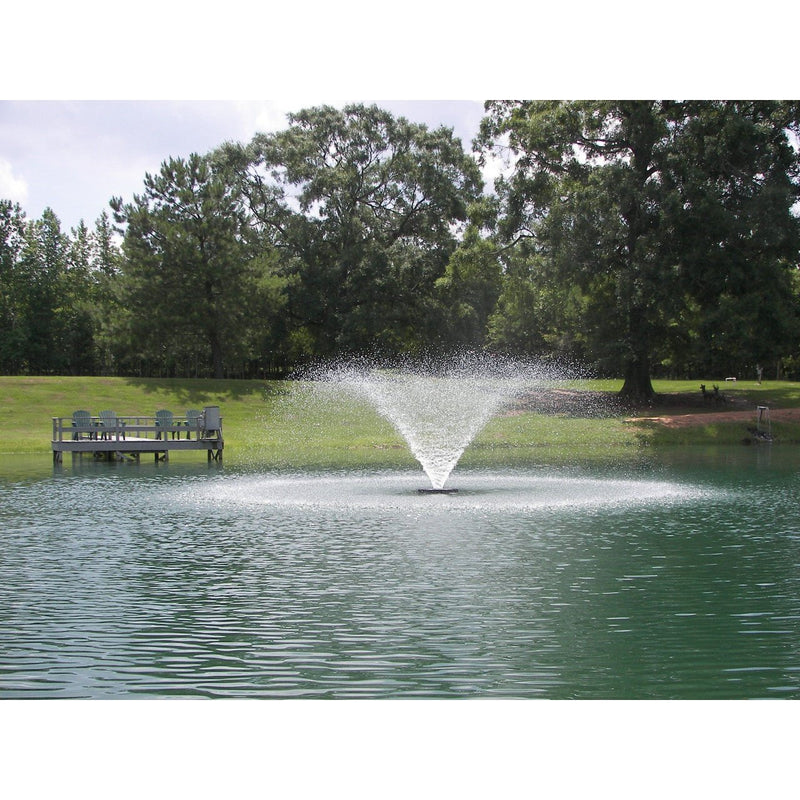
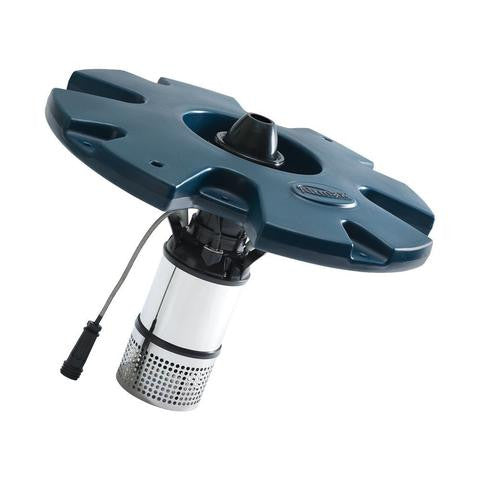
- Use Directional Fountains: If using a floating fountain, consider a model with an adjustable nozzle. Aim the spray slightly into the wind to increase the hang time of droplets, which maximizes oxygen absorption.
- Buffer the Banks: Use emergent vegetation (like rushes or sedges) on the leeward bank to act as a natural filter for the algae being pushed there by the wind.
Advanced Considerations: CFD and OTR
For professional managers, the interaction of wind and air can be quantified using Computational Fluid Dynamics (CFD) and Oxygen Transfer Rates (OTR).
Computational Fluid Dynamics (CFD)
CFD modeling allows managers to simulate how different aerator placements will interact with wind vectors. By inputting the pond's bathymetry (depth map) and the average wind speed, one can identify "stagnation points" where the water is likely to remain still despite mechanical aeration. This is especially useful for irregular "L" or "U" shaped ponds where the wind cannot reach every corner.
Oxygen Transfer Rates (OTR)
The OTR of a system is not a fixed number. It is influenced by the "Oxygen Deficit," which is the difference between current DO levels and the saturation point. Wind increases the OTR by constantly bringing "new" water to the surface and stripping away the boundary layer of saturated water. In high-wind scenarios, a smaller compressor can often achieve the same OTR as a larger unit in a sheltered environment.
Scenario: The 2-Acre Kidney-Shaped Pond
Consider a 2-acre pond with a prevailing wind from the Southwest. The Northeast corner is a narrow cove.
In a standard setup, the owner might place one large diffuser in the center. However, the Southwest wind creates a surface current that carries all floating organic matter into the Northeast cove. Because the cove is narrow, the wind energy dies out, and the matter becomes trapped—this is a classic Exposed Accumulation zone.
The optimized technical solution involves:
1. Moving the primary diffuser to the Southwest (windward) side of the main basin.
2. Installing a secondary, smaller circulator in the Northeast cove aimed back toward the center.
3. This secondary unit breaks the "trap" and forces the nutrients back into the main circulation loop where the larger aerator and wind can process them.
Final Thoughts
Wind direction is a predictable and powerful force in pond ecology. By understanding the 3% surface velocity rule and the dynamics of Langmuir circulation, managers can move away from "trial and error" aeration and toward mechanical optimization.
The most efficient ponds are those where the mechanical aeration system and the prevailing wind work as a single, integrated unit. Prioritize the placement of diffusers to leverage the natural fetch, and pay close attention to leeward accumulation zones.
Experimentation with placement during the peak of summer will reveal the most effective configuration. As wind speeds fluctuate, your ability to predict and harness these currents will determine the long-term clarity and health of the water.