

More Aeration Is Not Always Better
More air isn't always better. It's about the right movement, not the most bubbles. Is 'over-aeration' a real threat or a pond myth? While you can't really have too much oxygen, you CAN have too much turbulence. If you're stirring up bottom muck or stressing your fish with high-velocity currents, you're doing it wrong. Let's find the sweet spot.
Aeration serves two primary mechanical functions: gas exchange and thermal destratification. When these processes are mismanaged through excessive force, the biological stability of the pond is compromised. Precision in flow management ensures that oxygen levels remain at saturation without inducing mechanical stress on the aquatic environment.
This article examines the technical limits of pond aeration. We will analyze how to calculate oxygen demand, the physics of bubble-induced lift, and the specific thresholds where mechanical movement transitions from beneficial to destructive. Understanding these metrics is essential for maintaining a high-efficiency aquatic system.
The term "over-aeration" is often misunderstood. From a purely chemical perspective, it is nearly impossible to force too much dissolved oxygen (DO) into water using standard ambient air. Water has a physical saturation point dictated by temperature and atmospheric pressure; once reached, additional air simply escapes to the surface. Super-saturation typically only occurs with pure oxygen injection systems or rapid temperature shifts, not standard air diffusers.
The reality of "over-aeration" is mechanical rather than chemical. The threat lies in excessive turbulence and the disruption of the benthic zone. If an aeration system is oversized for the volume of the pond, the resulting vertical lift can create a "washing machine" effect. This prevents sediment from settling and forces fish to expend excessive metabolic energy to maintain position.
In many industrial and large-scale aquaculture settings, aeration is calculated based on Oxygen Transfer Efficiency (OTE). Standard Overkill occurs when the power input (HP) far exceeds the biological oxygen demand (BOD) and the physical capacity of the water column to handle the resulting displacement. Precision Flow, by contrast, matches the CFM (Cubic Feet per Minute) to the specific depth and surface area to achieve turnover without chaos.
Common myths suggest that high aeration causes "gas bubble disease." In reality, this condition is usually caused by nitrogen supersaturation or rapid pressure changes in deep-well water, not by surface-level diffusers. The primary technical concern remains the physical impact of water velocity on the pond's internal structure and its inhabitants.
The Physics of Gas Exchange and Oxygen Transfer
To understand the limits of aeration, one must first understand the physics of the air-water interface. Oxygen enters the water through two pathways: direct contact at the surface and the rising surface area of bubbles. Smaller bubbles, known as fine-pore aeration, provide significantly more surface area per cubic foot of air than large bubbles, leading to higher Standard Oxygen Transfer Efficiency (SOTE).
The rate of transfer is governed by Fick’s Law of Diffusion. The rate of gas transfer is proportional to the concentration gradient. This means that as the water approaches its saturation point, the efficiency of the aerator decreases. Running a high-output compressor in water that is already at 95% saturation results in diminishing returns and wasted electrical energy.
Mechanical turnover is the second critical component. An aerator acts as an air-lift pump. As bubbles rise, they pull cooler, oxygen-depleted water from the bottom (the hypolimnion) to the surface (the epilimnion). This process, known as destratification, ensures a uniform temperature and oxygen profile. However, if the turnover rate is too high, it can prevent the formation of natural thermal layers that some species require for winter dormancy or summer cooling.
Standard calculations for pond turnover suggest that the entire volume of the pond should be moved 1 to 2 times every 24 hours. Exceeding this rate by a factor of five or more introduces hydraulic shear forces that can damage delicate microorganisms and keep particulate matter in permanent suspension.
The Mechanical Consequences of Excessive Turbulence
When aeration exceeds the physical requirements of the pond, the first casualty is water clarity. High-velocity plumes from bottom-mounted diffusers create a toroidal flow pattern. If the velocity at the pond floor exceeds the settling velocity of the sediment, "muck" and organic debris are pulled into the water column. This increases turbidity and releases sequestered nutrients like phosphorus into the light-rich surface zone, often triggering algae blooms.
Fish physiology is also impacted by high-velocity currents. While many species thrive in moving water, a pond is not a river. Constant high-velocity turbulence forces fish to swim continuously to maintain stability. This increases their metabolic rate, meaning they require more food and produce more waste, which in turn increases the biological oxygen demand—a counterproductive cycle.
In shallow ponds, the risk of "over-aeration" via turbulence is significantly higher. In water less than 4 feet deep, the air plume does not have enough vertical space to dissipate its energy. The resulting surface boil can erode shorelines and disrupt the nesting sites of certain fish species. Precision Flow management in shallow water requires spreading the air across multiple small diffusers rather than one high-output station.
Thermal disruption is another technical risk. In the heat of summer, the bottom of a deep pond is often significantly cooler than the surface. Aggressive aeration eliminates this "cool zone." For cold-water species like trout, this can be fatal, as the entire water column is forced to reach the ambient air temperature, stripping the fish of their thermal refuge.
Technical Comparison: Standard Overkill vs. Precision Flow
Selecting aeration equipment requires a data-driven approach rather than a "bigger is better" mindset. The following table illustrates the technical differences between an unbalanced "over-aerated" system and a precision-engineered system.
| Metric | Standard Overkill | Precision Flow |
|---|---|---|
| Bubble Size | Coarse (Large bubbles) | Fine (Micro-bubbles) |
| Transfer Efficiency | Low (High energy waste) | High (Maximized O2 per Watt) |
| Water Velocity | > 1.0 ft/sec (Turbulent) | 0.1 - 0.3 ft/sec (Laminar) |
| Sediment Impact | High Resuspension (Turbid) | Minimal Disturbance (Clear) |
| Energy Consumption | High (Excessive HP) | Optimized (Variable Speed) |
Precision Flow systems utilize high-efficiency rocking piston compressors or regenerative blowers paired with membrane diffusers. These systems prioritize the surface area of the bubbles over the sheer volume of air. By distributing several smaller diffusers across the pond floor, you achieve uniform oxygenation without creating localized zones of high-velocity turbulence.
Sizing Your System for Optimal Oxygenation
To avoid the pitfalls of excessive turbulence, one must calculate the pond's specific requirements. The most important metric is the Oxygen Consumption Rate (OCR). This is the sum of the respiration of fish, the decomposition of organic matter by bacteria, and the chemical oxidation of minerals. In most recreational ponds, the benthic demand (decomposition at the bottom) accounts for the majority of oxygen use.
The standard formula for sizing an aerator involves determining the pond's volume in acre-feet (1 acre-foot = 325,851 gallons). For a typical pond with moderate fish loading, a turnover rate of once every 12 to 24 hours is the baseline. If you are using a 1/4 HP compressor that moves 2.0 CFM, you must ensure that the rising air plume is not concentrated in a single, narrow area.
Depth plays a crucial role in sizing. The deeper the water, the more pressure (PSI) the compressor must overcome. Every 2.31 feet of water depth adds 1 PSI of backpressure. A compressor that provides 4 CFM at 0 PSI might only provide 2 CFM at 10 feet of depth. Sizing for "Precision Flow" means selecting a compressor that hits its peak efficiency at your specific operating depth.
If you find your pond has a "boil" at the surface that looks like a geyser, the system is likely improperly sized or the diffuser is too shallow. This "geyser effect" indicates that the kinetic energy of the air is not being efficiently converted into lateral water movement, but is instead being wasted as vertical turbulence.
Challenges and Common Pitfalls in Pond Aeration
The most common mistake in pond aeration is the "one-and-done" approach to compressor installation. Many operators install a large compressor in a single location and expect it to treat the entire pond. This leads to over-aeration in the immediate vicinity of the diffuser and "dead zones" (hypoxia) in the far corners of the pond. Strategic placement is more important than raw horsepower.
Another frequent error is ignoring the "Spring Turnover" phenomenon. If you install a high-powered aeration system in a pond that has been stagnant for years, you can cause a catastrophic event. Rapidly mixing anaerobic (oxygen-free) bottom water with the rest of the pond can cause a sudden DO crash and a massive fish kill. In these cases, the "over-aeration" of the bottom layers must be introduced gradually, starting with just 15-30 minutes of run-time per day.
Maintenance neglect also leads to mechanical inefficiency. Membrane diffusers can become fouled with bio-films or calcium deposits. As the pores clog, the backpressure on the compressor increases. This reduces the airflow while increasing the heat generated by the motor. A system that was once "Precision Flow" can become an "Overkill" disaster as it strains to push air through a blocked medium.
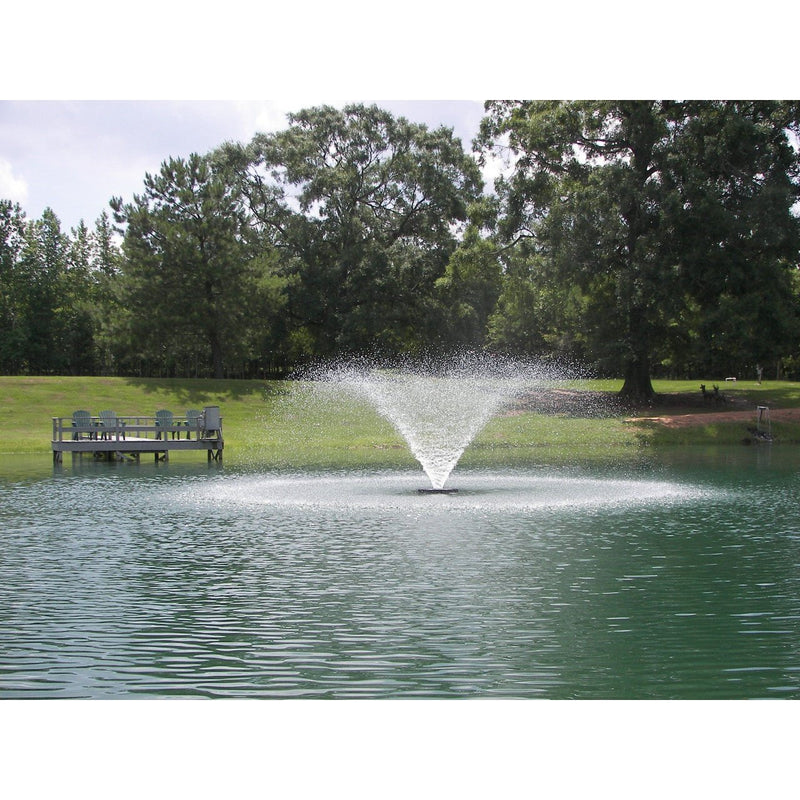
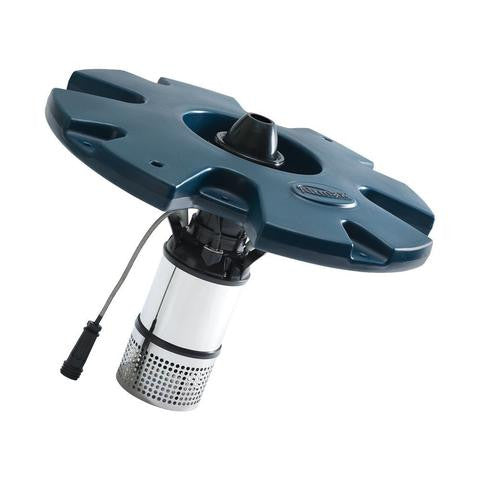
Finally, avoid the trap of using high-speed surface fountains for deep-water oxygenation. Fountains are primarily aesthetic. They are highly efficient at moving the top 2 feet of water but have almost no impact on the bottom 10 feet. Relying on a massive fountain for aeration often leads to over-circulating the surface while the bottom remains toxic.
Limitations and Environmental Constraints
Aeration is not a universal solution for all pond issues. In very shallow ponds (less than 3 feet), bottom aeration is largely ineffective because the bubbles do not have enough "hang time" in the water column to transfer oxygen. In these environments, surface circulators or "aspirators" are more effective than bottom diffusers, but they carry a higher risk of creating excessive currents.
Environmental factors like altitude also impact aeration efficiency. At higher elevations, the atmospheric pressure is lower, which reduces the amount of oxygen that can be dissolved in the water. An aeration system that works perfectly at sea level will provide significantly less oxygen in the mountains. This requires a 10-20% increase in air volume to achieve the same biological results.
In ponds with heavy clay liners, high-velocity aeration can be detrimental. The constant scouring action of the water plume can erode the clay, leading to leaks or structural instability of the pond walls. In these specific environments, the velocity of the water must be kept below the threshold of erosion, which often means using more diffusers with lower air volumes per head.
Seasonality also dictates limits. During winter in northern climates, "over-aeration" can super-cool the water. By constantly exposing the entire water volume to sub-zero air, you can drop the water temperature below the level that fish can survive. Precision winter aeration involves moving the diffuser to a shallower shelf to maintain an opening in the ice without mixing the deep, warmer "refuge" water.
Practical Tips for Optimizing Precision Flow
- Use a Dissolved Oxygen (DO) Meter: The only way to know if you are aerating correctly is to measure the results. Aim for 5-8 mg/L for most pond species. Anything above 10 mg/L in a standard pond is usually wasted energy.
- Distribute Diffusers: Instead of one large 12-inch diffuser, use three or four 6-inch diffusers. This spreads the lift and reduces localized turbulence.
- Implement Timers: Oxygen levels are lowest at dawn because plants consume oxygen at night. Running aeration primarily from dusk until dawn is often more efficient than 24/7 operation in balanced ponds.
- Monitor Water Clarity: If your Secchi disk depth decreases after starting your aerator, you are likely stirring up the bottom. Reduce the CFM or move the diffusers to a slightly shallower area.
- Check Your PSI: Install a pressure gauge at the compressor. A sudden rise in PSI indicates clogged diffusers, while a drop indicates a leak in the airline.
Advanced Considerations: Scaling and Automated Control
For large-scale operations or high-value koi ponds, advanced control systems can eliminate the risk of over-aeration. Variable Frequency Drives (VFDs) allow the compressor speed to be adjusted based on real-time data. When DO sensors detect that the water has reached 100% saturation, the VFD can throttle back the motor, saving electricity and reducing mechanical wear.
Scaling aeration for larger bodies of water requires a grid-based approach. Rather than thinking of the pond as a single unit, divide it into "cells" based on the effective radius of the diffusers. Each cell should have its own flow control valve. This allows you to "tune" the pond, providing more air to deep pockets and less to shallow shelves.
Computational Fluid Dynamics (CFD) modeling is sometimes used in high-end pond design to predict water movement patterns. While overkill for a backyard pond, it illustrates the principle: the goal is to achieve laminar flow (smooth, parallel layers of movement) rather than turbulent flow (chaotic, mixing movement). Laminar flow maximizes oxygen distribution while minimizing sediment resuspension.
Integration with supplemental systems, such as ozone or UV sterilizers, also changes the aeration requirement. Ozone injection, for example, significantly increases the oxidative capacity of the water, which may allow for a reduction in mechanical aeration. However, this requires precise monitoring to ensure that residual ozone does not reach the pond's inhabitants.
Example Scenario: The 1-Acre Suburban Pond
Consider a 1-acre pond with an average depth of 8 feet. A "Standard Overkill" approach might involve a 1 HP high-speed surface aerator. This unit moves massive amounts of water at the surface, creating a loud splashing sound and a high-velocity current within a 30-foot radius. The electricity cost is significant, and the bottom 4 feet of the pond remains anaerobic (stagnant).
A "Precision Flow" approach would utilize a 1/4 HP rocking piston compressor connected to two dual-membrane diffusers. The diffusers are placed at the deepest points of the pond. The system moves 2.5 CFM of air, creating two gentle "boils" on the surface. These plumes move approximately 2,000 gallons of water per minute from the bottom to the top.
The result of the Precision Flow setup is a total pond turnover every 8 hours. The water clarity improves because the low-velocity plumes do not disturb the muck. The fish have access to the entire water column because oxygen is uniform from top to bottom. The electricity bill is 75% lower than the "Overkill" fountain approach, and the mechanical longevity of the system is significantly higher.
Final Thoughts
The goal of pond aeration is to facilitate biological health, not to create a hydraulic spectacle. While the "more is better" philosophy is tempting, it often leads to unintended consequences like increased turbidity, thermal instability, and metabolic stress on fish. True mastery of pond management comes from understanding the balance between oxygen demand and mechanical flow.
By focusing on Precision Flow—utilizing fine-bubble diffusers, proper sizing, and strategic placement—you can achieve a high-efficiency system that maintains optimal dissolved oxygen levels with minimal disruption. This data-driven approach ensures that your pond remains a stable, clear, and healthy ecosystem.
Whether you are managing a small ornamental pond or a large recreational lake, the principles of gas exchange remain the same. Avoid the "washing machine" effect, monitor your metrics, and remember that the most effective aeration is often the most subtle. Experiment with your diffuser placement and timing to find the specific sweet spot for your unique environment.