

How To Cool Pond Water In Summer
Why pay a $200 electric bill to cool a pond that nature can chill for free? Modern pond management relies on high-energy chillers that fight the sun. Ancestral wisdom uses deep-water aeration to pull cool air into the depths and leverages biological shade to keep the thermometer down. One is a bill; the other is a habitat.
Managing water temperature in an outdoor aquatic system is an exercise in thermodynamics. For the pond owner, the transition into summer brings a critical challenge: as water temperature increases, its capacity to hold dissolved oxygen (DO) decreases. This inverse relationship creates a physiological bottleneck for fish and beneficial aerobic bacteria.
While mechanical solutions like pond chillers offer precise control, they are often inefficient for large-scale applications due to the high specific heat capacity of water. Biological and atmospheric cooling methods provide a sustainable alternative by manipulating the pond’s energy balance at the source. Understanding the physics of heat transfer allows for a management strategy that prioritizes ecosystem health over mechanical intervention.
How To Cool Pond Water In Summer
Thermal regulation in a pond environment involves managing the gain and loss of energy from solar radiation, conduction, and evaporation. Cooling pond water requires either shielding the surface from incoming solar energy or accelerating the rate of heat rejection to the atmosphere.
In a typical summer scenario, a pond acts as a thermal sink. Solar radiation penetrates the water column, heating the upper layers (the epilimnion). Because warm water is less dense than cold water, it remains at the surface, creating a thermal barrier known as the thermocline. This stratification prevents the cooler, deeper water (the hypolimnion) from mixing with the atmosphere.
Cooling strategies generally fall into two categories: proactive shading and reactive heat rejection. Shading reduces the initial energy input from the sun, while aeration and evaporation actively pull heat out of the system. In the real world, these methods are used to stabilize aquaculture tanks, ornamental koi ponds, and large recreational lakes, ensuring that temperatures remain within the biological safety zone of 65°F to 78°F for most temperate species.
How It Works: The Mechanics of Natural Cooling
To lower water temperature without high-energy machinery, one must master the three primary pillars of natural thermal management: biological shade, evaporative cooling, and thermal destratification.
Biological Shade and Solar Reflection
Biological shade uses organic structures to block UV and infrared radiation. Floating aquatic plants, such as Nymphaea (water lilies) or Pistia stratiotes (water lettuce), create a physical barrier at the air-water interface. These plants reflect a portion of solar radiation and absorb the rest for photosynthesis, preventing the energy from entering the water column. Studies indicate that a 40% to 60% surface coverage can reduce water temperatures by 3°C to 5°C compared to unshaded ponds.
Evaporative Heat Rejection
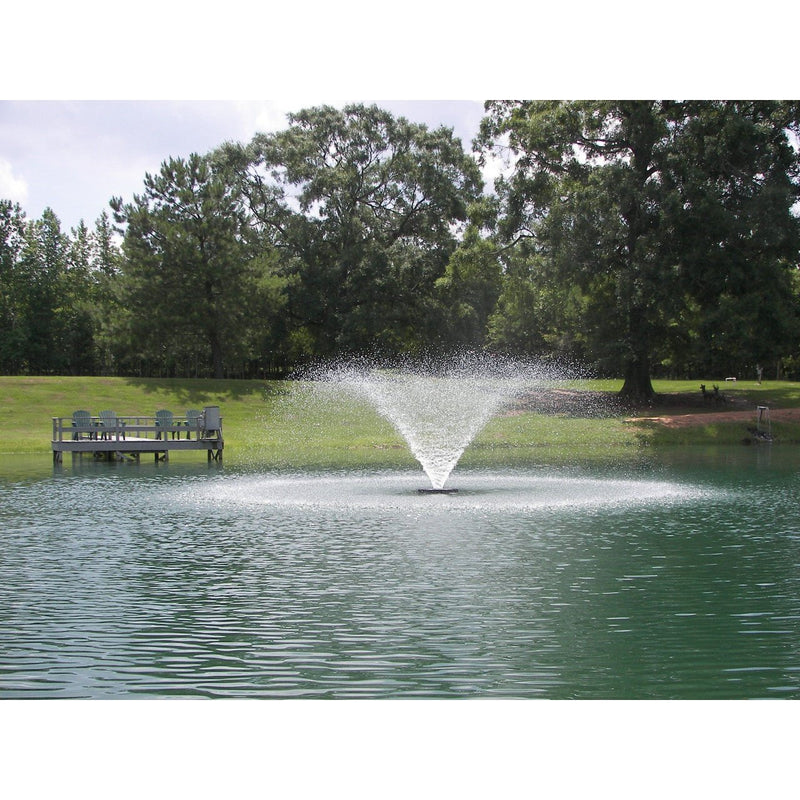
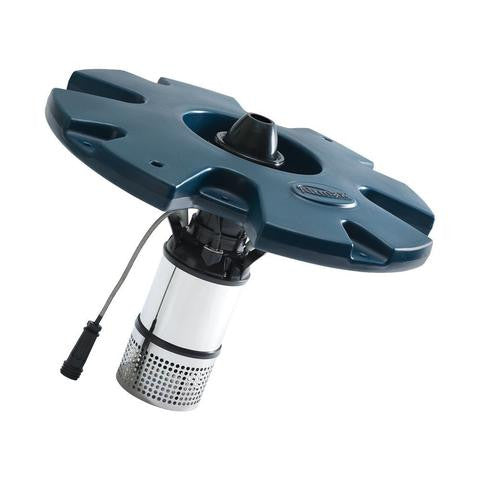
Evaporation is the most powerful natural cooling mechanism. When water molecules transition from liquid to gas, they consume energy—specifically, the latent heat of vaporization. For every pound of water evaporated, approximately 1,000 BTUs of heat are removed from the remaining water body. Increasing surface agitation through fountains or waterfalls accelerates this process by increasing the water-to-air surface area.
Deep-Water Aeration and Destratification
Bottom-diffused aeration systems use a compressor to push air through a diffuser located at the pond's deepest point. As the bubbles rise, they pull cold, dense water from the bottom toward the surface. This mechanical mixing breaks the thermocline. While this may slightly raise the temperature of the bottom layer, it significantly lowers the average temperature of the surface layer and, more importantly, ensures that dissolved oxygen is distributed throughout the entire water column.
Benefits of Biological and Natural Cooling
Transitioning from mechanical chillers to biological and atmospheric cooling offers measurable advantages in efficiency and system resilience.
Energy Efficiency and Operating Costs
Mechanical chillers are essentially air conditioning units for water. They require significant wattage to drive compressors and fans. In contrast, a bottom-diffused aerator might run on 60 to 100 watts, providing both cooling and oxygenation for a fraction of the cost. The financial shift from a $200 monthly cooling bill to a $15 aeration cost is a primary driver for large-scale pond management.
Enhanced Dissolved Oxygen (DO) Levels
Cold water naturally holds more oxygen than warm water. By maintaining lower temperatures through shading and evaporation, the pond's oxygen carrying capacity is preserved. High DO levels are critical for the nitrification process, where beneficial bacteria convert toxic ammonia into nitrates. Without adequate cooling, these bacteria slow down, leading to poor water quality and fish stress.
Reduced Algal Proliferation
Excessive heat and direct sunlight are the primary catalysts for filamentous algae and cyanobacteria blooms. Biological shade not only cools the water but also outcompetes algae for nutrients. By limiting the available light and keeping temperatures below the peak metabolic range for algae, the pond remains clearer with less chemical intervention.
Challenges and Common Mistakes
Applying natural cooling methods requires precision. Errors in implementation can lead to unintended consequences, including "oxygen crashes."
The Risk of Sudden Turnover
One common mistake is activating a bottom-diffused aerator in the middle of a heatwave without a "startup" period. If a pond is heavily stratified, the bottom water is likely anoxic (void of oxygen). Turning on an aerator at full power can instantly mix this oxygen-poor water with the surface layer, leading to immediate fish suffocation. Professional management requires a "staged" startup, running the aerator for increasing intervals over several days.
Over-Vegetation and Nighttime Oxygen Depletion
While floating plants provide excellent shade, they also respire at night. During the hours of darkness, plants consume oxygen and release carbon dioxide. If the pond surface is 100% covered with vegetation, the system may experience a massive drop in dissolved oxygen just before dawn. Maintaining a balance of 40% to 60% coverage is the technical sweet spot for thermal benefit without nighttime hypoxia.
Ignoring Evaporative Water Loss
Relying heavily on evaporative cooling means water levels will drop more rapidly. In shallow ponds, this can lead to a concentration of nitrates and minerals. Management must include a strategy for topping off water levels, ideally using a source that is cooler than the pond water itself, such as well water or a shaded storage tank.
Limitations of Natural Cooling
Natural cooling is governed by the laws of physics, specifically the "wet-bulb temperature" of the local environment.
The Wet-Bulb Limit
Evaporative cooling is limited by ambient humidity. If the air is 100% saturated with moisture, evaporation stops. In high-humidity environments (like the American Southeast in August), the cooling effect of fountains and waterfalls is significantly diminished. In these regions, biological shade becomes the primary tool, as it does not rely on evaporation.
Pond Depth and Thermal Mass
Shallow ponds (less than 3 feet deep) have very little thermal mass and heat up rapidly. Natural cooling methods struggle to stabilize shallow systems because the surface-area-to-volume ratio is too high. For these ponds, vertical expansion (digging deeper) is often the only permanent solution to extreme heat issues.
Geographical Constraints
In arid regions with high wind, evaporative loss may be too aggressive, leading to salinity spikes. In these cases, the trade-off between cooling and water conservation must be carefully managed.
Mechanical Chiller vs. Biological Shade
Choosing between a mechanical chiller and a biological/natural approach depends on the scale of the pond and the required temperature precision.
| Feature | Mechanical Chiller | Biological Shade & Aeration |
|---|---|---|
| Operating Cost | High ($100–$300/mo) | Low ($5–$20/mo) |
| Installation Complexity | High (Plumbing/Electrical) | Moderate (Planting/Diffusers) |
| Temperature Precision | +/- 1 degree | Weather Dependent |
| Ecosystem Impact | Neutral | Positive (Habitat Creation) |
| Scaling | Expensive for large ponds | Highly scalable |
For high-value ornamental koi where temperatures must remain under 75°F at all times, a mechanical chiller provides a safety net. For larger farm ponds or residential lakes, the biological approach is more sustainable and cost-effective.
Practical Tips and Best Practices
Implementation of a natural cooling system should follow a tiered approach to ensure stability.
- Optimize Diffuser Placement: Place aeration diffusers in the deepest part of the pond. This ensures that the coldest water is being circulated. Use a "dual-head" diffuser for irregular pond shapes to prevent dead zones.
- Strategic Planting: Focus floating plants on the south and west sides of the pond. These areas receive the most intense solar radiation during the hottest parts of the day.
- Utilize Nighttime Cooling: Run fountains and waterfalls primarily at night. The air-to-water temperature differential is greatest at night, maximizing heat rejection via conduction and evaporation.
- Monitor Dissolved Oxygen: Invest in a digital DO meter. If oxygen levels drop below 5 mg/L, increase aeration immediately, regardless of the temperature.
- Use Reflective Pond Tints: Food-grade blue or black dyes can block specific wavelengths of light, further reducing the energy that reaches the bottom of the pond.
Advanced Considerations for Practitioners
Serious practitioners should consider the fluid dynamics of their aeration systems to maximize cooling. The "entrainment ratio" describes how much water is moved per volume of air. Fine-pore diffusers produce smaller bubbles with a higher surface-area-to-volume ratio, which are more efficient at transferring oxygen and creating the "uplift" required to break a stubborn thermocline.
Furthermore, consider the "albedo effect" of the surrounding landscape. Dark rocks or pavement around the pond perimeter act as thermal batteries, absorbing heat during the day and radiating it into the water at night. Replacing dark stone with light-colored gravel or riparian vegetation can significantly reduce the local heat island effect around the aquatic system.
Example Calculation: The Energy of Evaporation
Consider a 1/4-acre pond (approximately 10,890 square feet) during a summer day. If a fountain evaporates 100 gallons of water over 24 hours:
1. One gallon of water weighs approximately 8.34 lbs.
2. Total weight evaporated = 100 gallons * 8.34 lbs/gal = 834 lbs.
3. Latent heat of vaporization = ~1,000 BTUs per lb.
4. Total heat removed = 834 lbs * 1,000 BTUs = 834,000 BTUs.
To achieve this same cooling effect mechanically, a 5-ton chiller would need to run for nearly 14 hours. The electrical cost of that 5-ton unit is massive compared to the cost of running a small fountain pump to facilitate the same 834,000 BTU reduction through evaporation.
Final Thoughts
Managing pond water in the summer is a balance of physics and biology. By moving away from high-energy mechanical chillers and toward systems that leverage evaporation and biological shade, you create a more resilient and self-sustaining ecosystem. The goal is not to fight the environment but to use its own mechanisms—like the latent heat of vaporization—to your advantage.
Strategic aeration and plant management do more than just lower the temperature; they improve water clarity, support fish health, and reduce the overall maintenance burden. As global temperatures continue to fluctuate, these ancestral methods provide a reliable framework for sustainable aquatic management.
Experiment with different coverage levels of floating plants and monitor your nighttime oxygen levels. Every pond is unique, and fine-tuning the balance between shade and aeration will eventually result in a stable, cool environment that thrives without a heavy electrical footprint.