

Deep Water Aeration Vs Surface Fountains
Is your fountain actually boiling your fish in the summer heat? Fountains look great, but they are active heaters in the summer—spraying water into the hot air and increasing evaporation. Passive bottom aeration uses the water's own density to circulate the entire pond without losing a drop to the wind.
Understanding the mechanical differences between these two systems is critical for pond owners who prioritize biological stability and energy efficiency. While a fountain provides a visual aesthetic, its utility as a primary aeration source diminishes as pond depth increases. In contrast, deep water diffused aeration focuses on the physics of water movement and gas exchange at the benthic level.
This guide examines the technical specifications, fluid dynamics, and thermodynamic impacts of both systems to help you optimize your aquatic environment.
Deep Water Aeration Vs Surface Fountains
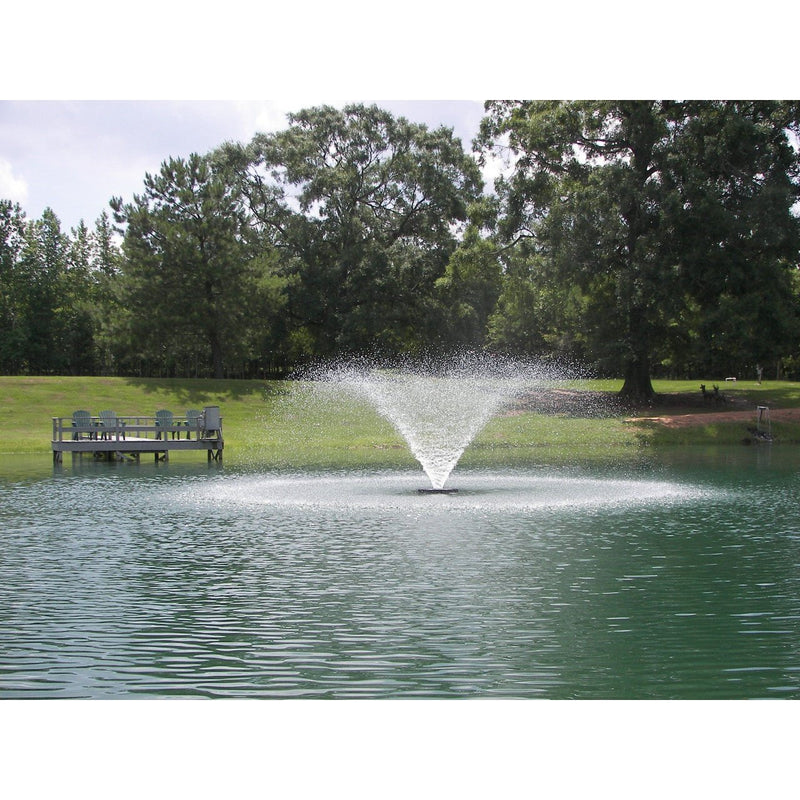
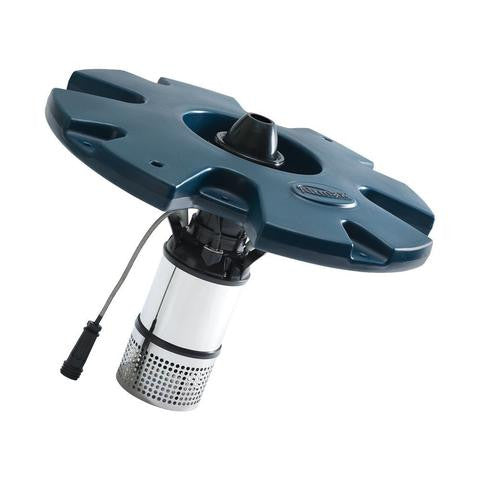
Deep water aeration and surface fountains represent two fundamentally different approaches to aquatic gas exchange. A surface fountain operates as an active spray system, utilizing an impeller or propeller to pump water into the air. This process relies on atmospheric contact with falling droplets to facilitate oxygen absorption. This method is effective for the top 2 to 4 feet of the water column but lacks the mechanical force to influence deeper layers.
Deep water aeration, or diffused aeration, is a passive lift system. It utilizes a shore-mounted compressor to pump air through weighted tubing to diffusers located on the pond floor. These diffusers release millions of micro-bubbles that rise through the water column. As these bubbles ascend, they create a laminar flow that entrains cooler, oxygen-poor water from the bottom and carries it to the surface.
The choice between these systems depends on the pond’s depth, volume, and biological load. In shallow ornamental ponds, a fountain may suffice for both aesthetics and oxygenation. However, in ponds deeper than 6 feet, a fountain often leaves the bottom half of the water column stagnant and anoxic. This creates a stratified environment where harmful gases accumulate and nutrient cycling stalls.
Mechanics of Passive Lift vs. Active Spray
The fundamental mechanical difference lies in the medium being moved. Fountains move water, which is dense and requires significant energy to propel. A 1-horsepower fountain may move several hundred gallons per minute, but the energy expenditure per unit of oxygen dissolved is relatively high. The Standard Aeration Efficiency (SAE) for fountains typically ranges between 1.5 and 2.5 pounds of oxygen per horsepower-hour.
Passive lift systems move air, which is significantly less dense. The rising bubbles act as a "gas lift," displacing water and creating a vertical current. A single diffuser at a depth of 10 feet can move thousands of gallons of water per hour using only a fraction of the electricity required by a fountain. Because the bubbles spend more time in contact with the water as they rise, the Oxygen Transfer Efficiency (OTE) increases with depth. At 15 feet, diffused aeration can reach an OTE of over 20%, whereas surface systems remain static at approximately 2% to 3%.
The bubble size in diffused systems is a critical variable. Fine-bubble diffusers produce bubbles less than 3mm in diameter. These small bubbles have a higher surface-area-to-volume ratio, which maximizes gas transfer. Furthermore, they rise more slowly than coarse bubbles, increasing the "hang time" for oxygen to dissolve into the surrounding fluid.
Thermal Stratification and the Thermocline Barrier
Thermal stratification is a primary challenge in pond management. During the summer, solar radiation heats the surface layer (the epilimnion), making it less dense. The bottom layer (the hypolimnion) remains cold and dense. A transition zone called the thermocline forms between them, acting as a physical barrier to mixing.
Fountains often exacerbate this problem. Because they only draw water from the top 4 to 6 feet, they circulate the warm surface water while leaving the cool bottom water untouched. Over time, the bottom layer becomes depleted of oxygen as aerobic bacteria consume it while breaking down organic matter. This leads to anaerobic conditions, producing toxic byproducts like hydrogen sulfide and methane.
Deep water aeration eliminates the thermocline. By lifting the cold bottom water to the surface, the system forces a continuous turnover of the entire water volume. This process, known as destratification, ensures that the temperature and dissolved oxygen (DO) levels remain uniform from top to bottom. A destratified pond has a larger "habitable zone" for fish and supports a more robust population of beneficial aerobic bacteria.
Thermodynamics: The Hidden Cost of Fountains
The thermodynamic impact of a fountain is often overlooked. When a fountain sprays water into the air, it increases the total surface area exposed to the atmosphere. On a hot summer day, the ambient air temperature is often higher than the water temperature. This leads to a net gain in thermal energy as the water droplets absorb heat from the air before falling back into the pond.
Evaporation also plays a role. While evaporation is a cooling process (latent heat of vaporization), it also results in significant water loss. In arid climates, a high-output fountain can contribute to a noticeable drop in pond levels. This increases the concentration of nutrients and salts in the remaining water, potentially fueling algae blooms.
Diffused aeration avoids these issues. The gas exchange occurs primarily through the bubble-to-water interface and the gentle "boiling" action at the surface. Because there is no high-velocity spray, the rate of evaporation and heat absorption from the air is minimized. This keeps the pond cooler and maintains a more stable water level throughout the peak summer months.
Mechanical Optimization: Compressor Selection
The heart of a deep water aeration system is the compressor. Selecting the correct mechanical design is essential for long-term reliability and efficiency. There are three primary types of compressors used in pond aeration:
Linear Diaphragm Compressors
These units use an electromagnetic motor to move a rubber diaphragm back and forth. They are extremely quiet and energy-efficient but have limited pressure capabilities. They are best suited for shallow ponds (under 8 feet) and small water volumes. If pushed beyond their pressure rating, the diaphragms will prematurely fatigue and fail.
Rotary Vane Compressors
Rotary vane units utilize carbon vanes that rotate within a cylinder to compress air. They offer high CFM (cubic feet per minute) at moderate pressures. These are the "workhorses" for ponds up to 15 feet deep. They require regular maintenance, such as vane replacement every 12 to 18 months, but they provide a consistent flow of air for large-scale circulation.
Rocking Piston Compressors
For deep water applications (15 to 50 feet), rocking piston compressors are the standard. They use a piston and cylinder design capable of generating high PSI to overcome the hydrostatic pressure of deep water. While they are louder and consume more power than linear pumps, they are the only viable option for deep-lake destratification.
Oxygen Transfer Efficiency (OTE) and SAE Metrics
To compare systems objectively, engineers use Standard Aeration Efficiency (SAE). This metric measures the pounds of oxygen transferred into the water per horsepower-hour (lb O2/hp-hr).
Surface fountains typically score low on the SAE scale because a significant portion of their energy is spent on kinetic energy—moving the weight of the water into the air for visual effect. Their SAE usually falls between 1.5 and 2.2.
Diffused aeration systems show a variable SAE that improves with depth. In shallow water (4 feet), the bubbles reach the surface too quickly for efficient gas transfer, resulting in an SAE of around 1.0 to 1.5. However, at depths of 12 to 20 feet, the increased pressure and contact time can push the SAE to 3.5 or even 4.0. This makes deep water aeration the most energy-efficient method for oxygenating large volumes of water.
Benefits of Deep Water Aeration
The advantages of sub-surface aeration extend beyond simple oxygenation. By maintaining a high dissolved oxygen level at the pond floor, several biological and chemical processes are optimized:
- Enhanced Benthic Digestion: Aerobic bacteria at the bottom of the pond decompose organic "muck" much faster than anaerobic bacteria. This prevents the buildup of sludge and reduces the need for mechanical dredging.
- Nutrient Sequestration: In an oxygenated environment, phosphorus binds to minerals in the sediment (like iron). In anoxic conditions, this phosphorus is released into the water column, where it acts as fertilizer for algae.
- Gas Stripping: The rising column of bubbles helps vent harmful gases like carbon dioxide and ammonia out of the water and into the atmosphere.
- Mosquito Control: While fountains disturb only a small area, a well-placed diffused system creates a gentle surface ripple across the entire pond, discouraging mosquitoes from laying eggs.
Challenges and Common Mistakes
The most frequent mistake in pond aeration is under-sizing the system. Aeration is not just about adding oxygen; it is about moving the entire volume of the pond. A system that cannot achieve at least one full "turnover" per day (moving the total volume of the pond to the surface once every 24 hours) will fail to destratify the water effectively.
Another common pitfall is improper diffuser placement. Diffusers should be located in the deepest parts of the pond to maximize the lift effect. Placing a diffuser in a shallow area leaves the deep pockets stagnant. If the pond has an irregular shape (like an "L" or "U" shape), multiple diffusers are required to ensure there are no "dead zones" where water remains uncirculated.
Over-aeration is rare in typical pond settings, but in very deep, cold lakes, excessive aeration in winter can super-cool the water. In most cases, however, the primary risk is "turning over" a stratified pond too quickly during the initial startup. If a pond has been stagnant for years, the bottom layer may contain high levels of toxic gases. Starting the system for 24 hours straight can mix these toxins into the surface layer, causing a sudden fish kill.
Limitations of Diffused Aeration
While diffused aeration is superior for depth, it has limitations in very shallow water. If a pond is less than 4 feet deep, the bubbles do not have enough time to transfer oxygen or create a strong enough current to entrain a large volume of water. In these environments, a high-volume surface aerator or a fountain may actually be more efficient.
Additionally, diffused systems do not provide the same "splash" effect that helps with certain types of surface film or duckweed. If the primary goal is to physically break up a thick layer of floating vegetation, the high-velocity impact of a fountain or a horizontal circulator may be necessary.
Finally, diffused systems require a shore-mounted power source and protective housing for the compressor. If the pond is in a remote location without electricity, the cost of running airline from a distant power source can be significant, though still often cheaper than running high-voltage underwater power cables for a fountain.
System Comparison: Technical Specifications
The following table compares the typical performance characteristics of a 1-HP fountain versus a 1-HP deep water diffused aeration system in a 12-foot deep pond.
| Feature | Surface Fountain (1 HP) | Deep Water Aeration (1 HP) |
|---|---|---|
| Primary Function | Aesthetics / Surface Aeration | Destratification / Bottom Oxygenation |
| Oxygen Transfer Efficiency (OTE) | 2% - 3% | 15% - 22% (at 12ft depth) |
| SAE (lb O2/hp-hr) | 1.5 - 2.2 | 3.0 - 3.8 |
| Water Movement | Active Spray (Top 4-6ft) | Passive Lift (Full Water Column) |
| Maintenance Requirements | High (Seals, Props, Power Cable) | Low (Air Filter, Compressor Vanes) |
| Evaporation Rate | High (2-3% of flow) | Minimal |
| Winter Performance | Poor (Freeze Risk) | Excellent (Prevents Ice) |
Practical Tips and Best Practices
Optimizing a pond aeration system requires attention to mechanical details. Use weighted tubing for all underwater runs. Non-weighted tubing will float to the surface as it fills with air, creating a navigation hazard and an eyesore. Weighted tubing stays on the pond floor and is resistant to punctures.
Install a pressure gauge at the compressor. The gauge is your primary diagnostic tool. A sudden drop in pressure indicates a leak in the airline or a disconnected diffuser. A steady rise in pressure indicates that the diffuser membranes are becoming clogged with mineral deposits or bio-film and need cleaning.
Perform a "staged startup" on any pond that has been stagnant for more than a month. Run the system for 30 minutes on the first day, 1 hour on the second, and double the time each day until the system is running 24/7. This allows gases to vent slowly and prevents a catastrophic shift in water chemistry.
Advanced Considerations: Sizing and CFM
For serious practitioners, sizing a system based on CFM (Cubic Feet per Minute) per acre is more accurate than using horsepower. A general rule for effective destratification is to provide 1.5 to 2.0 CFM of air per acre of pond surface. This ensures enough air volume to drive the vertical currents needed for turnover.
Consider the "friction loss" of the airline. If the compressor is located 500 feet from the pond, the air pressure will drop as it travels through the tubing. Increasing the diameter of the airline (e.g., from 1/2 inch to 5/8 inch) can reduce this friction and ensure the diffusers receive the rated CFM.
In cold climates, diffused aeration is an excellent tool for preventing winter fish kills. By keeping a small area of the surface open, the system allows oxygen to enter and toxic gases to escape. However, do not place diffusers directly under a dock or in a swimming area during winter, as the ice around the open water may be thin and unstable.
Example Scenario: The 1-Acre Pond
Imagine a 1-acre pond with a maximum depth of 12 feet and an average depth of 6 feet. The total volume is approximately 1.95 million gallons.
If a 1-HP fountain is installed, it may move 300 gallons per minute. Over 24 hours, this fountain "processes" 432,000 gallons. It would take roughly 4.5 days for the fountain to move the equivalent of the pond’s total volume, and even then, it would only be moving the water from the top 5 feet.
If a 1/2-HP rocking piston compressor is installed with two diffusers, it might provide 4.0 CFM. At 12 feet, this air volume can entrain and lift approximately 2,000 gallons of water per minute. Over 24 hours, this system moves 2.88 million gallons. The entire volume of the pond is turned over 1.4 times every single day, ensuring total oxygenation and temperature uniformity with half the electricity of the fountain.
Final Thoughts
Deep water aeration is the objectively superior choice for pond health and mechanical efficiency. While fountains serve an important role in landscape design, they are limited by the physics of surface-level interaction. For ponds deeper than six feet, a diffused system provides the necessary lift to break through the thermocline and maintain a biological balance that a fountain simply cannot achieve.
Investing in a high-quality compressor and fine-bubble diffusers reduces long-term maintenance costs and prevents common issues like muck accumulation and seasonal fish kills. By focusing on data-driven metrics like SAE and OTE, pond owners can create a sustainable environment that thrives even in the peak of summer.
Whether you are managing a small private pond or a large recreational lake, the goal remains the same: efficient circulation and maximum gas exchange. By utilizing the water's own density through passive lift, you ensure that your aquatic ecosystem remains stable, clear, and healthy for years to come.