

How Phosphorus Fuels Pond Algae Blooms
Phosphorus is the fuel. Algae is the fire. Here is how to cut the supply. Every time it rains, phosphorus enters your pond. Without aeration, it's a buffet for algae. With aeration, you lock that phosphorus away in the sediment.
Managing a pond's ecological health requires a shift from reactive chemical treatments to proactive nutrient sequestration. The primary driver of eutrophication in most freshwater systems is the availability of orthophosphate. While nitrogen and carbon are essential for biomass production, phosphorus typically acts as the limiting nutrient under Liebig’s Law of the Minimum. When phosphorus levels exceed 20 to 30 parts per billion (ppb), the risk of cyanobacteria blooms increases exponentially.
Aeration is not merely a method for keeping fish alive; it is a mechanical tool for chemical manipulation. By maintaining high dissolved oxygen (DO) levels at the sediment-water interface, the pond’s internal loading cycle can be interrupted. This process forces phosphorus to remain in a mineralized, non-bioavailable state within the benthic layer rather than dissolving into the water column to feed the algae producer.
How Phosphorus Fuels Pond Algae Blooms
Phosphorus functions as the metabolic accelerator for aquatic primary production. In freshwater ecosystems, algae and cyanobacteria require a specific ratio of nutrients to build cellular structures, often described by the Redfield Ratio (106 Carbon : 16 Nitrogen : 1 Phosphorus). Because phosphorus is required in the smallest relative quantity yet is often the least available, its presence dictates the total potential biomass of the system.
External loading occurs when storm runoff carries fertilizers, animal waste, and eroded soil into the basin. However, in established ponds, the most significant threat is often internal loading. This is the recycling of phosphorus that has already settled into the bottom muck. Over years of accumulation, the sediment becomes a concentrated reservoir of legacy phosphorus.
When the bottom of a pond becomes anaerobic—meaning it lacks dissolved oxygen—chemical bonds that hold phosphorus to the sediment break. This releases soluble reactive phosphorus (SRP) directly into the water column. This "internal pump" can provide enough fuel for a massive algae bloom even if no new nutrients enter the pond from the shore. This explains why ponds often continue to have algae problems years after a property owner stops using fertilizer.
The Role of Internal Loading and Legacy Phosphorus
Internal loading is the process where phosphorus is released from the sediment under specific chemical conditions. In many eutrophic ponds, internal loading accounts for 50% to 80% of the total phosphorus budget. This legacy phosphorus is stored in the top 4 to 10 centimeters of the sediment, known as the "active layer."
Without mechanical circulation, ponds undergo thermal stratification. The top layer (epilimnion) remains warm and oxygenated, while the bottom layer (hypolimnion) becomes cold and stagnant. As bacteria decompose organic matter in the muck, they consume all available oxygen. Once the DO drops below 1.0 mg/L, the redox potential of the sediment shifts, and the chemical "trap" for phosphorus fails.
The Mechanism: How Aeration Locks Phosphorus
The primary mechanism for sequestering phosphorus is the iron-redox cycle. In an oxygenated environment, iron exists in its oxidized form, known as ferric iron (Fe3+). Ferric iron has a high affinity for phosphorus, binding with it to form insoluble complexes like ferric phosphate or hydrous ferric oxides. These complexes settle into the sediment and remain there as long as oxygen is present.
If the pond bottom loses oxygen, ferric iron (Fe3+) is reduced to ferrous iron (Fe2+). Ferrous iron is highly soluble and cannot hold onto phosphorus. When this reduction occurs, both the iron and the bound phosphorus dissolve back into the water. Aeration prevents this by ensuring the sediment-water interface remains aerobic, keeping the iron in its "sticky" ferric state.
Redox Potential and Phosphorus Stability
To effectively lock phosphorus in the sediment, the oxidation-reduction potential (ORP) at the bottom must stay above +200 millivolts (mV). This requires a consistent supply of dissolved oxygen at the very floor of the pond. Standard diffused aeration systems achieve this by pumping compressed air through diffusers located at the deepest point of the basin.
The rising column of bubbles creates a "motive force" that pulls cold, oxygen-depleted water from the bottom to the surface. As this water makes contact with the atmosphere, it sheds harmful gases like methane and hydrogen sulfide and absorbs oxygen. This oxygenated water is then circulated back to the bottom, maintaining the aerobic barrier that keeps phosphorus trapped.
Benefits of Mechanical Nutrient Sequestration
Utilizing aeration for nutrient management offers measurable advantages over chemical-only approaches. The most significant benefit is the reduction of "internal recycling," which stabilizes the water quality over the long term.
- Reduction in Chemical Dependency: Consistent aeration reduces the need for algaecides and flocculants by addressing the root cause of the bloom rather than the symptoms.
- Enhanced Organic Decomposition: Aerobic bacteria decompose organic "muck" up to 20 times faster than anaerobic bacteria. This reduces the total volume of sediment available to hold phosphorus.
- Stabilized pH Levels: By promoting the off-gassing of carbon dioxide, aeration helps prevent the extreme pH swings associated with dense algae growth, which further stabilizes the chemical bonds in the sediment.
- Improved Water Clarity: Reduced phosphorus availability limits the growth of suspended planktonic algae, leading to higher Secchi disk readings and better light penetration for beneficial submersed plants.
Challenges and Common Implementation Mistakes
The most frequent failure in phosphorus management via aeration is undersizing the system. If the aeration system cannot overcome the Biological Oxygen Demand (BOD) of the sediment, the bottom will remain anaerobic, and phosphorus release will continue.
One common mistake is placing diffusers in the wrong locations. In an irregular-shaped pond, "dead zones" can form where water does not circulate. If even 10% of the pond bottom remains anaerobic, that area can release enough phosphorus to fuel a bloom across the entire surface. Practitioners must calculate the "lifting rate" of their diffusers to ensure the entire volume of the pond is turned over at least once every 24 hours.
Another challenge is "the aeration paradox" during the initial startup. If a pond has been stagnant for years, the bottom water is likely saturated with phosphorus. Turning on a powerful aerator for the first time can rapidly mix this phosphorus into the upper layers, potentially triggering a temporary bloom. Startup must be performed in stages—increasing run times gradually over a period of 10 to 14 days—to allow the iron-phosphorus binding process to keep pace with the mixing.
Limitations: When Aeration May Not Be Sufficient
While aeration is a powerful tool, it has realistic boundaries. It is not a "magic bullet" for every nutrient problem.
Excessive External Loading
Aeration primarily manages internal loading. If a pond receives massive amounts of phosphorus from active livestock runoff, failing septic systems, or heavy agricultural fertilization, the "new" phosphorus entering the system may overwhelm the sediment’s ability to bind it. In these cases, watershed management and buffer strips are mandatory alongside aeration.
Calcareous Sediments and High pH
In ponds with high alkalinity and calcareous (calcium-rich) sediments, phosphorus binding behaves differently. In these environments, phosphorus often binds to calcium to form calcium phosphate. This bond is less sensitive to oxygen levels but is highly sensitive to pH. If the pond's pH fluctuates significantly due to heavy plant growth or industrial runoff, aeration alone may not be enough to keep the phosphorus locked away.
Very Shallow Systems
In ponds shallower than 5 or 6 feet, diffused aeration is less efficient. The bubbles do not have enough "rise time" to create a strong vertical current, which limits the volume of water moved. In these environments, surface aerators or high-volume circulators may be required to maintain oxygen levels at the sediment-water interface.
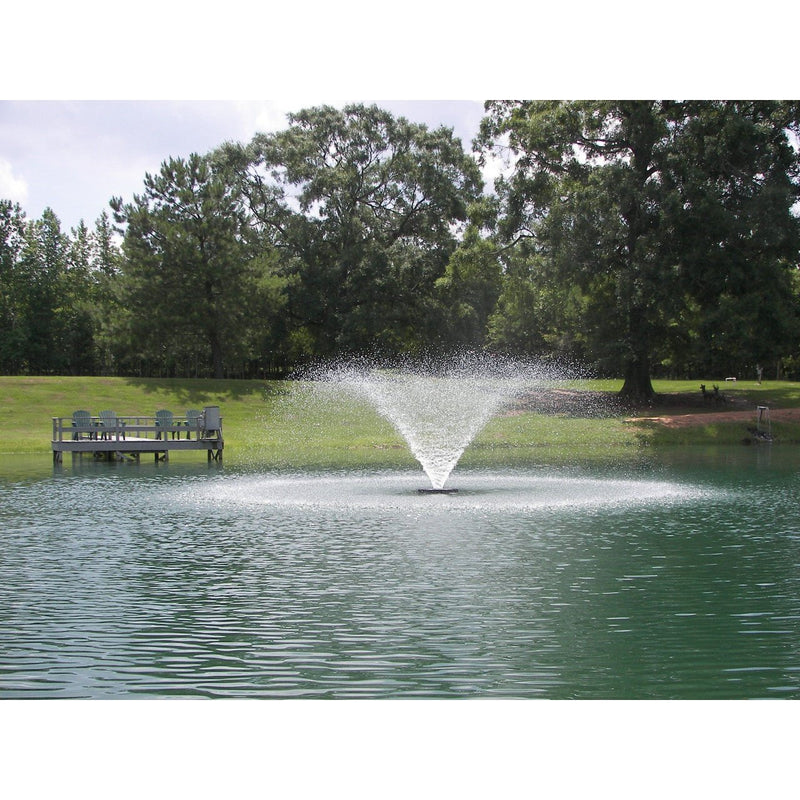
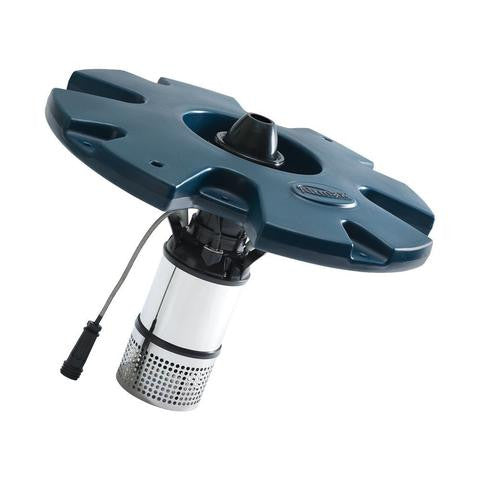
Comparison: Subsurface Diffusion vs. Surface Fountains
Choosing the correct technology is critical for phosphorus management. The following table compares the two primary methods based on their efficiency in nutrient sequestration.
| Feature | Subsurface Diffused Aeration | Surface Fountains / Aerators |
|---|---|---|
| Primary Target | Bottom sediment and full water column | Surface aesthetics and top 3–5 feet |
| Oxygen Transfer Efficiency (SOTE) | High (increases with depth) | Low to Moderate |
| Phosphorus Sequestration | Very Effective (locks sediment P) | Minimal (leaves bottom stagnant) |
| Operating Cost | Lower (less HP required for more air) | Higher (requires more HP to move water) |
| Thermal Stratification | Completely eliminates it | Can leave bottom layers stratified |
Practical Tips for Optimizing Nutrient Control
To maximize the sequestration of phosphorus, practitioners should follow these technical best practices:
- Calculate Turnover Rate: Aim for a minimum of 1.5 to 2 full turnovers of the pond volume per day. Total Gallons / (GPH of Aerator) = Hours for one turnover.
- Measure Dissolved Oxygen at Depth: Do not rely on surface DO readings. Use a probe to ensure the DO is at least 2.0 mg/L at the very bottom of the pond.
- Monitor the Iron-to-Phosphorus Ratio: For iron-binding to be effective, the sediment should ideally have an Fe:P ratio of at least 15:1. If the ratio is lower, supplemental iron or binding agents like alum may be needed.
- Continuous Operation: Run the aeration system 24/7 during the growing season. Turning the system off at night allows the sediment-water interface to quickly return to an anoxic state, potentially releasing phosphorus in just a few hours.
Advanced Considerations: Synergistic Treatments
For ponds with extreme legacy phosphorus loads, aeration can be paired with chemical binding agents to accelerate recovery. Aluminum sulfate (alum) or lanthanum-modified clay are used to "strip" phosphorus from the water and lock it into the sediment.
Aeration acts as the "maintenance" system for these treatments. Once the alum or lanthanum has bound the phosphorus, maintaining an aerobic environment ensures those bonds remain stable. Furthermore, aeration supports the growth of aerobic nitrifying bacteria, which compete with algae for other nutrients like nitrogen, further limiting the potential for blooms.
Example Scenario: Managing a 1-Acre Pond
Consider a 1-acre pond with an average depth of 8 feet and a history of summer cyanobacteria blooms. A sediment analysis reveals high levels of mobile phosphorus in the top 5 cm of the muck.
The technical solution requires a diffused aeration system capable of moving approximately 4,000 to 5,000 gallons per minute (GPM). Utilizing a 1/2 HP rocking piston compressor and two dual-disk diffusers placed at the deepest points, the system can achieve a turnover rate of approximately 2.2 times per day.
By running this system continuously, the ORP at the sediment surface stays above +250 mV. Over the first season, the soluble reactive phosphorus in the water column drops from 80 ppb to 15 ppb as the iron-redox cycle begins sequestering the legacy load. The following year, the frequency and intensity of algae blooms are reduced by 70%, with no additional chemical applications required.
Final Thoughts
Phosphorus management is a game of chemical equilibrium. By maintaining a highly oxygenated environment at the pond bottom, you leverage the natural chemistry of the sediment to act as a permanent trap for the nutrients that fuel algae. Aeration transforms the sediment from a source of pollution into a sink for sequestration.
Successful implementation depends on technical precision. Sizing the compressor correctly, placing diffusers strategically, and ensuring 24-hour operation are the metrics that determine success. While external runoff must still be addressed, controlling the internal phosphorus pump is the most effective way to break the cycle of recurring blooms.
For those serious about water quality, the goal is not to kill algae with chemicals, but to starve it of its primary fuel. Investing in the mechanical infrastructure to manage the phosphorus cycle is the only long-term, sustainable path to a clear and balanced pond ecosystem.