How Beneficial Bacteria Actually Work In Ponds
Your pond doesn't need bleach—it needs better bugs. Beneficial bacteria are the janitors of your pond. They work 24/7 to digest organic muck, but they only work if they have enough oxygen to breathe. Here’s the science.
Managing a pond ecosystem is essentially an exercise in bioreactor engineering. The objective is to facilitate the efficient conversion of complex organic waste into stable, inert compounds while maintaining high dissolved oxygen (DO) levels and stable chemical parameters. Understanding the metabolic pathways of aquatic microorganisms is the first step toward moving away from reactive chemical treatments and toward a self-sustaining biological engine.
How Beneficial Bacteria Actually Work In Ponds
Beneficial pond bacteria are categorized primarily by their metabolic requirements and their role in the nutrient cycle. These microorganisms are the primary drivers of the nitrogen cycle and carbonaceous oxidation in any aquatic environment. They function by secreting extracellular enzymes that break down complex polymers—such as proteins, lipids, and cellulose—into simpler monomers that can be absorbed and metabolized.
In a typical pond, these bacteria exist as biofilms. A biofilm is a complex architecture of microbial cells encased in a self-produced matrix of extracellular polymeric substances (EPS). This matrix protects the colony from environmental stressors and allows for a concentrated exchange of nutrients. Without these colonies, ammonia levels from fish respiration and decomposing organic matter would quickly reach toxic thresholds, leading to mass mortality of higher aquatic life forms.
Real-world application of these bacteria is seen in every scale of water management, from backyard koi ponds to municipal wastewater treatment facilities. The principles remain identical: provide sufficient surface area for colonization, ensure a steady supply of substrate (waste), and maintain the necessary electron acceptors (oxygen) to drive the chemical reactions.
The Mechanics of Microbial Oxidation
The process of waste degradation in a pond is a series of oxidation-reduction reactions. Depending on the availability of dissolved oxygen, different bacterial groups will dominate the environment.
Nitrification: The Autotrophic Pathway
Nitrification is the two-step biological oxidation of ammonia to nitrite and then to nitrate. This process is carried out by chemoautotrophic bacteria, which derive energy from inorganic nitrogen compounds rather than organic carbon.
The first step involves Nitrosomonas species, which oxidize ammonia (NH3) into nitrite (NO2-). The second step is performed by Nitrobacter or Nitrospira, which further oxidize nitrite into nitrate (NO3-). This process is highly sensitive to environmental conditions. It is an oxygen-intensive reaction; theoretically, 4.57 grams of oxygen are required to oxidize one gram of ammonia-nitrogen to nitrate-nitrogen.
Heterotrophic Digestion: Muck Reduction
While nitrifiers handle dissolved toxins, heterotrophic bacteria, such as those in the Bacillus genus, focus on solid organic waste. These "muck-eating" bacteria utilize organic carbon as their primary energy source. They are responsible for the degradation of leaf litter, uneaten fish food, and fish feces that accumulate as sludge on the pond floor.
Heterotrophs grow significantly faster than autotrophs. Under optimal conditions, a population of Bacillus can double in less than an hour, whereas nitrifying bacteria may take 15 to 24 hours to replicate. This disparity explains why ammonia spikes often occur after heavy cleaning or chemical treatments that disrupt the slower-growing nitrifying colonies.
Advantages of a Robust Microbial Population
Establishing a dominant microbial engine provides several measurable benefits to the pond's hydraulic and chemical stability.
The most immediate benefit is the reduction of Biochemical Oxygen Demand (BOD). When organic matter is left to rot without sufficient beneficial bacteria, it creates a massive oxygen sink. By accelerating the digestion of this waste through bioaugmentation (adding specific bacterial strains), the overall BOD is lowered, leaving more dissolved oxygen available for fish.
Furthermore, a healthy biofilm acts as a competitive inhibitor against opportunistic pathogens and algae. Bacteria and algae compete for the same limiting nutrients, particularly phosphorus and nitrogen. A well-established bacterial colony can sequester these nutrients more efficiently than algae, leading to clearer water and reduced filamentous algae growth without the need for copper-based algaecides.
Challenges and Common Pitfalls
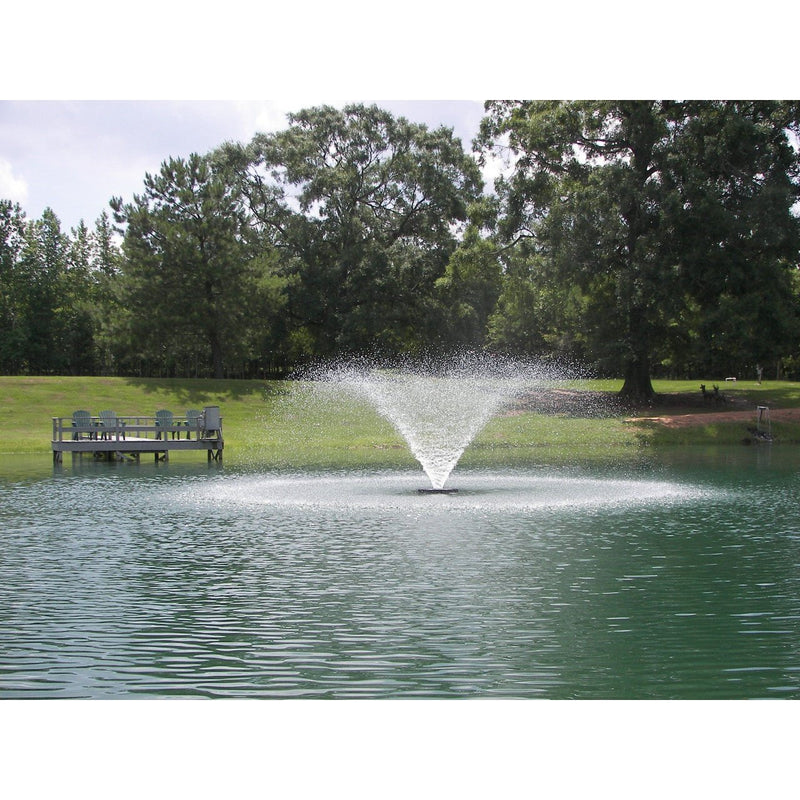
The most frequent failure in pond microbial management is the neglect of dissolved oxygen. Aerobic bacteria are orders of magnitude more efficient than their anaerobic counterparts. However, many pond owners rely on surface fountains that only aerate the top few inches of water.
In deep ponds, thermal stratification creates an anoxic (oxygen-depleted) zone at the bottom. When beneficial bacteria are added to these conditions, they either die or remain dormant. This allows anaerobic bacteria to take over, which produce toxic byproducts like hydrogen sulfide (H2S) and methane (CH4). These gases are not only detrimental to fish but also cause the "rotten egg" smell associated with stagnant ponds.
Another significant pitfall is the failure to account for alkalinity consumption. Nitrification is an acidifying process. For every milligram of ammonia oxidized, approximately 7.14 milligrams of alkalinity (as CaCO3) are consumed. In ponds with low carbonate hardness (KH), the pH can crash rapidly as the bacteria work, which eventually inhibits the bacteria themselves and creates a lethal environment for fish.
Limitations of Biological Treatment
Biological systems have clear operational boundaries. Temperature is a primary limiting factor. Most beneficial pond bacteria are mesophilic, meaning they thrive in temperatures between 65°F and 85°F. Once water temperatures drop below 50°F, metabolic rates slow significantly. Nitrification may cease entirely in near-freezing water, even if the bacteria remain present as spores.
Chemical interference also poses a major limitation. The use of broad-spectrum antibiotics, high doses of potassium permanganate, or copper sulfate will decimate bacterial biofilms. Recovery from such treatments can take weeks, during which time the pond is vulnerable to toxic ammonia spikes. Bioaugmentation must be viewed as a long-term management strategy, not a "quick fix" for systemic mechanical failures.
The Sterile Urban Approach vs. The Wild Microbial Engine
There is a fundamental shift in how modern pond managers view water quality. The traditional "Sterile Urban Approach" focuses on the removal of all life forms except the desired aesthetic features. This is often achieved through high-wattage UV sterilizers, heavy chemical dosing, and frequent mechanical backwashing.
In contrast, the "Wild Microbial Engine" approach treats the pond as a biological filter in its entirety. This method prioritizes biodiversity and surface area.
| Feature | Sterile Urban Approach | Wild Microbial Engine |
|---|---|---|
| Primary Control | UV Clarifiers & Chemicals | Bio-colonization & Aeration |
| Maintenance Type | Frequent Mechanical Cleaning | Biological Monitoring & Buffering |
| Stability | Fragile; prone to crashes | Resilient; self-regulating |
| Operating Cost | High (Electricity/Chemicals) | Moderate (Air Pumps/Bacteria) |
The Sterile Urban Approach is often more expensive over time because it fights the natural tendency of water to support life. The Wild Microbial Engine works with those tendencies to create a more stable, albeit more complex, ecosystem.
Practical Tips for Optimization
To maximize the efficiency of beneficial bacteria, the pond environment must be optimized for microbial respiration and attachment.
Prioritize Sub-Surface Aeration: Instead of a fountain, use a diffused aeration system. Placing air stones or diffusers at the deepest point of the pond ensures that the entire water column is oxygenated. This "bottom-up" aeration eliminates the anoxic zone where muck accumulates and provides the necessary DO for aerobic muck-digesters to function on the pond floor.
Increase Specific Surface Area (SSA): Bacteria need a home. The total biomass of your bacterial colony is limited by the available surface area. Incorporating high-SSA media, such as ceramic rings, bio-balls, or even structured gravel beds, allows for a much larger population of bacteria in a smaller footprint.
Monitor KH, Not Just pH: Since nitrification consumes alkalinity, you must ensure your KH stays above 100 ppm (parts per million). If the KH drops too low, the bacteria will stop processing ammonia. Adding calcium carbonate or sodium bicarbonate can help maintain the necessary buffer for sustained microbial activity.
Advanced Considerations: Stoichiometry and OTE
Serious practitioners should look at the Oxygen Transfer Efficiency (OTE) of their aeration systems. The goal is to maintain a DO level of at least 5.0 mg/L to ensure that oxygen is not the rate-limiting factor in the nitrification equation.
Furthermore, understanding the stoichiometry of the reactions allows for precise dosing. If you know the protein content of your fish food and the total daily feed weight, you can calculate the expected ammonia load. This allows you to size your biological filter based on the required ammonia oxidation rate rather than guessing based on pond volume.
For example, most koi food is roughly 35-40% protein. Approximately 16% of that protein is nitrogen. Through metabolic processes, roughly 25% of the ingested nitrogen is excreted as ammonia. Calculating this throughput allows a manager to determine exactly how many square feet of biofilm surface area are required to prevent a rise in total ammonia nitrogen (TAN).
Scenario: Rehabilitating a Muck-Heavy Pond
Consider a 10,000-gallon farm pond with 12 inches of accumulated organic sludge at the bottom. A "Sterile Urban" response might involve dredging, which is expensive and ecologically disruptive.
The "Wild Microbial Engine" approach would involve installing a 1/4 HP rocking piston compressor with two dual-disc diffusers. Following installation, a high-dose application of heterotrophic Bacillus spores is introduced. Over the course of 90 days, the increased DO levels allow the bacteria to begin enzymatic hydrolysis of the sludge.
Measurements show that for every pound of dry bacterial product applied, several inches of muck can be converted into CO2 gas and water. The key is to avoid "over-mixing" too quickly, as the sudden release of trapped gases and nutrients can cause a temporary oxygen dip. A phased approach to aeration and bacterial dosing is the most efficient path to restoration.
Final Thoughts
Relying on beneficial bacteria is the most technically sound way to manage a pond. These microorganisms provide a level of filtration that no mechanical sieve can match, processing waste at the molecular level. By focusing on the biological needs of these "janitors"—specifically oxygen and surface area—you create an environment that remains clear and healthy with minimal human intervention.
Success in pond management is not about killing the bad things; it is about cultivating the right things. As you move away from chemical dependency and toward biological optimization, you will find that the pond becomes a more resilient and self-sustaining engine.
Experiment with different media types and monitor your water chemistry closely. The transition from a beginner to a serious practitioner happens when you stop looking at the water and start looking at the microscopic life that defines it.