

Dock Ice Damage Prevention
Are you paying for the damage after it happens or producing a safe zone before the first freeze? Every spring, thousands of dock owners write checks for repairs that could have been avoided. Shift from a consumer of repair services to a producer of your own aquatic safety zone. Maintaining a waterfront property in northern latitudes requires a transition from reactive maintenance to proactive mechanical engineering.
Winter environments exert massive physical forces on static structures. Understanding the mechanics of ice formation is the first step toward mitigation. This article provides a comprehensive technical breakdown of dock ice damage prevention, focusing on fluid dynamics, thermodynamics, and mechanical systems.
Dock Ice Damage Prevention
Dock ice damage prevention is the application of thermal and mechanical energy to prevent the structural failure of waterfront assets caused by freezing water. Water is unique because it expands by approximately 9% to 10% when transitioning from a liquid to a solid state. In a confined environment, this expansion generates lateral pressures exceeding 10,000 pounds per square inch.
Prevention systems primarily target two physical phenomena: ice expansion and ice jacking. Ice expansion occurs when a solid sheet of ice grows horizontally, crushing pilings or bending frames. Ice jacking is a vertical force. As water levels fluctuate due to tides, wind, or barometric pressure, the ice sheet—which has frozen around a piling—lifts the entire structure upward. This ratcheting effect can pull pilings completely out of the lakebed or snap heavy timber supports.
Prevention systems work by disrupting the freezing process or by utilizing the thermal energy stored in deeper water. These systems are used in residential marinas, commercial shipping ports, and private lakefront properties. Without these systems, owners face "ice shoves," where massive sheets of ice move toward the shore, destroying anything in their path.
How It Works: The Thermodynamics of Water
Effective ice prevention relies on the principle of thermal stratification. In freshwater bodies, water reaches its maximum density at 39.2 degrees Fahrenheit (4 degrees Celsius). During winter, this denser, warmer water sinks to the bottom, while colder, less dense water remains at the surface to freeze.
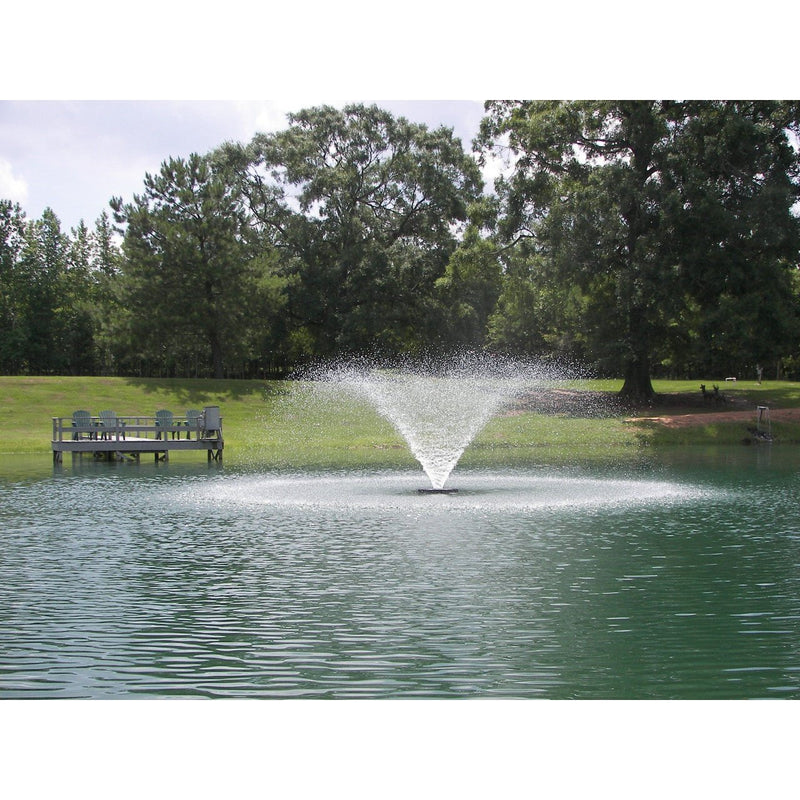
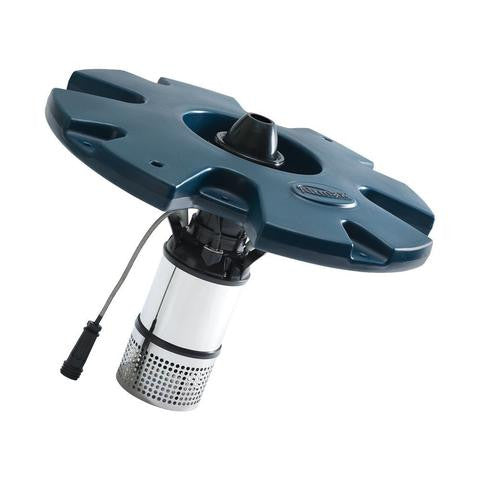
Preventative systems, such as agitators and bubblers, bridge the gap between these layers. An agitator uses a submerged motor and a high-speed propeller to draw the 39-degree water from the lakebed and push it toward the surface. This continuous flow of "warm" water melts existing ice and prevents new crystals from forming.
Bubbler systems use a different mechanical approach called the air-lift principle. An onshore compressor pumps air through weighted, perforated tubing. As small bubbles rise, they create friction against the surrounding water molecules, dragging the warmer bottom water upward in a vertical current. This creates a "curtain" of moving, warmer water along the perimeter of the dock.
Benefits of Active Prevention Systems
The primary advantage of installing a de-icing system is the preservation of structural integrity. Repairing a "jacked" piling often requires heavy machinery, such as a barge-mounted pile driver, which can cost thousands of dollars per day. Proactive systems eliminate the need for these expensive spring reconstructions.
Safety is another significant benefit. Controlled de-icing prevents the formation of massive ice ridges that can damage shorelines and boathouses. Furthermore, keeping water open around a dock allows for emergency access and protects bubbler-protected boat lifts from being crushed or seized by ice.
Energy efficiency has improved significantly with modern controllers. Using thermostats and timers allows a system to operate only when the air temperature drops below 32 degrees Fahrenheit. This prevents unnecessary electrical consumption and reduces the mechanical wear on the motors.
Challenges and Common Mistakes
One of the most frequent errors is improper depth placement. If an agitator is placed too close to the surface, it creates excessive splashing, which actually accelerates heat loss and can lead to "ice mushrooming"—a thick build-up of ice around the unit itself. If placed too deep in shallow water, the unit will stir up bottom sediment, leading to water quality issues and potential damage to the propeller.
Failure to account for "fetch" is another common pitfall. Fetch refers to the distance wind travels across open water. If a dock is on the windward side of a large lake, moving ice sheets can be pushed against the structure with immense force. A de-icer creates an open-water hole, but it cannot stop a mile-long sheet of ice from drifting into the dock.
Electrical safety is a critical challenge. Many owners attempt to use standard extension cords to power de-icers. This causes a significant voltage drop, which can burn out the motor and creates a high risk of electrical leakage into the water. All systems must be connected to a Ground Fault Circuit Interrupter (GFCI) outlet.
Limitations and Environmental Constraints
Environmental limitations often dictate which system is appropriate. In very shallow water (less than three feet), agitators are often ineffective because they cannot draw enough warm water from the bottom. In these scenarios, the water column is uniform in temperature, and there is no thermal reservoir to exploit.
Salinity also changes the equation. Saltwater freezes at a lower temperature (approximately 28.4 degrees Fahrenheit) and does not exhibit the same density-at-39-degrees behavior as freshwater. This makes de-icing in coastal environments more dependent on mechanical agitation than on thermal transfer.
Trade-offs exist regarding noise and aesthetics. Bubbler systems are generally quieter but require the installation of tubing along the lakebed, which can be disturbed by anchors. Agitators are more powerful but can create a hum that is audible in quiet winter environments.
Comparison: Bubblers vs. Agitators
Choosing between a bubbler and an agitator depends on water depth, dock configuration, and local climate conditions.
| Feature | Bubbler (Air-Based) | Agitator (Propeller-Based) |
|---|---|---|
| Depth Requirement | Works in shallow water (2ft+) | Requires 4-6ft for best results |
| Zone of Influence | Long, narrow (along tubing) | Circular or oblong (from point source) |
| Maintenance | Low (compressor is onshore) | Moderate (submerged motor) |
| Energy Cost | Lower (smaller motors) | Higher (high-torque motors) |
| Sediment Risk | Very Low | High in shallow areas |
Practical Tips and Best Practices
Always install a thermostat. Setting a de-icer to trigger at 30 degrees Fahrenheit ensures the system only runs when necessary. Running a system in 45-degree weather is a waste of electricity and does not provide additional protection.
Use stainless steel or galvanized mounting hardware. The constant vibration of an agitator combined with the corrosive nature of water will quickly degrade inferior metals. Check the zinc anodes on the motor housing every season to prevent galvanic corrosion.
Position units to push water outward. For agitators, angling the unit slightly toward the center of the lake can help keep the open water zone away from the shore, preventing ice ridges from forming against the seawall. For bubblers, ensure the weighted line is level; if one end is higher, the air will escape there, leaving the lower section inactive.
Advanced Considerations: Fluid Dynamics
Serious practitioners should consider the Reynolds number of the water flow. The goal is to maintain a turbulent flow rather than a laminar flow at the surface. Turbulent flow increases the rate of heat transfer between the warmer rising water and the freezing surface air.
In large marinas, "scaling" is a concern. Multiple agitators can be synchronized to create a large-scale circulation pattern. However, if units are pointed toward each other, they can create "dead zones" where water becomes stagnant and freezes. Mapping the flow vectors is essential for complex dock layouts.
Consider the impact of nutrient cycling. De-icers that disturb the bottom (benthic zone) can release phosphorus and nitrogen into the water column. This can lead to increased algae blooms in the spring. Using bubblers with fine-pore diffusers is a more ecologically sensitive approach for shallow, nutrient-rich lakes.
Scenario: Protecting a 40-Foot T-Dock
Imagine a 40-foot T-shaped dock in a lake with a depth of 10 feet. A single 1/2 HP agitator might be sufficient if placed at the junction of the "T" and angled toward the shore. However, this creates a circular hole that might leave the ends of the T-sections vulnerable.
A more engineered approach involves a bubbler system. By running 60 feet of weighted diffuser tubing around the entire perimeter of the dock, the owner creates a consistent safety zone. The compressor, located in a ventilated boathouse, uses 3.5 CFM of air to maintain a constant curtain of bubbles. This setup uses roughly 40% less electricity than a high-powered agitator while providing 100% perimeter coverage.
Final Thoughts
Preventing dock ice damage is a requirement for long-term waterfront asset management. By understanding the physics of ice expansion and the thermodynamics of thermal stratification, owners can implement systems that work with nature rather than against it. Whether choosing the concentrated power of an agitator or the surgical precision of a bubbler, the key lies in proactive installation.
Effective winterization is not a one-time event but a continuous mechanical process. Regular monitoring of equipment and the use of automated controllers ensure that your "safety zone" remains intact throughout the harshest months. Applying these principles now will save significant resources and stress when the spring thaw arrives.
Experimenting with unit angles and depth settings during the first few weeks of freezing will allow for fine-tuning. Every shoreline has unique characteristics, and the most successful owners are those who treat their dock as a specialized piece of engineering. Embrace the role of a producer of safety, and keep your waterfront investment secure for decades to come.