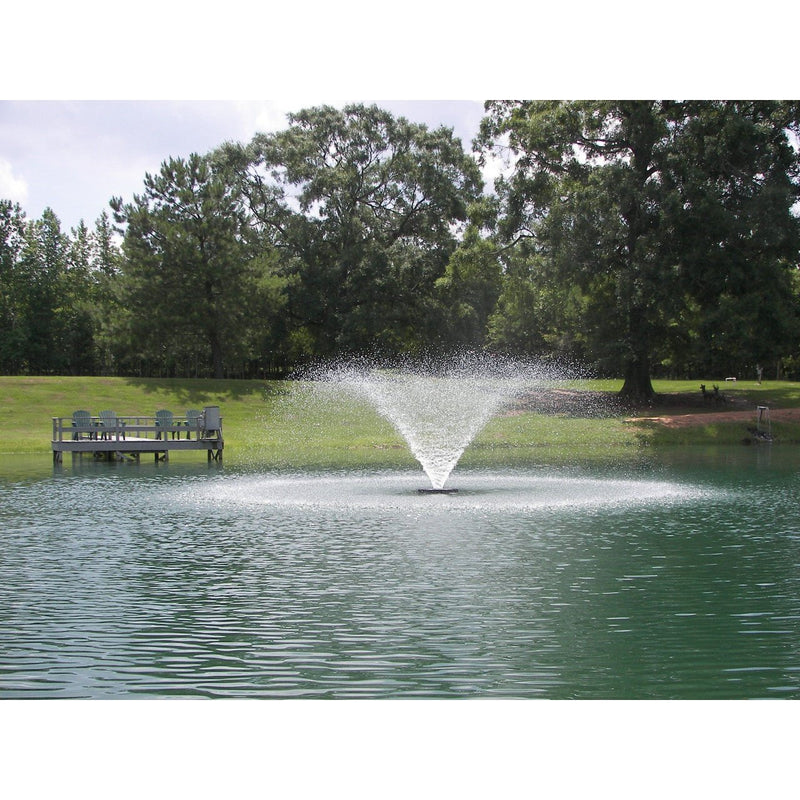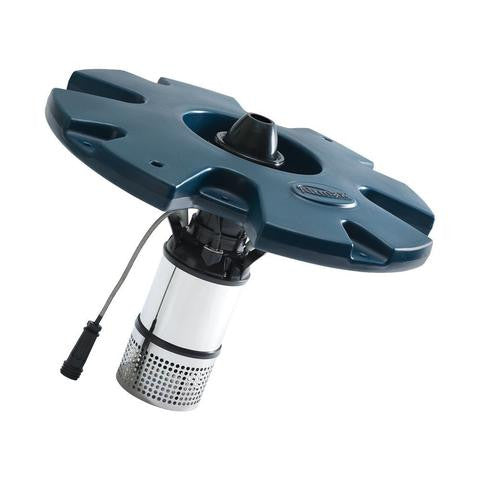


Diy Deicers Vs Professional Marina Systems
A 'cheap' solution is often just a delayed bill for a destroyed boat and a ruined dock. We've all seen the YouTube hacks using sump pumps and PVC. But when the temperature hits -20, you'll see the difference between a 'bubble machine' and a professional flow management system.
Choosing the right ice prevention strategy is not a matter of preference; it is a matter of mechanical engineering and fluid dynamics. Proper ice mitigation relies on the physics of thermal stratification and the consistent application of kinetic energy. Failure to understand these principles leads to "ice jacking"—the process where expanding ice sheets lift pilings out of the lakebed—or crushing pressures that can compromise the hulls of moored vessels.
This guide provides a technical analysis of de-icing systems, comparing makeshift solutions to engineered industrial hardware. Practitioners must evaluate water depth, salinity, and ambient temperature gradients to select a system that provides consistent structural protection.
Diy Deicers Vs Professional Marina Systems
DIY deicers are typically improvised assemblies utilizing off-the-shelf residential components. These systems often feature a standard submersible sump pump connected to a length of PVC pipe with manually drilled holes. The operational goal is to create surface agitation by discharging water at the air-liquid interface. While these setups can prevent thin ice formation in mild climates, they lack the calibrated flow rates and motor durability required for industrial applications.
Professional marina systems are purpose-built machines categorized into two primary types: high-velocity agitators (often called ice eaters) and diffused aeration systems (bubblers). High-velocity agitators utilize specialized submersible motors with propellers designed to move massive volumes of water. Diffused aeration systems use shore-mounted compressors to pump air through weighted, micro-perforated tubing.
The existence of professional systems is necessitated by the harsh reality of marine environments. Saltwater corrosion, biofouling, and continuous duty cycles quickly destroy standard residential pumps. Professional hardware is engineered with stainless steel housings, specialized mechanical seals, and dielectric cooling fluids to ensure 24/7 operation throughout the winter season.
How It Works: The Physics of Ice Prevention
Ice prevention is fundamentally about heat transfer. Most freshwater bodies undergo reverse thermal stratification during winter. Water reaches its maximum density at approximately 39.2°F (4°C). As a result, the "warmest" water in a frozen lake is actually at the bottom, while the coldest water (32°F) sits just beneath the ice surface.
Professional systems exploit this temperature gradient. A high-velocity agitator uses a propeller to draw this 39°F water upward, creating a continuous plume of warmer water that melts existing ice and prevents new crystals from forming. The effectiveness of this system is measured in Gallons Per Minute (GPM) and thrust. A 1/2 HP industrial unit can move upwards of 1,000 GPM, maintaining an open water area even in sub-zero conditions.
Diffused aeration systems operate on the principle of vertical lift. As air bubbles rise from the lakebed, they create a "curtain" of moving water. This rising air induces a current that carries warmer bottom water to the surface. This method is less about brute-force agitation and more about utilizing the latent heat of the water column to maintain a protective perimeter.
Benefits of Professional Systems
Professional ice prevention systems offer measurable advantages in efficiency and reliability. The primary benefit is the use of continuous-duty motors. Standard sump pumps are designed for intermittent use; running them 24/7 in freezing water leads to premature winding failure. Professional deicers are rated for thousands of hours of continuous operation.
Energy efficiency is another critical metric. A professional 1/2 HP deicer typically draws between 5 and 7 amps at 115V. In contrast, an uncalibrated DIY pump may draw significantly more power while moving less water due to inefficient impeller design. Over a four-month winter, the electrical savings of an engineered system often offset the initial price difference.
Mechanical protection is also superior. Professional units feature sacrificial anodes to prevent galvanic corrosion, especially in saltwater or brackish environments. They also utilize heavy-duty shrouds or "props guards" to prevent floating debris or ice chunks from damaging the impeller, a common failure point in unprotected DIY setups.
Challenges and Common Mistakes
The most frequent error in ice management is incorrect depth placement. If a deicer is placed too deep, it may not effectively pull the warmer water to the surface. If it is placed too shallow, it can draw in surface air (cavitation), reducing efficiency and potentially damaging the motor. Optimal placement typically requires 6 to 12 inches of clearance from the bottom to prevent the intake of silt and debris.
Another common mistake is the use of undersized extension cords. Submersible motors require stable voltage to maintain torque. Voltage drops caused by thin-gauge or excessively long cords increase amperage draw, causing the motor to run hot and eventually trip the internal thermal overload. Serious practitioners always calculate voltage drop and use 12-gauge or 10-gauge SJOOW-rated marine cables.
Finally, many owners fail to install thermostats or timers. Running a deicer when the water temperature is well above freezing is a waste of energy and mechanical life. Professional controllers use "C-Temp" or "Air-Temp" sensors to activate the system only when the ambient temperature drops below a specific threshold, typically 30°F to 35°F.
Limitations of Ice Management Systems
Environmental constraints can limit the effectiveness of even the best systems. In extremely shallow water (less than 3 feet), there is often not enough "warm" water at the bottom to facilitate melting. In these scenarios, deicers rely solely on kinetic energy (agitation) rather than thermal transfer, which is significantly less effective during "polar vortex" events.
Tidal movements also present a challenge. In coastal marinas, the water level changes constantly. A deicer mounted to a fixed piling may be at the correct depth at high tide but exposed to the air at low tide. This requires the use of floating mounts or specialized sliding rails to ensure the unit remains submerged at a consistent depth relative to the water surface.
Massive surface areas cannot be protected by a single unit. There is a physical limit to how much heat a 1 HP motor can transfer. Attempting to clear a 100-foot dock with one deicer often results in "spot melting"—where small holes open up around the unit while the rest of the structure remains encased in ice. This can actually increase structural stress by creating uneven pressure points.
Comparing the Systems: Technical Specifications
The following table compares the typical performance metrics of the three most common approaches to ice management.
| Feature | DIY Sump/PVC | Industrial Bubbler | High-Velocity Agitator |
|---|---|---|---|
| Motor Type | Intermittent Duty | Continuous Air Comp. | Continuous Submersible |
| Power Draw | 8 - 12 Amps | 2 - 5 Amps | 5 - 10 Amps |
| Primary Mechanism | Surface Agitation | Vertical Thermal Lift | Forced Convection |
| Service Life | 1 Season | 5 - 10 Years | 5 - 8 Years |
| Maintenance | High (Clogging) | Low (Filter change) | Moderate (Anodes) |
Practical Tips and Best Practices
Optimization of an ice prevention system starts with positioning. For long, straight docks, angling the deicer at a 30-degree upward pitch toward the shore creates an elongated "open water" shape that protects more of the structure. In marinas with boat slips, mounting the unit vertically at the end of the finger pier is generally more effective for maintaining a clear perimeter around the hull.
Use a GFCI (Ground Fault Circuit Interrupter) at all times. Electricity and water are a lethal combination. Professional systems often include a dedicated control box with a 30mA or 5mA trip level to ensure safety. Testing this circuit monthly is mandatory, as moisture ingress in junction boxes is the leading cause of winter system failure.
Regular inspection of the intake screen is also necessary. Falling leaves in late autumn or "slush" ice can block the intake, causing the motor to starve for water. Without water flow to cool the motor housing, the internal oil or dielectric fluid will overheat, leading to seal failure. A simple visual check every week can prevent a $1,000 replacement bill.
Advanced Considerations: Fluid Dynamics and Cavitation
For those managing large-scale marina operations, understanding Reynolds numbers and the "Thermal Bar" is essential. The Reynolds number helps determine whether the water flow is laminar or turbulent. Turbulent flow is generally preferred for ice prevention because it maximizes the mixing of warm and cold water layers. However, excessive turbulence can lead to cavitation, where low-pressure bubbles form on the propeller blades, causing pitting and mechanical erosion.
The "Thermal Bar" occurs when a large body of water has different cooling rates between the shallow shore and the deep center. In early winter, the shallow water cools faster, creating a dense wall of cold water that can "trap" warmer water in the center of the basin. A professional system must be powerful enough to break this bar and facilitate circulation across the entire dock footprint.
Mechanical seal technology is also an advanced consideration. DIY pumps use rubber "lip seals" that harden and crack in freezing temperatures. Professional units use silicon carbide or ceramic mechanical seals that maintain their integrity in extreme cold. When a seal fails, water enters the motor windings, causing a catastrophic short circuit. Investing in high-grade seal technology is the most effective way to ensure multi-season reliability.
Example Scenarios
Consider a 40-foot private dock in a freshwater lake with an average depth of 6 feet. A DIY sump pump setup would likely clear a 5-foot radius around the discharge pipe. However, if the temperature drops to -10°F for three consecutive days, the heat loss to the atmosphere will exceed the thermal energy provided by the pump, and the ice will close in.
In the same scenario, a 1/2 HP high-velocity agitator mounted 4 feet below the surface would move 40,000 gallons of water per hour. By drawing up 39°F water from the bottom, it provides a consistent "thermal blanket" over the surface. This unit would maintain an open water area roughly 25 feet in diameter, keeping the ice well away from the dock pilings.
For a marina with 20 slips in a shallow tidal basin, an industrial bubbler system is the better choice. By running weighted diffuser lines along the entire length of the docks, the system creates a continuous curtain of bubbles. This protects every slip simultaneously without the need for 20 individual motors, reducing both electrical infrastructure requirements and maintenance labor.
Final Thoughts
Protecting marine infrastructure from ice damage is a task that rewards precision and punishes improvisation. While a DIY bubbler might seem like a cost-saving measure in October, the risk of structural failure in January is substantial. Professional systems are engineered to work with the natural properties of water, using calibrated flow and thermal transfer to maintain safety.
Effective ice management requires a balance of kinetic energy, thermal access, and mechanical durability. By selecting the right hardware and following a rigorous maintenance schedule, dock owners and marina operators can ensure their assets survive the winter without the need for expensive spring repairs.
Serious practitioners should focus on the long-term ROI of energy efficiency and motor longevity. Experimenting with different mounting angles and thermostat settings will help fine-tune the system for specific local conditions. Ultimately, the goal is a controlled, predictable ice-free zone that remains stable regardless of how far the thermometer drops.