

Do Fountains Really Oxygenate an Entire Pond?
Is your fountain just a pretty face, or is it actually helping your fish? Fountains look great, but they often leave the bottom of your pond 'dead.' Discover when a fountain is enough and when you need bottom-up aeration.
Maintaining a balanced aquatic ecosystem requires more than just moving water. It requires a precise understanding of gas transfer and thermal dynamics. Dissolved oxygen (DO) is the primary limiting factor for biological health in any pond or lake. While a splashing fountain provides a visual centerpiece, its mechanical efficiency in delivering oxygen to the entire water column is often misunderstood.
This guide examines the engineering differences between surface-level spray and sub-surface diffusion. It focuses on the metrics that matter: Standard Aeration Efficiency (SAE) and Oxygen Transfer Efficiency (OTE). Understanding these variables is critical for optimizing energy consumption and ensuring the survival of your fish during peak biological demand.
Do Fountains Really Oxygenate an Entire Pond?
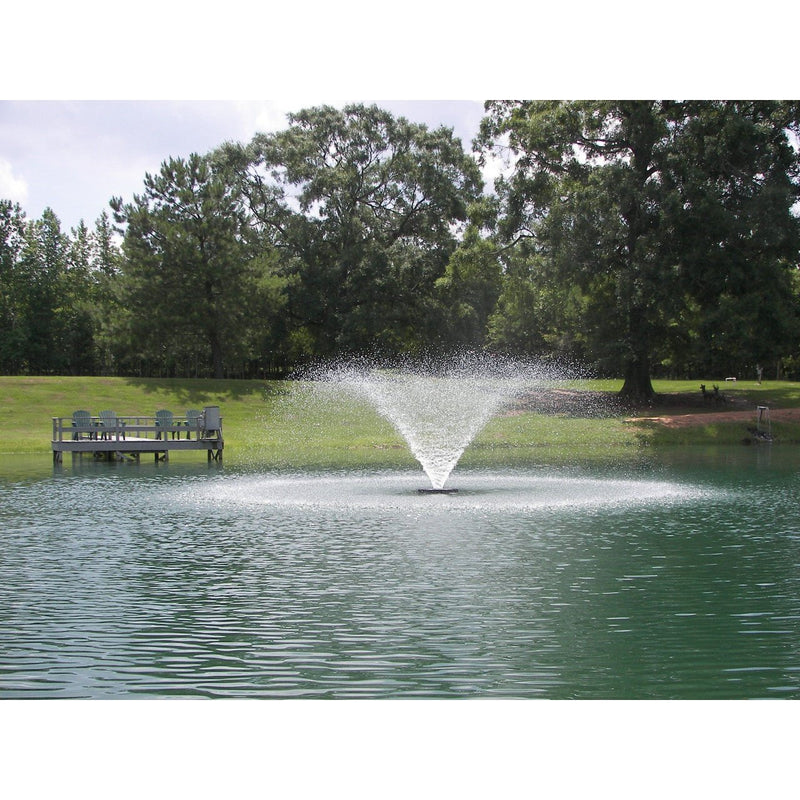
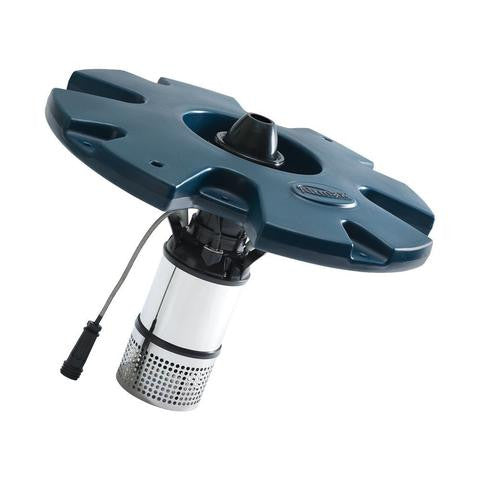
Pond fountains are primarily categorized as aesthetic tools with secondary aeration benefits. They function by drawing water from the upper 1 to 3 feet of the water column and propelling it into the atmosphere. Oxygenation occurs at the air-water interface when the droplets contact the air and then crash back into the surface, creating localized turbulence.
In real-world applications, this mechanism is effective only in shallow environments. If a pond is less than 6 feet deep, a fountain can provide enough surface agitation to maintain adequate dissolved oxygen levels for most species. However, the physical reach of a fountain’s influence is horizontally and vertically limited.
Fountains do not penetrate the lower depths of a water body. In ponds deeper than 8 feet, the water often separates into layers based on temperature and density. The fountain continues to circulate the warm, oxygen-rich top layer while the cool, dense bottom layer remains stagnant. This results in a "dead zone" where anaerobic conditions prevail, leading to the accumulation of toxic gases and organic sludge.
Mechanical Principles: Kinetic Energy vs. Gas Diffusion
The mechanical work performed by a fountain is largely dedicated to overcoming gravity. To create a decorative spray pattern, a pump must lift high volumes of water several feet into the air. This consumes significant electrical power, but only a fraction of that energy contributes to actual gas exchange.
Sub-surface diffused aeration operates on a different principle called the "airlift effect." Instead of moving water into the air, a shore-mounted compressor pumps air through weighted tubing to diffusers at the bottom of the pond. These diffusers release billions of micro-bubbles that rise through the water column.
This process achieves two goals simultaneously. First, oxygen is transferred directly from the surface of the bubbles into the water as they rise. Second, the rising bubble column acts as a mechanical pump, dragging cold, oxygen-depleted water from the bottom up to the surface. This continuous turnover ensures that the entire volume of the pond, not just the top layer, is oxygenated.
Thermodynamic Advantages of Bottom-Up Aeration
One of the most significant advantages of bottom-up aeration is the prevention of thermal stratification. During summer months, sunlight warms the surface water (the epilimnion), making it less dense. Below this, a transition zone called the thermocline forms, acting as a physical barrier against mixing with the cold, dense bottom water (the hypolimnion).
Without mechanical mixing, the hypolimnion becomes anoxic—completely devoid of oxygen. Beneficial aerobic bacteria cannot survive here, so organic matter like fish waste and leaves does not decompose. Instead, it turns into "muck" and releases hydrogen sulfide and methane.
Diffused aeration breaks the thermocline by forcing vertical circulation. By keeping the pond in a state of constant turnover, the system maintains uniform temperature and dissolved oxygen levels from the surface to the floor. This eliminates the risk of a "turnover fish kill," which occurs when a sudden storm or temperature change causes anoxic bottom water to mix rapidly with the surface, crashing the pond's total oxygen levels in minutes.
Engineering Miscalculations and Common Aeration Errors
A frequent mistake in pond management is sizing an aeration system based on surface acreage rather than volume and depth. Using a 1-horsepower fountain for a 1-acre pond that is 15 feet deep will fail to prevent bottom stagnation. The fountain simply does not have the mechanical reach to affect the lower 10 feet of water.
Another common error is operating aeration systems on a part-time basis. Many pond owners run fountains only during the day for visual appeal. However, oxygen demand peaks at 3:00 a.m. because aquatic plants and algae switch from producing oxygen via photosynthesis to consuming it via respiration. Turning off the fountain at night removes the only source of oxygen replenishment exactly when the pond needs it most.
Neglecting maintenance on intake screens is also a primary cause of system failure. Fountains pull water through a fine mesh to protect the pump impellers. If this screen becomes clogged with algae or debris, the pump’s flow rate drops significantly, reducing both the aesthetic display and the aeration efficiency.
Operational Constraints of Surface Fountain Systems
Surface fountains face realistic constraints in high-wind environments and cold climates. In areas with high wind speeds, fine spray patterns are easily drifted away, leading to water loss and inconsistent aeration. Furthermore, the evaporation rate of a fountain is much higher than that of a diffuser, which can be a drawback in regions with limited water replenishment.
Fountains are also vulnerable to mechanical damage from ice. Most manufacturers recommend removing floating fountains during the winter to prevent the motor from being crushed by expanding ice. This leaves the pond without aeration during the winter months, potentially leading to "winter kill" if snow cover blocks sunlight and stops natural oxygen production.
In contrast, diffused aeration systems are often operated year-round. The rising bubbles keep a small area of the surface open, allowing toxic gases to escape and oxygen to enter, even in freezing temperatures. This makes diffusers a more reliable choice for long-term ecosystem stability.
Efficiency Metrics: Fountains vs. Diffused Air
When evaluating these systems, it is helpful to look at Standard Aeration Efficiency (SAE), which measures pounds of oxygen transferred per horsepower-hour (lb O2/hp-hr). Diffused aeration systems consistently outperform surface units in deeper water.
| System Type | Primary Goal | Effective Depth | SAE (Approx.) |
|---|---|---|---|
| Decorative Fountain | Aesthetics | 1 - 5 feet | 1.5 - 2.5 |
| Surface Aerator | Agitation | 4 - 8 feet | 2.6 - 3.2 |
| Fine Bubble Diffuser | Oxygen Transfer | 8 - 50+ feet | Up to 12.0 |
The table demonstrates that while surface aerators are better than decorative fountains, they still cannot match the efficiency of a diffused system at depth. Energy costs for running a high-horsepower fountain can be three to five times higher than running a comparable compressor for a diffuser system.
Technical Best Practices for System Integration
Serious practitioners often find that the best approach is a hybrid system. This involves using a fountain for its aesthetic value and a diffused aeration system for the heavy lifting of biological maintenance. If you choose this route, position the diffusers in the deepest parts of the pond and place the fountain where it provides the best visual impact.
Always select a compressor that is rated for continuous duty. Unlike standard shop compressors, pond aeration compressors are designed to run 24/7 for years at a time. Using a non-rated pump will lead to premature motor failure due to heat buildup.
When installing diffusers, use self-weighted tubing to ensure the lines stay on the bottom and do not become a hazard for boats or swimmers. Additionally, install a check valve at the diffuser to prevent water from backing up into the air line when the system is turned off, which can cause internal corrosion in the compressor.
Advanced Calculations for Oxygen Demand
For large-scale or heavily stocked ponds, calculating the Biological Oxygen Demand (BOD) is essential. BOD is the amount of dissolved oxygen needed by aerobic biological organisms to break down organic material present in the water at a certain temperature.
In a high-density koi pond, the BOD increases significantly after feeding. If the aeration system is only sized for the water volume and not the biomass, you may experience an oxygen crash during the digestion period. A common rule of thumb for aquaculture is to provide at least 2.0 mg/L of dissolved oxygen specifically for the breakdown of waste, in addition to the base requirements for the fish themselves.
Oxygen Transfer Efficiency (OTE) also changes with depth. For every foot of depth, the contact time between the air bubble and the water increases, allowing more oxygen to dissolve. This means a diffuser at 15 feet is technically more efficient than the same diffuser at 5 feet, as the bubbles have a longer "hang time" in the water column.
Performance Scenarios: Depth-to-Surface Ratios
Consider a 1/2-acre pond with a maximum depth of 12 feet. A 1-horsepower decorative fountain might look impressive, but it will only circulate the top few feet. The bottom 8 feet will likely remain anoxic for most of the summer. In this scenario, the owner is paying for 746 watts of electricity but only oxygenating 30% of the pond's volume.
By contrast, a 1/4-horsepower rocking piston compressor paired with two diffuser plates would consume only about 200 watts. Because the diffusers are placed at the 12-foot mark, they will move the entire volume of the pond multiple times per day. The owner reduces their energy bill by nearly 70% while providing 100% water column oxygenation.
For shallow ponds under 4 feet, the math flips. A diffuser in 3 feet of water has very little contact time, resulting in poor OTE. In these cases, a surface aerator or a high-flow fountain is actually the more efficient mechanical choice because surface agitation becomes the dominant oxygenation force.
Final Thoughts
Fountains and bottom-up aeration systems serve different primary functions. A fountain is an aesthetic investment that provides supplemental oxygen to the surface layer of a pond. It is a suitable choice for shallow, decorative water features where visual appeal and sound are the priorities.
For deeper ponds, particularly those housing sensitive fish species, sub-surface diffused aeration is the technically superior solution. By preventing thermal stratification and ensuring whole-column circulation, diffusers maintain the biological engine of the pond. They are more energy-efficient, more effective at depth, and better suited for year-round operation.
Evaluating your specific pond depth and management goals is the first step toward a healthy ecosystem. Experimenting with different configurations or integrating a hybrid approach can lead to significantly better water clarity and fish health. Understanding the physics of gas transfer ensures that your investment provides the maximum benefit for your aquatic environment.