

Converting Decorative Ponds To Fish Habitats
Is your pond just a decoration, or is it a heartbeat for the local ecosystem? An urban decorative pond is often a closed loop that struggles to stay fresh. But when you add aeration and native structure, it transforms into a wild sanctuary. It stops being a chore to clean and starts being a self-sustaining refuge for fish, birds, and beneficial insects. Move beyond the 'lawn ornament' and build a living system.
Converting Decorative Ponds To Fish Habitats
Converting a decorative pond into a functional fish habitat requires transitioning from a static water feature to a dynamic biological reactor. In a standard decorative setup, the primary focus is visual clarity, often achieved through chemical sterilization or high-turnover mechanical filtration. In contrast, a wild sanctuary leverages the nitrogen cycle and physical structure to support a higher biomass of aquatic life.
This conversion involves the integration of two critical mechanical and biological components: subsurface aeration and specific surface area (SSA) expansion. A decorative pond typically lacks the depth and dissolved oxygen (DO) levels necessary to support native fish populations through seasonal temperature shifts. By retrofitting these systems, the pond can maintain a stable aerobic environment where nitrifying bacteria can effectively process fish waste (ammonia) into non-toxic nitrates, which are then sequestered by native aquatic flora.
Technical Mechanics of Habitat Conversion
The functionality of a wild sanctuary depends on the continuous management of the nitrogen cycle. Fish excrete ammonia (NH3) primarily through their gills. In a closed decorative system, NH3 levels as low as 0.25 parts per million (ppm) can cause gill damage and respiratory distress. To mitigate this, the system must facilitate the growth of Nitrosomonas and Nitrobacter bacteria.
Aeration serves as the mechanical engine for this process. Subsurface diffused aeration uses an on-shore compressor to pump air through weighted tubing to diffusers at the pond's floor. As bubbles rise, they create an "airlift" effect, pulling oxygen-depleted water from the bottom (hypolimnion) to the surface. This gas exchange increases the DO levels, ideally maintaining them above 5.0 mg/L to support both fish respiration and aerobic bacterial activity.
Native structures, such as submerged logs, rock piles, or specialized bio-media, provide the necessary surface area for these bacteria to colonize. For every pound of fish in the system, a minimum of 100 square feet of biological surface area (BSA) is recommended to ensure the complete conversion of ammonia into nitrite (NO2-) and subsequently into nitrate (NO3-).
Technical Benefits of System Retrofitting
The primary advantage of converting to a wild sanctuary is the measurable increase in ecological stability and carrying capacity. A properly aerated system prevents thermal stratification, a condition where water layers separate by temperature, leading to anoxic (oxygen-deprived) zones at the bottom. Eliminating these zones allows fish to utilize the entire water column, effectively increasing the usable habitat volume by up to 40% in ponds deeper than six feet.
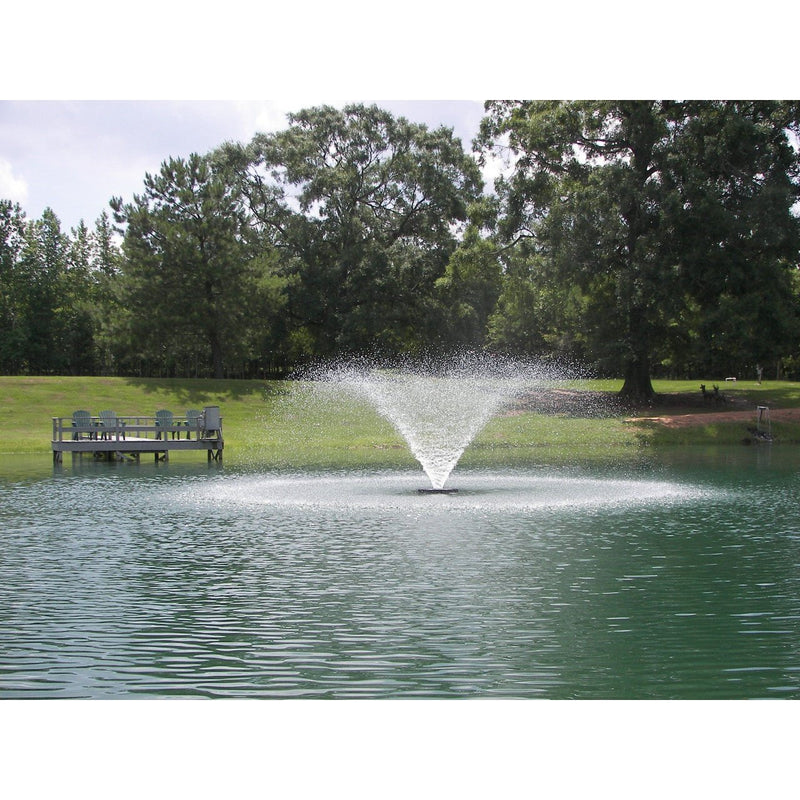
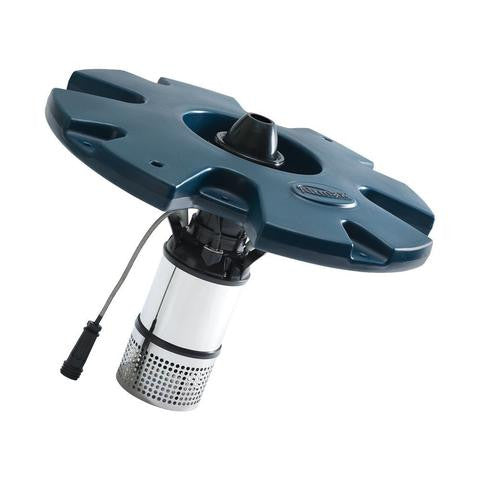
Energy efficiency is another measurable benefit. While surface fountains are popular for decorative ponds, they are significantly less efficient at transferring oxygen in deep water. Bottom-diffused aeration systems can achieve an Oxygen Transfer Efficiency (OTE) of 25-35%, compared to only 8-15% for surface aerators. This results in higher DO levels with lower kilowatt-hour (kWh) consumption. Furthermore, a self-sustaining ecosystem reduces the requirement for expensive chemical treatments like algaecides or synthetic clarifiers.
Challenges and Technical Pitfalls
One of the most frequent errors in habitat conversion is the failure to account for Biochemical Oxygen Demand (BOD). BOD represents the amount of dissolved oxygen needed by aerobic organisms to break down organic matter. If a pond has significant "muck" or leaf litter on the bottom, the initial activation of an aeration system can stir up these organics, causing a temporary spike in BOD that may deplete oxygen levels and cause a fish kill.
Another challenge is biofilm fouling on aeration diffusers. Fine-bubble diffusers, while efficient, are susceptible to mineral scaling and biological growth that can increase backpressure on the compressor. This reduces the Cubic Feet per Minute (CFM) output and can lead to premature mechanical failure. Regular maintenance intervals every 12 to 24 months are required to acid-clean or replace diffuser membranes to maintain optimal flow rates.
Environmental and Physical Limitations
System depth is a critical constraint. For cold-water species or to prevent winterkill in northern climates, a minimum depth of 8 to 12 feet is often required. Shallow decorative ponds (less than 4 feet deep) may experience rapid temperature fluctuations that stress native fish, regardless of aeration. In these cases, the volume-to-surface-area ratio may be insufficient to maintain a stable thermal refuge during summer peaks or winter freezes.
Stocking density is also a non-negotiable limitation. A wild sanctuary cannot support the same high-density populations as an intensive aquaculture tank without sophisticated life-support systems. Overstocking leads to nutrient loading that exceeds the uptake capacity of native plants, resulting in eutrophication—a state where excess phosphorus (above 0.05 mg/L) triggers uncontrollable algal blooms.
Comparative Analysis: Decorative vs. Wild Sanctuary
The following table compares the operational metrics of a standard decorative pond versus a converted wild sanctuary of equal volume (approx. 5,000 gallons).
| Metric | Garden Decorative Pond | Wild Sanctuary (Converted) |
|---|---|---|
| Primary Filtration | Mechanical/UV Sterilization | Biological/Phyto-sequestration |
| Oxygenation Method | Surface Fountain / Waterfall | Subsurface Diffused Aeration |
| Avg. Energy Use (kWh/mo) | 180 - 250 | 45 - 90 |
| Biomass Capacity | Low (Ornamental only) | High (Native ecosystem support) |
| Maintenance Frequency | Weekly (Filter cleaning) | Quarterly (System inspection) |
Practical Implementation Best Practices
Effective conversion starts with calculating the required air pressure based on pond depth. A general rule is that 1 PSI (pounds per square inch) is required for every 2.31 feet of water depth. For a 10-foot deep pond, the compressor must reliably produce at least 4.33 PSI, plus additional pressure to overcome friction loss in the tubing.
When placing structure, focus on the littoral zone—the shallow area near the shoreline where sunlight reaches the bottom. This is where primary productivity is highest. Use a mix of materials to maximize SSA. For instance, pea gravel has an SSA of approximately 280 m²/m³, while larger boulders provide significantly less. Integrating a variety of sizes creates niches for different trophic levels, from periphyton (algae/microbes) to macroinvertebrates and fish.
Native aquatic plants should be selected based on their nutrient uptake rates. Species such as Illinois Pondweed (Potamogeton illinoensis) are highly effective at sequestering nitrogen and phosphorus. These plants should cover approximately 20-30% of the pond surface to provide adequate cover and nutrient management without choking the water column.
Advanced Optimization Strategies
For serious practitioners, the use of multiparameter probes to monitor DO, pH, and conductivity in real-time can provide data-driven insights into system health. Measuring the Specific Surface Area (SSA) of added media allows for precise calculations of the system's metabolization rate. Industry standards suggest that nitrifying bacteria can process approximately 0.2 grams of fish waste per square meter of biofilm per day.
Scaling the system for off-grid or remote locations involves sizing solar arrays based on the Watt-hours (Wh) per day required by the compressor. A 1/4 HP compressor typically draws around 250 Watts. To run this 24/7, the solar and battery storage system must be sized to account for "days of autonomy" (cloudy days) and the surge current required for the motor start-up.
Conversion Example: 2,000-Gallon Concrete Pond
Consider a 2,000-gallon decorative concrete pond with a depth of 5 feet. In its original state, it uses a 1,500 GPH surface pump for a waterfall. To convert this:
First, install a 1/4 HP rocking piston compressor with a single fine-bubble disc diffuser. This system will provide approximately 1.5 CFM of air. At 5 feet of depth, the backpressure is minimal (approx 2.2 PSI), allowing the compressor to operate at peak efficiency.
Second, add 15 cubic feet of structured plastic media or native river rock (3-5 inch diameter) in mesh bags. This adds approximately 450-600 square feet of BSA.
Third, introduce marginal native plants like Blue Flag Iris and submerged oxygenators like Hornwort. This configuration can support a sustainable population of native minnows or sunfish while maintaining clear water through biological competition rather than chemical intervention.
Final Thoughts
Transitioning from a decorative pond to a wild sanctuary is a move toward mechanical efficiency and biological resilience. By prioritizing subsurface aeration and biological surface area, you create a system that manages its own waste streams. This approach reduces long-term operational costs and energy consumption while providing a stable environment for native species.
Success in habitat conversion is measured by water chemistry stability and the successful recruitment of beneficial organisms. When the nitrogen cycle is fully functional and oxygen levels remain consistent across the water column, the pond ceases to be an artificial ornament. It becomes a self-regulating component of the local landscape, requiring less human intervention to thrive.
Practitioners are encouraged to monitor their systems closely during the first full seasonal cycle. Adjustments to aeration run-times or plant density may be necessary as the biological load matures. Ultimately, building a living system is an exercise in engineering balance, where technology serves to facilitate natural processes rather than override them.