

Bass Pond Aeration Systems Guide
One of these ponds grows trophy bass, the other just grows mosquitoes. Most pond owners ignore the one thing bass need more than food: Oxygen. Moving water isn't just for looks; it's the engine of a healthy ecosystem. Discover how to flip the switch from a dead swamp to a trophy factory.
A pond without adequate circulation quickly becomes a liability rather than an asset. Biological oxygen demand (BOD) in typical earthen ponds often exceeds the natural diffusion rate provided by atmospheric contact. This discrepancy leads to thermal stratification, where the water column separates into distinct layers based on density and temperature.
The upper layer, or epilimnion, remains oxygenated but grows excessively warm during summer months. The lower layer, the hypolimnion, stays cool but becomes anoxic as bacteria consume oxygen to decompose organic matter. This creates a "dead zone" that limits the available habitat for Micropterus salmoides (largemouth bass) and their primary forage species.
Implementing a high-efficiency aeration system remediates these issues by facilitating gas exchange and destratification. Maintaining a dissolved oxygen (DO) level above 5.0 mg/L is the baseline requirement for optimal metabolic function and growth in apex predators. Lower concentrations force the fish into a state of physiological stress, reducing their feeding efficiency and increasing susceptibility to parasitic infections.
Bass Pond Aeration Systems Guide
A bass pond aeration system is a mechanical assembly designed to increase the concentration of dissolved oxygen and promote vertical mixing within a water body. These systems are utilized in recreational fisheries, commercial aquaculture, and stormwater management to maintain ecological stability. In the context of a trophy bass fishery, the system serves as a life-support mechanism that prevents catastrophic "turnover" events and maximizes the pond's carrying capacity.
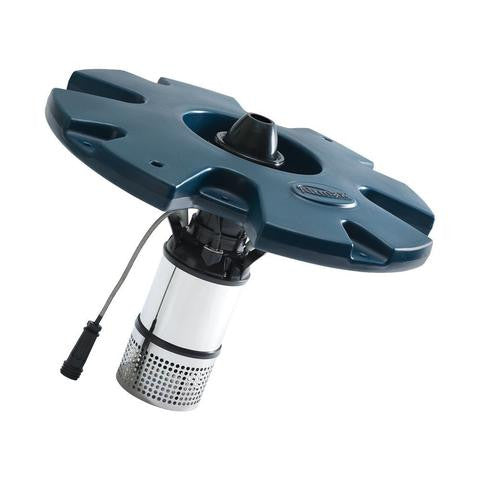
Mechanical aeration is categorized primarily by the method of oxygen delivery: surface agitation or subsurface diffusion. Surface aerators, such as paddlewheels or vertical pumps, splash water into the air to create surface area for gas exchange. Subsurface systems use shore-based compressors to pump air through weighted tubing to diffusers located on the pond floor. These diffusers release millions of micro-bubbles that rise through the water column, dragging low-oxygen water from the bottom to the surface.
Engineering these systems requires an understanding of the pond's bathymetry, volume, and total biological load. For a standard 1-acre pond with an average depth of 8 feet, a subsurface system is generally more efficient than surface agitation. This is due to the "chimney effect," where the rising bubbles create a continuous current that circulates the entire water volume multiple times per day. In contrast, surface aerators are often limited to the top 2-4 feet of the water column, leaving the bottom muck in an anaerobic state.
Mechanical Principles of Gas Transfer
Oxygen transfer from air to water is governed by the two-film theory. This principle states that a thin film of gas and a thin film of liquid exist at the interface between the two phases. The rate of transfer depends on the surface area available, the concentration gradient (the difference between current DO and saturation), and the turbulence at the interface. Mechanical systems optimize these variables to maximize the Standard Oxygen Transfer Rate (SOTR).
The efficiency of an aeration system is measured by its Standard Aeration Efficiency (SAE), expressed in pounds of oxygen transferred per horsepower per hour (lb O2/hp-hr). High-quality paddlewheel aerators typically achieve an SAE between 2.5 and 4.0, whereas fine-bubble diffused systems can range from 1.0 to 4.5 depending on depth. As depth increases, the contact time of the bubble with the water increases, improving the transfer efficiency.
Diffused systems rely on the hydrostatic pressure of the water column. For every 2.31 feet of depth, 1 PSI of back-pressure is exerted on the compressor. A system operating at 10 feet deep must overcome approximately 4.33 PSI plus the friction loss in the air lines. Selecting a compressor with a suitable performance curve is critical to ensuring the required Cubic Feet per Minute (CFM) of airflow reaches the diffusers.
Technical Benefits for Fish Growth and Water Quality
The primary advantage of continuous aeration is the elimination of the thermocline. By mixing the warm, oxygen-rich surface water with the cool, nutrient-heavy bottom water, the system creates a uniform environment. This allows bass to utilize 100% of the pond's volume. In stratified ponds, bass are often restricted to a narrow band of water where temperature and oxygen overlap, leading to overcrowding and stunted growth.
Aeration significantly accelerates the decomposition of organic sediment. Aerobic bacteria are approximately 20 times more efficient at breaking down "muck" than anaerobic bacteria. By providing oxygen at the sediment-water interface, the system facilitates the rapid oxidation of organic matter, reducing the accumulation of nitrogen and phosphorus. This process, known as nutrient sequestration, limits the fuel available for harmful filamentous algae and cyanobacteria blooms.
Maintaining a high redox potential at the pond bottom prevents the release of toxic gases such as hydrogen sulfide (H2S) and ammonia (NH3). These gases are byproducts of anaerobic decomposition and can be lethal to fish during a sudden turnover event—often triggered by cold rain or high winds. A stabilized, oxygenated bottom acts as a chemical buffer, keeping these toxins locked in the soil or converting them into less harmful forms like nitrate.
Engineering Challenges and System Failures
The most frequent failure in aeration systems is compressor overheating. Compressors, particularly rocking piston models, generate significant heat as they compress air. If the cabinet or housing lacks adequate ventilation, the internal temperature can exceed the thermal protection limits of the motor. This leads to premature diaphragm failure or complete motor seizure.
Friction loss in air lines is a common engineering oversight. Using a diameter that is too small for the distance traveled increases the total dynamic head (TDH) on the compressor. For example, running 1/2-inch ID tubing over 500 feet can result in a significant PSI drop, reducing the CFM output at the diffuser. It is standard practice to use larger diameter "trunk lines" (e.g., 1-inch) for long runs before transitioning to weighted tubing near the water's edge.
Diffuser fouling is an ongoing maintenance challenge. In nutrient-rich ponds, calcium carbonate scales and biological biofilms can clog the pores of EPDM (Ethylene Propylene Diene Monomer) membranes. As the pores clog, the back-pressure on the system increases. If left unaddressed, this increased pressure reduces the airflow and eventually causes the compressor's relief valve to pop or the motor to burn out. Monitoring the system's pressure gauge is the only way to detect this before a failure occurs.
Operational Limitations and Site Constraints
Aeration systems are not a "set and forget" solution for every pond. In hyper-eutrophic ponds with massive amounts of legacy sediment, starting an aeration system in the middle of summer can be dangerous. The initial mixing can pull up large volumes of anoxic, toxic water too quickly, causing an immediate fish kill. A "startup protocol" is required, where the system is run for only 30 minutes the first day, doubling the time each subsequent day until 24-hour operation is achieved.
Environmental factors such as high altitude reduce the efficiency of aeration. At higher elevations, the atmospheric pressure is lower, meaning there is less oxygen by weight in each cubic foot of air. System designers must derate the oxygen transfer expectations by approximately 3% for every 1,000 feet of elevation above sea level. This may require larger compressors or more diffusers to achieve the same DO targets as a sea-level pond.
Power availability is the most significant practical boundary. Running a 1/2-hp compressor 24/7 requires a reliable 110V or 220V power source. In remote locations, solar-powered aeration is an alternative, but it often lacks the battery capacity to run through the night. Since the lowest oxygen levels occur just before dawn (due to plant respiration), solar systems without significant battery storage may fail to protect the pond during the most critical hours.
System Comparison: Surface vs. Subsurface
Choosing between surface and subsurface aeration depends on the pond's geometry and goals. The following table compares the two primary configurations based on technical metrics.
| Feature | Surface Agitators (Panel A) | Subsurface Diffusers (Panel B) |
|---|---|---|
| Primary Mechanism | Atmospheric contact via splashing | Rising bubble plume and circulation |
| Effective Depth | 0–4 feet | 5–40+ feet |
| SAE Efficiency | Moderate (2.5–3.2 lb O2/hp-hr) | High (variable by depth) |
| Destratification | Poor (localized mixing) | Excellent (entire water column) |
| Maintenance | Motor in water, higher risk | Shore-based motor, easier access |
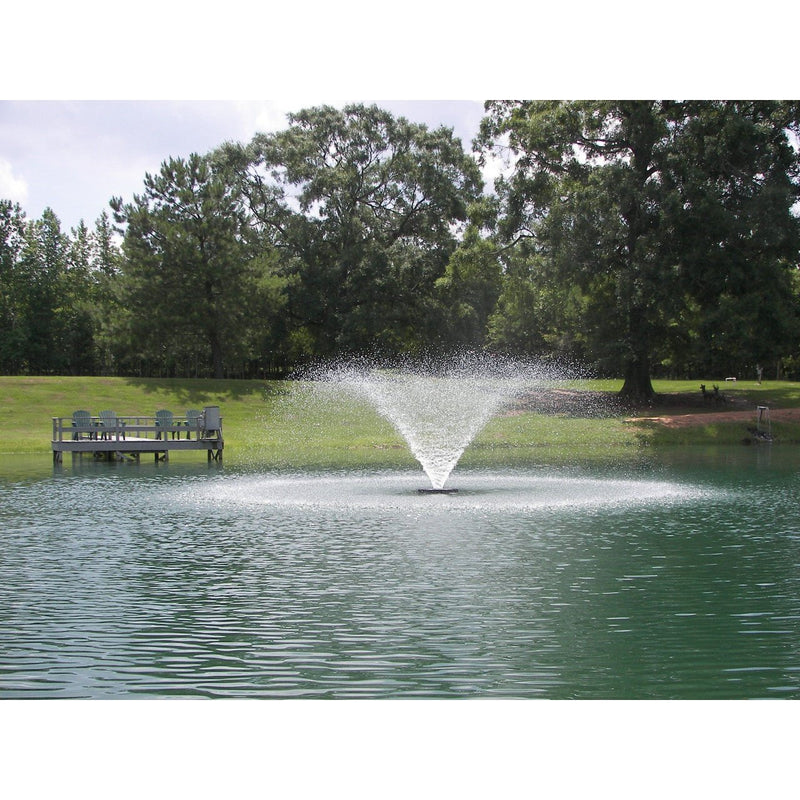
| Visual Impact | Fountain or splash pattern | Discrete "boil" on surface |
Surface aerators are highly effective for emergency situations where immediate oxygen transfer is needed in the top layer of water. They are also superior at venting off CO2 and other dissolved gases. However, for long-term health and muck reduction in deep ponds, subsurface diffusers are the industry standard due to their ability to move water from the absolute bottom to the surface.
Practical Tips for System Optimization
Optimizing an aeration system begins with proper diffuser placement. Diffusers should be located in the deepest parts of the pond to maximize the volume of water moved per bubble. However, avoid placing them directly in deep muck pockets; instead, use a weighted base or a small platform to keep the diffuser 6-12 inches off the bottom. This prevents the system from constantly stirring up sediment which can cloud the water and increase BOD.
Use a pressure gauge at the compressor manifold to establish a baseline. Record the PSI when the system is first installed with clean diffusers. If the pressure increases by 2-3 PSI over time, it indicates that the diffusers are clogging. If the pressure drops, it suggests a leak in the air line or a failing compressor diaphragm. This simple diagnostic tool can save hundreds of dollars in repair costs.
Check the air intake filters monthly. In rural environments, dust, pollen, and insects can clog a filter within weeks. A restricted intake forces the compressor to work harder, generating more heat and consuming more electricity. High-quality paper or felt filters should be replaced every 3-6 months depending on the environment.
- Manifold Balancing: If using multiple diffusers at different depths, use the manifold valves to balance the airflow. Air naturally takes the path of least resistance (the shallowest diffuser). Adjust the valves until the "boils" on the surface look even.
- Weighted Tubing: Always use self-weighted, lead-free air tubing. Non-weighted tubing will eventually float as it fills with air, creating a navigation hazard and an eyesore.
- Cabinet Ventilation: Ensure the compressor cabinet has a cooling fan that moves at least 100 CFM of air. High-performance rocking piston compressors can run at internal temperatures that will melt standard plastic fittings if not cooled properly.
Advanced Biogeochemical Considerations
Serious practitioners should understand the relationship between aeration and the Phosphorus cycle. In anoxic conditions, iron-bound phosphorus in the sediment is released back into the water column. This "internal loading" can trigger massive algae blooms even if external runoff is controlled. Maintaining aerobic conditions at the sediment interface keeps phosphorus bound to iron, effectively locking it in the soil and improving water clarity.
The "Alpha Factor" is another advanced consideration. It is the ratio of the oxygen transfer rate in pond water compared to clean tap water. In ponds with high dissolved solids or tannins, the Alpha factor might be as low as 0.6, meaning your system is 40% less efficient than the manufacturer's spec sheet suggests. Oversizing the system by 20-30% is a common strategy to compensate for these field conditions.
Noise pollution can impact Micropterus salmoides behavior. Recent studies suggest that constant high-decibel noise from surface aerators or nearby un-insulated compressors can increase fish stress and alter feeding patterns. Using sound-dampening cabinets and subsurface diffusers—which are virtually silent to the fish once the air is in the water—minimizes this behavioral disruption.
Quantitative Scenarios and Application
Consider a 2-acre pond with a maximum depth of 12 feet. To determine the air requirement, we use the "turnover" rule of thumb, which suggests moving the entire pond volume 1-2 times per 24-hour period. A 2-acre pond with an average depth of 6 feet contains 12 acre-feet of water, or roughly 3.9 million gallons.
A typical 1/2-hp rocking piston compressor produces approximately 4.5 CFM of air at 10 feet of depth. A high-efficiency diffuser can move approximately 2,000 gallons of water per minute (GPM) per CFM of air at that depth. Therefore, 4.5 CFM moves roughly 9,000 GPM. In 24 hours, this system would move 12.96 million gallons of water—approximately 3.3 total turnovers per day. This provides a significant safety margin for a high-density bass fishery.
In a second scenario, a shallow 0.5-acre pond (average depth 4 feet) would be better served by a linear diaphragm compressor. These units are highly efficient at low pressures (below 4 PSI) and are significantly quieter than rocking piston models. A small 60-watt linear pump producing 2.0 CFM is sufficient to keep a small pond destratified and oxygenated for a fraction of the electricity cost.
Final Thoughts
Aeration is the foundational investment for any pond owner serious about producing trophy-class bass. By managing the water's dissolved oxygen levels and preventing thermal stratification, you transform the entire pond into a productive, aerobic environment. This not only protects your fish from seasonal "kills" but also optimizes the entire food chain from the bottom up.
Successful management requires a technical approach: choosing the right compressor for your depth, monitoring system pressure, and performing routine maintenance on filters and diffusers. While food and genetics are important, they are useless if the water quality cannot support the metabolic demands of a growing predator. Flipping the switch on a proper aeration system is the most effective way to ensure your pond remains a healthy, thriving oasis for decades.
Implementing these systems may seem complex initially, but the long-term benefits of reduced algae, eliminated muck, and faster fish growth are measurable and consistent. Experiment with diffuser placement and monitor your results with a DO meter to fine-tune your ecosystem's performance. The difference between a stagnant swamp and a trophy factory is simply the management of the air you breathe.