

Chemical Algae Control Vs Aerated Pond Resilience
If you miss one chemical treatment, does your pond collapse, or is it strong enough to handle the heat on its own? Relying on algaecides creates a fragile loop: kill the algae, create muck, release nutrients, grow more algae. Break the cycle. A resilient pond uses oxygen to fuel beneficial bacteria that out-compete algae for food, creating a system that thrives even when the sun is at its hottest.
Managing a pond through chemical intervention is an exercise in reactive maintenance. This approach targets symptoms rather than the underlying environmental stressors that lead to water quality degradation. To transition from a state of fragile reliance to one of aerated resilience, a practitioner must prioritize the mechanical and biological variables that dictate the ecosystem's nutrient capacity and metabolic rate.
Chemical Algae Control Vs Aerated Pond Resilience
Chemical algae control refers to the application of algaecides, such as copper sulfate or sodium carbonate peroxyhydrate, to rapidly induce cellular lysis in algal populations. While effective for immediate biomass reduction, this method is fundamentally non-restorative. It does not address the nutrient loading—primarily phosphorus and nitrogen—that fuels the growth in the first place.
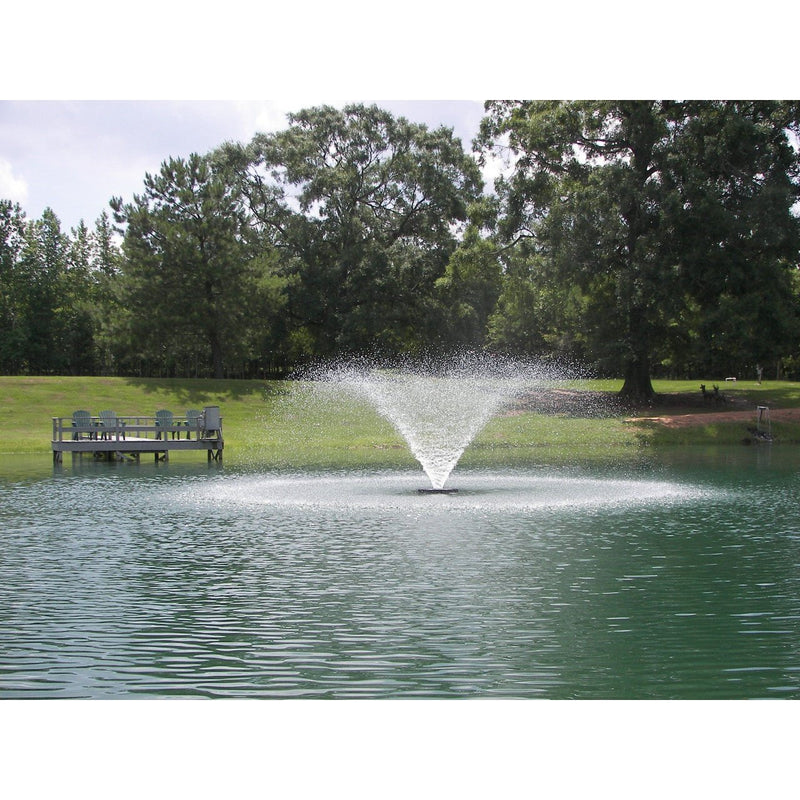
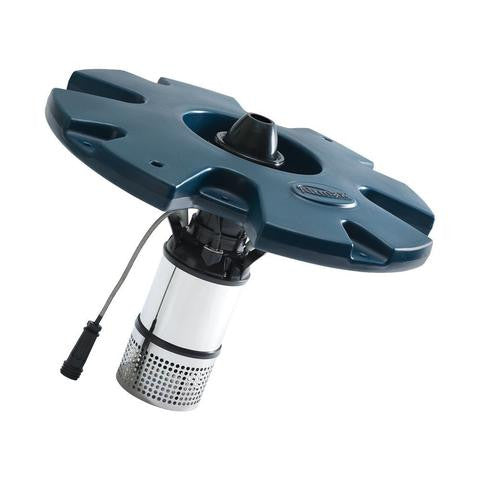
Aerated pond resilience, conversely, is a strategy focused on maintaining high levels of dissolved oxygen (DO) to support aerobic biological processes. In an aerated system, mechanical equipment—either surface agitators or diffused air systems—transfers atmospheric oxygen into the water column. This oxygen fuels aerobic bacteria, which decompose organic matter at a rate significantly higher than their anaerobic counterparts.
In a real-world scenario, a pond managed solely with chemicals often experiences a "rebound effect." When algaecides kill a bloom, the dead organic matter sinks to the bottom. In an oxygen-depleted (anaerobic) environment, this matter slowly decays into "muck," releasing sequestered nutrients back into the water. This creates a feedback loop where each chemical treatment effectively fertilizes the next bloom. An aerated system breaks this loop by ensuring that the nutrients released during decomposition are either sequestered in the sediment or consumed by beneficial microbes before algae can utilize them.
Mechanics of Aerobic Oxidation and Nutrient Sequestration
The transition from a fragile system to a resilient one depends on the efficiency of the aerobic oxidation cycle. The fundamental chemical process for aerobic decomposition is represented by the formula: C6H12O6 + 6O2 ? 6H20 + 6CO2. This process requires a consistent supply of dissolved oxygen to maintain metabolic efficiency.
When dissolved oxygen levels fall below 1.5 to 2.0 mg/L, the rate of aerobic oxidation reduces significantly. At this threshold, the microbial community shifts from aerobic to anaerobic. Anaerobic decomposition is not only 20 to 30 times slower but also produces undesirable byproducts, including methane (CH4), hydrogen sulfide (H2S), and organic acids. These byproducts contribute to the characteristic "rotten egg" odor and further decrease the water's pH, often leading to additional environmental stress.
Mechanical aeration influences nutrient availability through redox potential (oxidation-reduction potential). Under aerobic conditions (high redox potential), phosphorus remains bound to iron and other minerals in the sediment. This process, known as sediment binding, makes phosphorus unavailable to floating algae. If the pond bottom becomes anaerobic, the chemical bond between phosphorus and iron breaks, causing a "phosphorus spike" in the water column. Aeration maintains the oxygenated "cap" at the sediment-water interface, effectively locking nutrients out of the reach of surface algae.
Benefits of Aerated Resilience
The primary advantage of an aerated system is the stabilization of the aquatic environment. A resilient pond can absorb external stressors, such as high heat or heavy rainfall, without a catastrophic loss of water clarity or fish populations.
A quantifiable benefit is the reduction of benthic organic matter, commonly called muck. Studies indicate that aerobic bacteria are far more efficient at processing carbon-based debris. Over time, consistent aeration can reduce muck layers by several inches per year, effectively "dredging" the pond biologically. This increases the total water volume and extends the lifespan of the pond before physical dredging is required.
Furthermore, aerated systems promote a healthier nitrogen cycle. Nitrifying bacteria, which convert toxic ammonia (NH3) into nitrite (NO2) and then into less harmful nitrate (NO3), are obligate aerobes. They require oxygen to function. In a stagnant pond, ammonia can accumulate to levels that are toxic to fish and stimulatory for certain algal species. Aeration ensures the rapid conversion of these compounds, maintaining a safer habitat for higher-order organisms.
Challenges and Common Implementation Mistakes
The most frequent challenge in pond aeration is improper system sizing. Sizing is not merely a function of surface acreage; it is a complex calculation involving depth, shape, and biological oxygen demand (BOD). A common error is using a low-horsepower surface aerator in a deep pond. Because surface aerators only agitate the top few feet of water, the deeper layers remain stratified and anaerobic.
Diffuser placement is another critical variable. Placing diffusers in the shallowest part of a pond limits the "lifting" capacity of the air bubbles. As bubbles rise, they expand and pull cold, oxygen-poor water from the bottom to the surface (the "chimney effect"). If the diffuser is too shallow, the volume of water circulated is insufficient to destratify the entire water column.
Additionally, maintenance of mechanical components is often overlooked. Air filters on compressors must be replaced to prevent overheating, and diffusers may require periodic cleaning to remove calcium scale or biological growth that can increase backpressure and reduce the Standard Oxygen Transfer Rate (SOTR).
Limitations of Aeration Systems
Aeration is not a panacea for all pond issues. In situations involving extreme external nutrient loading—such as runoff from heavily fertilized agricultural fields or leaking septic systems—even the most efficient aeration system may be overwhelmed. The incoming nutrient load may exceed the biological processing capacity of the aerated microbial community.
Very shallow ponds (less than 4–5 feet deep) also present a limitation. In shallow water, the "residence time" of an air bubble is too short for significant oxygen transfer to occur during its ascent. For these environments, surface agitators or horizontal mixers are often more effective than diffused air systems, though they lack the bottom-to-top circulation efficiency found in deeper applications.
Environmental temperature also plays a role. Oxygen solubility decreases as water temperature increases. During extreme heatwaves, the physical limit of oxygen saturation in the water may be reached, making it difficult to maintain the high DO levels required for heavy organic loads regardless of the aeration intensity.
Comparison: Chemical Reliance vs. Aerated Resilience
The following table compares the operational metrics of chemical-only management versus aerated management.
| Metric | Chemical Reliance | Aerated Resilience |
|---|---|---|
| Response Time | Rapid (24–72 hours) | Slow (Weeks to Months) |
| Operational Cost | Low Initial / High Recurring | High Initial / Low Recurring |
| Nutrient Impact | Recycles Nutrients | Sequesters/Removes Nutrients |
| System Stability | Low (Fragile) | High (Durable) |
| Muck Impact | Increases Accumulation | Decreases Accumulation |
Practical Tips for Optimizing Aeration Efficiency
To maximize the efficiency of an aeration system, several best practices should be observed. First, the compressor should be sized to achieve at least one to two full "turnovers" of the pond's volume every 24 hours. A turnover is defined as moving the entire volume of the pond from the bottom to the surface.
Diffuser placement should target the deepest points of the pond. In irregularly shaped ponds (e.g., L-shaped or kidney-shaped), multiple diffusers are required to prevent "dead zones" where water remains stagnant. A single diffuser in the center of an L-shaped pond will fail to circulate water in the far arms.
For ponds with high organic loads, supplementing aeration with microbial inoculation (beneficial bacteria) can accelerate muck reduction. These laboratory-grade microbes are selected for their high metabolic rates and ability to target specific organic compounds like cellulose and lignin. When added to an aerated environment, their efficiency is roughly doubled compared to non-aerated applications.
Advanced Considerations: SOTR and SAE
Serious practitioners evaluate aeration equipment based on two primary metrics: Standard Oxygen Transfer Rate (SOTR) and Standard Aeration Efficiency (SAE). SOTR measures the amount of oxygen (usually in pounds or kilograms per hour) that an aerator adds to water under standard conditions (68°F, 0 ppm initial DO, 1 atm).
SAE is the SOTR divided by the power input, expressed as lbs O2/hp-hr. Most commercial aerators fall between 1.0 and 4.0 lbs O2/hp-hr. Fine-bubble diffusers typically offer higher SAE than coarse-bubble diffusers because they produce a larger total surface area of air-to-water contact for the same volume of air. This increased surface area facilitates faster gas exchange.
Understanding the "Alpha Factor" is also critical for advanced pond management. The Alpha Factor is the ratio of oxygen transfer in pond water (which contains salts, oils, and organics) versus clean tap water. In a pond with high dissolved solids, the actual oxygen transfer rate may be only 60% to 80% of the manufacturer's SOTR. Adjusting sizing calculations to account for this discrepancy is vital for maintaining resilience during peak summer demand.
Example Scenario: Managing a 1-Acre Pond
Consider a 1-acre pond with an average depth of 8 feet and a maximum depth of 12 feet. The pond has a history of heavy algae blooms and approximately 12 inches of bottom muck.
A chemical-only approach would require monthly applications of copper-based algaecides. Each treatment would kill the existing bloom but contribute roughly 0.5 to 1.0 inch of additional organic matter to the muck layer annually. The "fragile loop" is established: the pond is clear for 10 days, then nutrients release from the new muck, triggering another bloom.
An aerated approach would involve a 1/2 HP rocking piston compressor driving two fine-bubble diffusers placed at the 12-foot depth. This system would provide approximately 2.5 to 3.0 CFM (Cubic Feet per Minute) of air. At a depth of 12 feet, this setup can move over 1 million gallons of water per day, achieving more than one turnover for a 1-acre pond (approx. 2.6 million gallons). Within the first season, the high DO levels at the bottom would begin oxidizing the 12 inches of muck, and the phosphorus would start to bind to the sediment, naturally reducing the frequency and intensity of surface blooms.
Final Thoughts
The choice between chemical reliance and aerated resilience is a choice between managing a symptom and managing a system. Chemical treatments provide a quick aesthetic fix but ultimately degrade the long-term health of the pond by increasing nutrient density and muck accumulation. This creates a state of fragile reliance where the pond is one missed treatment away from a total collapse.
Transitioning to an aerated system requires a deeper understanding of the biological and mechanical variables at play. By maintaining high dissolved oxygen levels, you empower the pond's natural metabolic processes to handle nutrient loads autonomously. This shift results in clearer water, reduced muck, and a more stable environment for fish and other aquatic life.
Building a resilient pond is an investment in mechanical efficiency and biological health. While the initial setup of an aeration system involves higher costs and more planning than a bottle of algaecide, the result is a self-sustaining ecosystem that can withstand the stressors of the summer heat without constant chemical intervention. Applying these principles allows a practitioner to break the cycle of reactive maintenance and achieve long-term aquatic stability. Strong, oxygen-rich water is the foundation of a pond that doesn't just look healthy but is functionally robust.