

Is It Possible To Aerate A Pond Too Much?
Is there such a thing as 'too much' air? The answer might surprise you. Most people think you can blow the fish out of the water. In reality, the 'too much' is almost always about placement, not volume. Here is how to find the sweet spot.
In the context of pond management, the term "over-aeration" is frequently misused. Many practitioners operate under the misconception that excessive mechanical aeration will lead to toxic levels of dissolved oxygen (DO). From a biochemical standpoint, achieving oxygen levels that are inherently toxic to aquatic life through standard diffused air systems is nearly impossible. Atmospheric air contains approximately 20.9% oxygen; under standard pressure, water equilibrates with the atmosphere, and any excess oxygen naturally outgasses.
The reality of over-aeration lies not in the volume of oxygen itself, but in the physical and mechanical consequences of high-velocity air injection. These issues include total dissolved gas (TDG) supersaturation, thermal destratification, and the suspension of benthic sediments. While high dissolved oxygen is beneficial for aerobic metabolic processes, the mechanical delivery method must be calibrated to the specific volume, depth, and biological load of the water body to avoid secondary stressors.
The Mechanics of Oxygen Mass Transfer
Oxygen enters pond water through a process of diffusion at the gas-liquid interface. The efficiency of this transfer is governed by the Two-Film Theory, which suggests that oxygen must pass through a gas film and a liquid film to reach the bulk liquid. Mechanical aeration systems optimize this by increasing the surface area (A) of the interface and decreasing the thickness of the liquid film through turbulence.
The Standard Oxygen Transfer Rate (SOTR) is the primary metric used to evaluate aeration equipment. SOTR measures the mass of oxygen transferred per hour in clean water at 20°C, 1.0 atmosphere of pressure, and an initial DO of 0 mg/L. However, in real-world pond conditions, the Actual Oxygen Requirement (AOR) must be calculated. This involves adjusting the SOTR for the "Alpha" factor (water chemistry/impurities), the "Beta" factor (salinity/solids), and local temperature fluctuations.
Bubble size is a critical variable in mass transfer efficiency. Fine bubble diffusers (typically 0.5 to 2.0 mm in diameter) offer significantly higher Standard Aeration Efficiency (SAE) than coarse bubble systems. Smaller bubbles rise more slowly through the water column, increasing contact time, and provide a much larger total surface area for a given volume of air.
The Benefits of High-Saturation Aeration
High-level aeration facilitates the oxidation of nitrogenous wastes, a process fundamental to maintaining a healthy nitrogen cycle. Nitrifying bacteria, such as Nitrosomonas and Nitrobacter, require approximately 4.3 to 4.6 milligrams of oxygen for every milligram of ammonia oxidized into nitrate. Maintaining DO levels near saturation ensures that these bacteria operate at peak efficiency, preventing the accumulation of toxic ammonia and nitrite.
Enhanced aeration also increases the Redox Potential (ORP) of the pond environment. High ORP values indicate a strong oxidizing environment, which discourages the growth of anaerobic bacteria. This prevents the formation of hydrogen sulfide (H2S) and methane (CH4) in the benthos, gases that are highly toxic to fish and contribute to foul odors. Furthermore, high DO levels accelerate the decomposition of organic "muck" at the pond bottom, a process known as bio-dredging.
The Real Risks: When 'Too Much' Becomes Dangerous
The primary risk of aggressive aeration is Gas Bubble Disease (GBD), technically known as Gas Bubble Trauma. This occurs when the Total Dissolved Gas (TDG) pressure exceeds 100% of the ambient atmospheric pressure. While oxygen alone rarely causes GBD, the entrainment of atmospheric air under high pressure—such as in deep-water diffusers or through leaks in a pump’s suction side—can force nitrogen and oxygen into the water beyond their saturation points.
When fish inhabit supersaturated water, gases can come out of solution within the fish’s bloodstream and tissues, forming emboli (bubbles). These bubbles can cause physical trauma, exophthalmos (pop-eye), and acute mortality. This is particularly prevalent in systems where high-pressure air is injected at significant depths, as the increased hydrostatic pressure increases gas solubility.
Another risk is thermal destratification during extreme weather. In summer, deep ponds naturally stratify into a warm upper layer (epilimnion) and a cold bottom layer (hypolimnion). Aggressive bottom aeration can prematurely mix these layers. For cold-water species like trout, the loss of the cold-water refuge in the hypolimnion can be fatal, as the entire water column may reach temperatures that exceed their physiological tolerance.
Limitations of Mechanical Aeration Systems
Mechanical aeration is limited by the physics of gas solubility and the energy requirements of the delivery system. As water temperature increases, its capacity to hold dissolved oxygen decreases. For example, fresh water at 0°C can hold roughly 14.6 mg/L of DO at saturation, whereas at 30°C, it can only hold 7.5 mg/L. No amount of additional air volume can push the DO significantly beyond these temperature-dependent saturation points unless the system uses pure oxygen and pressurized chambers.
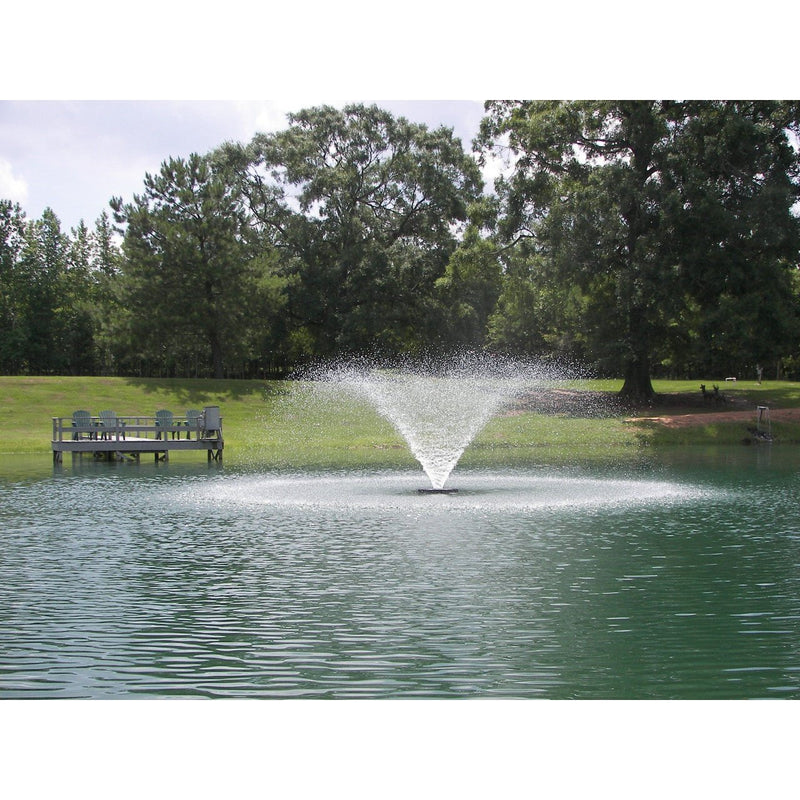
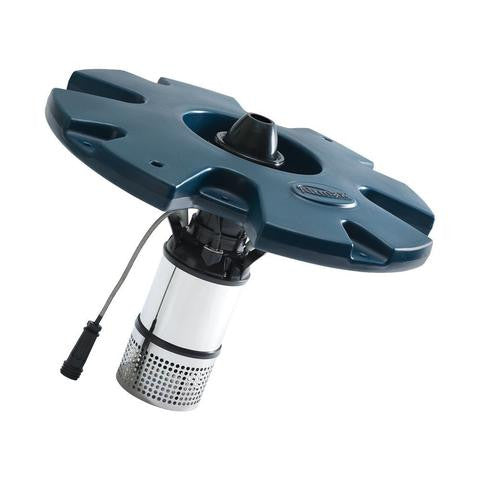
Depth also acts as a constraint. Diffused air systems must overcome the hydrostatic pressure of the water column (approximately 0.433 PSI per foot of depth). Shallow ponds (less than 6 feet) are inefficient for diffused aeration because the bubbles have very little "hang time" in the water. In these environments, surface aerators or fountains are often more effective at transferring oxygen, despite their lower SAE compared to deep-water diffusers.
Comparison: Standard Over-Correction vs Pro-Level Saturation
In many scenarios, pond owners engage in "Standard Over-Correction," where they install oversized compressors to compensate for poor system design or high organic loads. In contrast, "Pro-Level Saturation" focuses on precision and efficiency.
| Feature | Standard Over-Correction | Pro-Level Saturation |
|---|---|---|
| Sizing Method | Guesswork or "Bigger is Better" | Calculated SOTR vs AOR |
| Energy Consumption | High; Constant Full Power | Variable Frequency Drives (VFD) |
| Control Mechanism | Manual On/Off or Timer | DO Sensors and Automated Feedback |
| Sediment Impact | Potential for Excessive Lift/Turbidity | Controlled Laminar Flow |
| Fish Health Risk | Moderate (Stress/GBD) | Minimal; Optimized DO Curves |
Practical Implementation and Tuning
Effective aeration requires a strategic start-up procedure, especially in established ponds with high sediment loads. A sudden introduction of full-power aeration can cause a "catastrophic turnover." This event occurs when the anoxic bottom water, laden with hydrogen sulfide and ammonia, is rapidly mixed with the oxygenated surface water. The resulting chemical oxygen demand (COD) can strip the pond of all available DO in minutes, causing a massive fish kill.
To avoid this, use a gradual start-up schedule. On the first day, run the system for only 30 minutes. Double the runtime each subsequent day (1 hour, 2 hours, 4 hours, etc.) until the system runs 24/7. This allows the biological and chemical oxygen demands to be satisfied incrementally without overwhelming the ecosystem.
Diffuser placement should be optimized for circulation. Rather than placing all diffusers in the deepest part of the pond, distribute them to ensure there are no "dead zones" where water remains stagnant. In large lakes, utilize the prevailing wind direction to assist with surface circulation, placing diffusers upwind to maximize the effective fetch.
Advanced Engineering Considerations
For serious practitioners, optimizing an aeration system involves calculating the Oxygen Transfer Efficiency (OTE) under field conditions. The formula for OTE is the ratio of the oxygen absorbed by the water to the oxygen supplied by the blower. Factors such as diffuser fouling—caused by biofilm growth or mineral scaling—can drastically reduce OTE over time. Regular acid washing or mechanical cleaning of EPDM membranes is necessary to maintain design specifications.
Another consideration is the use of Micro-Nano Bubbles (MNB). Unlike traditional fine bubbles, nanobubbles (less than 200 nm in diameter) do not rise to the surface and burst. Instead, they remain suspended in the water column for weeks, providing a massive reservoir of oxygen and generating hydroxyl radicals that assist in the breakdown of complex organic pollutants. While MNB systems have higher capital costs, their mass transfer efficiency is significantly superior to any other mechanical method.
Scenario: High-Density Cold Water vs Shallow Warm Water
Consider a 1-acre trout pond that is 15 feet deep. In this scenario, the primary goal is maintaining oxygen without destroying the thermal refuge. The ideal setup would involve placing diffusers at 10-12 feet rather than the very bottom. This oxygenates the upper layers while leaving a 3-foot buffer of cold water for the trout during the peak of summer.
Contrast this with a 0.5-acre koi pond only 4 feet deep. Because the water is shallow, the oxygen transfer from a bottom diffuser is limited. Here, a surface splash aerator combined with a low-pressure air stone provides the best results. The surface aerator handles the bulk of the oxygen transfer through splashing (increasing surface area), while the air stone ensures enough circulation to prevent stratification and keep the benthos aerobic.
Final Thoughts
Finding the "sweet spot" in pond aeration requires moving beyond the simple "more air is better" philosophy. While it is difficult to over-oxygenate water to the point of chemical toxicity, the mechanical side effects of poorly designed systems can be devastating. Proper system sizing, gradual start-ups, and strategic placement are the keys to a high-performance aquatic environment.
The most successful systems are those that treat aeration as a precision tool. By focusing on data—such as SOTR, temperature-adjusted saturation points, and DO monitoring—practitioners can create stable, productive ecosystems that support high biomass and clear water. Experimenting with different diffuser depths and flow rates will allow you to fine-tune your pond’s specific requirements.
Deepening your understanding of gas laws and microbial metabolism will provide even more control over your water quality. Whether you are managing a small koi pond or a large industrial lagoon, the principles of efficient mass transfer remain the same. Consistency and precision are always more effective than sheer volume.