

Can Aeration Reduce Hydrogen Sulfide and Pond Odors?
That 'rotten egg' smell isn't just a nuisance—it's the smell of a pond that's suffocating in its own waste. Hydrogen sulfide only forms when oxygen is zero. By bringing order back to the water column with aeration, you strip the gas and stop the stink at the source.
Pond management requires an understanding of the chemical transitions that occur when dissolved oxygen reaches zero. In anoxic environments, specialized bacteria utilize sulfate as an electron acceptor, producing hydrogen sulfide (H2S) as a metabolic byproduct. This gas is highly soluble in water but remains volatile enough to escape into the atmosphere, creating the characteristic sulfurous odor associated with stagnant water bodies.
Maintaining aerobic conditions is the primary mechanical defense against H2S accumulation. Implementing a high-efficiency aeration system shifts the redox potential of the sediment-water interface, effectively halting the production of these gases. This guide details the technical mechanisms of gas stripping and oxidation used to remediate pond odors.
Can Aeration Reduce Hydrogen Sulfide and Pond Odors?
Aeration is a standard engineering process for reducing hydrogen sulfide and related odors in both municipal wastewater and private pond management. Hydrogen sulfide is a dissolved gas that exists in equilibrium with its ionic forms, HS- and S2-. Its presence indicates a total lack of dissolved oxygen (DO) at the pond floor, where organic matter decomposes under anaerobic conditions.
Mechanical aeration serves a dual purpose in odor reduction. First, it facilitates physical gas stripping, where the movement of air through water allows H2S to escape into the atmosphere at controlled rates. Second, it introduces dissolved oxygen, which reacts chemically and biologically with the sulfide to convert it into odorless elemental sulfur or sulfate.
Visualizing this process involves looking at the redox potential of the pond. A healthy, oxygenated pond typically maintains a redox potential between +200 mV and +600 mV. When this value drops below -50 mV, hydrogen sulfide production begins in earnest. Aeration raises this potential, effectively "flipping" the chemical environment from a reductive (smelly) state to an oxidative (clean) state.
How the Mechanics of H2S Removal Work
The removal of H2S via aeration follows specific thermodynamic and chemical principles. Understanding these mechanics is essential for sizing equipment and predicting performance.
Physical Gas Stripping and Henry's Law
Gas stripping relies on Henry's Law, which states that the amount of dissolved gas in a liquid is proportional to its partial pressure in the gas phase. Because the concentration of H2S in the surrounding atmosphere is effectively zero, the gas naturally wants to move out of the water and into the air bubbles provided by an aerator.
Stripping efficiency is highly dependent on the surface-to-volume ratio of the air bubbles. Fine-bubble diffusers are more effective than coarse bubbles because they provide a larger surface area for gas exchange. This allows more H2S molecules to cross the boundary layer from the liquid phase into the gas phase before the bubble reaches the surface.
Chemical and Biological Oxidation
Once dissolved oxygen is introduced, two types of oxidation occur. Chemical oxidation is a direct reaction where O2 interacts with H2S. Stoichiometrically, it requires approximately 1.0 mg/L of oxygen to oxidize 1.0 mg/L of hydrogen sulfide into elemental sulfur. If full oxidation to sulfate is required, the oxygen demand increases to 2.0 mg/L per mg/L of sulfide.
Biological oxidation involves sulfur-oxidizing bacteria (SOB) such as Thiobacillus. These microorganisms utilize the energy released during the oxidation of sulfide to fuel their growth. Biological processes are often more efficient than purely chemical ones, but they require consistent aerobic conditions to maintain the microbial population.
Benefits of Aeration for Odor Control
The primary benefit of aeration is the immediate reduction of volatile gases. Consistent oxygenation prevents the pond from reaching the "tipping point" of anaerobic chaos where large-scale gas releases occur.
- Reduction of Toxicity: H2S is toxic to fish at levels as low as 0.002 mg/L. Aeration keeps concentrations well below this threshold.
- Improved Redox Potential: Moving the sediment-water interface above -76 mV prevents the metabolic pathways that lead to odor production.
- Enhanced Decomposition: Aerobic bacteria decompose organic sludge up to 10 times faster than anaerobic bacteria, reducing the fuel source for future odors.
- Mechanical Degassing: Physical agitation breaks the surface tension, allowing trapped methane and carbon dioxide to escape alongside H2S.
These benefits translate to a more stable ecosystem and a significant reduction in maintenance costs over time. Relying on mechanical aeration is often more cost-effective than repetitive chemical treatments with algaecides or oxidizers.
Challenges and Common Mistakes
Implementing aeration without calculating the actual oxygen demand often leads to failure. Simply "moving the water" is not the same as effective gas stripping.
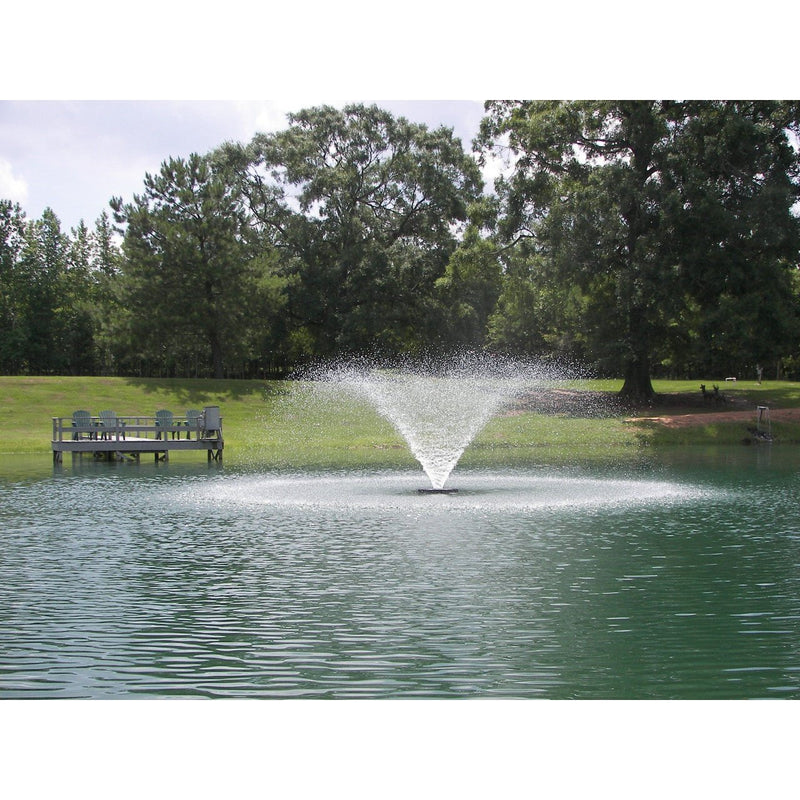
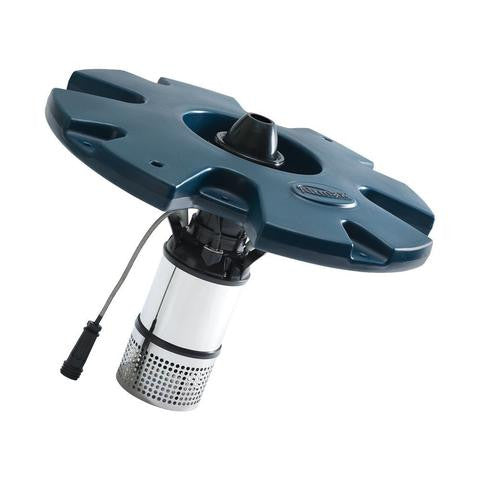
One frequent error is undersizing the compressor or diffuser array. If the rate of H2S production from deep sludge exceeds the rate of oxygen transfer and gas stripping, the odor will persist. Pond owners often choose decorative fountains, which only aerate the top few inches of water, leaving the anaerobic "factory" at the bottom untouched.
Timing is another critical variable. Running an aerator only during the day can be counterproductive. Photosynthesis provides oxygen during daylight hours, but respiration consumes it at night. Turning the system off at sunset allows the pond to return to an anoxic state, undoing the progress made during the day and allowing H2S to accumulate once again.
Incorrect placement of diffusers can also limit effectiveness. Placing a diffuser in the shallowest part of the pond ignores the deepest areas where anaerobic activity is highest. Diffusers must be located at the maximum depth to maximize the "contact time" of the bubbles as they rise through the water column.
Limitations of Aeration Systems
Aeration is not a universal cure for all pond issues. High pH levels, for instance, significantly impact H2S removal. At a pH above 8.0, most sulfide exists as the HS- ion, which is not volatile and cannot be stripped away as a gas. In these cases, the system must rely entirely on oxidation, which requires much higher volumes of air.
Environmental constraints such as excessive sludge depth also present challenges. If a pond has several feet of "muck" at the bottom, the oxygen demand of that decomposing matter may be higher than any standard aeration system can provide. In such scenarios, dredging or intensive biological augmentation may be required alongside aeration.
Temperature affects gas solubility and microbial rates. Cold water holds more oxygen but slows down the biological oxidation of sulfur. Conversely, warm summer water holds less oxygen precisely when the demand for gas stripping is at its peak. System designs must account for these seasonal extremes to ensure year-round odor control.
Comparison: Diffused Aeration vs. Surface Aeration
Choosing the right mechanical approach depends on the primary goal: aesthetics or gas removal. The table below compares the two most common methods based on mechanical efficiency.
| Metric | Diffused Aeration (Bottom-Up) | Surface Aeration (Fountains) |
|---|---|---|
| Oxygen Transfer Efficiency (OTE) | High (increases with depth) | Moderate to Low |
| Gas Stripping Capability | Superior for deep-water H2S | Effective only for surface water |
| Standard Aeration Efficiency (SAE) | 2.5 - 4.5 lb O2/hp-hr | 1.5 - 2.5 lb O2/hp-hr |
| Maintenance Complexity | Low (shore-mounted compressor) | Moderate (submerged motor) |
| Primary Application | Odor control and pond health | Decorative and shallow circulation |
Diffused systems are generally the preferred choice for H2S mitigation because they address the problem at the source. Surface units are often better suited for shallow ponds where depth does not allow for a full bubble column to develop.
Practical Tips for Optimizing Odor Control
Achieving maximum efficiency requires more than just plugging in a pump. Fine-tuning the system ensures the best results for the least energy expenditure.
- Monitor Dissolved Oxygen: Use a DO meter to ensure levels at the bottom of the pond stay above 2.0 mg/L. This is the minimum required to support aerobic sulfur oxidation.
- Check pH Levels: Keep the pond pH between 6.5 and 7.5 if possible. This range ensures that sulfide remains in the H2S gas form for easier stripping.
- Use Weighted Tubing: Ensure air lines stay on the pond floor. Floating lines are prone to damage and reduce the effectiveness of diffuser placement.
- Clean Diffuser Membranes: Biofilm and calcium buildup can clog fine-bubble diffusers. Annual cleaning maintains the small bubble size necessary for efficient gas transfer.
Small adjustments to diffuser placement can also eliminate "dead zones." Identifying stagnant corners and moving a diffuser to those areas can prevent localized H2S hotspots.
Advanced Considerations for Serious Practitioners
Experienced managers should look beyond basic DO levels and consider the Chemical Oxygen Demand (COD) of the water body. COD measures everything that can be oxidized, not just H2S. In high-organic-load ponds, the "apparent" oxygen demand may be much higher than the calculated stoichiometric demand for sulfur alone.
Targeting specific redox potential (ORP) values is a more precise way to manage odors. Installing an ORP probe allows for automated system control. A system can be programmed to increase air output when ORP drops below 0 mV and scale back once it reaches +200 mV, optimizing energy use while guaranteeing a lack of odor.
Scaling considerations are also vital. For very large ponds, a single large compressor may be less efficient than multiple smaller units distributed across the shoreline. This redundancy ensures that a single mechanical failure does not lead to an immediate oxygen crash and the return of the "rotten egg" smell.
Example Scenario: Remediation of a 1-Acre Pond
Consider a 1-acre pond with an average depth of 8 feet that has become anaerobic. Testing shows a hydrogen sulfide concentration of 0.5 mg/L in the bottom 2 feet of water. This represents roughly 650,000 gallons of affected water.
The total amount of H2S in that bottom layer is approximately 2.7 pounds. To oxidize this chemically, the system must deliver at least 2.7 pounds of oxygen. However, because of the Standard Aeration Efficiency (SAE) and the competing oxygen demand from organic muck, a 1/2 HP compressor delivering 2.5 CFM (cubic feet per minute) would be a more realistic requirement.
In this scenario, a diffused aeration system with two dual-disk diffusers placed in the deepest holes would begin stripping the gas immediately. Within 48 to 72 hours of continuous operation, the H2S levels would drop significantly, and the rotten egg odor would dissipate as the redox potential rises above the threshold for sulfide production.
Final Thoughts
Eliminating pond odors is a matter of mechanical and chemical balance. When oxygen levels are maintained, the pathways that create hydrogen sulfide are simply unavailable to the microbial population. Aeration provides the most direct and sustainable method for achieving this state by combining physical gas stripping with oxidative chemistry.
Successful odor management relies on choosing the right equipment and operating it correctly. Focusing on bottom-up aeration ensures that the entire water column is treated, not just the surface. This approach turns a "suffocating" pond back into a productive, odorless ecosystem.
Practitioners should remember that consistency is the key to preventing the return of anaerobic conditions. Regular monitoring of oxygen and redox levels allows for proactive adjustments before a nuisance becomes a crisis. Implementing these strategies will result in a healthier, more manageable water body.