

Can Too Much Aeration Harm A Pond?
Can you have too much of a good thing? In a pond, yes. More air isn't always better. If your pond looks like a jacuzzi, you're likely destroying the habitat for your fish. Find the perfect balance.
Effective pond management requires a precise understanding of gas solubility, fluid dynamics, and biological oxygen demand (BOD). While oxygen is the primary driver of aerobic health in an aquatic ecosystem, excessive mechanical introduction of air can lead to detrimental physiological effects on aquatic life and destabilize the physical structure of the water column. Managing a pond involves more than simply installing the largest compressor available. It requires a calibrated approach to ensure that dissolved oxygen levels remain optimal without crossing into the territory of gas supersaturation or thermal destabilization.
Maintaining a healthy pond relies on the relationship between atmospheric pressure, temperature, and the mechanical efficiency of the aeration system. High-performance aeration systems are designed to maximize gas transfer at the air-water interface, but when these systems are oversized or poorly configured, they disrupt the delicate equilibrium of the habitat. Identifying the point where beneficial aeration transitions into harmful over-aeration is critical for the long-term viability of the ecosystem.
Can Too Much Aeration Harm A Pond?
Over-aeration refers to the mechanical introduction of air at a rate or pressure that exceeds the biological and physical capacity of the pond to process it safely. This condition manifests through several distinct technical issues, including gas supersaturation, excessive turbidity, and the loss of thermal refugia. While the primary goal of aeration is to prevent hypoxia, an aggressive or poorly designed system can create a high-energy environment that is inhospitable to many fish species.
Gas supersaturation occurs when the total dissolved gas pressure in the water exceeds the ambient barometric pressure. In a pond environment, this is often caused by high-pressure air injection or the rapid mixing of water at different temperatures and pressures. When water becomes supersaturated, typically at levels above 110%, the excess gas—primarily nitrogen—can enter the bloodstream of fish. This leads to gas bubble disease, a condition analogous to the "bends" in human divers, where gas bubbles form in the tissues, fins, and eyes of the fish, often resulting in high mortality rates.
Beyond physiological damage, over-aeration impacts the physical stability of the pond. Excessive turbulence at the pond floor can suspend fine particulates and organic "muck" into the water column. This increase in turbidity limits light penetration, which inhibits the growth of beneficial submerged vegetation and reduces the efficiency of natural photosynthetic oxygen production. Furthermore, the suspension of anaerobic sediments can lead to the sudden release of sequestered toxins, such as hydrogen sulfide and methane, into the upper layers of the water column, posing an immediate threat to aquatic life.
How Mechanical Aeration Interacts with Pond Physics
The mechanics of pond aeration are governed by Henry's Law, which states that the amount of dissolved gas in a liquid is proportional to its partial pressure above the liquid. In a standard diffused aeration system, a compressor pushes air through a diffuser located at the pond bottom. As the bubbles rise, they transfer oxygen to the surrounding water while simultaneously creating a "lift" effect that moves oxygen-depleted bottom water to the surface.
The efficiency of this gas transfer is heavily dependent on bubble size. Fine-bubble diffusers create a larger surface area-to-volume ratio compared to coarse-bubble systems, allowing for more efficient oxygenation with less mechanical turbulence. However, if the CFM (cubic feet per minute) output is too high for the pond's volume, the resulting vertical current becomes too powerful. This leads to a turnover rate that exceeds the 12-to-24-hour ideal, causing the entire water column to move with high velocity.
Excessive velocity at the substrate level is the primary driver of sediment re-suspension. In a balanced system, the current should be sufficient to circulate the water without scouring the bottom. When the system is over-engineered, the laminar flow at the bottom transitions into turbulent flow, which picks up silt and organic debris. This creates a feedback loop where the aeration system is forced to work against the increased biological oxygen demand (BOD) created by the newly suspended organic matter.
Benefits of Calibrated Aeration
A properly sized aeration system provides measurable improvements to water quality and ecosystem health. The primary objective is to maintain dissolved oxygen (DO) levels between 5 and 8 mg/L, which is the optimal range for most temperate freshwater fish. Strategic aeration ensures that these levels are consistent throughout the entire water column, preventing the formation of anoxic zones in the deeper sections of the pond.
Consistent circulation promotes the growth of aerobic bacteria, which are far more efficient at decomposing organic waste than anaerobic varieties. By maintaining oxygen at the sediment-water interface, these bacteria can process fish waste, fallen leaves, and other organic matter, effectively reducing the accumulation of muck. This process also prevents the buildup of ammonia and nitrites, which can reach toxic levels in stagnant water.
Thermal destratification is another key benefit. In the summer, ponds often form a thermocline, a sharp boundary between the warm surface water and the cold, oxygen-poor bottom water. Aeration breaks this barrier, ensuring that the entire volume of the pond is available for fish to inhabit. In the winter, the movement of warmer bottom water to the surface helps maintain an opening in the ice, allowing for the continuous exchange of gases and preventing the buildup of lethal carbon dioxide levels.
Challenges and Mechanical Pitfalls
The most common mistake in pond management is selecting a compressor based solely on horsepower without considering the specific requirements of the pond's depth and shape. An oversized compressor creates high-pressure air that can lead to cavitation at the diffuser head, which increases the risk of nitrogen supersaturation. Furthermore, high-pressure systems consume significantly more energy and experience faster mechanical wear on diaphragms and pistons.
Placement of the diffusers is another area where errors frequently occur. Placing a high-output diffuser in the deepest part of a small pond can lead to localized "boiling" at the surface, which indicates that the air is escaping into the atmosphere before it has time to transfer oxygen to the water. This also creates extreme currents that can stress fish, forcing them to expend excessive energy just to maintain their position in the water column.
Seasonal timing is also critical. Starting a powerful aeration system in the middle of a hot summer in a pond that has been stagnant for months can be catastrophic. The sudden mixing of anoxic, nutrient-rich bottom water with the oxygenated surface water can cause a "turnover" event that rapidly depletes the oxygen in the entire pond. This often results in a total fish kill within hours of the system being activated.
Limitations and Environmental Constraints
Aeration is not a panacea for all pond issues and has clear limitations when dealing with high nutrient loading. If a pond receives excessive runoff from fertilized lawns or agricultural fields, the primary issue is phosphorus and nitrogen enrichment. While aeration can help manage the symptoms of this enrichment, such as algae blooms and muck accumulation, it cannot remove the nutrients from the system. In these cases, even the most advanced aeration system will struggle to maintain water clarity without additional nutrient mitigation strategies.
Climate and altitude also impose physical boundaries on aeration efficiency. As altitude increases, the partial pressure of oxygen in the atmosphere decreases, which in turn reduces the maximum amount of oxygen that can be dissolved in the water. A system that works perfectly at sea level may be undersized for a pond located at 5,000 feet. Similarly, water temperature plays a massive role; warm water has a much lower saturation point for dissolved oxygen than cold water. In extreme heat, even a high-output aerator may fail to keep DO levels above the stress threshold for sensitive species like trout.
Mechanical limitations must also be acknowledged. Linear diaphragm compressors are highly efficient for shallow ponds but lose significant output as depth increases. For ponds deeper than 8 feet, a rocking piston compressor is required to overcome the hydrostatic pressure of the water. Attempting to use a shallow-water pump in a deep application will result in poor air delivery and shortened equipment lifespan.
Comparing Aeration Methods
The choice between surface aeration and diffused (bottom) aeration depends on the specific goals and physical characteristics of the pond. While both aim to increase dissolved oxygen, they operate on different principles and offer varying levels of efficiency.
| Factor | Surface Aeration (Fountains) | Diffused Aeration (Bottom) |
|---|---|---|
| Depth Efficiency | Low (effective only in top 2-4 ft) | High (moves the entire water column) |
| Operational Cost | Higher (requires more HP for same O2) | Lower (highly efficient air delivery) |
| Maintenance | High (pump is submerged in water) | Low (compressor is on shore) |
| Aesthetic Value | High (visual spray and sound) | Low (bubbles at surface only) |
| Fish Safety | Safe (low risk of supersaturation) | Moderate (risk if oversized or deep) |
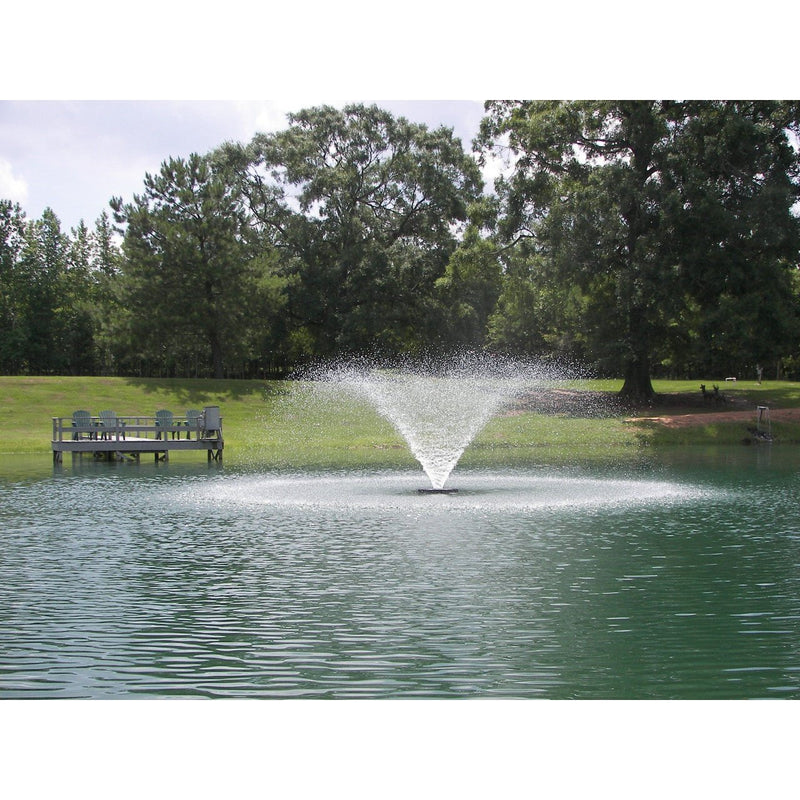
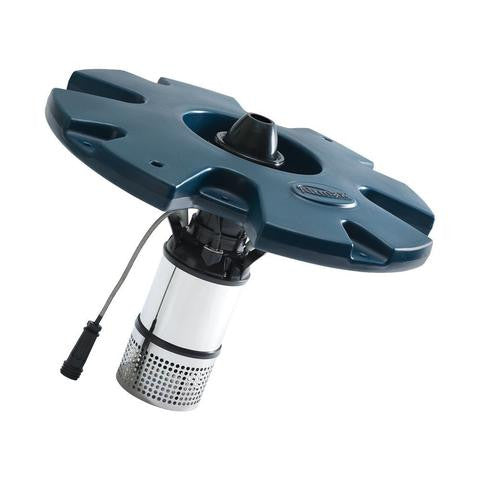
Surface aerators are ideal for decorative ponds or shallow aquaculture where aesthetic appeal is a priority. They work by splashing water into the air, which breaks the surface tension and allows for gas exchange. However, they are generally less efficient at moving water from the very bottom of the pond. Diffused aeration is the superior choice for most natural ponds and lakes because it targets the muck layer and promotes a complete turnover of the water volume.
Practical Tips for System Optimization
Achieving the perfect balance in pond aeration requires a methodical approach to installation and operation. The most important practice is a gradual start-up routine for any new or seasonal system. Instead of running the aerator 24/7 from the first day, follow a progressive schedule to allow the pond's chemistry to stabilize. Start with 30 minutes on Day 1, and double the runtime each day until you reach full operation on Day 7. This prevents the sudden release of toxic gases and minimizes thermal shock to the fish.
Calculating the correct CFM for your pond is essential. A standard recommendation is 1 to 2 CFM per acre for average conditions, but this may need to be increased to 3 or 4 CFM for ponds with high fish density or heavy organic loading. To ensure the compressor can handle the depth, use the formula: PSI Required = (0.433 × Depth in feet) + Friction Loss. Adding 0.5 to 1 PSI for the diffuser's resistance ensures that the motor is not being overworked.
Regularly monitor dissolved oxygen and temperature at different depths. A DO meter is a valuable tool for any serious pond manager. If you notice that oxygen levels are consistently above 100% saturation during the day, your pond may be experiencing an intense algae bloom rather than over-aeration. In these cases, the high oxygen levels are a byproduct of photosynthesis, and the real danger comes at night when the algae switch to respiration and consume the oxygen they produced.
Advanced Considerations for Serious Practitioners
Serious practitioners must look beyond simple oxygen levels and consider the impact of total dissolved gas (TDG) pressure. Measuring nitrogen levels specifically can identify if an aeration system is causing supersaturation. In high-value koi ponds or aquaculture facilities, packed columns or degassing units can be used in conjunction with aeration to ensure that nitrogen levels remain below the 100% saturation mark while oxygen is maximized.
Altitude-adjusted oxygen saturation is another advanced calculation. Because barometric pressure decreases with elevation, the "100% saturation" point for oxygen in a mountain pond is lower than at sea level. For example, at 20°C, the saturation level at sea level is approximately 9.08 mg/L, but at 2,000 meters, it drops to roughly 7.19 mg/L. Understanding these physical constraints prevents the frustration of trying to achieve unattainable DO levels in high-altitude environments.
Micro-bubble technology is an emerging field in pond management. These systems produce bubbles that are so small they do not rise to the surface, but instead remain suspended in the water column for long periods. This allows for near-perfect oxygen transfer efficiency with almost zero turbulence. While currently more expensive than standard diffused aeration, micro-bubble systems are the ultimate solution for ponds that require high oxygen levels without the mechanical disruption of traditional aerators.
Scenario: The Over-Aerated 0.5-Acre Pond
Consider a 0.5-acre pond with a maximum depth of 12 feet, stocked with sensitive sport fish. The owner installs a 1/2 HP rocking piston compressor capable of delivering 4.5 CFM through four large diffusers. While this setup ensures high oxygen levels, the excessive CFM for such a small area creates a "jacuzzi" effect. The constant high-velocity current at the bottom keeps silt suspended, leading to permanent turbidity.
The fish in this scenario show signs of stress. Despite the high oxygen levels, the constant movement of the water forces them to swim continuously, depleting their fat reserves. Furthermore, the aggressive mixing has eliminated the thermal refuge at the bottom, raising the overall water temperature to 80°F during a heatwave. If the owner had used a 1/4 HP compressor delivering 1.5 CFM with two fine-bubble diffusers, the pond would have achieved the same oxygen goals with clearer water and a healthier, more stable temperature profile.
Final Thoughts
Maintaining a balanced pond ecosystem is a matter of precision rather than power. While the benefits of oxygenation are undeniable, the risks associated with over-aeration—ranging from gas bubble disease to sediment destabilization—are real and quantifiable. Successful pond management requires an objective assessment of the pond's specific needs, including its volume, depth, and biological load.
By adhering to industry-standard sizing metrics and following a gradual system integration plan, pond owners can avoid the pitfalls of mechanical over-optimization. The goal should always be to support the natural biological processes of the pond without overwhelming the physical environment. A well-aerated pond is not one that is constantly churning, but one where the water remains clear, the fish are active, and the ecosystem is resilient to seasonal shifts.
Experiment with different diffuser placements and monitor the results over time. Small adjustments to airflow and positioning can lead to significant improvements in water quality without increasing energy costs. Remember that every pond is a unique system, and finding the perfect balance is an ongoing process of observation and technical tuning.