

Why Organic Sludge Keeps Returning To Your Pond
Raking muck is like mopping a floor while the faucet is still running. You have to fix the system. Is your pond a 'muck magnet'? Discover the integrated approach to stopping sludge at the source instead of just fighting it.
Pond management often focuses on symptomatic relief, such as manual raking or chemical applications to clear surface algae. These methods fail to address the underlying mechanical and biological inefficiencies of the ecosystem. This article outlines a technical framework for integrated benthic remediation, moving beyond temporary fixes toward a stable, self-regulating aquatic environment.
Why Organic Sludge Keeps Returning To Your Pond
Organic sludge, or benthic sediment, is the accumulation of undissolved organic matter that settles at the bottom of a water body. In technical terms, this material is classified based on its composition and state of decay. Copropel muck (Gyttja) consists of well-oxygenated humus and plant fragments, whereas Sapropel muck is a glossy, black, anaerobic material high in ferrous sulfide and methane.
Sludge returns because of a fundamental imbalance between the rate of organic loading and the rate of microbial decomposition. In many ponds, allochthonous loading (external material like leaves and runoff) and autochthonous production (internal growth like algae and weed die-off) exceed the metabolic capacity of the local bacterial population. This creates a feedback loop known as eutrophication.
As muck accumulates, it consumes dissolved oxygen (DO) through a process called Sediment Oxygen Demand (SOD). When SOD exceeds the oxygen replenishment rate, the benthic zone becomes anaerobic. This shift suppresses efficient aerobic bacteria and favors slow-acting anaerobic microbes. These anaerobic processes release phosphorus and nitrogen back into the water column, fueling further plant growth and leading to a continuous cycle of sludge production.
Integrated Benthic Remediation: How It Works
The integrated approach relies on three mechanical and biological pillars: benthic oxygenation, microbial augmentation, and nutrient sequestration. Each pillar addresses a specific failure point in the pond's natural recycling system.
Benthic Oxygenation and Gas Transfer
Oxygen is the primary catalyst for organic decomposition. The rate of oxygen movement into the water is governed by the gas transfer equation: dC/dt = KL(A/V)(Cs – Cm). To optimize this, diffused aeration systems are utilized to increase the surface area-to-volume ratio (A/V) and turbulence (KL).
Diffused aeration works by pumping compressed air through membranes located at the pond's deepest points. These membranes produce fine bubbles, typically 1–3 mm in diameter. Smaller bubbles provide a higher Standard Oxygen Transfer Efficiency (SOTE) because they have a greater surface area per unit of volume and a slower rise velocity, allowing more contact time with the water column.
Microbial Augmentation via Heterotrophic Bacteria
While oxygen provides the environment, bacteria perform the labor. Integrated systems utilize "Muck-Biotics," which are concentrated blends of heterotrophic bacteria such as Bacillus subtilis and Bacillus licheniformis. These microbes are obligate or facultative aerobes that produce extracellular enzymes—proteases, cellulases, and amylases—to break down complex organic polymers into simpler compounds.
When introduced into an oxygen-rich benthic environment, these bacteria can decompose organic matter significantly faster than indigenous populations. Data suggests that microbial decomposition rates can double for every 10°C increase in water temperature up to approximately 35°C, provided oxygen levels remain above 2.0 mg/L.
Nutrient Sequestration and Redox Potential
The third component involves managing the chemical state of the sediment, specifically the redox potential. In aerobic conditions, iron and other minerals in the sediment bind to phosphate ions, effectively "locking" them in the muck. In anaerobic conditions, the redox potential drops, causing these minerals to release phosphorus. Integrated management uses aeration to maintain a high redox potential at the water-sediment interface, preventing internal nutrient loading.
Benefits of an Integrated Management System
Shifting from symptomatic treatment to an integrated system offers measurable improvements in water quality and mechanical efficiency.
The most immediate benefit is the reduction in Sediment Oxygen Demand (SOD). By satisfying the oxygen requirement of the muck layer, the system stabilizes the Dissolved Oxygen (DO) levels throughout the entire water column. This prevents the "early morning oxygen dip" that often leads to fish kills in eutrophic ponds.
Integrated systems significantly reduce the need for chemical algaecides. Because the bacteria and aeration process remove the nitrogen and phosphorus that algae require for growth, the pond’s carrying capacity for nuisance vegetation decreases. This results in a self-clearing effect over a 90-to-180-day window.
Mechanical dredging is often the alternative for severe muck accumulation. Dredging is extremely expensive, disruptive to the ecosystem, and requires heavy machinery. In contrast, biological muck reduction through an integrated approach can remove up to 0.25 to 0.5 inches of muck per month at a fraction of the capital expenditure.
Challenges and Common Technical Pitfalls
Designing and maintaining an integrated system requires precision. Errors in equipment sizing or microbial dosing can lead to sub-optimal results.
Thermal stratification is a primary challenge in deeper ponds. During summer, a warm upper layer (epilimnion) can sit atop a cold, dense bottom layer (hypolimnion). Without a properly sized diffused aeration system to break this thermocline, the oxygen pumped into the bottom will not circulate, and the benthic zone will remain anaerobic despite the equipment's operation.
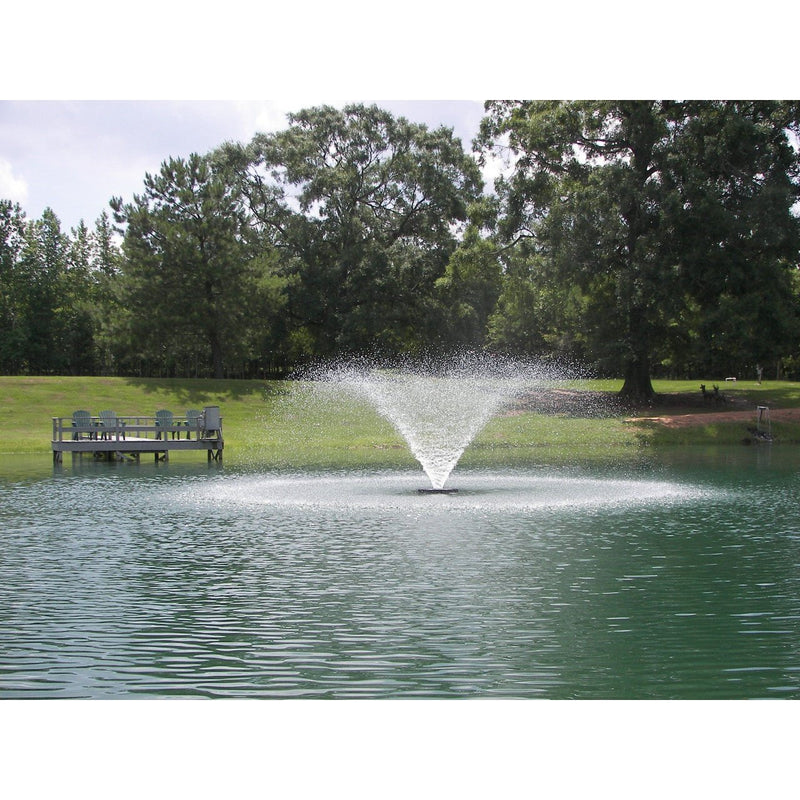
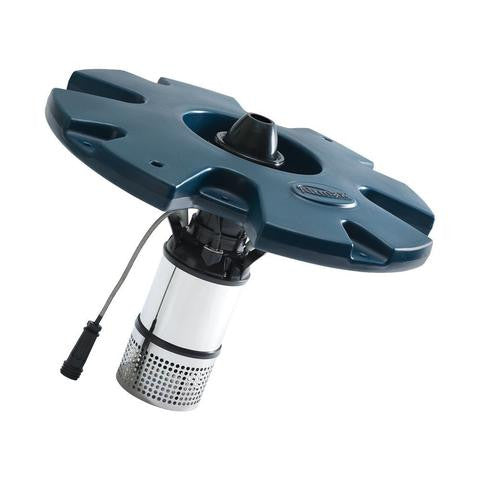
A common mistake is the "undersizing" of the compressor. Standard Aeration Efficiency (SAE) varies between devices. Fountain-style aerators often have an SAE of 1.5–2.5, while high-efficiency diffused systems can reach 3.0 or higher. Using a decorative fountain to manage a high-SOD pond is a frequent point of failure; fountains only aerate the surface and do not address the benthic muck layer.
Over-reliance on microbial additives without sufficient aeration is another pitfall. Adding bacteria to an anaerobic pond is largely ineffective because the microbes lack the oxygen necessary to drive their metabolic processes. The bacteria may survive as spores, but they will not actively consume organic sludge.
Limitations and Environmental Constraints
Integrated benthic remediation is not a universal solution for every aquatic environment. Certain constraints limit the effectiveness of this approach.
Excessive water depth, typically exceeding 15 to 20 feet, requires high-pressure compressors to overcome the hydrostatic pressure at the bottom. This increases energy consumption and mechanical wear. In very deep lakes, the "bubble hang time" may lead to oxygen saturation before the bubbles reach the surface, but the volume of air required to move the entire water mass becomes cost-prohibitive.
High allochthonous loading from external sources can also overwhelm a system. If a pond receives a constant inflow of grass clippings, leaf litter, or agricultural runoff, the rate of new muck accumulation may equal or exceed the rate of biological decomposition. In these scenarios, physical barriers or filtration zones must be established at the inflow points to supplement the benthic treatment.
Cold water temperatures represent a seasonal limitation. Microbial activity slows drastically below 50°F (10°C). While aeration should continue to maintain oxygen levels and prevent ice-over, the "muck eating" component of the system will be largely dormant during winter months in temperate climates.
Comparative Analysis: Integrated vs. Symptomatic Management
The following table compares the metrics of the integrated approach against traditional symptomatic methods.
| Parameter | Symptomatic (Raking/Chemicals) | Integrated (Aeration/Biologicals) |
|---|---|---|
| Target Focus | Surface Algae / Physical Bulk | Benthic SOD / Nutrient Cycle |
| Operational Cost | High (Repeated Applications) | Medium (Continuous Energy) |
| Labor Intensity | Extremely High | Low (Automated) |
| Long-term Stability | Low (Frequent Rebound) | High (Self-Regulating) |
| Ecological Impact | High (Chemical Toxicity) | Positive (Habitat Enhancement) |
Practical Tips for System Optimization
Effective management requires data-driven adjustments. Use these best practices to ensure the system operates at peak efficiency.
Perform a muck depth survey before installation. Use a calibrated "sludge judge" or a probe to measure the thickness of the soft sediment across various points. This establishes a baseline to track the rate of reduction over time.
Position diffusers based on the bathymetry of the pond. To maximize the "laminar flow" of water, diffusers should be placed in the deepest areas. This ensures that the rising columns of bubbles pull the maximum amount of hypoxic water from the bottom to the surface for atmospheric gas exchange.
Monitor Dissolved Oxygen (DO) levels at the bottom, not just the surface. A successful integrated system should maintain DO levels above 3.0 mg/L at the sediment interface. If bottom DO remains low, the aeration run-time or the number of diffusers may need to be increased.
Advanced Considerations for Practitioners
Serious practitioners should consider the stoichiometry of the pond's nutrient load. The Redfield Ratio (C:N:P ratio of 106:16:1) suggests that if nitrogen or phosphorus is excessively high, it can limit the rate of carbon decomposition. In cases of extreme phosphorus loading, adding a lanthanum-modified clay or aluminum sulfate (Alum) can provide a "nutrient lockout" that accelerates the effectiveness of biological treatments.
Flocculants can also be used to clear inorganic turbidity. While biologicals handle organic muck, they do not remove suspended silt or clay. Adding a food-grade flocculant can bind these particles together, causing them to settle where they can be incorporated into the stabilized benthic layer.
Performance improvements can also be found through "pulsed" aeration in specific scenarios, though continuous 24/7 operation is generally recommended for muck reduction. Continuous operation prevents the re-establishment of anaerobic conditions and keeps the microbial population in a constant state of high metabolic activity.
Example Scenario: Half-Acre Eutrophic Pond
Consider a half-acre pond with an average depth of six feet and a 12-inch layer of sapropel muck. The pond suffers from monthly algae blooms and a persistent hydrogen sulfide odor.
A technician installs a 1/4 HP rocking piston compressor connected to two fine-bubble diffusers. These diffusers are placed in the deepest basins. The system is set to run 24 hours a day. Simultaneously, a high-concentrate Bacillus blend is added bi-weekly for the first 90 days.
Initial testing shows nitrogen and phosphorus levels are elevated. After 60 days of integrated treatment, nitrogen levels typically drop by as much as 70-80% as the aeration facilitates nitrification and denitrification. By day 90, the hydrogen sulfide odor is eliminated because the benthic zone has shifted from an anaerobic to an aerobic state. Physical measurements often reveal a muck reduction of 1 to 2 inches within the first full season, depending on the organic content of the sludge.
Final Thoughts
Integrated pond management represents a shift from reactive to proactive ecology. By focusing on the mechanical transfer of oxygen and the biological augmentation of the benthic zone, practitioners can solve the "muck magnet" problem at its source.
This approach acknowledges that a pond is a complex system of nutrient inputs and outputs. True success is not found in the temporary removal of weeds, but in the permanent optimization of the decomposition cycle. Stabilization of the sediment-water interface is the most effective way to ensure long-term water clarity and ecosystem health.
Pond owners are encouraged to begin with a technical assessment of their water chemistry and sediment depth. Implementing these integrated strategies will reduce the need for manual intervention and create a resilient, self-sustaining aquatic environment for years to come. Exploring related concepts such as watershed management and shoreline buffering can further enhance these results by reducing the external loading that fuels muck accumulation.