

Why Is Nighttime So Deadly For Fish In A Pond?
Is your pond a death trap after the sun goes down? Your pond's biology flips at night. Without sunlight, plants stop producing oxygen and start consuming it alongside your fish. If your pond is stagnant, 3 AM is the danger zone. Here is how to keep the water 'living' even in the dark.
Why Is Nighttime So Deadly For Fish In A Pond?
Nighttime creates a biological inversion known as the diurnal dissolved oxygen cycle. During daylight hours, aquatic plants and phytoplankton utilize solar radiation to perform photosynthesis, converting carbon dioxide and water into glucose and oxygen. This process often results in oxygen supersaturation, where dissolved oxygen (DO) levels can exceed 15 mg/L in highly productive systems. However, this production is entirely light-dependent.
Sunset terminates the production of oxygen while the consumption of oxygen—respiration—continues unabated. Every living organism in the pond, including fish, macroinvertebrates, plants, and aerobic bacteria, must consume oxygen to survive. In a process called photorespiration, even the plants that provided life during the day become competitors for the remaining oxygen supply. This creates a steady decline in DO levels that typically reaches its nadir just before dawn.
Midnight hypoxia refers to the condition where DO levels drop below the critical threshold required for aquatic life, often defined as 2-3 mg/L. In eutrophic ponds with high organic loads, this depletion can happen rapidly. Stagnant water lacks the mechanical means to replenish oxygen from the atmosphere at a rate that matches the biological oxygen demand (BOD). This imbalance turns a healthy ecosystem into a "death trap" in a matter of hours.
Temperature further complicates this survival equation. Warm water has a lower physical capacity to hold dissolved gases than cold water. As temperatures rise during summer months, the pond's oxygen-carrying capacity decreases while the metabolic rates of fish and bacteria increase. This dual pressure—higher demand and lower supply—is why most mass mortality events occur during the hottest months of the year between the hours of 2:00 AM and 6:00 AM.
The Mechanics of Active Aeration Systems
Active aeration functions by increasing the surface area of the water-air interface or by utilizing the hydrostatic pressure of the water column to facilitate gas exchange. The goal is to maximize the Standard Oxygen Transfer Rate (SOTR), which is the mass of oxygen an aerator can transfer per hour under standard conditions. This mechanical intervention ensures that the oxygen supply remains above the critical respiration requirements of the pond's biomass.
Diffused aeration systems utilize shore-mounted compressors to pump air through weighted tubing to membrane diffusers positioned at the pond floor. These diffusers break the air into millions of fine bubbles. As these bubbles rise, they transfer oxygen into the water through their surface area. Fine-bubble diffusers are significantly more efficient than coarse-bubble versions because smaller bubbles have a higher surface-area-to-volume ratio and rise more slowly through the water column, allowing more contact time for gas transfer.
Surface aerators and paddlewheels take a different approach by physically agitating the surface. These units splash water into the atmosphere, creating droplets that absorb oxygen before falling back into the pond. While effective for venting harmful gases like ammonia and carbon dioxide, surface aerators generally have lower Standard Aeration Efficiency (SAE) than deep-water diffusers in ponds deeper than six feet. SAE is measured in pounds of oxygen transferred per horsepower-hour (lb O2/hp-hr).
Atmospheric oxygen transfer also occurs naturally through wind-driven wave action, but this is often insufficient during the calm, humid nights typical of summer. Active systems provide a predictable, constant rate of gas exchange. By calculating the total pond volume and the biological oxygen demand, engineers can size aeration systems to maintain a "living" environment regardless of the diurnal cycle or weather conditions.
Advantages of Continuous Nighttime Aeration
Continuous aeration provides a stable baseline for the pond's redox potential, which is a measurement of the water's ability to cleanse itself. When oxygen levels are high, aerobic bacteria can efficiently break down organic waste through nitrification. This prevents the accumulation of toxic ammonia and nitrites. Systems that experience frequent hypoxia shifts suffer from stunted bacterial growth, leading to "muck" buildup on the pond floor.
Fish growth and feed conversion ratios (FCR) improve significantly in well-aerated environments. Fish are aerobic organisms; their metabolic efficiency is directly tied to the availability of dissolved oxygen. When DO levels drop, fish go into a state of stress-induced lethargy, stopping their feeding and diverting energy to maintain basic physiological functions. Active aeration eliminates these growth "bottlenecks," allowing for higher stocking densities and faster maturity rates.
Mechanical aeration prevents thermal stratification, a condition where the pond separates into a warm, oxygen-rich upper layer (epilimnion) and a cold, oxygen-depleted bottom layer (hypolimnion). Without mixing, the bottom layer becomes anoxic and accumulates lethal levels of hydrogen sulfide. Active aeration creates a vertical current that mixes these layers, ensuring that the entire volume of the pond is habitable and biologically active.
Venting of dissolved gases is a secondary but critical benefit of active aeration. Carbon dioxide, which can cause pH swings, and methane from anaerobic decomposition are continuously released at the surface. This gas exchange stabilizes the water chemistry, making the environment less prone to the sudden "crashes" that often plague stagnant water bodies. A well-aerated pond acts as a consistent biological reactor rather than a volatile chemical soup.
Challenges and Common Implementation Mistakes
Under-sizing the aeration system is the most frequent error made by practitioners. Many pond owners choose an aerator based on the surface acreage of the pond without accounting for the depth or the biological oxygen demand. A pond with high fish biomass or heavy algae growth requires significantly more oxygen than a clear, low-biomass pond of the same size. Failing to calculate the total BOD leads to "emergency" aeration that is too little, too late.
Poor placement of diffusers can lead to "dead zones" where water remains stagnant despite the system running. In irregular-shaped ponds or those with varying depths, diffusers must be positioned strategically to ensure total volume turnover. Water follows the path of least resistance; if the system is not designed to force circulation into corners or deep pockets, those areas will still suffer from midnight hypoxia and accumulate anaerobic sludge.
Neglecting routine maintenance can cause a catastrophic system failure at the worst possible time. Diffuser membranes can become fouled with bio-growth or calcium deposits, increasing backpressure on the compressor and reducing oxygen transfer efficiency. Air filters on compressors must be replaced regularly to prevent overheating. A system that fails at midnight during a heatwave can result in total stock loss before the sun rises.
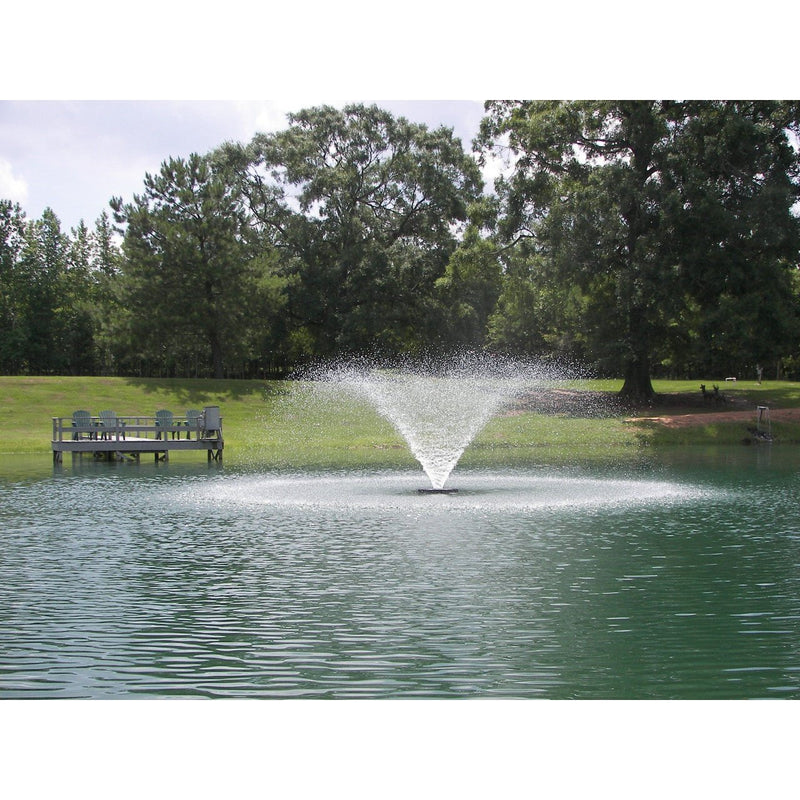
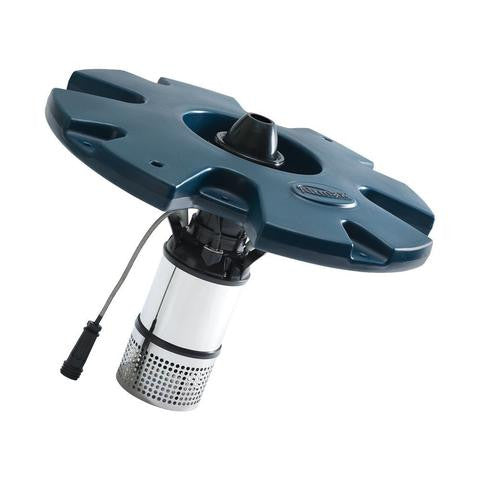
Relying solely on "aesthetic" aeration, such as decorative fountains, is a common technical misunderstanding. While fountains move water at the surface, they often draw from the top few inches of the water column. They provide very little vertical mixing and have low SAE ratings compared to dedicated aeration equipment. Practitioners must distinguish between decorative displays and functional life-support systems when designing for pond health.
Limitations and Environmental Constraints
Extreme water temperatures set a physical limit on how much oxygen any aeration system can transfer. According to Henry's Law, the solubility of a gas in a liquid is proportional to its partial pressure and inversely proportional to the temperature. At 30°C (86°F), freshwater can only hold about 7.5 mg/L of oxygen at saturation. No amount of mechanical aeration can force the water to hold more oxygen than its physical limit without the use of pure oxygen injection systems.
High altitude significantly reduces aeration efficiency. As atmospheric pressure decreases, the partial pressure of oxygen also drops, making it harder for oxygen to dissolve into the water. Practitioners operating ponds at high elevations must oversize their equipment to compensate for this reduced transfer rate. A compressor that provides sufficient oxygen at sea level may fail to maintain safe DO levels at 5,000 feet above sea level.
Power dependency is a major operational constraint. Active aeration requires a constant supply of electricity. In remote areas or regions prone to thunderstorms, power outages often coincide with the times when aeration is most critical. Without a backup power source or a solar-integrated battery system, the pond remains vulnerable. The reliance on mechanical components introduces a single point of failure into the ecosystem's life-support chain.
Excessive aeration in very shallow ponds can lead to high turbidity. If the diffusers are too powerful for the depth of the water, the rising air plumes can disturb the bottom sediments. This suspends silt and organic matter in the water column, which can irritate fish gills and temporarily increase the oxygen demand as the disturbed organic matter begins to decompose. Balancing mixing power with water depth is a necessary design trade-off.
Comparison: Midnight Hypoxia vs. Active Aeration
The following table illustrates the measurable differences between a stagnant pond prone to midnight hypoxia and a pond managed with an active aeration system. These metrics are based on a standard 1-acre pond with moderate fish biomass during peak summer conditions.
| Metric | Stagnant Pond (Hypoxia Risk) | Active Aerated Pond (Living) |
|---|---|---|
| Minimum DO (4 AM) | 0.5 - 1.5 mg/L | 5.0 - 6.5 mg/L |
| Thermal Stratification | Strong (Lethal bottom layer) | None (Fully mixed) |
| Ammonia Levels (NH3) | High (Accumulates at night) | Low (Constant nitrification) |
| Bacterial Efficiency | Anaerobic (Sludge buildup) | Aerobic (Waste digestion) |
| Fish Stress Level | Critical (Mortality risk) | Low (Optimal growth) |
Active aeration transforms the pond from a variable, high-risk environment into a controlled biological system. While the cost of electricity and equipment is a factor, the efficiency gains in fish growth and the reduction in mortality risk provide a clear return on investment for serious practitioners.
Practical Tips for Nighttime Oxygen Management
Monitor dissolved oxygen levels using a digital DO meter during the early morning hours. Taking measurements at 4:00 PM will show high oxygen levels due to photosynthesis, which can give a false sense of security. The only way to understand the true risk profile of your pond is to measure the DO at its daily minimum, typically between 3:00 AM and 6:00 AM. This data allows for precise tuning of the aeration schedule.
Set aeration timers to run specifically during the night if energy conservation is a priority. While continuous 24/7 aeration is ideal for waste processing, the critical life-support window begins at sunset and ends at sunrise. Running the system during these hours ensures that you are supplementing the oxygen supply exactly when the natural production has ceased. However, in heavily stocked ponds, daytime aeration is still necessary to prevent thermal layering.
Calculate your stocking density and feeding rates to determine the required oxygen input. A common industry rule of thumb is that 1 kg of fish feed requires approximately 350 grams of oxygen for the fish to metabolize it, plus an additional amount for the bacteria in the biofilter. If you are feeding 10 kg of feed per day, your aeration system must be capable of delivering at least 3.5 kg of oxygen to the water just to handle the feed load.
Position diffusers in the deepest part of the pond to maximize the "lifting" effect. As bubbles rise from the bottom, they pull cold, oxygen-poor water toward the surface. This creates a circular current that ensures the entire pond volume is turned over. In larger ponds, using multiple smaller diffusers is more effective than one large diffuser, as it provides more uniform oxygen distribution and reduces the risk of dead zones.
Advanced Considerations in Aeration Technology
Redox potential (ORP) is an advanced metric that provides deeper insight into pond health than DO alone. ORP measures the oxidative capacity of the water, reflecting the balance between oxidizers (like oxygen) and reducers (like organic waste). A high ORP indicates a clean, aerobic environment where waste is quickly processed. Professional systems often use ORP sensors to automatically trigger higher aeration rates when waste levels spike.
Oxygen Transfer Efficiency (OTE) varies based on bubble size and water depth. Fine-bubble membranes can achieve OTE rates of 2% to 4% per foot of water depth. This means that in 10 feet of water, a high-quality diffuser can transfer up to 40% of the oxygen in the air bubbles into the water. Understanding these percentages is vital for scaling systems in commercial aquaculture where energy costs must be balanced against production yields.
Variable Frequency Drives (VFDs) can be integrated with dissolved oxygen sensors to create an automated control loop. Instead of running the compressor at full power constantly, the VFD adjusts the motor speed based on real-time oxygen demand. This optimization strategy reduces energy consumption during the day when photosynthesis is active and ramps up the mechanical support at night, maximizing both biological safety and mechanical efficiency.
Scenario: A Technical Analysis of a 1-Acre Pond
Consider a 1-acre pond with an average depth of 6 feet, containing a biomass of 2,000 lbs of fish. During a summer night with water temperatures at 28°C (82°F), the total community respiration (fish, plants, and bacteria) might consume oxygen at a rate of 0.3 mg/L per hour. In a stagnant state, if the pond starts the evening at 8.0 mg/L, it will hit the 3.0 mg/L danger zone in approximately 16 hours. However, this rate often accelerates as the night progresses and oxygen becomes harder to extract.
Installing a 1/2 HP diffused aeration system changes the trajectory. A 1/2 HP compressor can deliver approximately 1.5 lbs of oxygen per hour under standard conditions. Correcting for field conditions (temperature and low DO), the system might transfer 1.0 lb of O2/hr. Over a 10-hour night, this adds 10 lbs of oxygen to the pond. In a 1-acre pond (approx. 2 million gallons), 10 lbs of oxygen equates to an increase of roughly 0.6 mg/L across the total volume.
This mechanical addition offsets the respiration rate. Instead of a steady decline toward hypoxia, the DO levels stabilize. The aerator provides enough "make-up" oxygen to keep the levels above 5.0 mg/L throughout the night. This technical buffer prevents the metabolic stress associated with midnight hypoxia and ensures that the pond's biological filtration remains active, preventing an ammonia spike the following morning.
Final Thoughts
Midnight hypoxia is a predictable physical and biological event in any stagnant pond. The transition from oxygen production to consumption is an inevitable consequence of the diurnal cycle. Without mechanical intervention, the biological oxygen demand of a healthy pond can easily exceed the natural rate of atmospheric diffusion, leading to a "danger zone" in the early morning hours.
Active aeration is the most effective technical solution to this imbalance. By utilizing the physics of gas transfer and vertical mixing, practitioners can maintain a stable, aerobic environment that supports higher stocking densities and efficient waste processing. Choosing the right system requires a focus on Standard Aeration Efficiency and a thorough calculation of the pond's unique biological needs.
Investing in reliable aeration equipment and monitoring systems transforms pond management from a game of chance into a disciplined science. Understanding the mechanics of oxygen transfer allows you to keep your water "living" even in the total absence of sunlight. This proactive approach is the hallmark of a serious practitioner dedicated to the long-term health and productivity of an aquatic ecosystem.