

Why Does My Pond Still Smell Bad Even With Aeration Running?
Aeration alone won't save a stinking pond if the air isn't reaching the 'dead zones' at the bottom. If your pond smells like rotten eggs, you have anaerobic activity. Even with a bubbler, if you have 'dead spots,' the smell remains. Here is how to fix the circulation.
Pond management often fails when operators treat aeration as a simple "on/off" feature rather than a mechanical system requiring optimization. A common misconception is that adding bubbles anywhere in the water column will resolve odor issues. In reality, gas exchange is only one half of the equation; the other half is the vertical and horizontal transport of water masses. Without a calculated circulation strategy, your aerator may simply be oxygenating a small pocket of water while leaving massive volumes of stagnant fluid untouched at the floor.
The "rotten egg" odor is a chemical signature of hydrogen sulfide (H2S), a byproduct of anaerobic respiration. This occurs when the biological oxygen demand (BOD) at the sediment interface exceeds the rate of oxygen delivery. When oxygen levels hit zero, specialized bacteria utilize sulfate as a terminal electron acceptor. To eliminate this, the mechanical system must achieve total pond turnover, ensuring that every gallon of water is periodically exposed to the atmosphere.
Why Does My Pond Still Smell Bad Even With Aeration Running?
Stagnation is not just a lack of movement; it is a physical barrier created by thermal stratification. In most ponds deeper than six feet, the water column separates into distinct layers. The upper layer, or epilimnion, is warmed by solar radiation and stays oxygen-rich through atmospheric contact and photosynthesis. The bottom layer, the hypolimnion, remains cold and dense. Between them sits the thermocline, a transition zone where the temperature drops rapidly. This density difference acts as a physical ceiling that prevents oxygen from the surface or an improperly placed aerator from reaching the bottom.
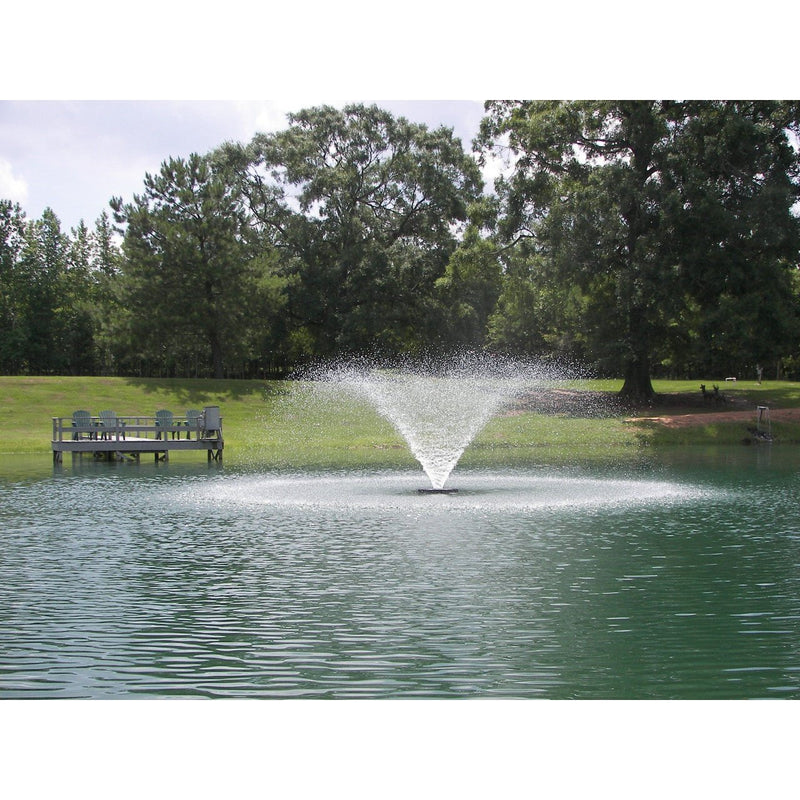
When you run a surface fountain or a shallow-set bubbler, you are effectively aerating only the epilimnion. The hypolimnion remains trapped in a state of permanent hypoxia. Organic matter—fish waste, decaying algae, and leaf litter—settles into this "dead zone." Without oxygen, aerobic bacteria cannot function, and the decomposition process shifts to anaerobic pathways. This shift results in the accumulation of methane (CH4), ammonia (NH3), and hydrogen sulfide (H2S). These gases are what the user perceives as "Dead Zone Gas," a toxic and foul-smelling accumulation that stays trapped until a weather event or mechanical change forces it upward.
Another factor is the Oxygen Transfer Efficiency (OTE). Many systems provide high-volume air but low-efficiency transfer. If the bubbles are too large or the residence time in the water column is too short, the actual mass of dissolved oxygen (DO) added to the water is negligible. This creates a scenario where the pond has "air" but lacks the "Living Breath" of dissolved oxygen necessary for healthy biological cycles. The technical failure here is often a result of ignoring the hydrostatic pressure and bubble surface-to-volume ratios required for efficient diffusion.
How Vertical Induction and Laminar Flow Eliminate Dead Zones
Solving the odor problem requires moving the bottom water to the top. This process is known as vertical induction. When a diffuser is placed at the deepest point of the pond, the rising columns of bubbles create a "lifting" effect. As the bubbles ascend, they pull a massive volume of water with them through friction and displacement. This upward movement is called an airlift. For every cubic foot of air injected at a depth of 15 feet, thousands of gallons of water are moved toward the surface.
Once the water reaches the surface, it spreads horizontally in a circular pattern away from the bubble plume. This creates a laminar flow across the surface where the water can vent harmful gases like H2S and CO2 while absorbing atmospheric oxygen. The now-oxygenated water, which is slightly cooler than the surface layer, eventually sinks back down to the bottom at the pond’s edges. This creates a continuous loop of circulation that gradually replaces the anaerobic hypolimnion with aerobic water.
Mechanical optimization of this process depends on the following variables:
- Diffuser Depth: Placing the diffuser at the deepest point maximizes the length of the bubble column, increasing both the water-moving capacity and the oxygen transfer time.
- Bubble Size: Fine-bubble diffusers (1–3 mm) have a significantly higher surface-area-to-volume ratio than coarse-bubble systems, allowing more oxygen to dissolve before the bubble reaches the surface.
- Turnover Rate: The goal for an odor-troubled pond is a minimum of one full turnover per 24 hours. This means the system must be capable of moving the entire volume of the pond through the surface interface once every day.
Benefits of Optimized Bottom-Up Aeration
The primary benefit of a bottom-up system is the elimination of thermal stratification. By mixing the entire water column, you create a uniform temperature and oxygen profile. This prevents the sudden "turnover" events triggered by cold rain or heavy winds, which can otherwise cause mass fish kills by mixing toxic bottom gases into the entire pond at once.
From a chemical standpoint, introducing oxygen to the sediment-water interface changes the redox potential of the muck. In an aerobic environment, bacteria can decompose organic solids up to 10 times faster than in anaerobic conditions. This leads to "muck digestion," where the thick layer of sludge at the bottom is slowly converted into carbon dioxide and water, reducing the physical depth of the waste and eliminating the source of foul odors. This process is significantly more cost-effective than mechanical dredging.
Furthermore, aerobic conditions stabilize phosphorus. In anaerobic water, phosphorus is released from the sediments back into the water column, where it acts as a fertilizer for algae blooms. Maintaining an aerobic layer at the bottom keeps phosphorus bound to the soil, naturally limiting the growth of pond scum and noxious weeds. This creates a self-regulating ecosystem where the mechanical system supports the biological one.
Common Mechanical Failures and Misunderstandings
One of the most frequent errors is the "shallow-set" diffuser. Operators often place diffusers in four or five feet of water, even if the pond is twelve feet deep, to save on weighted tubing or to avoid disturbing the muck. This leaves the deepest, most critical area of the pond anaerobic. The air rising from five feet only circulates the top half of the water, and the bottom seven feet remain a "dead zone." To fix this, the diffuser must be relocated to the deepest basin, regardless of the difficulty of installation.
Another mistake is under-sizing the compressor. Aeration is a function of pressure and volume. For every foot of depth, the compressor must overcome approximately 0.43 PSI of water pressure. If the compressor is not rated for the depth, the airflow will be restricted, the motor will overheat, and the turnover rate will drop below the threshold required to maintain aerobic conditions. Using a 1/4 HP compressor on a 2-acre pond is a mechanical mismatch that will never resolve a hydrogen sulfide problem.
Operators also often fail to account for pond shape. A pond with a "waist" or multiple bays cannot be cleared with a single diffuser. Water movement is impeded by shoreline geometry. If the oxygen-rich water cannot reach a remote cove, that cove will remain a stagnant pocket of anaerobic activity, and the smell will persist despite the main basin being clear. Mapping the pond's bathymetry and placing diffusers in every major deep pocket is the only way to ensure 100% coverage.
Limitations and Environmental Constraints
While bottom-up aeration is the gold standard, it is not always the ideal solution for every environment. In very shallow ponds (less than 4 feet deep), the bubble column is too short to generate a significant vertical current. In these cases, the oxygen transfer efficiency (OTE) is low because the bubbles escape to the atmosphere too quickly. For shallow ponds, surface circulators or horizontal "aspirators" are often more effective as they rely on pushing water horizontally rather than lifting it vertically.
Another limitation is high weed density. If a pond is choked with submersed vegetation like Coontail or Milfoil, the plants act as physical baffles that stop the circulation current. You may have a high-functioning diffuser, but the oxygenated water cannot travel more than 20 feet before being stopped by a wall of weeds. In these situations, mechanical or chemical weed management must precede or accompany the installation of an aeration system to allow the circulation to function.
Finally, extremely high organic loads—such as ponds receiving agricultural runoff—may require more oxygen than a standard atmospheric air system can provide. In these specialized cases, the BOD is so high that even a perfectly optimized system cannot keep up. These scenarios might require supplemental biological treatments or the use of pure oxygen injection, though such measures are usually reserved for high-density aquaculture rather than general pond maintenance.
Comparison of Aeration Technologies
Different mechanical approaches offer varying levels of efficiency. The following table compares the two most common methods based on standard engineering metrics for ponds deeper than 8 feet.
| Metric | Surface Fountain / Aerator | Bottom Diffused Aeration |
|---|---|---|
| Oxygen Transfer Efficiency (OTE) | Low (1.5 - 2.0 lbs O2/hp-hr) | High (3.5 - 4.5 lbs O2/hp-hr) |
| Circulation Capacity | Limited to upper 3-5 feet | Total water column (top to bottom) |
| Energy Consumption | High (requires high GPH pumps) | Low (efficient air compression) |
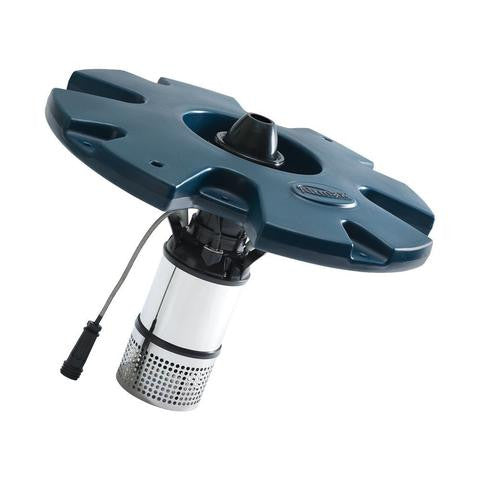
| Maintenance Requirements | Frequent (submerged motors, seals) | Minimal (on-shore compressor) |
| Odor Reduction Effectiveness | Marginal (does not treat floor muck) | Excellent (treats source of gases) |
Practical Best Practices for Setup
To optimize a system, begin by determining the pond's volume in acre-feet. One acre-foot is 325,851 gallons. For an average pond, you need to move this volume once per day. If your diffuser kit is rated for 2,000 gallons per minute (GPM), you can calculate the necessary run time. Running the system 24/7 is generally recommended during the summer months to maintain a stable aerobic environment.
When installing a system in a pond that is already "stinking," do not start the system at full power. This is the most critical safety rule. Turning on a powerful bottom aerator in a septic pond will immediately bring all the H2S and deoxygenated water to the surface, likely killing every fish in the pond within hours. Use a "staged start-up" protocol:
- Day 1: Run the system for 15 minutes.
- Day 2: Run for 30 minutes.
- Day 3: Run for 1 hour.
- Day 4: Run for 2 hours.
- Subsequent Days: Double the time each day until the system runs 24/7.
This allows the pond to slowly "gas off" and gives the aerobic bacteria time to colonize the bottom without stripping the entire pond of its remaining oxygen. Additionally, place your compressor in a ventilated, shaded enclosure. Heat is the enemy of compressor life; keeping the intake air cool will improve both the efficiency of the machine and the longevity of the diaphragms or pistons.
Advanced Considerations: The Physics of Gas Transfer
For serious practitioners, understanding the Standard Aeration Efficiency (SAE) is vital. SAE is the amount of oxygen transferred per kilowatt-hour of energy. In diffused systems, this is heavily influenced by the depth of the diffuser due to hydrostatic pressure. As the bubble rises, the pressure decreases, causing the bubble to expand. This expansion increases the surface area but also the rise velocity. The engineering goal is to find the "sweet spot" where the bubble is small enough to stay in the water longer but large enough to provide the necessary lifting force for circulation.
The rate of oxygen transfer is also governed by the saturation deficit. According to the gas transfer equation (dC/dt = KLa(Cs - C)), oxygen moves into water faster when the existing dissolved oxygen (C) is far below the saturation point (Cs). This means that aeration is most efficient in the very water that needs it most—the "dead zones." As the water becomes more oxygenated, the transfer rate slows down. Mechanical systems should therefore be sized to handle the "worst-case" BOD during the hottest month of the year, when water holds less oxygen and biological activity is at its peak.
Scenario: Rehabilitating a 1-Acre Retention Pond
Consider a 1-acre stormwater retention pond with a maximum depth of 12 feet and a severe hydrogen sulfide odor. The calculated volume is approximately 8 acre-feet (roughly 2.6 million gallons). A standard 1/2 HP rocking piston compressor and two fine-bubble diffusers are selected.
The diffusers are placed in the two deepest holes of the pond. Based on a conservative airlift calculation, each diffuser moves approximately 1,500 GPM at 12 feet. Combined, the system moves 3,000 GPM, or 180,000 gallons per hour. At this rate, the entire 2.6 million gallons will be moved to the surface in approximately 14.5 hours. This meets the requirement of one turnover per day with a significant safety margin.
Following the staged start-up protocol, the odor begins to dissipate by Day 5. By Day 14, the water column is fully mixed, and the temperature at the bottom is within 2 degrees of the surface. Dissolved oxygen levels at the 12-foot mark rise from 0.2 mg/L to 6.5 mg/L. The anaerobic bacteria are outcompeted by aerobic strains, and the "dead zone" is eliminated. Within one season, the muck layer is reduced by three inches through biological digestion alone.
Final Thoughts
Eliminating pond odors is a matter of mechanical physics rather than chemical treatment. While aeration is the engine of pond health, circulation is the transmission that delivers that power to where it is needed. Without reaching the dead zones, even the most expensive bubbler is merely a decorative feature. By focusing on vertical induction and total volume turnover, you can transform a stagnant, septic pond into a high-functioning aerobic ecosystem.
Effective management requires a shift from "adding air" to "moving water." Operators must account for depth, pond geometry, and turnover rates to ensure the biological processes of the pond are supported by a continuous supply of oxygenated water. This technical approach not only removes the immediate nuisance of foul smells but also provides long-term stability against algae blooms and fish kills.
As you apply these principles, remember that every pond is a unique mechanical system. Regular monitoring of dissolved oxygen at various depths and adjusting diffuser placement accordingly will yield the best results. Those who master the balance of air volume and circulation efficiency will find their ponds become more resilient, clearer, and fundamentally healthier over time.