

Why Do Fish Die Just Before Sunrise? The Science Behind Overnight Oxygen Crashes
The 'Stillness' of a night-time pond is the leading cause of morning fish loss. Plants produce oxygen by day, but they consume it by night. Discover why the hours before dawn are the most dangerous for your fish and how dynamic aeration saves lives.
Aquatic ecosystems operate on a delicate 24-hour cycle of gas exchange. While sunlight drives the production of life-sustaining oxygen, the absence of light triggers a massive biological reversal. Understanding the mechanics of this shift is essential for any serious pond keeper or aquaculturist.
Dissolved oxygen (DO) is the single most critical parameter in pond management. It is not a static value but a fluctuating variable influenced by temperature, atmospheric pressure, and biological load. When a pond becomes still at night, the mechanical transfer of oxygen from the air to the water slows significantly, creating a dangerous deficit.
Dynamic aeration systems provide a continuous 24/7 flow that mitigates these fluctuations. By maintaining a constant state of surface renewal, these systems ensure that the oxygen transfer rate always exceeds the biological oxygen demand (BOD). This technical guide explores the physics and biology behind overnight oxygen crashes and the mechanical solutions required to prevent them.
Why Do Fish Die Just Before Sunrise? The Science Behind Overnight Oxygen Crashes
The phenomenon of morning fish loss is rooted in the diurnal oxygen cycle. During daylight hours, phytoplankton and aquatic plants engage in photosynthesis, using solar energy to convert carbon dioxide (CO2) and water into glucose and oxygen. In many healthy ponds, this process can lead to "supersaturation," where DO levels exceed 100% of their normal carrying capacity at a given temperature.
Photosynthesis ceases entirely when the sun sets. However, the metabolic requirements of the pond’s inhabitants do not stop. Fish, plants, algae, and aerobic bacteria all continue to "breathe" through a process called cellular respiration. This process consumes O2 and releases CO2 around the clock.
Biochemical Oxygen Demand (BOD) represents the total amount of oxygen required by all aerobic organisms in the pond. In a densely stocked pond or one with high organic matter (sludge), the BOD remains high throughout the night. Without the "input" side of the equation (photosynthesis), the DO levels begin a steady, linear decline from dusk until dawn.
The "Stillness" of the pond aggravates this decline. In a static water column, oxygen at the surface is consumed, and because there is no mechanical mixing, oxygen-depleted water remains at the bottom while the surface layer fails to re-oxygenate quickly enough through passive diffusion. By 4:00 AM or 5:00 AM, the DO levels often hit a critical floor—typically below 2.0 mg/L—leading to hypoxia and sudden mass mortality.
How Dynamic Aeration Works: Mechanics and Gas Exchange
Dynamic aeration is the process of using mechanical force to increase the Standard Oxygen Transfer Rate (SOTR) of a water body. It works by exploiting the principles of gas solubility and surface area. Oxygen enters water primarily through the interface where air meets liquid; the more surface area exposed, the faster the transfer.
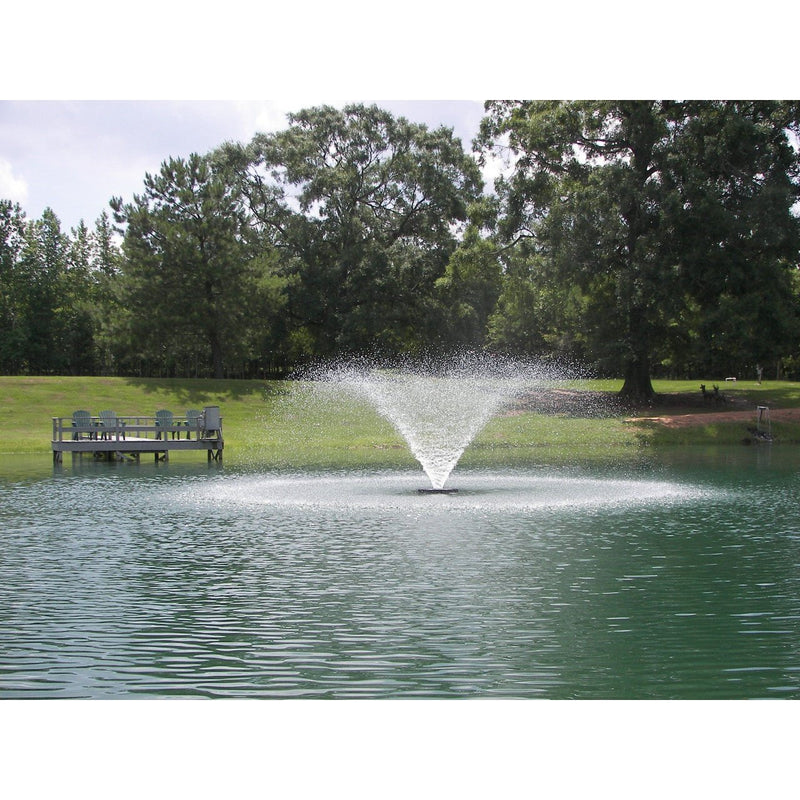
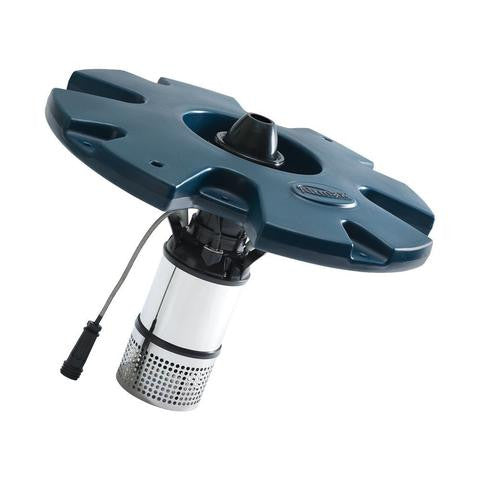
Mechanical aerators, such as diffused air systems or surface splashers, create a 24/7 flow that prevents the formation of stagnant boundary layers. In a diffused air system, an air compressor pushes air through weighted tubing to diffusers placed at the pond's bottom. As the bubbles rise, they perform two critical functions:
- Direct Transfer: Oxygen molecules move from the air bubble into the water across the bubble's surface.
- Laminar Flow and Upwelling: The rising bubbles pull oxygen-poor water from the bottom to the surface, where it can interact with the atmosphere.
The efficiency of this system is governed by Henry’s Law, which states that the amount of dissolved gas in a liquid is proportional to its partial pressure above the liquid. Higher pressure at the bottom of the pond (due to water depth) actually increases the solubility of oxygen in the air bubbles, making bottom-mounted diffusers more efficient than surface-level agitation in deep ponds.
Calculations for aeration requirements must account for the AOR (Actual Oxygen Requirement). This is calculated by factoring in the fish biomass, the water temperature (which affects metabolic rates), and the elevation of the pond above sea level. Higher temperatures and higher altitudes both reduce the amount of oxygen water can hold, necessitating more aggressive dynamic flow.
Benefits of Maintaining Continuous 24/7 Flow
Maintaining a dynamic flow provides measurable advantages for pond health and fish physiology. Unlike intermittent aeration, which allows for "oxygen valleys" during off-cycles, a 24/7 approach ensures a stable baseline of dissolved oxygen above the critical 5.0 mg/L threshold.
Stable DO levels improve the metabolic efficiency of fish. When oxygen is plentiful, fish can digest food more effectively, leading to better growth rates and stronger immune systems. Conversely, chronic low-level hypoxia (DO between 3.0 and 4.0 mg/L) stresses the fish's endocrine system, making them susceptible to opportunistic pathogens like Aeromonas or Ichthyophthirius.
Continuous circulation also assists in the removal of metabolic wastes. Ammonia (NH3), a byproduct of fish metabolism, must be converted to nitrate (NO3) by nitrifying bacteria (Nitrosomonas and Nitrobacter). These bacteria are obligate aerobes, meaning they require oxygen to function. In a still, oxygen-depleted pond at night, nitrification slows down, leading to a dangerous spike in ammonia levels that coincides with the lowest oxygen point of the day.
Thermal destratification is another key benefit. In the summer, ponds often develop a "thermocline"—a sharp temperature gradient where warm water sits on top of cold, dense, oxygen-poor water. Dynamic aeration breaks this barrier, mixing the entire water column and ensuring that oxygen reaches the benthic zone where organic decomposition occurs.
Challenges and Common Aeration Mistakes
One frequent error is undersizing the aeration equipment. Many pond owners select air pumps based on the volume of the pond without considering the biological load. A pond with 50 kg of fish requires significantly more oxygen transfer than an ornamental pond of the same size with only 5 kg of fish. The BOD of the fish must be the primary driver of equipment selection.
Placement of diffusers is another common pitfall. Placing diffusers too close to each other creates a single column of upwelling, leaving large "dead zones" in the pond corners. For optimal dynamic flow, diffusers should be spread out to ensure the entire pond volume is cycled. Furthermore, placing them in the deepest part of the pond maximizes the "hang time" of the bubbles, increasing the contact time for gas exchange.
Fouling of aeration components is a mechanical reality. Over time, calcium deposits, algae, and biofilm can clog the pores of fine-bubble diffusers. This increases the "back pressure" on the air pump, reducing its airflow (measured in CFM or Lpm) and increasing energy consumption. Regular maintenance and the use of high-quality, EPDM-membrane diffusers are required to maintain system efficiency.
Limitations and Environmental Constraints
Aeration has limits, especially during extreme heatwaves. As water temperature rises, its physical ability to hold dissolved oxygen decreases. At 30°C (86°F), freshwater can hold only about 7.5 mg/L at saturation, whereas at 10°C (50°F), it can hold 11.3 mg/L. In very hot weather, even a high-powered aeration system may struggle to keep DO levels high if the pond is shallow and loses heat slowly.
High altitude also presents a physical constraint. At higher elevations, the atmospheric pressure is lower, which reduces the partial pressure of oxygen. This means that a pump rated for a certain SOTR at sea level will perform significantly worse in a mountain environment. Designers must over-spec equipment by 10-20% for every 1,000 meters of elevation.
Chemical treatments can temporarily increase oxygen demand. Certain algaecides or medications for fish parasites cause a rapid die-off of organic matter. As bacteria rush to decompose this dead material, they consume massive amounts of oxygen. During any chemical treatment, dynamic aeration must be maximized to prevent a crash, and in some cases, aeration alone may not be enough to counter the sudden BOD spike.
Static Midnight Stillness vs. Dynamic 24/7 Flow
The difference between a static pond and one with dynamic flow can be quantified by comparing the Oxygen Transfer Coefficient (KLa). A static pond relies on wind-driven diffusion, which is highly variable and often insufficient in sheltered areas.
| Factor | Static Midnight Stillness | Dynamic 24/7 Flow |
|---|---|---|
| Oxygen Transfer (KLa) | Low (0.01 - 0.05 hr?¹) | High (0.20 - 1.5 hr?¹) |
| Surface Renewal Rate | Passive / Dependent on Wind | Mechanical / Constant |
| DO Gradient | Extreme (High surface, zero bottom) | Uniform (Homogeneous throughout) |
| Ammonia Oxidation | Stalled at night | Continuous 24/7 |
| Maintenance Requirement | Low | Moderate (Compressor/Diffusers) |
The table demonstrates that the primary advantage of dynamic flow is the stabilization of the environment. While a static pond may have higher DO at midday due to algae, the "crash" at night is significantly more severe because there is no mechanical floor to catch the falling oxygen levels.
Practical Tips for Optimizing Your Aeration System
To maximize efficiency, use fine-bubble diffusers rather than coarse-bubble stones. Fine bubbles (1-3mm) have a much higher surface-to-volume ratio, allowing for more oxygen to dissolve before the bubble reaches the surface. They also create a gentler upwelling that is less stressful for fish species that prefer calmer water.
Install a check valve between the pump and the diffuser. This prevents water from siphoning back into the air pump during a power outage, which can cause motor failure or electrical shorts. In areas with frequent power cuts, consider a battery-backed air pump or a "failsafe" system that triggers upon power loss.
Monitor your DO levels using a digital meter or a high-quality test kit, specifically taking measurements just after sunset and just before sunrise. If the pre-sunrise reading is consistently below 5.0 mg/L, your dynamic flow is insufficient for the current biological load, and you should consider upgrading your pump or reducing the fish population.
Advanced Considerations: The Role of CO2 and pH
Oxygen is only half of the gas exchange equation. As fish and plants respire at night, they produce Carbon Dioxide (CO2). In a still pond, CO2 can build up, leading to a drop in pH because CO2 reacts with water to form carbonic acid. This "pH swing" adds additional stress to fish already struggling with low oxygen.
Dynamic aeration facilitates "gas stripping." The same mechanical action that brings O2 into the water helps CO2 escape into the atmosphere. By maintaining a 24/7 flow, you stabilize the pond's pH levels, preventing the acidic spikes that often occur in the early morning hours. This is particularly important in soft water ponds with low alkalinity (KH), which lack the buffering capacity to resist pH changes.
Consider the "Bubble Point" in deep ponds. In very deep systems (over 3 meters), the pressure at the bottom can actually cause nitrogen supersaturation if not handled correctly. While rare in garden ponds, professional aquaculture setups must balance deep-water aeration with atmospheric degassing to prevent Gas Bubble Disease in sensitive species.
Example Scenario: Calculating Oxygen Demand
Imagine a 10,000-liter pond with 20 kg of adult Koi. At 25°C, Koi have a metabolic oxygen consumption rate of approximately 400 mg of O2 per kg of fish per hour.
- Fish Demand: 20 kg x 400 mg/kg/hr = 8,000 mg/hr (8 grams of O2 per hour).
- BOD (Bacteria/Debris): In a typical pond, the organic load can double the fish's demand. Total demand = 16 grams of O2 per hour.
A standard air pump might provide 40 liters of air per minute (Lpm). Air is approximately 21% oxygen, meaning the pump is moving roughly 8.4 liters of O2 per minute. However, the SOTE (Standard Oxygen Transfer Efficiency) for diffusers is often only 1% to 2% per foot of depth. In a 1-meter deep pond (approx. 3.3 feet), you might achieve 5% efficiency.
- System Output: 8.4 L/min x 5% = 0.42 L/min of O2 dissolved.
- Mass Conversion: Since 1 liter of O2 weighs approx 1.43 grams, 0.42 L/min = 0.6 grams/min or 36 grams/hr.
In this scenario, the 36 grams/hr of transfer comfortably exceeds the 16 grams/hr of demand. However, if the pump were only run during the day, the 16 grams/hr of demand would quickly deplete the 70-80 grams of total dissolved oxygen available in the 10,000L pond, leading to a crash in just a few hours after sunset.
Final Thoughts
The "Stillness" of a night-time pond is a silent threat that can undo years of careful fish husbandry in a single morning. By understanding the diurnal cycle of dissolved oxygen and the mechanics of gas solubility, pond keepers can move from reactive troubleshooting to proactive management. Dynamic aeration is not merely an "extra" feature; it is the life-support system that bridges the gap between sunset and sunrise.
Maintaining a 24/7 flow ensures that the biological oxygen demand is met at all times, metabolic wastes are processed efficiently, and pH levels remain stable. While the physics of gas exchange—governed by temperature, pressure, and surface renewal—are complex, the solution is mechanically straightforward. High-quality diffused aeration is the most efficient way to maintain a healthy oxygen baseline.
Applying these principles allows for higher stocking densities, faster growth rates, and a significantly lower risk of mass mortality. Whether you are managing a small ornamental pond or a large aquaculture facility, the goal remains the same: eliminate the stillness and keep the water moving. Experiment with diffuser placement and monitor your early morning DO levels to fine-tune your system for maximum efficiency.