

Why Do Fish Die Just Before Sunrise? The Science Behind Overnight Oxygen Crashes
The 'Invisible Crash' happens when you're asleep. Here's how to stop it. Plants produce oxygen all day, but they steal it all back at night. This 'Respiratory Reversal' is why most fish kills happen just before the sun comes up. If you aren't aerating at night, you're gambling with your pond's life.
Understanding the mechanics of a pond ecosystem requires looking past surface-level aesthetics. Every body of water functions as a biological reactor where oxygen serves as the primary currency for survival. During daylight hours, the system often appears healthy because photosynthesis generates a surplus of dissolved oxygen (DO).
This surplus is temporary and deceptive. The same biological agents that produce oxygen during the day become its primary consumers the moment the sun sets. This shift creates a volatile environment where oxygen levels can plummet from supersaturation to lethal hypoxia within hours.
Managing these fluctuations is the difference between a stable ecosystem and a total loss of stock. Technical intervention through mechanical aeration is the only reliable method to counteract the physics of the diurnal oxygen cycle. This guide breaks down the data, the chemistry, and the mechanical requirements for preventing nighttime oxygen depletion.
Why Do Fish Die Just Before Sunrise? The Science Behind Overnight Oxygen Crashes
The biological phenomenon responsible for early morning fish kills is the Diurnal Oxygen Cycle. This cycle is driven by the interaction between photosynthesis and respiration. During the day, phytoplankton and aquatic macrophytes utilize solar energy to convert carbon dioxide and water into glucose, releasing oxygen as a byproduct.
Dissolved oxygen levels typically peak in the late afternoon, sometimes reaching 150% to 200% saturation. These high levels do not persist. At night, photosynthesis ceases entirely because there is no light to drive the reaction. However, cellular respiration continues unabated.
Respiration is the process where organisms—including fish, bacteria, and the plants themselves—consume oxygen to break down carbohydrates for energy. In a process known as 'Respiratory Reversal,' the very plants that oxygenated the water during the day begin to strip it away. This demand is compounded by the Biochemical Oxygen Demand (BOD) of the pond's sediment and the Chemical Oxygen Demand (COD) of various dissolved substances.
The lowest point of the oxygen curve occurs just before dawn. This is the culmination of 8 to 12 hours of continuous consumption without any production. If the total demand exceeds the available supply, the concentration falls below critical thresholds. For most warm-water species, a DO level below 3.0 mg/L causes severe physiological stress. If the level drops below 1.0 mg/L for even a short duration, mass mortality is inevitable.
Quantifying Oxygen Transfer and Diffusion Rates
Oxygen enters a body of water through two primary mechanisms: natural diffusion at the surface and biological production. Natural diffusion is governed by the gas transfer equation: dC/dt = KL(A/V)(Cs – Cm).
The term KL represents the liquid-film coefficient, which is a measure of turbulence. A/V is the ratio of the air-water interfacial area to the total water volume. Cs is the saturation concentration of oxygen at the current temperature and pressure, and Cm is the actual measured concentration.
Analysis of this equation reveals that gas exchange is most efficient when the gap between Cs and Cm is large. As oxygen levels drop overnight, the potential for natural diffusion actually increases. However, in still water, the A/V ratio is too low to meet the massive respiratory demand of a high-biomass pond.
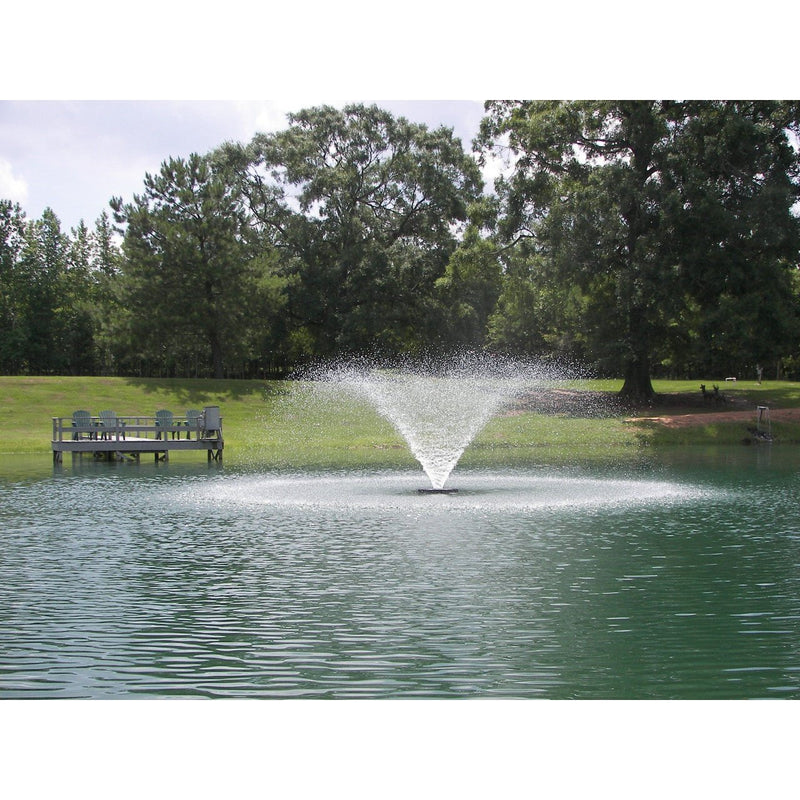
Mechanical aeration works by artificially increasing the A/V ratio. By breaking the water surface into millions of droplets or introducing millions of tiny bubbles from the bottom, the surface area for gas exchange increases by several orders of magnitude. This mechanical intervention ensures that the rate of oxygen transfer (OTR) stays ahead of the rate of consumption.
Measuring Oxygen Demand: BOD, COD, and Biomass
Calculating the necessary aeration capacity requires an understanding of the total oxygen sinks within the system. These sinks are categorized into three main components.
The first component is the respiratory demand of the fish and other macro-fauna. Ectothermic organisms like fish have metabolic rates that are highly dependent on water temperature. A 10-degree Celsius increase in temperature can double the oxygen consumption of a fish. Larger fish consume more total oxygen, but smaller fish have a higher metabolic rate per gram of body weight.
The second component is the Biochemical Oxygen Demand (BOD). This is the amount of oxygen required by aerobic microorganisms to decompose organic matter in the water column and the benthos (bottom sediment). High levels of fish waste, uneaten feed, and decaying plant matter lead to high BOD.
The third component is Chemical Oxygen Demand (COD). This represents the oxygen consumed by chemical oxidation of inorganic compounds, such as the conversion of ammonia to nitrate (nitrification). Nitrification is a high-demand process, requiring approximately 4.6 pounds of oxygen for every 1 pound of ammonia oxidized.
Neglecting any of these variables results in an underpowered aeration system. Practitioners must account for the peak demand period, which occurs during the warmest weeks of the year when metabolic rates are highest and the water's natural ability to hold oxygen is at its lowest.
Aeration Hardware: Comparing Efficiency Metrics
When selecting mechanical aeration equipment, efficiency is measured using two primary standards: Standard Oxygen Transfer Rate (SOTR) and Standard Aeration Efficiency (SAE).
SOTR measures the total pounds of oxygen a device can transfer into a body of water per hour under standard conditions (20°C, 1 atmosphere of pressure, and 0 mg/L initial DO). While SOTR provides a baseline for capacity, it does not account for the energy cost.
SAE is the more critical metric for long-term operational viability. It is calculated by dividing the SOTR by the power input (horsepower or kilowatts). This yields the pounds of oxygen transferred per horsepower-hour (lb O2/hp-hr).
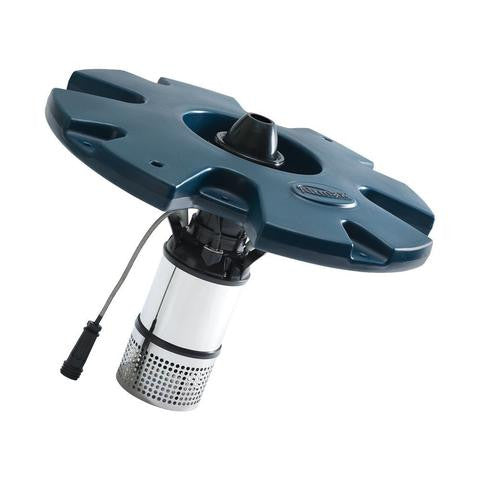
Surface aerators and paddlewheels generally offer high SAE in shallow environments, typically ranging from 2.6 to 3.2 lb O2/hp-hr. They are effective at creating surface turbulence and venting harmful gases like carbon dioxide and methane. However, their influence is limited to the upper layers of the water column.
Subsurface diffused aeration systems utilize compressors to push air through membrane diffusers located on the pond floor. While their clean-water SAE might appear lower than surface units in shallow water, their efficiency increases with depth. Deeper water provides more contact time for the rising bubbles, improving the Standard Oxygen Transfer Efficiency (SOTE).
Limitations of Nighttime Oxygen Management
Mechanical aeration is not a panacea and is subject to the laws of thermodynamics. The primary limitation is the inverse relationship between water temperature and oxygen solubility.
As water temperature increases, the saturation point (Cs) decreases. For example, fresh water at 10°C can hold approximately 11.3 mg/L of oxygen at saturation. At 30°C, that capacity drops to roughly 7.5 mg/L. This means that during the peak of summer, you are starting with a much smaller "oxygen bank account" than in the spring or fall.
Salinity further complicates this. Saltwater holds approximately 20% less dissolved oxygen than fresh water at the same temperature. Systems located at high altitudes also face lower atmospheric pressure, which further reduces the partial pressure of oxygen and its subsequent solubility in water.
Turbidity and algae density also act as constraints. While a dense algae bloom produces massive amounts of oxygen during the day, it represents a massive respiratory liability at night. This is often referred to as a "heavy bloom," and it can overwhelm standard aeration setups if the biomass is not managed through nutrient control or harvesting.
The Morning Disaster vs. The Nighttime Solution
Relying on emergency aeration is often a losing strategy. The 'Morning Disaster' occurs when a pond owner waits until they see fish gasping at the surface (piping) to turn on their equipment. By this point, the fish have already suffered significant physiological damage, and the oxygen debt may be too large to overcome quickly.
The 'Nighttime Solution' involves proactive, automated aeration that begins well before the oxygen levels reach a critical floor. Data suggests that starting aerators when DO levels drop to 4.0 or 5.0 mg/L—usually shortly after sunset—prevents the system from ever entering the stress zone.
| Factor | Emergency Aeration (Morning) | Proactive Aeration (Night) |
|---|---|---|
| Fish Stress Levels | Critical / Fatal | Low / Minimal |
| Oxygen Level Stability | Volatile / Hypoxic | Consistent / Stable |
| Operational Risk | High (Equipment failure is fatal) | Low (Buffer exists) |
| Long-term Growth | Stunted by stress | Optimized |
Proactive management reduces the risk of 'Partial Kills,' where the largest and most valuable fish die first because they have the highest oxygen requirements. Maintaining a stable DO floor ensures that metabolic processes, including digestion and immune response, continue to function at peak efficiency.
Practical Tips for Optimizing Aeration Efficiency
Optimizing a system requires more than just high-quality hardware. Placement and timing are equally important for maximizing the OTR.
Diffusers should be placed in the deepest part of the pond to maximize bubble contact time, but not directly on the bottom sediment. Placing them 12 to 18 inches above the floor prevents the intake of "muck" and prevents the aeration from stirring up anaerobic sediment which could temporarily increase the BOD.
Use timers or Dissolved Oxygen controllers to automate the system. Modern DO sensors can be integrated with Variable Frequency Drives (VFDs) to adjust aerator speed based on real-time demand. This prevents "over-aerating" during the day, which wastes power, and ensures maximum output during the midnight-to-sunrise window.
Ensure adequate water movement. Stagnant pockets of water can become hypoxic even if an aerator is running elsewhere in the pond. Aim for a total pond turnover rate that ensures well-oxygenated water reaches every corner of the system. This often requires multiple smaller diffusers rather than one large unit.
Regularly maintain membrane diffusers. Biofouling and mineral scaling can clog the fine pores of a diffuser, increasing the backpressure on the compressor and reducing the SOTE. Periodic cleaning with a mild acid solution or mechanical scrubbing is necessary to maintain design specifications.
Advanced Considerations: Thermal Stratification and Turnover
Serious practitioners must account for thermal stratification, particularly in ponds deeper than 6 to 8 feet. During the summer, the top layer of water (epilimnion) warms and becomes less dense, floating on top of a colder, denser bottom layer (hypolimnion).
The hypolimnion is cut off from the atmosphere and photosynthesis, leading to rapid oxygen depletion. This creates a "dead zone" at the bottom of the pond. A sudden cold rain or high wind can cause the pond to "turn over," mixing the oxygen-depleted bottom water with the surface water.
This mixing can instantly drop the average DO level of the entire pond below the survival threshold, leading to a catastrophic fish kill. Bottom-up diffused aeration prevents stratification by continuously mixing the water column, ensuring that the entire volume remains oxygenated and thermally uniform.
Furthermore, consider the impact on the nitrogen cycle. Aerobic bacteria (Nitrosomonas and Nitrobacter) require oxygen to convert toxic ammonia into less harmful nitrate. If oxygen levels drop overnight, this process stalls, leading to a spike in ammonia levels that further stresses the fish. Continuous nighttime aeration supports the biological filter, maintaining water chemistry stability.
System Scenario: Calculating Requirements for a 1-Acre Pond
Consider a 1-acre pond with an average depth of 5 feet and a fish biomass of 1,000 pounds. During a 30°C summer night, the total respiratory demand (Fish + BOD + COD) might reach 1.5 pounds of oxygen per hour.
If using a surface aerator with an SAE of 3.0 lb O2/hp-hr, a 0.5 HP motor would theoretically provide exactly 1.5 pounds of oxygen per hour. However, this calculation assumes standard conditions and 100% transfer efficiency, which never occurs in the field.
In real-world conditions, the OTR is reduced by factors such as water temperature, elevation, and the current DO level. It is standard engineering practice to apply a safety factor of 2.0. Therefore, a 1-acre pond with this biomass would require approximately 1.0 HP of aeration capacity to guarantee safety during the worst-case scenario (a hot, still, cloudy night).
By over-specifying the system slightly, you account for the inevitable decline in equipment performance over time and the potential for "algae crashes," where a sudden die-off of phytoplankton creates a massive, immediate oxygen demand.
Final Thoughts
The 'Invisible Crash' is a predictable biological event, not a random act of nature. By understanding the diurnal oxygen cycle and the mechanics of gas transfer, pond managers can eliminate the primary cause of mass fish mortality.
Nighttime aeration is the only proactive defense against the respiratory reversal of aquatic plants and the accumulating oxygen debt of the pond's biomass. Success in pond management is defined by the ability to maintain a dissolved oxygen floor that supports growth rather than just preventing death.
Investing in high-efficiency hardware and automated control systems pays for itself through reduced mortality and improved feed conversion ratios. Practitioners who focus on the data of oxygen transfer and the chemistry of the water column will find their systems are more resilient and far more productive over the long term.