

Why Dissolved Oxygen Changes Throughout The Day
One test at noon won't save your fish at midnight. Testing your pond oxygen at 2 PM gives you a false sense of security. Oxygen is a moving target. If you aren't tracking the cycle, you're missing the danger zone.
Dissolved oxygen (DO) represents the most volatile and critical parameter in any aquatic system. While temperature and pH remain relatively stable over short intervals, DO levels fluctuate in a predictable but dangerous 24-hour cycle known as the diurnal oxygen cycle. Failure to account for the dynamic life-cycle of oxygen leads to sub-lethal stress, increased feed conversion ratios (FCR), and high-mortality events during pre-dawn hours.
Why Dissolved Oxygen Changes Throughout The Day
The diurnal dissolved oxygen cycle is driven by two competing biological processes: photosynthesis and respiration. During daylight hours, phytoplankton and aquatic plants utilize solar radiation to convert carbon dioxide and water into chemical energy and oxygen. This process often results in supersaturation, where DO levels exceed 100% of their theoretical solubility limit at a given temperature and pressure.
Respiration continues 24 hours a day. Fish, shrimp, bacteria, and the plants themselves consume oxygen to fuel metabolic functions. When the sun sets, photosynthesis ceases, but the oxygen demand from the entire biomass—the biochemical oxygen demand (BOD)—remains constant or even increases if water temperatures are high. Consequently, DO levels begin a steady decline, typically reaching their minimum (nadir) just before sunrise.
Environmental factors further complicate this cycle. The solubility of oxygen in water is inversely proportional to temperature and salinity. Warm, saline water holds significantly less oxygen than cold, fresh water. Atmospheric pressure also dictates the partial pressure of oxygen available to cross the air-water interface. These variables create a system where the "holding capacity" of the water changes alongside the biological demand, making midday snapshots virtually useless for risk assessment.
The Mechanics of Oxygen Solubility and Transfer
Understanding how oxygen enters and leaves the water requires an analysis of gas laws and fluid dynamics. Two primary principles govern these interactions: Henry’s Law and Dalton’s Law of Partial Pressures.
Henry’s Law and Gas Tension
Henry’s Law states that the amount of dissolved gas in a liquid is proportional to its partial pressure above the liquid. In aquaculture, this means that increasing the surface area of water in contact with the air—or increasing the pressure of the air (as seen in deep-water diffusers)—directly improves the rate of oxygen transfer. Gas tension refers to the partial pressure of a gas already dissolved in the water. When the gas tension is lower than the atmospheric partial pressure, oxygen dissolves into the water. When it is higher (supersaturation), oxygen "gasses out" into the atmosphere.
Dalton’s Law of Partial Pressures
Dalton’s Law dictates that the total pressure of a gas mixture is the sum of the partial pressures of its individual components. Oxygen constitutes approximately 20.9% of the atmosphere. Therefore, at 1.0 standard atmosphere (760 mm Hg), the partial pressure of oxygen is roughly 160 mm Hg. This pressure is the driving force that pushes oxygen into the water. In high-altitude ponds, the lower atmospheric pressure reduces this driving force, necessitating more aggressive aeration strategies to maintain the same DO concentration found at sea level.
Oxygen Saturation Table (Freshwater at 1 atm)
| Temperature (°C) | DO at Saturation (mg/L) |
|---|---|
| 0 | 14.60 |
| 10 | 11.29 |
| 20 | 9.08 |
| 25 | 8.24 |
| 30 | 7.54 |
How Technical Monitoring Works
Accurate measurement of DO requires sophisticated sensors. The industry has largely transitioned from chemical titrations (Winkler method) to electronic sensors that provide real-time data.
Galvanic vs. Optical Sensors
Galvanic sensors operate as electrochemical cells. They consist of an anode (usually lead or zinc) and a cathode (silver or gold) submerged in an electrolyte. Oxygen diffuses through a membrane and is reduced at the cathode, generating a current proportional to the partial pressure of oxygen. These sensors are cost-effective but require a constant flow of water across the membrane to prevent oxygen depletion at the sensor tip.
Optical sensors, also known as Luminescent Dissolved Oxygen (LDO) sensors, utilize a completely different principle. An LED shines light on a sensing cap coated with a luminescent dye. Oxygen molecules interact with the dye and "quench" the luminescence. The sensor measures either the intensity or the lifetime of the luminescence to determine the DO concentration. Optical sensors do not consume oxygen, require no flow, and are significantly more resistant to drift and biofouling.
Standard Oxygen Transfer Rate (SOTR)
The SOTR is the primary metric for evaluating aeration equipment. It measures the mass of oxygen an aerator can transfer into a body of water per hour under standard conditions (20°C, 1 atm, and 0 mg/L DO). Manufacturers use SOTR to define the capacity of paddlewheels, diffusers, and aspirators. However, the Actual Oxygen Transfer Rate (AOTR) in a pond is usually much lower due to high water temperatures and existing DO levels which reduce the "oxygen deficit."
Benefits of Strategic Oxygen Management
Mechanical optimization of DO levels provides measurable economic and biological advantages. Precision management moves a facility beyond mere survival into the realm of high-performance production.
Feed Conversion Ratio (FCR) Optimization
Fish and shrimp require oxygen to metabolize nutrients. Research indicates that as DO levels drop below 5 mg/L for most warm-water species, the FCR begins to rise. This means the animals consume more feed but gain less weight because their metabolic efficiency is compromised. Maintaining DO above 60-70% saturation throughout the 24-hour cycle ensures that feed is converted into growth rather than wasted.
Pathogen Resistance and Stress Reduction
Hypoxia triggers the release of cortisol and other stress hormones in aquatic species. Prolonged stress suppresses the immune system, making the biomass susceptible to opportunistic bacteria and parasites. Optimal DO levels maintain the integrity of the animals' mucous layers and gill functions, providing a natural defense against disease outbreaks.
Waste Degradation (BOD and COD)
Biochemical Oxygen Demand (BOD) and Chemical Oxygen Demand (COD) measure the amount of oxygen required to decompose organic matter and oxidize chemicals in the water. High DO levels support aerobic bacteria that efficiently break down fish waste and uneaten feed. In low-oxygen environments, anaerobic bacteria take over, producing toxic byproducts like hydrogen sulfide and methane.
Challenges and Common Technical Failures
The most frequent mistakes in oxygen management stem from a misunderstanding of sensor maintenance and system design.
Sensor Drift and Calibration Errors
Uncalibrated or poorly maintained sensors can drift by as much as 0.5 to 1.0 mg/L within weeks. For sensitive species like trout or shrimp, this margin of error is the difference between a healthy crop and a total loss. Galvanic sensors are particularly prone to drift as the electrolyte depletes and the membrane fouls with biofilms.
Inadequate Aeration Placement
Placing aerators in a way that leaves "dead zones" allows waste to accumulate in stagnant areas. This localized organic load increases the sediment oxygen demand (SOD), which can suddenly consume all available oxygen in the water column if the pond turns over due to wind or temperature shifts. Mechanical efficiency requires total water circulation, not just surface agitation.
Over-Reliance on Midday Data
Reliance on 2 PM readings creates a dangerous illusion of safety. Midday readings often show supersaturation (120-150%), which masks the fact that the same pond may crash to 1.5 mg/L by 4 AM. Systems must be designed based on the pre-dawn minimums, not the afternoon peaks.
Limitations of Current Systems
Every oxygen management strategy has thermodynamic and mechanical boundaries. Recognizing these limitations is essential for realistic risk assessment.
The Temperature Ceiling
As water temperature increases, its physical capacity to hold oxygen decreases while the metabolic demand of the fish increases. This "scissors effect" means that during heatwaves, no amount of standard aeration can force the water to hold as much oxygen as it did in the spring. Operators must be prepared to reduce feeding or harvest biomass when temperatures reach critical thresholds.
Power Reliability and Scaling
Large-scale intensive systems are entirely dependent on mechanical aeration. A power failure at 2 AM in a high-density shrimp pond will result in 100% mortality within 30 to 60 minutes. The limitation here is the requirement for redundant power systems and automated fail-safes, which significantly increases capital expenditure (CAPEX).
Comparison: Aeration Technology Efficiency
Different mechanical approaches offer varying levels of Standard Aeration Efficiency (SAE), measured in kg of O2 per kWh.
| Aerator Type | SAE Range (kg O2/kWh) | Primary Mechanism | Best Application |
|---|---|---|---|
| Paddlewheel | 1.1 – 2.0 | Surface Splashing | Shallow Ponds, Shrimp |
| Diffused Air (Fine Bubble) | 2.0 – 6.0 | Bottom Release | Deep Ponds, RAS |
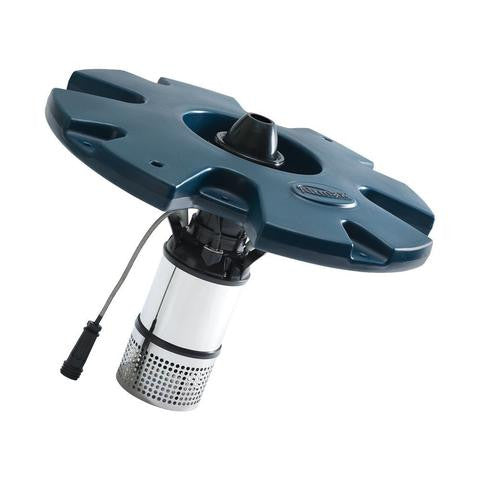
| Vertical Pump (Aspirator) | 1.2 – 1.8 | Venturi Injection | Mixing and Degassing |
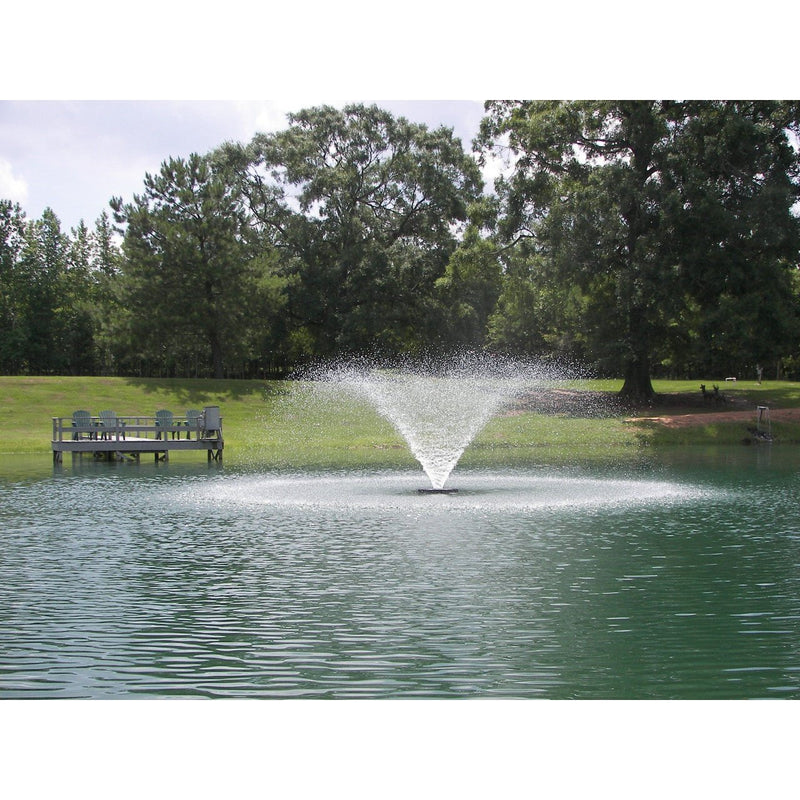
| Fountain / Splashers | 0.8 – 1.2 | Spray Patterns | Ornamental / Shallow |
Diffused air systems generally offer higher SAE in deeper water (> 2 meters) because the bubbles have a longer "hang time" to transfer oxygen as they rise. Paddlewheels are superior for shallow ponds (< 1.5 meters) where they can create strong horizontal currents to eliminate dead zones.
Practical Tips for Precision Management
Implementation of the following best practices will stabilize DO levels and protect the system from sudden crashes.
- Automated Pre-Dawn Verification: Configure IoT sensors to trigger alarms when DO drops below 4.0 mg/L. Do not wait for visual signs of fish gasping at the surface (piping), as biological damage has already occurred by that stage.
- Strategic Feeding Windows: Link feeding schedules to oxygen availability. Feeding should occur when DO is rising (mid-morning) and should be reduced if pre-dawn levels were lower than 3.0 mg/L. Digestion consumes significant amounts of oxygen.
- Optical Sensor Maintenance: Wipe the optical cap of LDO sensors weekly to remove biofouling. Calibrate the sensor in water-saturated air every 3 to 6 months depending on the organic load of the pond.
- Diffuser Placement: Distribute fine-bubble diffusers in a grid pattern or place them in front of paddlewheels to maximize bubble retention time.
Advanced Considerations: Automation and Algorithms
Serious practitioners are moving beyond manual control toward automated aeration logic. Modern systems utilize Proportional-Integral-Derivative (PID) controllers to adjust aerator speed based on real-time DO data.
Intelligent algorithms can now predict oxygen crashes before they happen by analyzing the rate of decline (slope) during the first four hours of darkness. If the system detects a steeper-than-normal decline—often caused by a sudden phytoplankton die-off or "bloom crash"—it can activate secondary aeration hours before the fish show signs of stress.
Furthermore, Variable Frequency Drives (VFDs) allow paddlewheels and blowers to run at reduced speeds during periods of high oxygen (afternoon), saving significant energy costs while maintaining enough movement to prevent stratification.
Scenario Analysis: The Heatwave Crash
Consider a 1-hectare tilapia pond with a stocking density of 5 fish per square meter. In normal conditions (25°C), the pond stays at 4.5 mg/L pre-dawn. During a summer heatwave, the temperature rises to 32°C.
According to the solubility laws, the oxygen holding capacity of the water drops by nearly 15%. Simultaneously, the metabolic rate of the tilapia increases (Q10 rule), requiring 20% more oxygen for basic respiration. If the operator maintains the same feeding rate, the organic waste decomposition will further deplete the DO. Without activating emergency aeration or reducing feed, this pond will hit an anoxic state (< 1 mg/L) by 3 AM, leading to massive losses. Accurate data and a programmed response to temperature shifts would prevent this outcome.
Final Thoughts
Mastering dissolved oxygen requires moving away from the "snapshot" mentality of the past. Success in modern aquaculture and pond management depends on a deep understanding of the diurnal cycle and the physical laws of gas transfer. By treating oxygen as a dynamic, moving target, operators can optimize their mechanical systems for maximum efficiency.
Implementing high-accuracy optical sensors and automated control logic reduces the risk of human error and mechanical failure. This technical approach not only protects the biomass but also ensures that energy and feed inputs are utilized with maximum efficiency.
Explore the integration of IoT monitoring systems and variable speed aeration to take full control of your pond's life-cycle. The transition from reactive management to proactive optimization is the hallmark of a serious practitioner.