

Why Are My Fish Dying Overnight?
Plants produce oxygen by day, but they steal it by night. Is your pond running out of air at 3 AM? Many pond owners turn off their pumps at night to save power, not realizing that night is when fish need the most help. Learn how to keep your pond 'living' around the clock.
This article examines the mechanical and biological requirements of 24/7 pond aeration. Maintaining high dissolved oxygen (DO) levels is the most critical factor in preventing mass mortality events and optimizing the nitrification process within biological filters. Understanding the diurnal oxygen cycle is the first step toward a stable aquatic environment.
Why Are My Fish Dying Overnight?
Nighttime fish mortality is almost always the result of a "dissolved oxygen sag" that occurs when the production of oxygen ceases while consumption continues or increases. During daylight hours, aquatic plants and algae undergo photosynthesis, converting solar energy, water, and carbon dioxide into carbohydrates and molecular oxygen. This process often leads to supersaturation, where DO levels exceed 100% of the water's natural carrying capacity at a given temperature.
Sunlight disappears, and the chemical process reverses. Plants, algae, and even the beneficial bacteria in the filter stop producing oxygen and begin a process called respiration. Respiration consumes oxygen to break down stored sugars for energy. Because the fish are also consuming oxygen simultaneously, the pond's total oxygen demand spikes exactly when the supply is no longer being replenished by photosynthesis.
The lowest DO concentrations typically occur just before dawn. In a heavily stocked pond or one with high organic loads, the DO level can drop from a healthy 8 mg/L at dusk to a lethal 2 mg/L by 4 AM. This rapid depletion creates a "hypoxic zone" where fish suffocate despite the water appearing clean and clear during the day.
Oxygen Solubility and Thermal Dynamics
Temperature is the primary physical constraint on how much oxygen a pond can hold. The relationship between water temperature and oxygen solubility is inverse; as the temperature rises, the water's ability to hold dissolved gases decreases.
For example, at 50°F (10°C), freshwater can hold approximately 11.3 mg/L of oxygen at 100% saturation. When the temperature rises to 86°F (30°C), that capacity drops to roughly 7.5 mg/L. This physical limitation is dangerous because fish are cold-blooded (ectothermic) organisms. Their metabolic rate—and thus their oxygen demand—increases as the water warms.
Higher temperatures force fish to require more oxygen at the exact moment the water is physically capable of holding the least. This intersection of high demand and low capacity makes summer nights the highest risk period for any pond system.
Biological Oxygen Demand (BOD) and Nitrification
Dissolved oxygen is not only consumed by fish. The total Biological Oxygen Demand (BOD) includes the requirements of aerobic bacteria that decompose organic matter and the nitrifying bacteria that convert toxic ammonia into nitrate.
Nitrification is an oxygen-intensive process. For every 1 mg of ammonia nitrogen oxidized into nitrate, approximately 4.58 mg of dissolved oxygen is consumed. If a pond experiences an ammonia spike due to overfeeding or a dead fish, the nitrifying bacteria will rapidly deplete the available DO to process the waste.
Organic "muck" or sludge at the bottom of the pond also contributes to a high BOD. Aerobic bacteria living in the sludge consume oxygen 24 hours a day. In a pond with poor circulation, the bottom layer can become anoxic (zero oxygen), leading to the production of hydrogen sulfide and methane, both of which are toxic to fish.
Mechanical Optimization: Choosing the Right Aeration Hardware
Mechanical aeration systems work by increasing the surface area of the water in contact with the atmosphere. This is achieved through two primary methods: surface agitation and subsurface diffusion.
Surface Aeration (Fountains and Waterfalls)
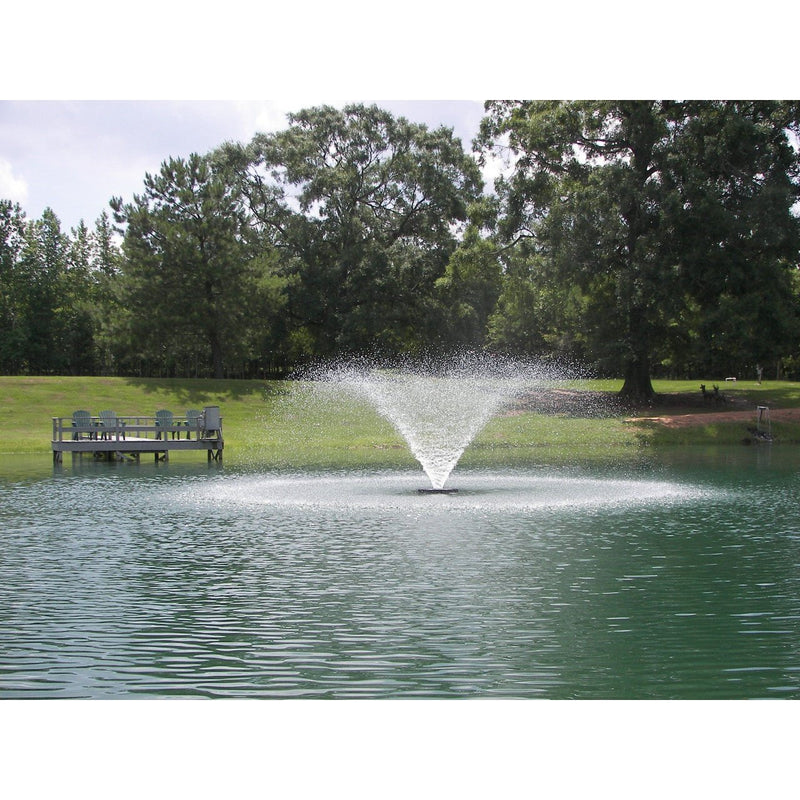
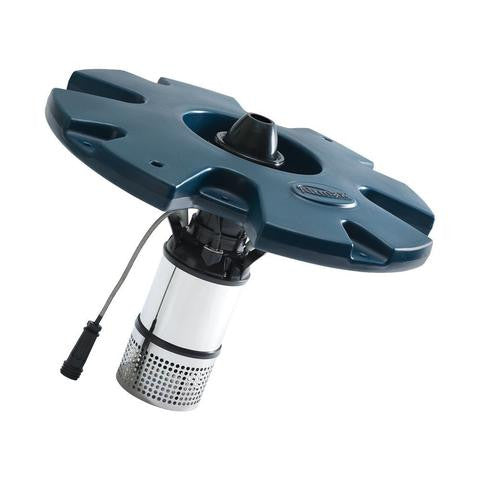
Surface aerators move water into the air. Waterfalls and fountains create turbulence that breaks the surface tension, allowing atmospheric oxygen to dissolve into the water. These systems are highly effective for shallow ponds (under 3 feet deep) where total water volume turnover is easy to achieve.
Efficiency drops significantly in deeper water. Surface units often fail to circulate the cooler, denser water at the bottom, leaving the lower depths stagnant and oxygen-depleted.
Subsurface Diffused Aeration
Diffused aeration uses an on-shore compressor to pump air through weighted tubing to diffusers (air stones) placed at the bottom of the pond. These diffusers release thousands of micro-bubbles that rise through the water column.
Oxygen transfer occurs in two ways with this method. First, a small amount of oxygen dissolves directly from the bubbles as they rise. Second, and more importantly, the rising bubbles create a "chimney effect" that pulls oxygen-poor water from the bottom to the surface, where it can interact with the atmosphere. This process is known as "induced vertical mixing" and is the most energy-efficient way to aerate deep ponds.
Benefits of Constant Aeration
Continuous 24/7 aeration provides measurable improvements in water chemistry and fish health beyond simple survival.
* Stabilized pH Levels: Nighttime respiration produces carbon dioxide (CO2), which reacts with water to form carbonic acid. This acid lowers the pH overnight. Constant aeration "off-gasses" excess CO2, preventing the dramatic pH swings that stress fish.
* Enhanced Biofiltration: Nitrifying bacteria require a minimum of 2 mg/L of DO to function, but they operate at peak efficiency only when DO levels are above 5 mg/L. Aerating the filter media directly ensures that ammonia conversion never stalls.
* Pathogen Inhibition: Many harmful anaerobic bacteria and parasites thrive in low-oxygen environments. Maintaining high DO levels throughout the water column promotes a healthy microbiome that naturally outcompetes many common pond pathogens.
* Organic Waste Reduction: Aerobic decomposition is up to 20 times faster than anaerobic decomposition. Constant oxygen at the pond floor allows bacteria to "eat" through sludge, reducing the need for manual pond cleaning.
Challenges and Common Mistakes
The most frequent error is undersizing the aeration system. A pump that provides enough air for a 1,000-gallon pond will be insufficient for a 5,000-gallon pond, especially as the fish grow and their biomass increases.
The Depth Pressure Trap
Air compressors are rated by their "open flow" CFM (cubic feet per minute), but this flow decreases as depth increases. For every 2.31 feet of water depth, the compressor must overcome 1 PSI of backpressure. A pump that produces 2.0 CFM at the surface may only produce 0.5 CFM at a depth of 6 feet. Always check the compressor's performance curve at your specific pond depth before purchasing.
Incorrect Diffuser Placement
Placing all diffusers in a single cluster creates "dead zones" in far corners of the pond. Water in these zones remains stagnant, leading to localized oxygen depletion and waste buildup. Distributing diffusers across the deepest areas of the pond ensures total volume circulation.
Limitations: When Aeration Alone is Not Enough
Aeration is a tool for gas exchange, not a cure for poor pond management. In cases of extreme eutrophication—where the water is "pea soup" green with algae—the BOD may exceed the mechanical capacity of any standard aerator.
Overstocking is another hard limit. Every pond has a "carrying capacity" based on its volume and surface area. If the fish biomass exceeds this limit, even the most powerful aeration system cannot prevent a disaster if a power failure occurs for even 30 minutes.
Comparison: Surface vs. Subsurface Aeration
| Feature | Surface Aeration (Fountains) | Subsurface Diffusion |
|---|---|---|
| Energy Efficiency | Low to Moderate | High |
| Deep Water Circulation | Poor (Top 2-3 feet only) | Excellent (Total column) |
| Aesthetics | High (Visual spray) | Low (Bubbles only) |
| Noise Level | Splashing Sound | Quiet (Compressor humming) |
| Maintenance | High (Motor in water) | Low (Compressor on shore) |
Practical Best Practices
Effective aeration requires more than just "bubbles." Optimization of the system ensures the highest OTE (Oxygen Transfer Efficiency).
* Use EPDM Diffusers: Modern EPDM (Ethylene Propylene Diene Monomer) disc diffusers produce much finer bubbles than traditional blue air stones. Finer bubbles have more surface area and stay in the water column longer, significantly increasing oxygen transfer.
* Monitor DO Directly: Relying on fish behavior (gulping at the surface) is an "emergency-only" strategy. Use a digital DO meter or a chemical test kit periodically, especially during the first few hours of a summer morning.
* Clean Diffusers Regularly: Algae and calcium deposits can clog the fine pores of a diffuser. Pulling and scrubbing the diffusers every six months maintains the correct PSI and airflow.
* Install a Backup System: Mechanical failures happen. Having a secondary, battery-operated air pump or a generator on standby is the only way to protect your investment during a power outage.
Advanced Considerations: Redox Potential and Oxygenation
Serious practitioners monitor more than just DO; they look at Oxidation-Reduction Potential (ORP), measured in millivolts (mV). ORP indicates the water's ability to "clean itself" by oxidizing organic waste.
High dissolved oxygen levels correlate with high ORP (typically 250mV to 400mV for koi ponds). When DO drops, ORP plummeting follows, signaling that the pond is shifting from an oxidizing environment to a reducing (polluting) environment. Maintaining a 24/7 aeration cycle keeps the ORP stable, ensuring that organic pollutants are neutralized as soon as they enter the system.
Saturation calculations must also account for altitude. Ponds at higher elevations have lower atmospheric pressure, which reduces the maximum possible DO saturation. A pond in Denver, Colorado, will hold approximately 17% less oxygen than a pond at sea level at the same temperature.
Scenario: Calculating Oxygen Depletion in a 2,500-Gallon Pond
Assume a 2,500-gallon pond contains 20 large koi (total weight approx. 40 kg). At 75°F (24°C), the maximum DO is 8.4 mg/L. The total available oxygen is roughly 80 grams.
Koi at rest consume approximately 150 mg of O2 per kg of body weight per hour. This group of fish consumes 6 grams of oxygen per hour. Without any aeration or photosynthesis, the fish alone would deplete the oxygen to critical stress levels (3 mg/L) in under 8 hours.
This calculation does not account for the biological filter or sludge decomposition, which can double the depletion rate. In this scenario, the "3 AM dead zone" becomes a mathematical certainty without mechanical intervention.
Final Thoughts
The transition from a "daytime-only" pond to a 24/7 living cycle is the most significant upgrade a pond owner can make. Oxygen is the fuel for every positive biological process in the water. From the digestion of food by the fish to the conversion of ammonia by bacteria, nothing functions at peak efficiency without it.
Implementing a robust subsurface aeration system removes the variables of weather and plant respiration from the equation. It provides a consistent, measurable safety margin that protects fish when they are most vulnerable.
Consistency is more valuable than raw power. A smaller aerator running 24 hours a day is often more effective than a massive fountain running for only four hours. Focus on total volume turnover and maintaining DO levels above 6 mg/L to ensure your pond remains a healthy, self-sustaining ecosystem regardless of the time of day.