

Why Are Fish Gasping At The Surface Of My Pond?
When your fish are at the surface, they aren't hungry—they're suffocating. Warm water holds less oxygen than cold water. If your fish are gasping, your 'standard' pond setup is failing the heat test. Learn the pro tricks to oxygenate your water even during a heatwave.
Maintaining a pond ecosystem requires a technical understanding of fluid dynamics and gas solubility. Oxygen does not simply exist in the water; it is forced into solution through specific physical interactions at the air-water interface. When these interactions are insufficient to meet the biological demand of the pond's inhabitants, the system enters a state of hypoxia.
A professional approach to pond management moves beyond "bubbles" and focuses on Dissolved Oxygen (DO) levels measured in milligrams per liter (mg/L). Achieving pro-level saturation requires optimizing the surface area of gas exchange and managing the variables that dictate gas solubility. This guide provides the mechanical and chemical data necessary to prevent oxygen crashes and maintain a high-performance aquatic environment.
Why Are Fish Gasping At The Surface Of My Pond?
Gasping at the surface, or "piping," is a mechanical response to a physiological crisis. Fish congregate at the surface because the thin layer of water in direct contact with the atmosphere has the highest concentration of dissolved oxygen. When the deeper layers of the pond become hypoxic, fish migrate upward to access this marginal interface.
This phenomenon is primarily driven by the inverse relationship between water temperature and gas solubility. As water temperature increases, the kinetic energy of the water molecules increases, which allows dissolved oxygen molecules to escape more easily into the atmosphere. For example, fresh water at 10°C (50°F) can hold approximately 11.3 mg/L of oxygen at saturation, whereas at 30°C (86°F), that capacity drops to approximately 7.5 mg/L.
Beyond temperature, biological oxygen demand (BOD) plays a critical role. BOD represents the amount of oxygen required by aerobic microorganisms to break down organic matter. In a pond with high waste levels or heavy algae growth, these microorganisms compete directly with fish for the limited oxygen supply. At night, when photosynthesis ceases, plants and algae stop producing oxygen and begin consuming it through respiration, often leading to lethal oxygen dips just before dawn.
The Mechanics of Gas Exchange and Dissolved Oxygen
Oxygen enters pond water through two primary pathways: atmospheric diffusion and photosynthesis. In a managed pond environment, atmospheric diffusion is the only reliable variable. This process is governed by Henry's Law, which states that the amount of dissolved gas in a liquid is proportional to its partial pressure in the gas phase above the liquid.
To increase the rate of oxygenation, you must increase the surface area where the water meets the air. This is achieved through mechanical agitation or the introduction of bubbles. However, not all bubbles are equal. The efficiency of a bubble depends on its surface-area-to-volume ratio. Smaller bubbles have a much larger surface area relative to their volume and rise more slowly through the water column, allowing more time for oxygen to transfer into the liquid phase.
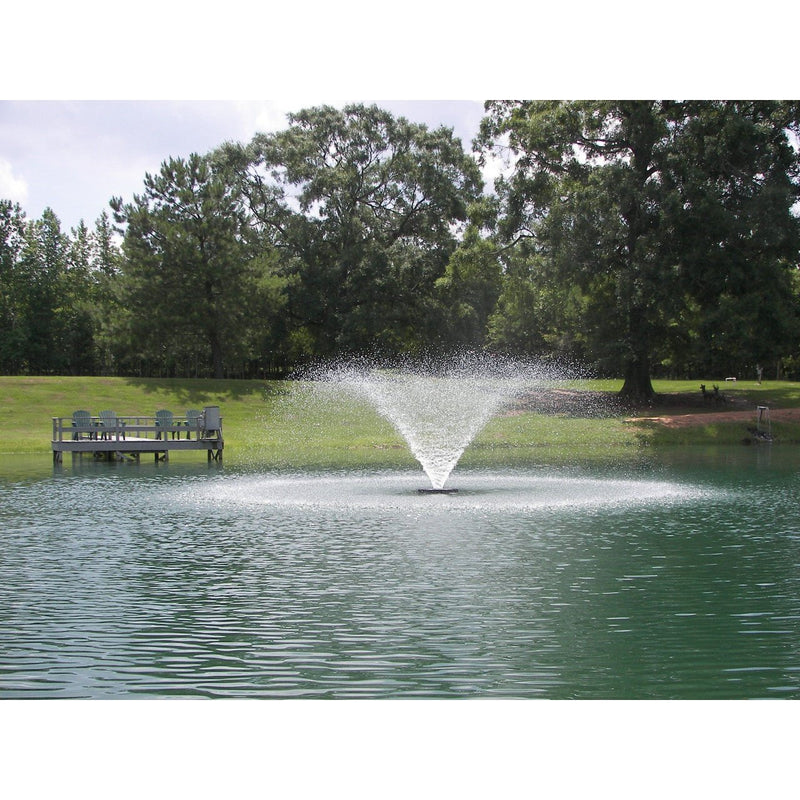
Surface agitation, such as that provided by waterfalls or fountain sprays, works by breaking the surface tension and "folding" atmospheric air into the water. While visually appealing, surface agitation is often less efficient than bottom-fed diffused aeration in deep ponds because it does not address the hypoxic zones at the pond floor. A professional setup typically utilizes a combination of both to ensure total vertical mixing.
Standard Oxygen Depletion vs Pro Dissolved Oxygen Levels
Understanding the difference between a surviving pond and a thriving pond requires looking at the specific DO metrics. Standard pond setups often hover around 5-6 mg/L during the summer, which is the bare minimum for many large fish species. Pro-level management aims for 8 mg/L or higher, regardless of temperature fluctuations.
| Metric | Standard Oxygen Levels | Pro Dissolved Oxygen Levels |
|---|---|---|
| DO Concentration | 5.0 - 6.5 mg/L | 8.0 - 10.0+ mg/L |
| Saturation % | 70% - 85% | 95% - 110% (Super-saturation) |
| Aeration Method | Waterfall or small fountain | High-volume bottom diffusers + Venturi |
| Monitoring | Visual (watching fish behavior) | Electronic DO Meters / ORP Probes |
| Fish Growth Rate | Baseline / Limited | Maximum genetic potential |
How to Oxygenate Your Pond: Professional Techniques
Increasing oxygen levels requires a strategic deployment of mechanical hardware. The goal is to maximize the Standard Aeration Efficiency (SAE), which is measured in pounds of oxygen transferred per horsepower-hour (lb O2/hp-hr). The following methods are the most effective for professional-grade results.
Diffused Aeration Systems
Diffused aeration involves an onshore compressor pumping air through a weighted hose to a diffuser membrane located at the bottom of the pond. This is the most efficient method for deep-water oxygenation. As the bubbles rise, they create an "airlift" effect, pulling oxygen-poor water from the bottom to the surface for gas exchange.
For maximum efficiency, use EPDM membrane diffusers that produce "fine bubbles" (less than 3mm in diameter). These diffusers provide a massive surface area for gas transfer. Ensure the compressor is rated for continuous duty and sized according to the pond's total volume and depth; backpressure increases with depth, which can reduce the airflow (CFM) of the pump.
Venturi Injectors
A Venturi injector is a high-efficiency device that uses the pressure differential of flowing water to vacuum air into the pipework. This air is then sheared into microscopic bubbles and blasted into the pond. Venturis are highly effective because they can be integrated into existing filtration returns.
The technical advantage of a Venturi is that it mixes air and water under pressure within the pipe, which increases the rate of dissolution. If you are using a high-pressure pump for your filtration, adding a Venturi is one of the most cost-effective ways to boost DO levels without adding a second electrical component.
Surface Aerators and Splashers
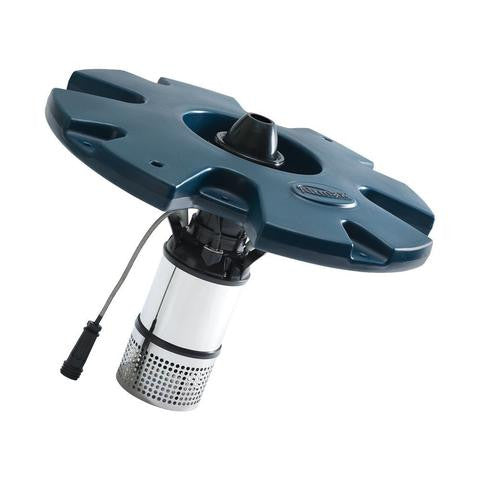
Surface aerators, often seen in aquaculture and commercial koi facilities, use a motor-driven impeller to throw water into the air. This provides rapid degassing (removing CO2 and ammonia) while simultaneously oxygenating the water. These units are highly effective during emergency oxygen crashes because they move massive volumes of water quickly.
Benefits of High Dissolved Oxygen Levels
Optimizing DO levels provides benefits that extend far beyond simply keeping fish alive. High oxygen concentrations are the engine behind the nitrogen cycle. The nitrifying bacteria (Nitrosomonas and Nitrobacter) that convert toxic ammonia into nitrate are aerobic; their metabolic rate is directly tied to oxygen availability.
When DO levels are maintained at 8 mg/L or higher, the biological filter operates at peak efficiency. This prevents "new pond syndrome" and ammonia spikes. Furthermore, fish in oxygen-rich environments exhibit higher feed conversion ratios. This means they can digest food more efficiently, leading to faster growth and improved immune system function.
High DO levels also facilitate the aerobic decomposition of organic "muck" at the bottom of the pond. This reduces the buildup of hydrogen sulfide and methane gases, which are toxic to aquatic life. In essence, oxygen is the primary cleaning agent in a self-sustaining pond ecosystem.
Challenges and Common Pitfalls
The most common mistake in pond oxygenation is relying solely on a waterfall. While waterfalls provide some aeration, their efficiency is limited to the top few inches of water. In deep ponds, this leads to thermal stratification, where a warm, oxygen-rich layer sits on top of a cold, hypoxic layer. If the pond "turns over" suddenly due to a heavy rainstorm or temperature drop, the hypoxic water can mix and suffocate the fish instantly.
Another pitfall is the failure to account for "Nighttime Oxygen Sag." As mentioned previously, aquatic plants and algae consume oxygen at night. A pond that looks perfectly healthy at 2:00 PM may be in a lethal state at 4:00 AM. Many hobbyists turn off their pumps or waterfalls at night to save electricity or reduce noise—this is the most dangerous time to do so.
Maintenance of aeration equipment is also frequently overlooked. Diffuser membranes can become clogged with "biofouling" (algae and mineral deposits), which increases backpressure and reduces oxygen output. Compressors require regular air filter changes and diaphragm replacements to maintain their CFM ratings. A drop in mechanical performance often goes unnoticed until the fish start gasping.
Limitations of Aeration Systems
Aeration systems have physical limits governed by atmospheric pressure. You cannot force more oxygen into water than the laws of physics allow at a given altitude and temperature without using specialized equipment like oxygen cones or pure oxygen injection. For most backyard ponds, "saturation" is the practical ceiling.
Furthermore, aeration cannot compensate for extreme overstocking. Every fish adds to the total BOD. If the fish biomass exceeds the pond's carrying capacity, even the most advanced aeration system will eventually fail to keep up during a heatwave. Professional practitioners use the "inch of fish per gallon" rule only as a loose starting point, preferring to monitor DO and ammonia levels to determine true carrying capacity.
Practical Tips for Heatwave Oxygen Management
- Increase Flow Rates: During a heatwave, run all pumps and aerators at 100% capacity 24/7. Never shut down aeration at night.
- Lower Water Temperature: Use shade sails to reduce direct UV exposure on the pond surface. Cooler water naturally holds more oxygen.
- Stop Feeding: Digestion requires significant oxygen. During an oxygen crisis or extreme heat, stop feeding your fish. This reduces both the fish's metabolic oxygen demand and the waste load on the filter.
- Perform Partial Water Changes: If DO levels are crashing, a partial water change with cooler, dechlorinated water can provide an immediate (though temporary) boost in oxygen and a reduction in temperature.
- Clean the Pre-filters: Ensure that mechanical filters are clear of debris. Clogged filters reduce flow rates, which in turn reduces the efficiency of Venturis and waterfalls.
Advanced Considerations: Monitoring and Automation
For the serious practitioner, relying on visual cues is insufficient. Digital DO meters provide real-time data on oxygen concentrations. Many advanced pond controllers can be programmed to trigger secondary aeration systems if DO levels drop below a certain threshold (e.g., 6.5 mg/L).
Oxidation-Reduction Potential (ORP) is another critical metric. ORP measures the "cleanness" of the water or its ability to break down waste. There is a strong correlation between high DO levels and high ORP levels. Monitoring ORP can provide an early warning of an impending oxygen crash before the fish show signs of distress. A stable ORP of 300mV to 400mV typically indicates a well-oxygenated, healthy system.
Scaling a system for large koi or heavy stocking also requires looking at "turnover rate." A professional pond should have its total volume pass through the filtration and aeration system at least once per hour. In high-performance setups, this can be as frequent as every 30 minutes.
Example Scenario: Managing a 3,000-Gallon Pond in 95°F Weather
Consider a 3,000-gallon pond stocked with 15 large koi. In 70°F weather, a standard 40W air pump might maintain 7.0 mg/L DO. However, as the air temperature hits 95°F and the water temperature climbs to 85°F, the oxygen saturation point drops significantly.
In this scenario, the practitioner should:
1. Deploy a second 40W air pump to double the bubble volume.
2. Ensure the diffusers are placed in the deepest part of the pond to break up thermal stratification.
3. Install a shade sail to prevent the water from exceeding 85°F.
4. Monitor DO levels every 4 hours. If the level drops below 6.0 mg/L, bypass the biological filter (if possible) and increase surface splashing to maximize CO2 off-gassing, which can sometimes help fish cope with lower DO levels.
Final Thoughts
Oxygen management is the single most important factor in successful pond keeping, especially during the summer months. By moving from a "standard" understanding of aeration to a "pro" focus on dissolved oxygen metrics, you can create an environment that not only keeps fish alive but allows them to thrive. The physics of gas solubility are non-negotiable; therefore, your mechanical systems must be engineered to handle the worst-case scenario.
Focus on maximizing surface area, utilizing fine-bubble diffusion, and maintaining equipment to its highest specification. When you treat oxygen as a measurable nutrient rather than an invisible background element, you gain total control over the health and stability of your aquatic ecosystem. Experiment with different diffuser placements and monitoring tools to find the optimal configuration for your specific pond volume and fish load.