What Is The Thermocline In A Pond?
The bottom half of your pond might be a 'dead zone' right now. The thermocline is a thermal barrier that traps toxic gases at the bottom. If you don't break it, your pond is only half-alive.
Thermal stratification is a physical phenomenon dictated by the nonlinear relationship between water temperature and density. In a static water column, solar radiation preferentially heats the surface layer, reducing its density relative to the cooler, deeper water. This creates a vertical gradient where the less dense water floats atop the denser, colder mass, effectively isolating the lower reaches from atmospheric interaction. This separation is not merely a temperature difference; it is a mechanical barrier that prevents the transfer of oxygen and facilitates the accumulation of anaerobic byproducts.
Establishing an integrated water column requires understanding the specific gravity of water and the energy required to overcome the buoyant forces holding these layers in place. Without active intervention, a pond remains divided into two distinct biological zones: a productive, oxygenated upper layer and a stagnant, toxic abyss.
What Is The Thermocline In A Pond?
The thermocline, technically known as the metalimnion, is the transition layer between the warm surface water (epilimnion) and the cold bottom water (hypolimnion). It is defined by a rapid change in temperature over a small change in depth. In most temperate freshwater systems, a temperature drop of one degree Celsius per meter of depth is the standard threshold for identifying this zone.
In a stratified pond, the epilimnion remains in contact with the atmosphere, allowing for continuous oxygen exchange and photosynthesis. However, the thermocline acts as a physical seal. Because water reaches its maximum density at 3.98°C (39.16°F), the colder water in the hypolimnion is significantly heavier than the sun-warmed surface water. This density differential is so profound that even high winds often lack the kinetic energy to force these layers to mix.
Consequently, the hypolimnion becomes an isolated system. Once the initial dissolved oxygen (DO) from the spring turnover is consumed by microbial decomposition, it cannot be replenished. This leads to anoxic conditions where oxygen levels drop to 0 mg/L. In this state, the bottom of the pond—the 'Isolated Abyss'—ceases to support aerobic life and instead becomes a laboratory for anaerobic chemistry.
Mechanics of Stratification and Thermal Density
Understanding the thermocline requires an analysis of water’s unique thermodynamic properties. Unlike most liquids, water does not have a linear density-to-temperature ratio. The density difference between 20°C and 25°C is much greater than the difference between 5°C and 10°C. This means that as summer progresses and surface temperatures rise, the resistance to mixing (known as the Relative Thermal Resistance to Mixing or RTRM) increases exponentially.
Solar radiation (shortwave) penetrates the water but is absorbed rapidly. Most of the heat energy is concentrated in the top 2–4 feet. As the epilimnion warms, the density gap between it and the hypolimnion widens. In a 10-foot deep pond, the thermocline may sit at 5 or 6 feet, leaving 40% of the pond's total volume completely devoid of oxygen.
This stratification is further reinforced by the lack of light in the lower depths. Without light, photosynthesis—the primary driver of submerged oxygen production—cannot occur. The hypolimnion essentially becomes a "sink" for organic matter. Dead algae, leaf litter, and fish waste drift down through the thermocline and settle on the bottom, where they are consumed by anaerobic bacteria.
How It Works: Mechanical Destratification
Breaking the thermocline involves a process called mechanical destratification. The objective is to move enough volume from the bottom to the surface to eliminate the temperature/density gradient, creating an 'Integrated Column.' The most efficient method for achieving this is through bottom-diffused aeration.
A shoreline-mounted compressor pumps air through weighted tubing to a diffuser manifold located at the pond's deepest point. The diffuser breaks the air into millions of micro-bubbles (typically 0.5 to 3 millimeters in diameter). As these bubbles rise, they act as a "lift" system through a mechanism known as an airlift pump effect.
As the bubbles ascend, they displace water, dragging the cold, dense, oxygen-poor water from the hypolimnion toward the surface. This creates a vertical current that physically ruptures the thermocline. Once the bottom water reaches the surface, it spreads out, releases accumulated gases like methane (CH4) and hydrogen sulfide (H2S), and absorbs oxygen from the atmosphere.
Engineering a destratification system requires calculating the turnover rate. A standard benchmark for healthy pond management is a minimum of one full turnover of the entire water volume every 24 hours. For high-biomass environments or ponds with significant organic loading, a turnover rate of 2 times per day may be required to maintain a homogenized oxygen profile.
Benefits of an Integrated Water Column
The transition from an isolated abyss to an integrated column provides measurable improvements to the pond's chemical and biological stability.
- Aerobic Mineralization: With oxygen present at the sediment-water interface, aerobic bacteria can flourish. These organisms are significantly more efficient at decomposing organic muck than their anaerobic counterparts. This leads to a reduction in "black muck" and prevents the accumulation of pond sludge.
- Nutrient Sequestration: In anoxic conditions, phosphorus—a primary driver of algae blooms—is released from the sediments into the water column. Maintaining oxygen at the bottom binds phosphorus to iron and other minerals in the soil, effectively locking it away and starving algae of a key nutrient.
- Thermal Stability: Destratification eliminates the risk of sudden "pond turnover." A sudden cold rain or windstorm can cause a stratified pond to mix all at once, sending a massive "slug" of anoxic, toxic water into the surface layer. This often results in catastrophic fish kills. An integrated column prevents this by maintaining uniform conditions year-round.
- Expanded Habitat: When the thermocline is broken, the entire volume of the pond becomes habitable. Fish are no longer compressed into the top few feet of water but can utilize the cooler, oxygenated water at the bottom, reducing stress during peak summer heat.
Challenges and Common Mistakes
The most frequent error in pond management is undersizing the aeration system. If the compressor does not move a sufficient volume of air, the vertical current will be too weak to break the thermocline. Instead of destratifying the pond, the bubbles may only aerate a small "chimney" of water, leaving the rest of the hypolimnion stagnant.
Another critical mistake is the "cold start" of a system in mid-summer. If an aeration system is installed in a heavily stratified pond in July, it must be started gradually. Turning the system on at full capacity immediately will force all the trapped toxic gases and anoxic water to the surface at once, which can kill fish within hours. A phased startup—running the system for 30 minutes the first day, 60 minutes the second, and doubling each day thereafter—is the industry-standard protocol for avoiding turnover shock.
Failure to account for diffuser placement is also a common pitfall. Diffusers must be placed at the deepest point to maximize the lift of the bubble column. Placing a diffuser in shallow water fails to move the coldest, densest water, leaving the deepest "pockets" of the pond unmanaged.
Limitations of Mechanical Destratification
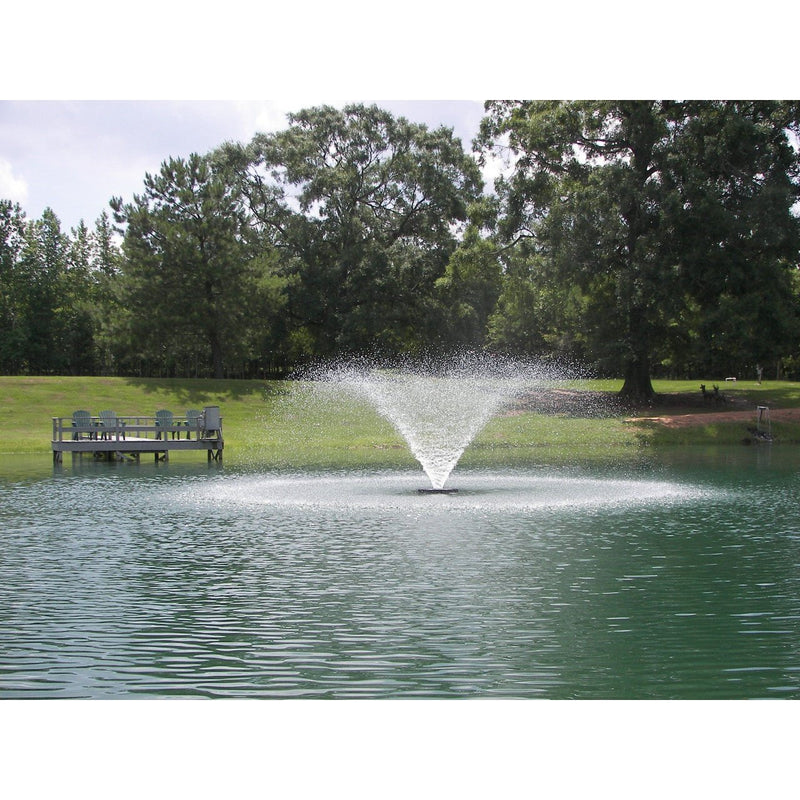
While destratification is a powerful tool, it is not a universal solution for every aquatic environment. In very shallow ponds (less than 5–6 feet deep), thermal stratification is rarely the primary issue because wind action is usually sufficient to mix the water column. In these cases, surface aeration or fountains may be more appropriate for aesthetic and localized oxygenation.
In extremely large reservoirs or lakes, the energy requirements to fully destratify the water column can be cost-prohibitive. For bodies of water over 20 acres, management often shifts from full destratification to "refuge aeration," where specific zones are kept oxygenated for fish survival rather than attempting to homogenize the entire lake.
Environmental conditions such as high salinity can also complicate destratification. Saltwater is denser than freshwater, and if a pond has significant salt stratification (a halocline) in addition to a thermocline, the energy required to mix the layers increases significantly.
Technical Comparison: Bottom Diffusion vs. Surface Fountains
The choice between bottom diffusion and surface fountains is often a choice between efficiency and aesthetics. The table below outlines the mechanical performance metrics of each system.
| Feature | Bottom-Diffused Aeration | Surface Fountains |
|---|---|---|
| Oxygen Transfer Efficiency | High (increases with depth) | Low to Moderate |
| Destratification Capability | Full water column mixing | Surface layer only |
| Operating Cost | Low (0.25 - 0.75 HP typical) | High (1.0 - 5.0+ HP typical) |
| Muck Reduction | Direct (aerates sediments) | Indirect (minimal effect) |
| Visual Appeal | Minimal (rising bubbles) | High (decorative patterns) |
Bottom diffusers are notably 5 to 10 times more efficient at transferring oxygen into the water than surface fountains. For every kilowatt-hour of electricity, a diffuser moves a significantly larger volume of water and dissolves more oxygen due to the increased pressure and contact time of the bubbles as they travel from the floor to the surface.
Practical Tips for Pond Management
To optimize your pond's vertical integration, follow these best practices:
- Measure the Profile: Use a dissolved oxygen and temperature meter to map your pond's vertical profile. Take readings every 2 feet. If you see a sudden drop in temperature or oxygen, you have confirmed the location of your thermocline.
- Monitor Methane Release: If you notice a "rotten egg" smell near your pond, it is a sign that the hypolimnion is producing hydrogen sulfide. This is an immediate indicator that your pond is stratified and the bottom is anoxic.
- Check Compressor PSI: For bottom diffusers, the compressor must overcome the backpressure of the water. Each foot of depth adds approximately 0.43 PSI of resistance. Ensure your compressor is rated for the depth of your pond to prevent premature motor failure.
- Clean Diffusers Periodically: Biofilm and calcium deposits can clog fine-pore diffusers over time. Annual cleaning or "burping" the lines with a small amount of dilute acid (where permitted) ensures the micro-bubbles remain small and the lift remains efficient.
Advanced Considerations: Redox Potential and Phosphorus Binding
For practitioners looking to optimize sediment health, the concept of Reduction-Oxidation (Redox) potential is vital. In a stratified pond, the lack of oxygen leads to a low (negative) redox potential. In this reducing environment, insoluble phosphorus (bound to iron) becomes soluble and dissolves back into the water. This process is called "internal loading."
Even if you stop all nutrient runoff from the land, a stratified pond will continue to "feed" its own algae blooms from the phosphorus trapped in its bottom muck. By using aeration to maintain a high (positive) redox potential at the sediment interface, you ensure that the iron remains oxidized (Ferric), which keeps the phosphorus chemically locked in the soil. This technical intervention is often more effective at long-term algae control than the repeated use of chemical algaecides.
Example Scenario: The 1-Acre Farm Pond
Consider a 1-acre farm pond with a maximum depth of 12 feet. In July, this pond likely has a thermocline at 6 feet.
The Isolated Abyss: The bottom 6 feet of the pond (approximately 3 acre-feet of water) contains zero oxygen. It is accumulating ammonia and methane. The water temperature at the bottom is 55°F, while the surface is 85°F.
The Integration Strategy: A 1/2 HP rocking piston compressor is installed with two diffusers placed at the 12-foot mark. The system moves 3.5 cubic feet of air per minute (CFM).
The Result: Within 48 hours of full operation, the temperature at the 12-foot depth rises to 78°F, and the surface temperature drops to 81°F. More importantly, the dissolved oxygen at the bottom increases from 0 mg/L to 6.5 mg/L. The "dead zone" is eliminated, and aerobic bacteria begin to digest the organic matter on the floor, effectively "cleaning" the pond from the bottom up.
Final Thoughts
The presence of a thermocline is a natural state for any deep body of water, but it is an inherently limiting one. In a managed pond environment, stratification represents a loss of biological potential and a significant risk to the stability of the ecosystem. By understanding the mechanics of water density and the chemical consequences of anoxia, you can take precise steps to bridge the gap between the surface and the floor.
Establishing an integrated water column through mechanical destratification is the single most impactful intervention a pond owner can make. It converts the "Isolated Abyss" into a functional, aerated habitat, ensuring that the entire volume of your pond is working to support a healthy, balanced ecosystem. Experimenting with turnover rates and monitoring the oxygen profile will allow you to tune your system for maximum efficiency and long-term clarity.