

The Most Important Pond Water Test Most Owners Never Run
The Most Important Pond Water Test Most Owners Never Run
When pond owners think about water testing, they usually think about pH, ammonia, nitrate, phosphorus, alkalinity, or hardness.
Those are all useful measurements.
But if you have fish in your pond, one of the most important things you can measure is something many pond owners never test at all:
Dissolved oxygen.
Dissolved oxygen, usually shortened to DO, is simply the amount of oxygen available in the water for fish and other aquatic organisms.
The reason it deserves so much attention is simple: many water-quality problems develop gradually. Low oxygen can become serious very quickly.
A pond can look perfectly healthy from the bank and still have an oxygen problem developing below the surface.
Why Dissolved Oxygen Matters So Much
Fish need oxygen just as we do. They simply obtain it from water rather than air.
But fish aren't the only things using oxygen in a pond.
Bacteria use oxygen while decomposing organic material. Insects and other aquatic organisms consume it. Aquatic plants and algae produce oxygen during daylight through photosynthesis, but they also consume oxygen through respiration.
That creates a constantly changing oxygen balance.
During a sunny day, algae and aquatic plants can produce substantial amounts of oxygen.
After sunset, photosynthesis stops.
Fish, plants, algae, bacteria, and other organisms continue consuming oxygen throughout the night.
The result is a normal daily cycle:
Oxygen generally rises during daylight and falls overnight.
That leads to one of the most useful things a pond owner can know about oxygen testing.
If You Only Test Once, Test Around Sunrise
Testing dissolved oxygen at 2:00 in the afternoon can give you a very different picture than testing the same pond early in the morning.
By afternoon, several hours of photosynthesis may have increased oxygen levels substantially.
The lowest oxygen level of the day commonly occurs around dawn, after the pond has gone through an entire night without photosynthesis.
So if you want to know how close your pond is getting to an oxygen problem, early morning is usually the most revealing time to test.
This is also why fish suffering from low oxygen are commonly seen near the surface early in the morning.
By afternoon, the same fish may appear perfectly normal.
What Is a Good Dissolved Oxygen Level?
There isn't one universal dissolved oxygen number that applies to every fish species and every situation.
Coldwater fish such as trout generally require more oxygen than many warmwater species. Water temperature, fish species, fish size, and the length of time fish are exposed to low oxygen all matter.
For a typical warmwater pond, however, these numbers provide a useful general guide:
5 mg/L and above: Generally a comfortable range for many warmwater pond fish.
3–5 mg/L: Worth paying attention to, particularly if the reading is taken early in the morning or appears to be declining.
Below about 3 mg/L: Increasingly stressful for many fish, especially if low oxygen persists.
Around 1–2 mg/L: Potentially dangerous. Fish may begin congregating near the surface or wherever they can find more oxygen.
These shouldn't be treated as absolute lines between "safe" and "deadly."
A brief exposure to moderately low oxygen isn't the same as remaining at that level for hours. Different fish also tolerate low oxygen differently.
The trend and duration matter along with the number.
Don't Just Test the Surface
This is probably the second biggest mistake people make when checking dissolved oxygen.
They take one reading near the surface and assume it represents the entire pond.
In a shallow, well-mixed pond, it might.
In a deeper pond during summer, it may not be remotely representative of what's happening below.
Warm weather can cause a pond to develop distinct temperature layers, a condition known as thermal stratification.
The upper layer receives sunlight, interacts with the atmosphere, and usually contains considerably more oxygen.
The deeper water is isolated from the surface. Little or no photosynthesis may occur there, while bacteria and other organisms continue consuming oxygen as organic material decomposes.
Eventually, you can have a pond with plenty of oxygen near the surface and very little oxygen near the bottom.
A surface reading alone won't show you that.
Build an Oxygen Profile
If you have a DO meter with a long enough probe cable, one of the most useful pond tests you can perform is an oxygen profile.
Instead of taking one reading, take measurements at several depths.
For example, in a 12-foot pond you might check:
-
Just below the surface
-
3 feet
-
6 feet
-
9 feet
-
Near the bottom
If your meter also measures temperature, record that at the same depths.
You may find something like this:
Surface: good oxygen, warm water
Mid-depth: oxygen beginning to decline
Bottom: cooler water with very little oxygen
That tells you much more about what's happening in the pond than a single surface measurement.
It can also help identify whether the pond is strongly stratified and how much of the total water column is actually providing usable fish habitat.
Why Warm Weather Is Especially Important
Summer is when we pay particularly close attention to dissolved oxygen.
There are several reasons.
First, warm water physically holds less oxygen than cold water.
At the same time, fish, bacteria, algae, and other organisms are generally more biologically active in warm conditions.
So just when the pond's ability to hold oxygen is declining, biological oxygen demand can be increasing.
Add a heavy algae bloom, several hot cloudy days, a large amount of decaying vegetation, or a sudden algae die-off and oxygen levels can fall even further.
Hot, calm summer weather deserves particular attention.
Algae Can Produce Oxygen—and Cause Oxygen Problems
Pond owners understandably tend to think of algae only as a problem.
But microscopic algae, or phytoplankton, can be an important source of oxygen in a pond during daylight.
The problem comes when the pond becomes too dependent on a large algae population.
A dense bloom can produce large amounts of oxygen on a sunny afternoon while consuming oxygen at night.
Then something changes.
Several cloudy days reduce photosynthesis.
A weather event disrupts the bloom.
The algae naturally collapse.
Or a large amount of algae is killed with an algaecide.
Now oxygen production drops while bacteria begin decomposing all that dead organic material.
That combination can produce a serious oxygen shortage.
This is one reason we generally advise against treating large amounts of aquatic vegetation or algae all at once, particularly during hot weather.
Watch for Sudden Changes in Water Color
Your eyes can sometimes give you an early warning that checking oxygen would be a good idea.
Suppose your pond has been strongly green for several weeks.
Then you walk outside and notice that the water suddenly looks brown, gray, or unusually clear.
That can indicate a major change or die-off in the phytoplankton population.
It doesn't automatically mean you're going to have a fish kill.
But during hot weather, it is a very good reason to pay attention.
Check the pond early the next morning.
If you have a DO meter, use it.
If you don't, watch the fish.
Fish Can Be Your Warning System
One of the classic signs of dangerously low oxygen is fish gathering near the surface and appearing to gulp or "pipe" for air.
You may also see fish congregating around:
-
A fountain
-
A surface aerator
-
An incoming stream
-
A waterfall
-
A water discharge
-
Other areas where oxygen levels are higher
Larger fish may show stress before smaller fish because their oxygen requirements are greater.
If fish are actively gasping at the surface, don't wait until you have a DO measurement before responding.
Start aerating.
At that point, rapidly creating an oxygenated refuge can be more important than diagnosing exactly why the oxygen dropped.
What Kind of DO Meter Do You Need?
You don't necessarily need laboratory-grade equipment to learn something useful about your pond.
Chemical DO Test Kits
Chemical test kits can provide useful basic dissolved oxygen measurements without the expense of an electronic meter.
They're slower to use and aren't as convenient for taking measurements at many depths, but they can still tell you whether oxygen is becoming dangerously low.
Basic Electronic DO Meters
For pond owners who want to monitor oxygen more regularly, a decent portable dissolved oxygen meter can be very useful.
The ability to take repeated readings quickly makes it much easier to compare morning versus afternoon oxygen and measure different depths.
Follow the manufacturer's instructions for calibration and maintenance. A poorly maintained meter can provide very convincing-looking numbers that aren't accurate.
Optical DO Meters
Optical dissolved oxygen meters are commonly used by professionals because they're convenient, stable, and generally require less maintenance than some traditional probe technologies.
They're excellent tools, but most recreational pond owners don't need to purchase an expensive professional meter simply to understand what's happening in their pond.
The important thing isn't owning the most expensive instrument.
It's knowing when, where, and why to test.
How Aeration Changes the Picture
Aeration can help improve dissolved oxygen conditions, but different aeration systems work in different ways.
Bottom-diffused aeration uses rising bubbles to create a water-lifting plume. This circulation can bring deeper water toward the surface, where gases can exchange with the atmosphere, while helping reduce strong thermal and oxygen stratification.
Surface aerators aggressively mix water with the atmosphere near the surface and can be particularly useful when rapid oxygenation is needed or when the pond is relatively shallow.
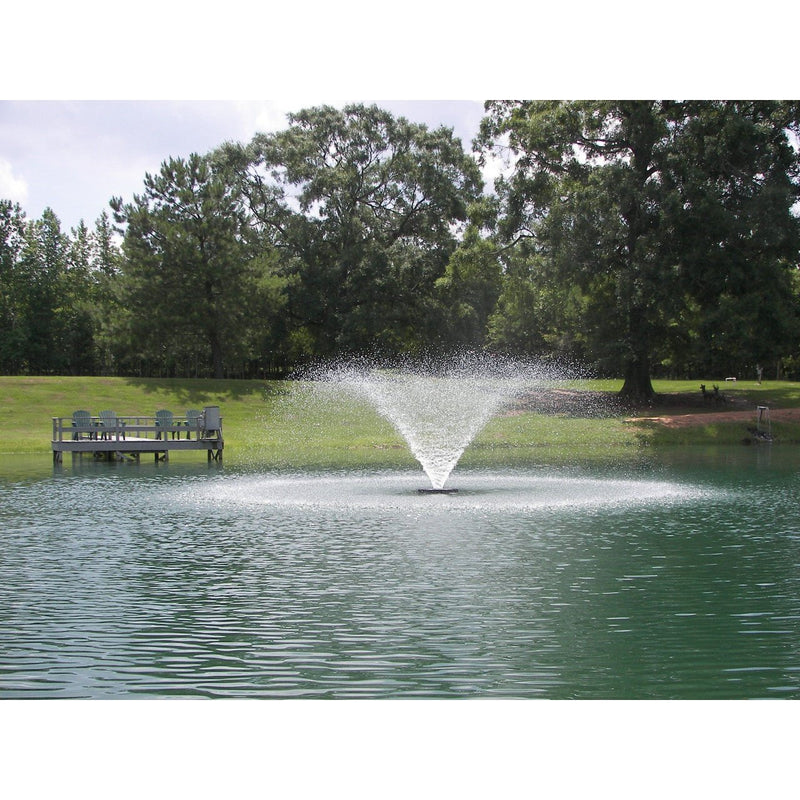
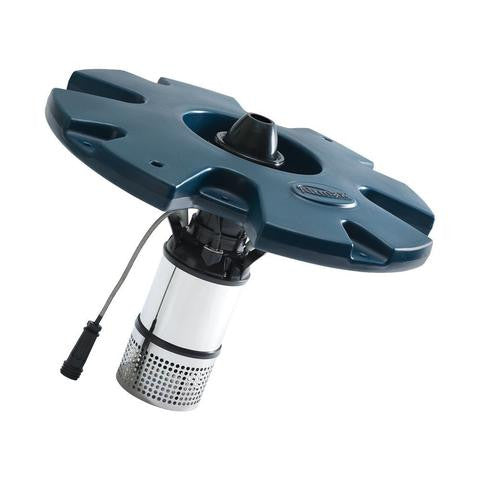
Pond fountains also provide surface circulation and gas exchange while adding an attractive display. Depending on the pond and fountain design, they can be a very practical combination of aesthetics and aeration.
The best approach depends on pond depth, shape, fish population, water quality, and the reason you're aerating in the first place.
Aeration Doesn't Eliminate the Need to Pay Attention
It's tempting to install an aeration system and assume oxygen can never become a problem again.
That's not necessarily true.
An undersized system, failed compressor, clogged diffuser, power outage, excessive organic load, major algae die-off, or unusual weather event can change conditions.
Aeration greatly improves our ability to manage oxygen, but it doesn't make the pond immune to every possible oxygen problem.
Occasional observation and testing are still worthwhile, especially if you have a valuable fish population.
When Should You Test Dissolved Oxygen?
You don't necessarily need to test every day.
For most recreational pond owners, DO testing is particularly useful:
-
During hot summer weather
-
Around sunrise
-
After several cloudy days
-
During or following a heavy algae bloom
-
After a sudden change in water color
-
Following treatment of significant algae or vegetation
-
When fish behave unusually
-
When evaluating an aeration system
-
When trying to determine whether deeper water has adequate oxygen
-
Before and after making major changes to pond circulation
Taking readings at different times and depths can be even more useful than taking a large number of random measurements.
You're looking for patterns.
A Pond Can Look Fine and Still Have an Oxygen Problem
That's ultimately what makes dissolved oxygen different from many other pond measurements.
You can't see it.
The water may be clear.
The fish may have looked normal yesterday afternoon.
The pH may be perfectly acceptable.
And there can still be very little oxygen in part of the pond—or the entire pond may be approaching a dangerously low level before sunrise.
That's why dissolved oxygen is one of the most valuable measurements a pond owner can make.
If you're going to invest in water testing, don't focus only on what's easy to measure.
Measure what the fish actually need.
And if you're only going to check dissolved oxygen once to see how your pond is doing, don't choose the middle of a sunny afternoon.
Get up early and check it around sunrise.
That reading may tell you more about your pond than almost any other water test you run.