

The Best Time Of Day To Run A Pond Aerator
Running your aerator at the wrong time is like watering your lawn in the rain. Learn the biological 'Golden Hours.' Most pond owners run their aerators when they are looking at the pond. But the fish need it most when you are asleep. Here is the ideal schedule for maximum health.
Efficient pond management requires more than just mechanical hardware; it demands an understanding of the aquatic respiratory cycle. Maintaining a stable environment for fish and aerobic bacteria depends on managing Dissolved Oxygen (DO) levels, which fluctuate significantly throughout a 24-hour period. While an aerator may provide aesthetic value during the day, its biological utility peaks during specific windows of high demand and low natural production.
The difference between a thriving ecosystem and a catastrophic fish kill often comes down to the timing of oxygen delivery. In high-density environments, the natural processes of photosynthesis and respiration create a volatile oxygen curve. Managing this curve through scheduled aeration is the primary method for stabilizing water chemistry and preventing the accumulation of toxic gases like ammonia and hydrogen sulfide.
The Best Time Of Day To Run A Pond Aerator
The primary window for operating a pond aerator is from dusk until shortly after dawn. This period, often termed the "Golden Hours" of aeration, typically spans from 10:00 PM to 8:00 AM. Data-driven management identifies this as the critical time because natural oxygen production ceases when the sun sets, while biological oxygen demand (BOD) remains constant or increases due to the metabolic needs of fish, plants, and decomposing bacteria.
During daylight hours, phytoplankton and aquatic plants engage in photosynthesis, converting solar energy and carbon dioxide into oxygen. In a healthy pond with an active algal bloom, DO levels can reach supersaturation (over 100% saturation) by late afternoon. However, the system reverses at night. Without sunlight, these same plants stop producing oxygen and begin consuming it through respiration. This creates a "DO sag" that reaches its lowest point just before sunrise.
Operating an aerator during the afternoon when DO levels are already high is mechanically inefficient. The rate of oxygen transfer into water is governed by the saturation deficit; the closer the water is to its maximum oxygen capacity, the less oxygen an aerator can successfully transfer. Conversely, running the system at night when DO levels are low maximizes the Standard Oxygen Transfer Rate (SOTR), ensuring that every watt of electricity translates into the maximum possible amount of dissolved gas.
Thermodynamics and Gas Exchange: How Aeration Works
Aeration relies on the physical principle of gas transfer across the air-water interface. This process is quantified by Henry’s Law, which states that the amount of dissolved gas in a liquid is proportional to its partial pressure in the gas phase above it. In practical pond terms, the aerator works by increasing the surface area of the water and creating turbulence, which facilitates the escape of trapped gases and the absorption of atmospheric oxygen.
Bubble size is a critical factor in oxygen transfer efficiency (OTE). Fine-bubble diffused aeration systems generate millions of tiny bubbles that have a much higher surface-area-to-volume ratio compared to larger bubbles. As these bubbles rise from the bottom of the pond, they transfer oxygen through the bubble wall into the surrounding water. The longer the bubble stays in contact with the water—a factor determined by the depth of the pond—the more oxygen is transferred.
Vertical mixing is a secondary but equally vital function of aeration. In many ponds, thermal stratification creates layers of water with different densities. The top layer (epilimnion) is warm and oxygen-rich, while the bottom layer (hypolimnion) is cold and often anoxic (void of oxygen). A bottom-diffused aerator acts as a laminar pump, lifting the cold, deoxygenated water from the bottom and bringing it to the surface where it can shed toxic gases and absorb oxygen from the atmosphere.
Benefits of Strategic Nighttime Aeration
Implementing a nighttime aeration schedule provides measurable improvements in water quality and fish health. The most immediate benefit is the prevention of oxygen crashes. In ponds with heavy algal blooms, a sudden "bloom crash" or a series of cloudy days can lead to a situation where nighttime respiration exceeds the available oxygen supply. Strategic aeration ensures a "floor" for DO levels, typically keeping them above the critical stress threshold of 5.0 mg/L.
Mechanical longevity is another advantage. While some systems are rated for 24/7 operation, running them only during the high-need window of 10 to 12 hours per day can extend the service life of diaphragms, pistons, and motors. This also reduces the total power consumption, leading to a more favorable Standard Aeration Efficiency (SAE) rating for the pond owner. Reducing runtime during the hottest part of the day also prevents the aerator from pushing hot ambient air into the deep, cooler regions of the pond, which helps maintain thermal refuges for cool-water fish.
Aerobic decomposition is significantly enhanced by consistent nighttime aeration. The bacteria responsible for breaking down organic muck and fish waste require oxygen to function. Without it, the pond shifts to anaerobic decomposition, which is slower and produces harmful byproducts like methane and hydrogen sulfide. Maintaining high DO levels at the sediment-water interface ensures that nutrients remain "locked" in the muck rather than being released into the water column to fuel excessive algae growth.
Challenges and Common Mistakes
One frequent error is the practice of "visual aeration," where owners run the system only when they are present to see it. This usually results in aeration during the day when the pond is already at peak oxygen levels and shutting it off at night when the system is under the most stress. This creates a "Guessing Consumer" scenario where the owner assumes the pond is healthy because it looks active, while the fish are actually suffering from sub-lethal hypoxia during the early morning hours.
Rapid destratification is a dangerous pitfall for new installations. If a pond has been stagnant and stratified for months, the bottom layer likely contains high concentrations of ammonia and hydrogen sulfide. Starting a powerful bottom aerator and running it 24/7 immediately can force this toxic, deoxygenated water to the surface too quickly, causing a localized or pond-wide fish kill. This is often misinterpreted as the aerator "killing the fish," when in reality, the mistake was the speed of the turnover.
Undersizing the compressor for the pond’s depth and volume is a technical failure. Every foot of depth adds approximately 0.43 PSI of backpressure. If the compressor is not rated for the specific depth of the diffusers, the airflow (CFM) will drop significantly, and the motor may overheat. Using a "one size fits all" approach often leads to insufficient oxygen transfer, especially during the summer months when water temperatures are high and oxygen solubility is at its lowest.
Limitations and Environmental Constraints
Aeration is not a universal solution for all pond issues. For instance, in extremely deep water bodies (over 20-30 feet), the energy required to completely destratify the water column may be prohibitive. In these cases, partial aeration or "refuge aeration" is used to keep a specific area oxygenated, but the entire volume remains stratified. This is a common limitation in large reservoirs where technical efficiency must be balanced against total volume.
Water temperature dictates the "ceiling" of what aeration can achieve. According to the laws of solubility, 30°C (86°F) water can only hold about 7.5 mg/L of oxygen at 100% saturation, whereas 10°C (50°F) water can hold 11.3 mg/L. No amount of aeration can force more oxygen into the water than the temperature-dependent saturation point allows. During extreme heat waves, the aerator acts more as a stabilizer than a booster, simply trying to keep the pond from falling into the danger zone.
Comparison: Surface Aeration vs. Bottom Diffused Aeration
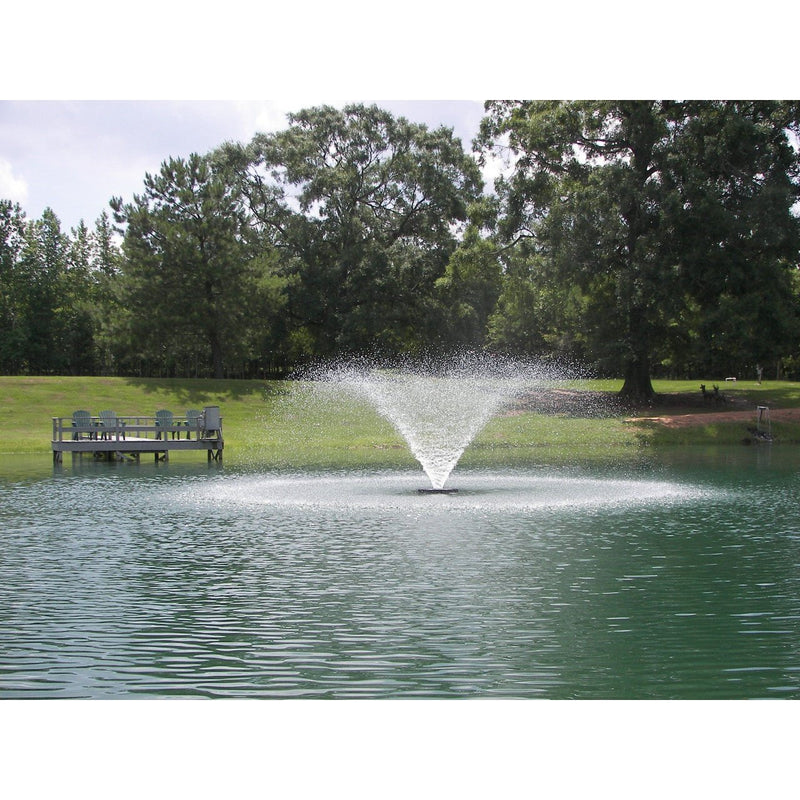
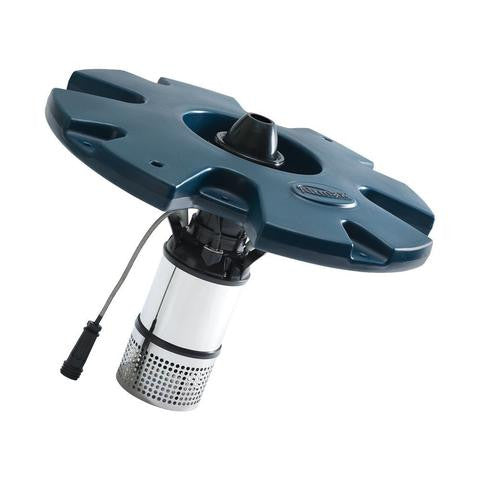
Selecting the right hardware depends on pond depth and the specific goals of the owner. Below is a technical comparison based on efficiency and application.
| Feature | Surface Aerator (Fountain) | Bottom Diffused Aeration |
|---|---|---|
| Standard Aeration Efficiency (SAE) | 1.5 - 3.2 lbs O2/hp-hr | 1.0 - 4.0 lbs O2/hp-hr (Depth dependent) |
| Effective Depth | Best for ponds < 6 feet | Best for ponds > 6 feet |
| Destratification Capability | Low; mostly surface mixing | High; mixes full water column |
| Maintenance | Frequent (clogging, seals) | Low (compressor service) |
| Ideal Run Schedule | Daytime (Aesthetics) + Night | Nighttime (Biological necessity) |
Practical Tips and Best Practices
Automating the aeration schedule is the most effective way to ensure consistency. Heavy-duty mechanical or digital timers should be used to trigger the system at dusk. This removes the human error factor and ensures the "Golden Hours" are never missed. For ponds with high fish density or active algae blooms, setting the timer to run from 10:00 PM to 9:00 AM provides a safe buffer that covers the lowest oxygen period and extends into the early hours of photosynthetic ramp-up.
Monitoring Dissolved Oxygen with a handheld meter is the hallmark of an "Efficient Oxygen Producer." Measuring DO levels at 6:00 AM will give the most accurate "worst-case scenario" data for the pond. If the dawn reading is consistently above 5.0 mg/L, the current schedule is sufficient. If it drops below 3.0 mg/L, the runtime must be increased or the hardware must be upgraded to provide higher CFM (Cubic Feet per Minute) of airflow.
Seasonal adjustments are necessary to optimize performance. In the winter, the aeration schedule can often be reduced, as cold water holds more oxygen and biological activity slows down. However, the diffusers should be moved to shallower water (mid-depth) to prevent "super-cooling" the bottom layer where fish congregate. In the summer, the schedule should be at its maximum, potentially running 24/7 if water temperatures exceed 85°F (29°C) to combat the rapid loss of oxygen solubility.
Advanced Considerations: SOTE and Trophic States
For serious practitioners, understanding Standard Oxygen Transfer Efficiency (SOTE) is essential. Fine-bubble diffusers typically achieve an SOTE of 25% to 35%, which translates to roughly 6.9% oxygen transfer per meter of depth. This means that a diffuser placed at 12 feet is significantly more efficient than one placed at 4 feet, as the bubbles have a longer residence time in the water column. Calculating the SOTE based on your pond's specific depth allows for precise compressor sizing.
The trophic state of the pond—whether it is oligotrophic (nutrient-poor) or eutrophic (nutrient-rich)—drastically alters the aeration requirement. Eutrophic ponds have high levels of organic matter and phytoplankton, leading to massive swings in diurnal oxygen. These systems require a much more aggressive aeration schedule. Using the formula for Oxygen Demand (BOD), managers can calculate the pounds of oxygen required per day to offset the respiration of the biomass, ensuring the mechanical system is capable of meeting peak demand.
Example Scenario: Sizing for a 1-Acre Pond
Consider a 1-acre pond with an average depth of 8 feet and a heavy load of koi or catfish. To maintain optimal health, the system should aim for at least one full turnover of the water volume every 24 hours. A 1-acre-foot volume is approximately 325,900 gallons. A typical 1/4 HP rocking piston compressor might produce 2.5 CFM at 8 feet of depth. Using fine-bubble diffusers, this setup can move thousands of gallons per hour through laminar lift.
Running this system for 12 hours (from 8:00 PM to 8:00 AM) would move approximately 150,000 to 200,000 gallons. While this is less than a full turnover, the timing is optimized. The aeration occurs exactly when natural production is zero. Because the system is focused on the "Golden Hours," the pond maintains a high DO floor during the night, and the natural photosynthesis during the day handles the rest. This configuration balances mechanical efficiency with biological necessity.
Final Thoughts
Successful pond aeration is a science of timing and physics. By focusing operation on the nighttime hours, you maximize the efficiency of gas exchange and provide critical support to the ecosystem when it is most vulnerable. Transitioning from a "Guessing Consumer" to an "Efficient Oxygen Producer" involves moving beyond aesthetics and focusing on the data provided by the diurnal oxygen cycle.
Maintaining a stable dissolved oxygen level above 5.0 mg/L is the single most important factor in preventing fish mortality and managing muck accumulation. Whether you use a bottom-diffused system for deep-water mixing or a surface aerator for shallow ponds, the goal remains the same: stabilizing the environment. Consistency is the key to long-term success, and a well-timed schedule is the most effective tool in your management kit.
Experimenting with different runtimes while monitoring dawn DO levels will allow you to fine-tune your system for your specific climate and fish load. As the seasons change, remain proactive in adjusting your diffusers and timers. This technical approach ensures that your pond remains a healthy, aerobic environment for years to come.