

Surface Aerators vs Bottom Diffused Aeration: Which Works Better?
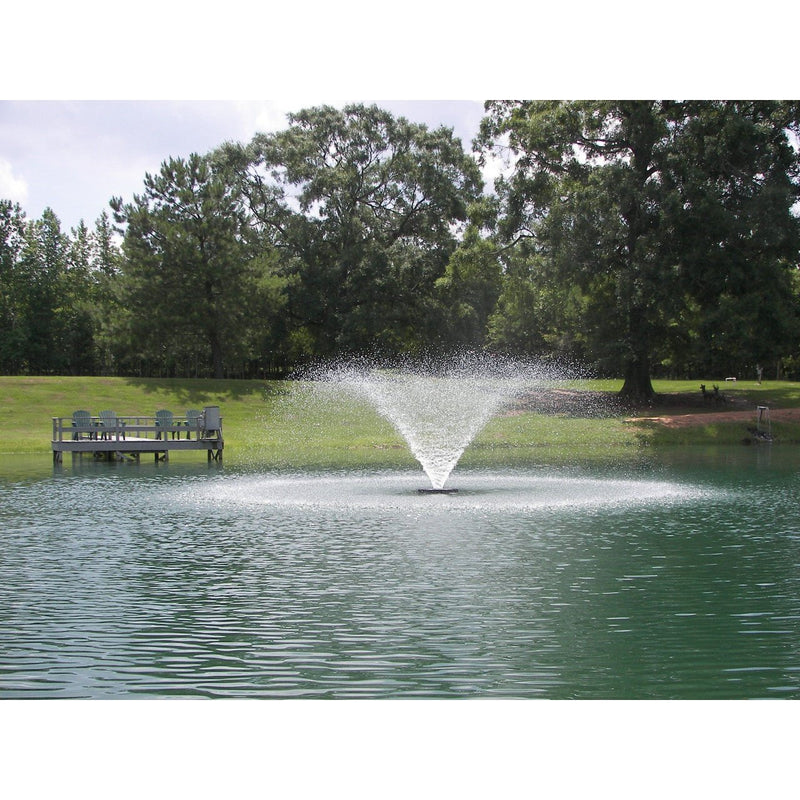
Fountains are for looks; diffusers are for health. Do you know the difference? Don't mistake a pretty splash for real aeration. For deep ponds, precision bottom diffused systems are the only way to eliminate the 'dead zone.' Maintaining a healthy aquatic ecosystem requires a fundamental understanding of fluid dynamics and gas solubility. While aesthetic water features provide surface movement, they often fail to address the biological and chemical demands of deeper water columns.
Effective pond management hinges on the strategic application of dissolved oxygen (DO). In a standard pond environment, oxygen is consumed by fish respiration and the decomposition of organic matter by aerobic bacteria. If the rate of consumption exceeds the rate of transfer, the system enters a state of hypoxia. For deep bodies of water, this risk is compounded by thermal stratification, which physically isolates the bottom water from atmospheric interaction. This guide details the technical specifications and mechanical requirements for implementing professional-grade aeration systems.
Surface Aerators vs Bottom Diffused Aeration: Which Works Better?
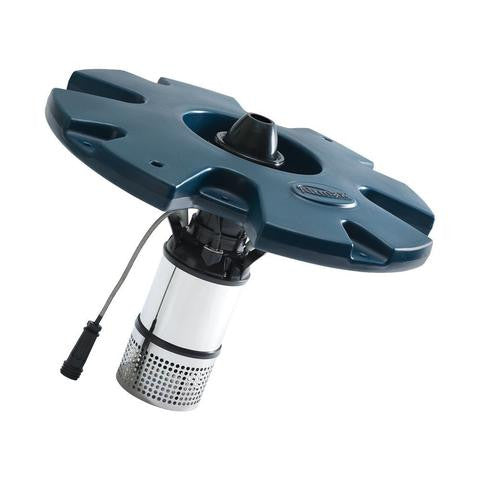
Determining which system is superior depends entirely on the physical dimensions of the pond and the specific goals of the operator. Surface aerators, such as floating spray units or paddlewheels, operate by drawing water from the upper 1 to 3 feet of the water column and throwing it into the air. This process increases the surface area of the water droplets, facilitating rapid gas exchange with the atmosphere. Surface aerators are highly effective in shallow environments, typically under 6 feet in depth, where vertical mixing is less critical.
Bottom diffused aeration, conversely, utilizes an on-shore compressor to pump air through weighted tubing to diffusers located on the pond floor. These diffusers release thousands of micro-bubbles that rise through the entire water column. As these bubbles rise, they create a "chimney effect" or "synergistic lift," pulling cold, oxygen-depleted water from the bottom (the hypolimnion) to the surface (the epilimnion). This movement facilitates "precision vertical mixing," ensuring that the entire volume of the pond interacts with the atmosphere.
For ponds deeper than 8 feet, surface aerators are mechanically incapable of reaching the lower layers. This results in a stratified environment where the bottom water remains anoxic, accumulating toxic gases like hydrogen sulfide (H2S) and ammonia (NH3). In these scenarios, bottom diffused systems are technically the only viable solution for maintaining uniform dissolved oxygen levels and preventing seasonal turnover events that lead to massive fish kills.
How Precision Aeration Works: Mechanical Principles
The efficiency of an aeration system is measured by several key metrics: Standard Oxygen Transfer Rate (SOTR), Standard Aeration Efficiency (SAE), and Standard Oxygen Transfer Efficiency (SOTE). SOTE represents the percentage of oxygen from the air source that successfully dissolves into the water under standard conditions (20°C at 1 atm). For bottom diffused systems, SOTE is directly correlated with bubble size and the depth of the diffuser.
Fine bubble diffusers are the industry standard for high-efficiency aeration. These units produce bubbles typically between 1 mm and 3 mm in diameter. Because smaller bubbles have a higher surface-area-to-volume ratio than larger bubbles, they provide more opportunities for oxygen transfer. Furthermore, fine bubbles rise more slowly—at a rate of approximately 0.8 to 1 foot per second—which increases the contact time between the air and the water. Technical data indicates that fine-bubble systems can achieve an SOTE of approximately 6.9% per meter of depth.
Coarse bubble diffusers, which produce bubbles 6 mm or larger, are primarily used for high-energy mixing. While they provide significant vertical lift, their SOTE is much lower, often ranging from 1% to 2% because the bubbles rise too quickly and have less surface area relative to the volume of air pumped. In most pond applications, the primary objective is oxygenation, making fine bubble membranes the preferred technical choice.
The compressor is the mechanical engine of the system. Its performance is rated by Cubic Feet per Minute (CFM) and maximum Pounds per Square Inch (PSI). Pressure requirements are determined by the depth of the diffusers; for every 2.31 feet of water depth, the compressor must overcome 1 PSI of backpressure, plus any friction loss within the tubing.
Benefits of Strategic Bottom Aeration
The primary benefit of a bottom diffused system is the elimination of the thermocline. In a stratified pond, the thermocline acts as a physical barrier between the warm, oxygen-rich surface and the cold, anoxic bottom. By inducing vertical circulation, a diffused system equalizes the temperature throughout the water column. This process, known as destratification, expands the habitable zone for fish and aerobic bacteria.
Bacterial decomposition of muck and organic sludge is significantly accelerated in aerobic conditions. Aerobic bacteria can process organic waste up to 20 times faster than anaerobic bacteria. Continuous aeration prevents the accumulation of "muck" (organic sediment), which reduces nutrient availability for harmful algal blooms. Strategic aeration also assists in the oxidation of minerals; for instance, it can help precipitate dissolved iron and manganese out of the water column.
Thermal regulation is an additional benefit. During the summer, circulating cooler water to the surface can help moderate overall pond temperatures, reducing stress on heat-sensitive species like trout. In winter, the constant movement of warmer bottom water to the surface creates a "hole" in the ice. This opening allows for the venting of toxic gases and prevents winter-kill, provided the system is sized correctly for the volume of the pond.
Challenges and Common Pitfalls
The most frequent error in pond management is under-sizing the compressor or the diffuser array. If the turnover rate is insufficient, the system will fail to keep the entire water column mixed. For professional applications, a minimum turnover rate of 1.0 per 24-hour period is required. High-load environments, such as commercial aquaculture ponds, may require 2.0 to 3.0 turnovers per day.
Fouling of the diffusers is a mechanical challenge that requires routine monitoring. Fine-pore diffusers are susceptible to bio-fouling (algae or bacterial growth) and mineral scaling (calcium carbonate buildup). As the pores clog, the backpressure on the compressor increases. If left unmaintained, this increased pressure will cause premature failure of the compressor's internal components, such as the diaphragms or piston cups. Monitoring the system's pressure gauge is essential; a rise of 2-3 PSI above the initial install pressure indicates the need for cleaning.
Friction loss in the delivery lines is often overlooked by beginners. Small-diameter tubing (e.g., 3/8-inch) creates significant resistance over long distances. For runs exceeding 200 feet, technicians should upgrade to 1/2-inch or 5/8-inch weighted tubing to ensure the compressor can deliver the required CFM to the diffuser without overheating.
Limitations: When This Approach May Not Work
While bottom diffused systems are the most efficient for deep ponds, they lose their efficiency in very shallow water. In ponds under 4 feet deep, the bubbles do not have enough "rise time" to transfer significant amounts of oxygen. The "cone of influence"—the area of water moved by a single diffuser—is also much smaller in shallow water. In these environments, a high-volume surface aerator is often more effective and cost-efficient.
Environmental factors like high altitude also impact performance. At higher elevations, the atmospheric pressure is lower, which reduces the partial pressure of oxygen and subsequently the oxygen transfer rate. Compressors also operate less efficiently in thin air. Designers must adjust the sizing calculations for ponds located above 3,000 feet to compensate for these physical constraints.
In ponds with extremely high turbidity or high concentrations of surfactants (soaps or oils), the "alpha factor" becomes a critical variable. Surfactants can coat the bubbles, creating a barrier that reduces the rate of oxygen diffusion. In these specific industrial or heavily polluted scenarios, the actual field oxygen transfer rate may be only 40% to 70% of the manufacturer's SOTE.
Technical Comparison: Surface vs. Bottom Diffused
| Feature | Surface Aerator | Bottom Diffused System |
|---|---|---|
| Optimal Depth | 1–6 feet | 8–50+ feet |
| SOTE Efficiency | 8%–15% | 20%–40% (depth dependent) |
| Energy Use | Moderate to High | Low to Moderate |
| Water Movement | Horizontal/Surface only | Vertical/Total column |
| Aesthetics | Visible spray/Fountain | Subtle surface boil |
| Maintenance | Cleaning props/screens | Compressor rebuilds/Diffuser cleaning |
Practical Tips for System Optimization
Correct installation of the compressor is vital for longevity. Compressors generate significant heat; they must be housed in a ventilated cabinet with a cooling fan. Placing a compressor in a sealed box without airflow will cause the internal gaskets and valves to fail within weeks. Additionally, use an air intake filter and replace it every 3–6 months to prevent dust and debris from scoring the cylinders.
When starting a system for the first time in a stratified pond, do not run it 24/7 immediately. This is the "slow-start" protocol. Turning on a powerful aeration system in the middle of summer can cause a "sudden turnover," where large volumes of anoxic water and hydrogen sulfide are mixed into the surface layer, suffocating the fish. Start the system for 30 minutes the first day, 1 hour the second, and double the time each day until the pond is fully mixed.
Positioning the diffusers is a matter of bathymetry. Do not simply place the diffusers in the deepest part of the pond if it is a small pocket. Instead, distribute them to ensure that the "boils" reach all corners of the pond. Use a weighted line to drop the diffusers, and ensure they are leveled on the bottom using a base plate or a self-weighted design to prevent them from sinking into the muck.
Advanced Considerations: Compressor Selection
There are three main types of compressors used in bottom diffused aeration, each with specific mechanical profiles. Linear Diaphragm compressors are extremely quiet and energy-efficient but are limited to shallow water (usually 8 feet or less). They operate using electromagnetically driven diaphragms that have a short stroke, making them unsuitable for overcoming the high backpressure found in deep lakes.
Rocking Piston compressors are the workhorses of the industry. They can handle high pressures up to 30–50 PSI, allowing them to aerate ponds 30 to 50 feet deep. They utilize a piston with a flexible cup that "rocks" within a cylinder, providing a balance between airflow and pressure capability. They are noisier than linear compressors and require more frequent maintenance (rebuild kits every 2–4 years).
Rotary Vane compressors provide high CFM at moderate pressures, typically up to 10–15 PSI. They use carbon vanes that spin within a chamber. These units are highly reliable and have long maintenance intervals, but they consume more electricity than rocking pistons and are generally limited to depths of 18 feet or less. For serious practitioners, selecting the compressor based on the "pump curve" (CFM vs. PSI) is mandatory to ensure the system meets the air requirements of the specific diffuser model.
Example Scenario: A 2-Acre Deep Pond
Consider a 2-acre pond with a maximum depth of 15 feet and an average depth of 8 feet. The total volume is approximately 16 acre-feet, or roughly 5.2 million gallons. To achieve a 1.0 turnover rate per day, the aeration system must move 3,611 gallons per minute (GPM).
A single 1/2 HP rocking piston compressor outputting 4.5 CFM at 7 PSI can power a two-diffuser array. In 15 feet of water, a single fine-bubble diffuser can move approximately 2,000 GPM. Therefore, two diffusers would move 4,000 GPM, comfortably exceeding the required turnover rate. If the operator chose a surface aerator for this pond, it would move significant volume at the surface but leave the bottom 10 feet of water (approximately 60% of the pond's volume) entirely stagnant and anoxic.
In this scenario, the mechanical advantage of the bottom diffused system is clear. By using the natural buoyancy of air to lift water, the system achieves total volume mixing with significantly less horsepower than would be required by a series of surface aerators attempting to achieve the same result.
Final Thoughts
Precision aeration is an engineering task that requires a move away from aesthetic preferences toward mechanical data. Fountains and surface splashes have their place in landscaping, but they are insufficient for the biological maintenance of deep aquatic systems. By utilizing bottom diffused aeration, an operator can effectively eliminate the 'dead zone,' manage nutrient loads, and ensure the long-term stability of the pond ecosystem.
Success in pond aeration is determined by the turnover rate and the oxygen transfer efficiency. Prioritize the selection of high-quality fine bubble diffusers and compressors that are rated for the specific depth of the water body. Routine maintenance of air filters and diffuser membranes will ensure the system operates at peak efficiency for years.
Implementing these systems requires an upfront investment in technical planning, but the results are measurable in water clarity, fish health, and reduced muck accumulation. For those managing deep-water assets, the transition to precision vertical mixing is the only path to comprehensive environmental control.