

Summer Pond Aeration Strategies
Static water is a tomb in July, but dynamic flow is a sanctuary for every fish you own. When the wind stops and the sun beats down, your pond becomes a layered cake of heat and low oxygen. Static water traps toxins at the bottom and heat at the top. Moving water is living water. Switch from a stagnant puddle to a dynamic ecosystem before the next heatwave hits.
Managing a pond during peak summer requires an understanding of fluid dynamics and thermal properties. High ambient temperatures do not merely warm the water; they fundamentally alter its capacity to sustain life. Professional pond management focuses on mechanical intervention to override these natural limitations.
Every degree of temperature increase represents a measurable loss in gas solubility. Simultaneously, the metabolic demand of the biomass increases, creating a widening gap between oxygen supply and demand. This article details the technical strategies required to stabilize these variables through engineered aeration.
Summer Pond Aeration Strategies
Summer pond aeration is the mechanical process of increasing dissolved oxygen (DO) levels and eliminating thermal stratification. In a typical unmanaged pond, the sun warms the upper layer (epilimnion), making it less dense than the cooler, deeper water (hypolimnion). These layers do not mix, creating a stagnant, anoxic zone at the bottom where organic waste accumulates and toxic gases like hydrogen sulfide build up.
Aeration strategies aim to break this physical barrier. Using mechanical systems, managers force the entire water column to circulate, a process known as destratification. This brings oxygen-depleted water to the surface to interact with the atmosphere and pushes oxygenated surface water downward. This movement ensures that the entire volume of the pond remains habitable and chemically stable.
Real-world applications range from small ornamental koi ponds to multi-acre recreational lakes and industrial aquaculture facilities. Regardless of scale, the objective remains the same: maintain DO levels above 5.0 mg/L to prevent physiological stress in fish and support aerobic bacterial decomposition of organic matter.
The Mechanics of Oxygen Transfer
Oxygen enters water primarily through two mechanisms: atmospheric diffusion at the surface and photosynthetic production from aquatic plants. During summer, photosynthesis is unreliable because it peaks during the day but consumes oxygen at night, leading to dangerous "crashes" before dawn. Mechanical aeration provides a consistent, 24-hour alternative.
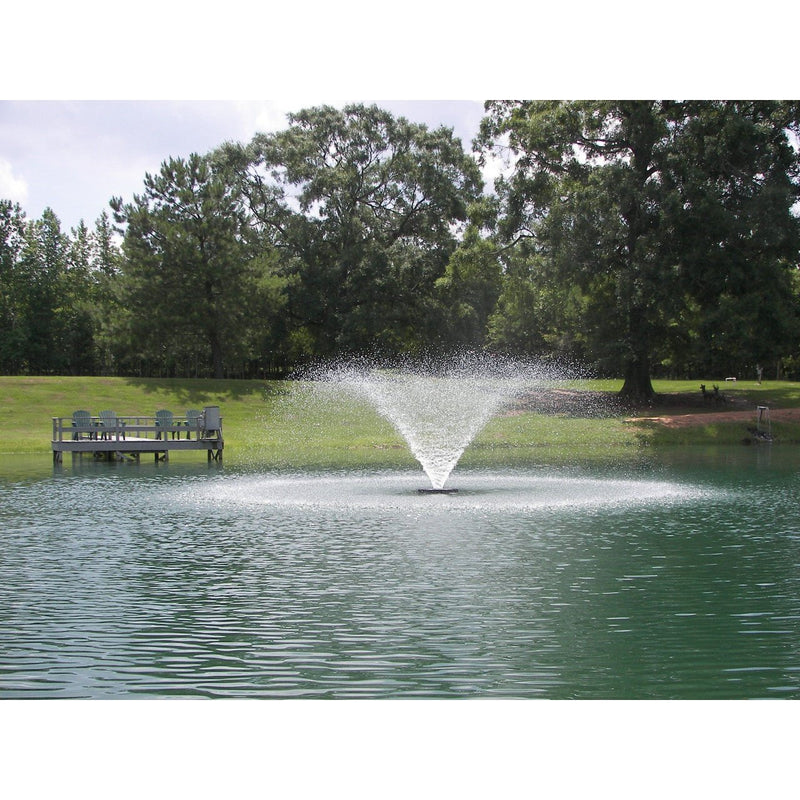
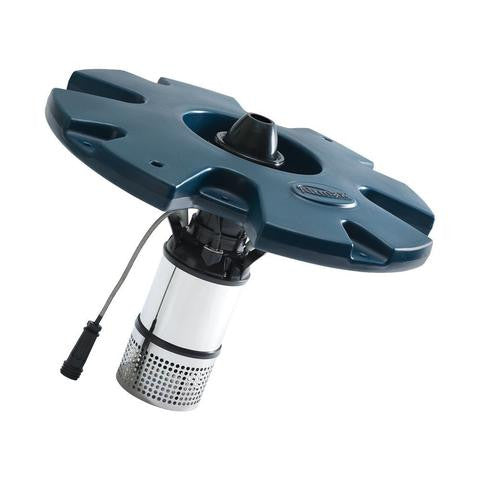
Surface aerators operate by physically lifting water into the air. This increases the surface area contact between water droplets and the atmosphere, facilitating rapid gas exchange. These systems are highly effective for shallow ponds where the water column is less than 6 feet deep and the primary goal is immediate oxygen injection.
Bottom-diffused systems utilize compressors to push air through weighted lines to fine-pore diffusers on the pond floor. These diffusers release millions of micro-bubbles that rise through the water column. As these bubbles ascend, they create a "laminar lift" effect, pulling thousands of gallons of water from the bottom to the surface. This method is the industry standard for deep ponds because it addresses the entire water volume rather than just the top layer.
Hardware and System Components
Selecting the correct hardware is vital for operational efficiency. A standard aeration system consists of a power source, a compressor, delivery lines, and the aeration interface (diffuser or propeller).
Compressors are the heart of diffused systems. Linear diaphragm compressors are ideal for shallow applications due to their high efficiency and low noise, though they struggle with backpressure beyond 8 feet of depth. Rocking piston compressors are the preferred choice for deeper water, as they can handle significantly higher pressures without a drop in performance. Rotary vane compressors provide high volume for large-scale operations but require more frequent maintenance of the carbon vanes.
Diffuser technology also varies. Ceramic and EPDM membrane diffusers produce fine bubbles (1-3mm), which offer the highest oxygen transfer efficiency (OTE) because of their large surface-area-to-volume ratio. Coarse bubble diffusers are less efficient at transferring oxygen but are excellent for high-volume water movement and preventing ice formation in winter climates.
Benefits of Summer Aeration
The primary benefit is the prevention of fish kills caused by hypoxia. When DO levels drop below 3.0 mg/L, most sport fish like bass and bluegill experience severe stress; levels below 2.0 mg/L are often fatal. Consistent aeration keeps levels well above these thresholds even during the hottest nights.
Aeration also accelerates the "muck" digestion process. Aerobic bacteria are up to 20 times more efficient at breaking down organic sludge than anaerobic bacteria. Supplying oxygen to the pond bottom allows these beneficial microbes to consume dead leaves, fish waste, and excess nutrients. This reduces the need for expensive chemical treatments or mechanical dredging in the future.
Water clarity often improves as a secondary result. By circulating the water, aeration prevents the accumulation of suspended solids and reduces the nutrient availability that fuels algae blooms. Ponds with active aeration systems typically exhibit lower levels of nitrogen and phosphorus in the water column.
Challenges and Common Mistakes
The most dangerous mistake in summer pond management is the sudden startup of a bottom-diffused system in a highly stratified pond. This causes an immediate "turnover." If the bottom layer is anoxic and filled with hydrogen sulfide, mixing it too quickly into the surface layer can drop the total oxygen level to near zero in minutes. This leads to an instant fish kill.
Sizing errors are another frequent pitfall. Many pond owners underestimate the Cubic Feet per Minute (CFM) required to turn over their pond's volume. Using a system that is too small for the surface acreage or depth results in "dead zones" where water remains stagnant. Inadequate aeration is often worse than no aeration because it provides a false sense of security while the underlying chemical imbalance persists.
Maintenance neglect often leads to system failure during the most critical periods. Air filters must be checked monthly, especially in dusty summer conditions. Clogged filters force the compressor to work harder, increasing heat and shortening the lifespan of diaphragms and pistons.
Limitations of Aeration Systems
Mechanical aeration cannot overcome extreme overstocking or massive nutrient loading. If a pond is significantly overpopulated, the Biological Oxygen Demand (BOD) may exceed the maximum transfer capacity of the equipment. In these cases, population reduction or nutrient mitigation must accompany aeration.
Environmental factors like extreme heat can also limit efficiency. As water temperature increases, the physical "saturation point" of oxygen decreases. Even with the best equipment, 90°F water can only hold about half as much oxygen as 40°F water. Aeration becomes a battle of diminishing returns at extreme temperatures, where the goal shifts from "optimal" to "survival."
Power availability is a practical constraint. Deep-water compressors require significant electricity, and running long airlines can lead to pressure drops. Solar-powered systems are an option for remote locations, but they require expensive battery banks to provide the necessary night-time aeration when oxygen levels are lowest.
Comparison of Aeration Methods
Choosing between surface and subsurface aeration depends on the specific metrics of the pond. The following table compares the two primary configurations based on standard performance data.
| Feature | Surface Aerator | Bottom Diffused System |
|---|---|---|
| Optimal Depth | 0 - 6 feet | 6 - 40+ feet |
| Oxygen Transfer | High (Surface only) | High (Full column) |
| Energy Efficiency | Moderate | Very High |
| Destratification | Low | Excellent |
| Maintenance | Moderate (In-water motor) | Low (On-shore motor) |
| Visual Impact | High (Spray/Splash) | Low (Bubbles) |
Practical Best Practices
Implementing a "Slow-Start" procedure is mandatory when installing a new system in summer. Start by running the aerator for only 30 minutes on the first day. Increase the runtime by 1 hour each subsequent day until the system is running 24/7. This gradual mixing allows the pond's chemistry to equalize without shocking the fish.
Placement of diffusers is critical for maximum circulation. Place diffusers in the deepest parts of the pond to maximize the length of the bubble column. If the pond is irregular in shape or has coves, multiple diffusers should be used to ensure no stagnant pockets remain. Each diffuser should be leveled to prevent uneven air distribution.
Monitoring dissolved oxygen levels with a digital meter provides the data needed for optimization. Checking levels at both the surface and the bottom during the early morning hours will reveal the true effectiveness of the system. If a significant delta exists between surface and bottom DO, the system requires more CFM or better diffuser placement.
Advanced Engineering Considerations
Serious practitioners calculate the Biological Oxygen Demand (BOD) to size their systems accurately. BOD is the amount of dissolved oxygen needed by aerobic biological organisms to break down organic material. This demand increases exponentially with temperature. For every 10°C (18°F) increase in temperature, the metabolic rate of fish and bacteria roughly doubles. This is known as the Q10 rule.
The Standard Oxygen Transfer Rate (SOTR) of an aerator is measured in "clean" water at 20°C. In a real-world summer pond, the Actual Oxygen Transfer Rate (AOTR) will be significantly lower due to higher temperatures and the presence of dissolved solids and organic matter. Practitioners should over-engineer their systems by at least 20-30% to account for these real-world losses.
Henry’s Law dictates that the solubility of a gas in a liquid is proportional to the partial pressure of that gas above the liquid. Because bottom-diffused systems operate under higher hydrostatic pressure at the pond floor, the air inside the bubbles is more likely to dissolve into the water. This makes deep-water diffusion inherently more efficient than surface agitation for actual gas transfer.
Implementation Examples
Consider a 1-acre pond with an average depth of 10 feet. A surface fountain might move water at the top but leaves 80% of the volume stratified and anoxic. Installing a 1/2 HP rocking piston compressor with two dual-membrane diffusers provides approximately 3.5 CFM of air. This setup creates a total turnover rate of the entire pond volume every 24 hours, ensuring uniform oxygen distribution from floor to surface.
Another scenario involves a shallow 1/4-acre koi pond. Because the water is only 4 feet deep, a bottom diffuser has limited "run time" to transfer oxygen before the bubble hits the surface. In this case, a high-volume surface aerator or a venturi-driven circulation pump is more effective. The high-speed propeller creates a massive surface interface, which is the most efficient way to inject oxygen in shallow environments.
Final Thoughts
Summer pond aeration is not a luxury; it is a critical life-support system for any managed aquatic environment. Understanding the relationship between temperature, gas solubility, and biological demand allows for the implementation of systems that prevent the seasonal "tomb" effect of stagnant water. Mechanical intervention ensures that the ecosystem remains dynamic and resilient even during periods of extreme thermal stress.
Engineered solutions like bottom-diffused aeration offer the highest efficiency for deep-water management, while surface systems provide rapid oxygenation for shallow applications. Success depends on proper sizing, high-quality hardware selection, and a disciplined approach to startup and maintenance. Practitioners who prioritize these technical factors will maintain healthier fish populations and superior water quality year-round.
Experimenting with different diffuser depths and monitoring daily DO fluctuations can provide deeper insights into the specific needs of your pond. Applying these principles ensures that your water remains a sanctuary rather than a liability during the most challenging months of the year.