

Submersible vs. Onshore Compressors: Which Lasts Longer in Harsh Climates?
When nature gets wild, does your equipment stay protected or get pummeled? Choosing between onshore and submersible isn't just about price—it's about surviving the environment. We put them to the test in the harshest conditions.
Reliability in extreme environments depends on mechanical design and environmental shielding. For engineers and facility managers, the decision to install an onshore compressor versus a submersible unit involves analyzing variables such as thermal dissipation, ingress protection (IP) ratings, and mean time between failures (MTBF). Each system offers distinct advantages depending on the atmospheric or aquatic stressors present at the site.
Understanding these systems requires a look at the physics of air compression and the mechanical stresses of varying climates. This guide examines the technical specifications and operational performance of both configurations to determine which provides the highest level of efficiency and longevity under duress.
Submersible vs. Onshore Compressors: Which Lasts Longer in Harsh Climates?
Determining longevity begins with a clear definition of the hardware. An onshore compressor is a surface-mounted unit, typically housed in a protective cabinet or building. These systems rely on atmospheric air intake and utilize either air-cooled or water-cooled heat exchangers. They are common in industrial settings where accessibility is a priority for routine maintenance.
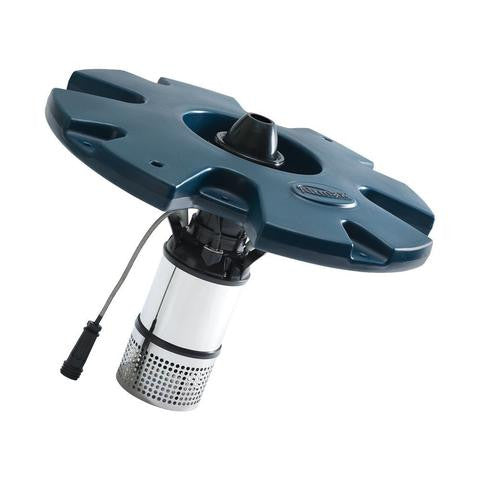
In contrast, a submersible compressor—often integrated into aeration systems or specialized pumping units—operates entirely underwater. These units are designed with hermetically sealed enclosures, typically rated IP68 or NEMA 6P, allowing them to function at depth. The primary differentiator in longevity is the environment to which the internal components are exposed.
In harsh climates, onshore units face UV radiation, salt-laden air, and extreme temperature fluctuations. A coastal environment with high salinity can cause rapid oxidation of standard steel enclosures and internal circuitry. Submersible units, while protected from the sun and salt air by the water column, face different challenges such as hydrostatic pressure, mineral scaling, and biological fouling.
Data suggests that in high-temperature regions, submersible motors often exhibit superior longevity. This is due to the high thermal conductivity of water compared to air. Water acts as a constant heat sink, maintaining the motor at a stable operating temperature and preventing the thermal degradation of windings and lubricants. Onshore units, conversely, must combat "Delta T" limitations, where high ambient air temperatures reduce the efficiency of the cooling system, leading to accelerated wear or thermal shutdowns.
How the Systems Operate: Physics and Engineering
The operational efficiency of these systems is rooted in how they manage the movement of air and the dissipation of heat. Onshore compressors work on the principle of suction. They pull air from the surrounding atmosphere, compress it within a chamber—such as a rotary screw or reciprocating piston—and then discharge it through a manifold. This "pulling" action is limited by atmospheric pressure and air density.
As altitude increases or temperature rises, air density drops. This forces the onshore compressor to work harder to achieve the same mass flow rate, directly impacting the specific power (kW/100 CFM). If an onshore unit is operating at an ambient temperature of 45°C (113°F), the cooling system's ability to reject heat is severely compromised. This leads to higher internal temperatures, which can break down lubricants and cause mechanical components to expand beyond their design tolerances.
Submersible units operate by pushing air or fluid from a submerged position. The motor is directly coupled to the compression or pumping mechanism and is surrounded by a cooling medium (water). Because water is roughly 25 times more thermally conductive than air, these motors can maintain a 100% duty cycle even in climates where the surface air is dangerously hot.
From an engineering perspective, the sealing of a submersible unit is its most critical feature. These units use mechanical seals, often made of silicon carbide or tungsten carbide, to prevent liquid ingress. The enclosure material is usually 316 stainless steel or a specialized polymer to resist corrosion. Unlike onshore units that require complex ventilation and filtration systems to keep the internal environment clean, a submersible unit is a closed-loop thermal system.
The Technical Benefits of Each Configuration
Each design offers measurable advantages based on the specific requirements of the application. The selection process should be guided by performance metrics and site-specific constraints.
Advantages of Onshore Compressors
- Accessibility: Onshore units allow for rapid inspection and component replacement. Technicians can perform oil changes, filter swaps, and belt adjustments without specialized retrieval equipment.
- Initial Capital Expenditure: Generally, onshore compressors have a lower upfront cost. They do not require the expensive hermetic sealing and specialized materials needed for submersion.
- Instrumentation: It is easier to integrate complex telemetry and monitoring sensors on surface-mounted units. Airflow meters, vibration sensors, and thermal probes can be wired directly without the need for waterproof cabling.
Advantages of Submersible Compressors
- Thermal Stability: The surrounding water provides a constant temperature environment. This eliminates the risk of overheating during heatwaves that would typically shut down an air-cooled onshore unit.
- Acoustic Mitigation: Underwater operation naturally dampens the noise generated by the motor and compression cycle. This makes them ideal for environments with strict noise ordinances.
- Protection from Vandalism and Environment: Being submerged protects the equipment from UV damage, wind-blown debris, and human interference.
- Efficiency in Depth: For aeration, pushing air from the bottom of a water column is more energy-efficient than pulling it through long lengths of onshore piping where friction losses occur.
Challenges and Common Engineering Pitfalls
Despite their robust designs, both systems are susceptible to specific failure modes if not properly managed.
Onshore compressors often fail due to poor thermal management. A common mistake is installing the unit in a cabinet with insufficient ventilation. If the air intake is too close to the exhaust, the unit will ingest its own hot air, leading to a thermal runaway. Additionally, in dusty or agricultural environments, filters can clog in a matter of days. A clogged intake filter increases the vacuum at the inlet, forcing the motor to work harder and increasing energy consumption by up to 10% before a total failure occurs.
Submersible compressors face the challenge of seal degradation. If the mechanical seals are not inspected during scheduled intervals, water can seep into the motor housing. Once moisture enters, it contaminates the dielectric oil (in oil-filled motors) or causes a direct short in the windings. Another pitfall is ignoring the "total dynamic head" or hydrostatic pressure. Operating a submersible unit beyond its rated depth can cause the enclosure to deform or the seals to fail under the increased pressure.
Limitations and Environmental Constraints
Neither system is a universal solution. Each has environmental boundaries that dictate its effectiveness.
Onshore Limitations:
Onshore units are highly vulnerable to flooding. If a site is located in a flood zone, even a NEMA 4X enclosure might not prevent damage if the unit is completely submerged. Furthermore, in coastal areas, the "salt spray" effect can bypass standard filters, leading to internal corrosion of the compressor block. These units are also limited by ambient temperature; most standard industrial compressors are rated for a maximum of 40°C (104°F).
Submersible Limitations:
The primary limitation for submersible units is the complexity of repair. If a unit fails, it must be pulled from the water using a winch or crane. This increases downtime and labor costs significantly. Additionally, submersible motors are sensitive to power quality. Because they are harder to access, a minor electrical surge that might only trip a breaker on an onshore unit can cause internal damage to a submersible motor that requires a full rebuild.
Technical Comparison: Onshore vs. Submersible
The following table compares the two systems across key performance indicators (KPIs) relevant to harsh environments.
| Metric | Onshore (NEMA 4X) | Submersible (IP68) |
|---|---|---|
| Cooling Method | Forced Air / Radiator | Water (Passive Heat Sink) |
| Operating Temp Range | -20°C to 45°C | 4°C to 30°C (Water Temp) |
| Maintenance Frequency | Quarterly (Filters/Oil) | Bi-annual / Annual (Seals) |
| Incursion Protection | Dust/Rain (High) | Continuous Submersion (Total) |
| Energy Efficiency | Subject to Air Density | 30% more efficient at depth |
| Noise Level | 75–90 dB | <50 dB (Surface) |
Practical Tips and Best Practices
Optimizing these systems for long-term survival requires a proactive maintenance and installation strategy.
For Onshore Systems:
- Implement Dual-Stage Filtration: In dusty environments, use a pre-filter to catch large particles before they reach the high-efficiency internal filter. This extends filter life and maintains airflow.
- Monitor the Delta T: Regularly measure the difference between the ambient air and the discharge air. An increasing Delta T indicates that the heat exchanger is fouling and needs cleaning.
- Elevate the Base: Always mount onshore units on a concrete pad at least 6-12 inches above the ground to prevent water ingestion during heavy rain.
For Submersible Systems:
- Check Seal Integrity: Use a moisture sensor or "seal-fail" relay in the control panel. This provides an early warning if moisture enters the motor housing before a catastrophic short occurs.
- Cathodic Protection: In saltwater or highly mineralized water, attach sacrificial zinc anodes to the compressor housing to prevent galvanic corrosion.
- Cable Management: Ensure the power cable is shielded and secured. Most submersible failures are actually cable failures caused by wildlife or shifting sediment.
Advanced Considerations for Serious Practitioners
When scaling a system or managing a fleet of compressors, the focus shifts to Mean Time Between Failures (MTBF) and Specific Power Consumption. Serious practitioners should utilize Variable Frequency Drives (VFDs) for both types of systems. A VFD allows the motor to "soft start," reducing the inrush current and mechanical stress on the bearings.
In harsh climates, the use of synthetic lubricants is non-negotiable. Synthetic oils have a higher viscosity index, meaning they remain stable across a wider temperature range. For onshore units in the Arctic, this prevents the oil from thickening and stalling the motor during a cold start. For submersible units, it ensures that the lubricant continues to protect the bearings even if the internal temperature rises during heavy load cycles.
Furthermore, consider the Isentropic Efficiency of the unit. This is the ratio of the work required for an ideal compression process to the actual work done. High-end compressors will provide an isentropic efficiency rating of 70% or higher. Tracking this metric over time allows you to identify internal wear before it results in a total system shutdown.
Case Scenario: Coastal Aeration Project
Consider a project located in a coastal region with 95% humidity, high salinity, and summer temperatures reaching 42°C.
An Onshore Setup would require a NEMA 4X stainless steel enclosure with a specialized AC unit to keep the internal temperature below 35°C. The salt air would necessitate weekly filter cleaning and a bi-annual application of anti-corrosive coatings to the heat exchanger. The energy cost would be high due to the cooling requirements and the density-driven loss in air output.
A Submersible Setup would be installed 5 meters deep. The water temperature remains a constant 22°C year-round. No external cooling is required. The 316 stainless steel housing resists the salt water, and the seals are rated for 20 meters of depth. While the initial cost is 40% higher than the onshore unit, the lack of air filters and the stable operating temperature lead to a 25% reduction in annual maintenance costs and a 15% increase in energy efficiency.
In this scenario, the submersible unit is the objectively superior choice for long-term reliability and lower total cost of ownership (TCO).
Final Thoughts
Selecting the right compressor architecture is a balancing act between environmental shielding and mechanical accessibility. Onshore compressors offer ease of use and lower initial costs but require intensive management in extreme climates. They are the "civilized" choice for accessible, controlled environments.
Submersible compressors represent the "rugged" alternative, utilizing the surrounding environment as a thermal tool rather than fighting against it. For sites where downtime is expensive and the climate is unforgiving, the technical advantages of submersion—stability, protection, and efficiency—often outweigh the complexities of maintenance.
The most effective strategy is to analyze your site’s specific stressors. If you face high heat and salt air, the submersible unit is likely your strongest ally. If you have a clean, dry site with high accessibility needs, the onshore unit will serve you well. Always prioritize data-driven metrics over initial price to ensure your equipment survives the wild.