

Pond Turnover Explained: Why Some Ponds Suddenly Lose Fish
The 'Big Flip' can be fatal for your fish. Static ponds develop dangerous layers. When the seasons change, these layers flip, killing fish instantly. A dynamic, mixed pond never has this problem. Learn how to keep your water moving.
Thermal stratification represents a state of physical equilibrium in a body of water where density gradients prevent vertical mixing. This phenomenon is a primary driver of pond health and a frequent precursor to catastrophic fish kills. In static environments, solar radiation facilitates the heating of the upper water column, while deeper sections remain insulated and cold. Because water reaches its maximum density at 3.98°C, these temperature variations create distinct weight-based layers that act as physical barriers to circulation.
Understanding the mechanics of these layers is critical for any serious pond manager or aquaculturist. When a pond "flips," the sudden mixing of these layers introduces anoxic, toxic water into the once-habitable upper zones. This article provides a technical deep dive into the physics of pond turnover, the chemistry of the hypolimnion, and the engineering principles required to maintain a dynamic, mixed state through mechanical aeration.
Pond Turnover Explained: Why Some Ponds Suddenly Lose Fish
Pond turnover is the process where a stratified body of water undergoes a complete vertical inversion. In a typical summer scenario, a pond divides into three distinct zones: the epilimnion, the metalimnion, and the hypolimnion. The epilimnion is the surface layer, which remains warm and oxygen-rich due to atmospheric contact and photosynthetic activity. Below this is the metalimnion, or thermocline, a narrow band characterized by a rapid temperature drop. The bottom layer, the hypolimnion, is cold, dense, and physically isolated from the surface.
This isolation leads to a phenomenon known as hypolimnetic oxygen depletion. Without access to the atmosphere or sunlight for photosynthesis, the oxygen in the bottom layer is consumed by the decomposition of organic matter—such as fish waste, dead algae, and leaf litter. Once the oxygen is exhausted, anaerobic bacteria take over, producing metabolic byproducts including hydrogen sulfide (H2S), methane (CH4), and carbon dioxide (CO2). These gases remain trapped under the pressure of the upper layers.
Turnover occurs when the density barrier between these layers is compromised. This typically happens in the fall when surface temperatures drop, making the epilimnion denser than the water below. It can also be triggered by a "Storm Turnover," where heavy, cold rain and high winds provide the kinetic energy needed to shatter the thermocline. When this happens, the toxic, oxygen-depleted water from the bottom surges upward. The resulting drop in dissolved oxygen (DO) across the entire water column, combined with the presence of toxic gases, can suffocate an entire fish population in hours.
The Physics of Thermal Stratification and Density Gradients
The stability of a pond’s stratification is governed by the relationship between temperature and water density. Unlike most substances, water does not follow a linear density-to-temperature curve. Its density peaks at 3.98°C (1.0000 g/cm³) and decreases as it warms or cools toward the freezing point. Even a small temperature difference of 2°C to 3°C can create a density gradient sufficient to resist wind-driven mixing in ponds deeper than 8 to 10 feet.
The Epilimnion: The Mixed Surface Layer
The epilimnion is the primary habitat for aquatic life during the summer months. It is characterized by high levels of dissolved oxygen, often reaching 100% saturation or higher during peak daylight hours due to algal photosynthesis. Its depth is determined by "wind fetch"—the distance wind travels across the water surface—and the clarity of the water. High turbidity restricts solar penetration, resulting in a shallower, more intensely heated epilimnion.
The Metalimnion and the Thermocline
The metalimnion serves as the transition zone. Within this layer, the thermocline represents the point of maximum temperature change per unit of depth. This layer acts as a thermal curtain, preventing the diffusion of gases and nutrients between the top and bottom. In many managed ponds, the thermocline is found at depths of 4 to 8 feet, depending on geographic location and pond geometry.
The Hypolimnion: The Anaerobic Dead Zone
The hypolimnion is the reservoir of potential disaster. Because it is darker and colder, it cannot support primary production. Instead, it serves as a sink for organic carbon. The Biological Oxygen Demand (BOD) in this layer is often extreme. As the water becomes anoxic (0 mg/L DO), the redox potential of the sediment changes, causing the release of phosphorus and heavy metals into the water column, further degrading water quality.
Mechanics of the "Big Flip" and Turnover Triggers
A pond turnover is rarely a slow process. While seasonal turnover in large lakes may take weeks, small-to-medium ponds can experience a complete inversion in a single night. Identifying the triggers for these events is the first step in risk mitigation.
Meteorological events are the most common catalysts for rapid turnover. A high-intensity thunderstorm provides two critical inputs: thermal shock and mechanical energy. Cold raindrops, being denser than the warm surface water, sink rapidly through the epilimnion. This sinking action creates micro-currents that begin to erode the thermocline from above. Simultaneously, high wind speeds generate wave action and surface "pile-up," which forces water downward on the leeward side of the pond, further destabilizing the stratified layers.
Once the thermocline is breached, the process becomes self-reinforcing. The cold, dense water from the bottom is pulled into the mixing zone, further cooling the surface and accelerating the loss of stratification. In a matter of hours, the pond’s chemical profile is homogenized. If the hypolimnion constitutes 40% of the pond’s volume and has a DO of 0 mg/L, and the epilimnion has a DO of 8 mg/L, the resulting mixed DO will drop toward 4.8 mg/L—not accounting for the massive "oxygen debt" created by the sudden oxidation of accumulated organic matter and gases.
Dynamic Mixing: Engineering a Solution
To prevent the "Big Flip," a pond must transition from a static stratified system to a dynamic mixed system. This is achieved through mechanical aeration and circulation. The goal is not just to add oxygen, but to eliminate the density gradients that allow stratification to form in the first place.
Diffused Aeration Systems
Diffused aeration is the most efficient method for deep-pond destratification. A compressor located on the shore pumps air through weighted tubing to diffusers placed at the deepest points of the pond. As the air exits the diffusers, it breaks into millions of tiny bubbles. These bubbles do not actually provide the majority of the oxygen; rather, they act as a "laminar lift" mechanism.
As the bubbles rise, they pull the cold, dense water from the bottom toward the surface. This creates a continuous "upwelling" effect. When the bottom water reaches the surface, it spreads out, loses toxic gases like hydrogen sulfide through volatilization, and absorbs oxygen from the atmosphere. This constant vertical circulation ensures that the temperature and oxygen levels remain uniform from the surface to the floor, making the entire pond volume habitable and preventing the buildup of an "oxygen debt."
Surface Aeration and Fountains
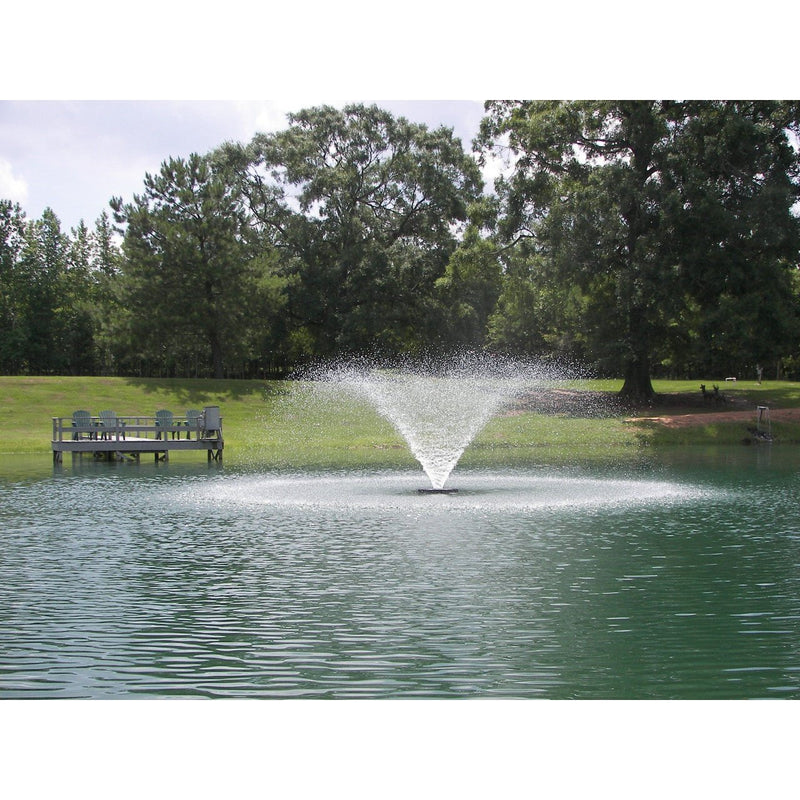
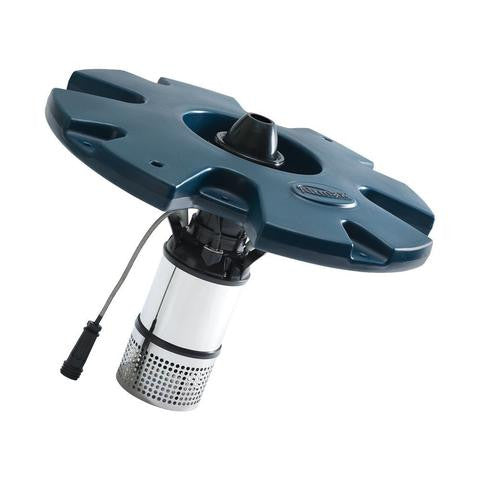
Surface aerators and decorative fountains operate by splashing water into the air. While effective at localized oxygenation and gas exchange, they have limited depth penetration. In ponds deeper than 6 feet, a surface fountain may only circulate the top 2 to 3 feet of water, leaving the bottom layers to stratify. For effective turnover prevention, surface units must be paired with high-volume circulators or replaced with diffused systems.
Benefits of a Constantly Mixed Pond
Maintaining a dynamic, mixed environment offers measurable advantages over allowing a pond to remain static. These benefits extend beyond fish survival into the realm of nutrient management and long-term pond health.
- Elimination of the Thermocline: Continuous mixing prevents the formation of density barriers, meaning a sudden storm or temperature drop cannot trigger a catastrophic turnover.
- Expanded Habitable Volume: In a stratified pond, fish are restricted to the oxygenated top layer. Mixing makes 100% of the pond volume available for fish growth and foraging.
- Accelerated Decomposition: Aerobic bacteria, which require oxygen, are up to 20 times more efficient at breaking down organic muck than anaerobic bacteria. Mixing ensures these bacteria can function at the pond floor.
- Nutrient Sequestration: Anoxic bottom conditions cause phosphorus to be released from the sediment, fueling algae blooms. Maintaining oxygen at the sediment-water interface keeps phosphorus bound to iron and minerals in the soil.
- Reduction of Toxic Gases: Continuous circulation allows methane and hydrogen sulfide to vent slowly into the atmosphere rather than accumulating to lethal levels.
Challenges and Common Pitfalls in Aeration Management
Implementing a mixing system is not without risks, particularly when dealing with an existing pond that is already stratified. The most dangerous mistake a pond owner can make is the "Shock Start."
If an aeration system is installed in a pond that has been stagnant for months, turning it on at full power will cause an immediate, man-made turnover. The system will pull the toxic bottom water to the surface all at once, potentially killing the fish the owner was trying to protect. To avoid this, new systems must be "staged in." A common protocol is to run the system for 15 minutes the first day, 30 minutes the second, and doubling the time daily until the pond is fully destratified over a week or more.
Another challenge is system sizing. Undersizing an aeration system is a frequent error. If the volume of water being lifted by the diffusers is less than the rate of thermal loading from the sun, the pond will remain stratified despite the aeration. Calculating the "Turnover Rate"—the number of times the total pond volume is moved to the surface in 24 hours—is essential. For most ponds, a turnover rate of 1.0 to 2.0 per 24-hour period is the technical standard for success.
Limitations: When Dynamic Mixing May Not Be Ideal
While mixing is generally beneficial, there are specific environmental trade-offs to consider. One primary limitation is the impact on water temperature. In the summer, constant mixing will raise the overall average temperature of the pond by bringing cold bottom water to the surface where it is heated. For cold-water species like trout, this can be problematic. If the entire water column exceeds the thermal limit of the species, mixing could be counterproductive.
Environmental constraints also include power availability. In remote locations, the cost of running electrical lines for a high-volume compressor can be prohibitive. While solar-powered aeration is an option, it often lacks the capacity for deep-water mixing or nighttime operation when oxygen demand is highest. Furthermore, in very shallow ponds (less than 5 feet), diffused aeration is less efficient because the bubbles have less "rise time" to create an effective upward current.
Static Stratification vs. Dynamic Mixing: Technical Comparison
The following table compares the operational characteristics of static ponds versus those utilizing dynamic mixing systems. The data points focus on efficiency and chemical stability.
| Metric | Static Stratified Pond | Dynamic Mixed Pond |
|---|---|---|
| DO Profile | High at surface, 0 mg/L at bottom | Uniform DO from top to bottom |
| Temperature | Layered (Thermocline present) | Homogenized water column |
| Muck Accumulation | High (Anaerobic decomposition) | Low (Aerobic decomposition) |
| Turnover Risk | Severe / Catastrophic | Negligible |
| Fish Carrying Capacity | Limited by Epilimnion volume | Maximum (Full pond volume) |
| Energy Consumption | Zero | Variable (Compressor wattage) |
Practical Tips for Optimizing Pond Aeration
To maximize the efficiency of a mixing system, technical precision is required during installation and maintenance. Placement of diffusers is the most critical factor. They should be positioned at the deepest points to ensure the entire water column is engaged. If a pond has multiple deep basins, each basin requires its own diffuser to prevent "dead spots" of stagnant water.
Operational timing also plays a role. While many owners run aeration only during the day, the highest oxygen demand occurs at night when photosynthesis stops and plants begin to consume oxygen through respiration. Running the system 24/7 provides the most stable environment. For those looking to save on energy, prioritizing nighttime operation is more effective than daytime-only runs.
Regular maintenance of the system is mandatory. Air filters on the compressor should be changed every 3 to 6 months to maintain CFM (Cubic Feet per Minute) output. Diffusers can become fouled with mineral deposits or bio-film over time, increasing back-pressure and reducing bubble efficiency. Cleaning diffusers with a weak acid solution or replacing membranes annually ensures the Standard Oxygen Transfer Rate (SOTR) remains within design specifications.
Advanced Considerations: Calculating Oxygen Transfer and SAE
Serious practitioners should understand the metrics of aeration efficiency to make informed equipment choices. Two key metrics are Standard Oxygen Transfer Rate (SOTR) and Standard Aeration Efficiency (SAE). SOTR is the amount of oxygen an aerator can transfer to clean water at 20°C at sea level, measured in pounds of O2 per hour.
SAE is a measure of energy efficiency, calculated as the SOTR divided by the power input (horsepower or kilowatts). Fine bubble diffusers typically offer a higher SAE (3.0 to 4.5 lbs O2/hp-hr) compared to surface aerators (1.5 to 2.5 lbs O2/hp-hr) because they provide greater surface area for gas exchange and longer bubble residence time in the water. When designing a system, the Actual Oxygen Transfer Rate (AOTR) must be calculated, which adjusts for local temperature, altitude, and the pond’s current DO levels. As water temperature increases, the solubility of oxygen decreases, requiring more aggressive mixing to maintain the same DO concentration.
Example Scenario: Destratifying a 2-Acre Pond
Consider a 2-acre pond with a maximum depth of 12 feet and an average depth of 6 feet. The total volume is approximately 12 acre-feet, or roughly 3.9 million gallons. In a static state during July, the thermocline is at 5 feet. This means that 7 feet of the water column (the hypolimnion) is anoxic. This represents approximately 50% of the pond's volume being unusable and potentially toxic.
To transition this to a dynamic system, a manager selects a 1/2 HP rocking piston compressor capable of delivering 4.5 CFM. Using two dual-disc diffusers placed in the deepest areas, the system is designed to move approximately 4,000 gallons of water per minute to the surface. At this rate, the entire volume of the pond is "turned over" to the surface once every 16 hours (1.5 times per day). This exceeds the minimum requirement for destratification, ensuring that the anoxic zone never forms and the "Big Flip" risk is eliminated.
Final Thoughts
The transition from a static, stratified pond to a dynamic, mixed system is the most significant step a manager can take toward long-term ecological stability. By understanding the physical laws governing water density and gas solubility, one can predict and prevent the conditions that lead to catastrophic fish kills. Thermal stratification is a natural phenomenon, but it is not a requirement for a healthy pond.
Implementing a high-efficiency diffused aeration system provides a mechanical safeguard against the volatility of seasonal changes and storm events. While there are initial capital costs and ongoing energy requirements, the benefits of expanded habitable volume, reduced muck accumulation, and lower nutrient levels provide a significant return on investment. Consistency is the hallmark of professional pond management; keeping the water moving is the most effective way to achieve it.
For those looking to deepen their understanding, further research into nitrogen cycling in aerated systems and the impact of dissolved oxygen on sediment redox potential is recommended. These advanced topics will further refine your ability to optimize your pond’s biological performance.