Pond Aeration Myths That Need To Die
Stop paying for a temporary fix when a permanent solution costs less in the long run. Most pond owners spend hundreds on chemicals every year to fight algae. The truth? Aeration does the job for pennies by fixing the oxygen levels. Stop the chemical cycle today.
Pond Aeration Myths That Need To Die
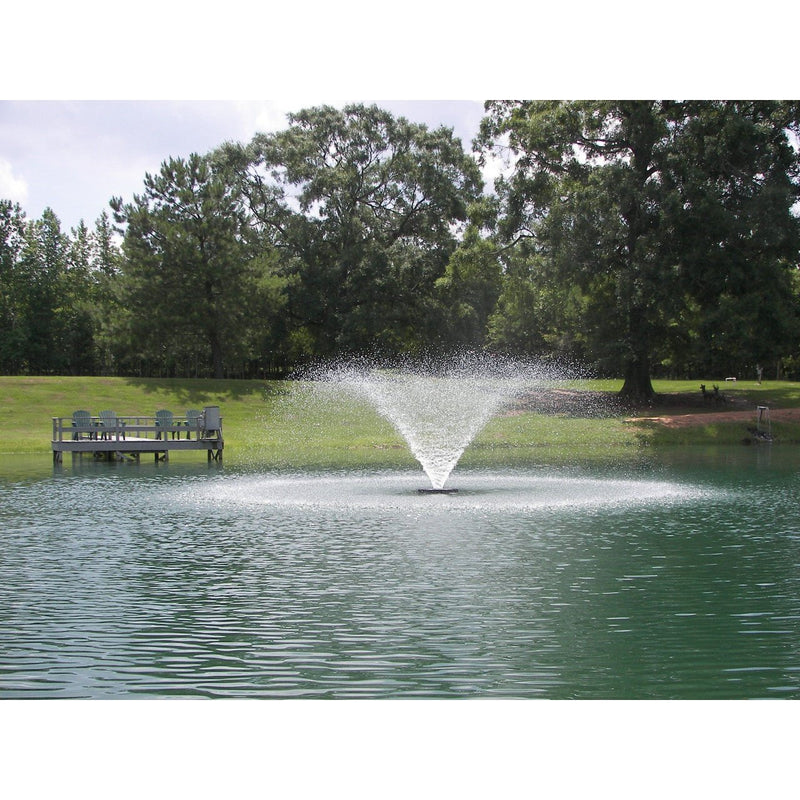
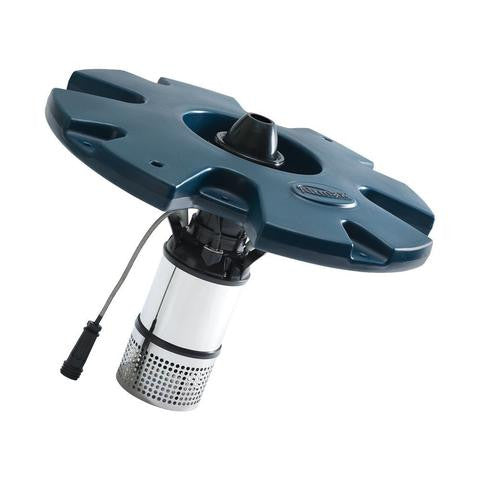
Pond aeration is frequently misunderstood as a purely cosmetic feature, such as a decorative fountain. In reality, it is a critical engineering intervention designed to manage the gas exchange and thermal stratification of a closed aquatic ecosystem. Many owners believe that a fountain provides sufficient aeration because they see water movement. This is a technical fallacy. Fountains primarily aerate the top few inches of the water column, leaving the bottom of the pond—the "benthic zone"—in a state of hypoxia.
Another persistent myth is that an airstone diffuser should be elevated from the bottom to prevent "stirring up muck." Engineering data shows that diffusers must be placed at the deepest point of the pond to be effective. Placing a diffuser on the bottom allows the rising bubble column to engage the maximum volume of water through a process called laminar entrainment. Elevating the diffuser creates a stagnant, anaerobic zone beneath it where toxic gases like hydrogen sulfide and methane can accumulate. To manage sediment, high-quality diffusers are often placed in plastic pails or on base plates rather than being elevated into the mid-column.
There is also a common misconception that aerating in the summer will "heat up" the water. While it is true that air temperatures are high, the physics of water temperature is governed primarily by radiant energy from the sun. The energy required to change the temperature of water is 1,000 times greater than that of air. Aeration actually stabilizes temperatures by drawing cooler water from the depths and mixing it with the surface, preventing the "thermocline" from trapping heat in the upper layers. This circulation reduces the risk of thermal shock to fish populations.
Finally, many practitioners believe that aeration kills algae directly. This is incorrect. Aeration is a nutrient management strategy. It provides the dissolved oxygen (DO) necessary for aerobic bacteria to oxidize organic matter (muck) and compete for the nitrogen and phosphorus that algae require to bloom. By facilitating the biological oxygen demand (BOD) of the system, aeration starves algae of its primary fuel sources.
How Subsurface Aeration Works: The Physics of Gas Transfer
The efficiency of a pond aeration system is measured by the Standard Oxygen Transfer Rate (SOTR) and Standard Aeration Efficiency (SAE). These metrics describe how many pounds of oxygen are transferred into the water per hour per horsepower of energy consumed. The underlying mechanism is governed by the gas transfer equation: dC/dt = KL(A/V)(Cs – Cm). In this formula, the rate of transfer (dC/dt) is dependent on the surface area of the bubbles (A) and the difference between saturation concentration (Cs) and the measured oxygen concentration (Cm).
Fine-bubble diffusion is the most efficient method for subsurface gas transfer. As a compressor pushes air through a membrane or ceramic diffuser, thousands of microscopic bubbles are created. Small bubbles have a higher surface-area-to-volume ratio than large bubbles, which increases the contact area for oxygen to dissolve into the liquid phase. Furthermore, smaller bubbles rise more slowly through the water column, increasing the "contact time" or residence time, allowing for more complete gas absorption before the bubble reaches the surface.
Beyond simple gas transfer, aeration drives a mechanical process known as "total pond turnover." As bubbles rise, they pull large volumes of water from the bottom to the surface. A single 1/2 HP rocking piston compressor can move over 4,000 gallons of water per minute at depths of 20 feet. This constant vertical mixing breaks the thermal stratification that naturally occurs in still water. By forcing the entire water column to interact with the atmosphere, the system ensures that oxygen levels remain consistent from the surface to the floor.
For systems deeper than 8 feet, rocking piston compressors are the technical standard. They are designed to operate against high back-pressure while maintaining consistent CFM (Cubic Feet per Minute) output. In shallower applications (under 6-8 feet), linear diaphragm pumps are often used due to their lower energy consumption and quieter operation. Selecting the wrong compressor type for the specific depth of a pond is one of the most common engineering failures in pond management.
Advantages of The One-Time Air Investment
The primary advantage of aeration is the stabilization of the aquatic environment. In non-aerated ponds, oxygen levels fluctuate wildly between day and night. During the day, photosynthesis from plants and algae adds oxygen; at night, those same plants consume oxygen, often leading to "morning crashes" where DO levels drop below 2 mg/L, causing fish kills. An aeration system provides a constant baseline of DO, typically targeting 5 mg/L or higher, which is the threshold for healthy fish growth and metabolic efficiency.
From an economic standpoint, aeration offers a superior return on investment compared to chemical treatments. Algaecides like copper sulfate provide a "quick kill" but do not address the underlying nutrient load. In fact, the dead algae sink to the bottom and decompose, which consumes more oxygen and releases more nutrients back into the water, fueling the next bloom. This is the "Chemical Spending Cycle." An aeration system, once installed, costs approximately $8.00 to $15.00 per month in electricity (based on a 1/4 to 1/2 HP unit running 24/7) and addresses the cause of the problem rather than the symptoms.
Aeration also facilitates "muck reduction" through aerobic digestion. In an anaerobic (oxygen-deprived) bottom, organic matter decays very slowly, leading to the accumulation of "pond sludge." When oxygen is introduced, aerobic bacteria populations explode. These bacteria can decompose organic matter up to 10 times faster than anaerobic bacteria. Over several seasons, a properly aerated pond can actually "self-dredge," reducing the depth of the muck layer without the need for expensive mechanical excavation.
Challenges and Common Implementation Mistakes
One of the most frequent errors in pond management is undersizing the aeration system. If the compressor cannot provide enough air to turn the pond volume over at least once or twice every 24 hours, the benefits of aeration are marginalized. An undersized system may create localized "boils" of oxygenated water while leaving 80% of the pond in a stagnant state. Practitioners must calculate the total acreage and average depth to determine the required CFM and the number of diffuser plates needed.
Starting a system in the middle of a hot summer without a "break-in" period is another dangerous mistake. If a pond has been stagnant for years, the bottom layer is likely full of toxic gases. Turning an aerator on full-blast immediately will force all that toxic, deoxygenated water to the surface at once, causing a "turnover fish kill." The correct protocol is to run the system for 30 minutes on day one, 1 hour on day day two, and double the time daily until the system is running 24/7.
Neglecting maintenance on the compressor is a technical failure that leads to premature system collapse. Compressors are mechanical devices that require air filter changes every 3-6 months and piston cup replacements every 12-36 months. As the piston cups wear, the CFM output drops significantly. The motor may still be "running," but it is no longer producing enough pressure to push air to the bottom of the pond. This "ghost operation" gives the owner a false sense of security while the pond's oxygen levels slowly decline.
Limitations of Aeration Systems
Aeration is not a "magic bullet" for all pond issues. In environments with extreme nutrient loading—such as ponds receiving heavy agricultural runoff or large amounts of waterfowl waste—aeration alone may not be enough to stop algae blooms. The influx of phosphorus and nitrogen may exceed the system's capacity for biological oxidation. In these cases, aeration must be paired with nutrient binders (like lanthanum-modified clay) or beneficial bacteria supplements.
Shallow ponds (less than 4 feet deep) present a specific limitation for diffused aeration. The "cone" of air rising from a diffuser is narrow; in shallow water, the bubbles reach the surface before they have moved enough water to create a significant turnover effect. Surface aerators or high-flow circulators are often more efficient than bottom-diffused systems in these shallow environments. Additionally, very large lakes (over 10 acres) may require significant electrical infrastructure, making the capital investment for grid-powered aeration prohibitive compared to solar or wind-powered alternatives.
The Chemical Spending Cycle vs The One-Time Air Investment
The following table illustrates the cost-efficiency metrics of chemical management versus a mechanical aeration strategy over a five-year period for a typical 1-acre pond.
| Factor | Chemical Spending Cycle | One-Time Air Investment |
|---|---|---|
| Initial Capital Cost | $0 - $150 (Equipment) | $800 - $1,400 (System) |
| Annual Operating Cost | $300 - $600 (Chemicals/Labor) | $100 - $180 (Electricity) |
| Annual Maintenance | $0 | $40 - $60 (Filters/Kits) |
| 5-Year Total Cost | $1,500 - $3,150 | $1,500 - $2,600 |
| Environmental Impact | Residual copper/biocide accumulation | Improved biodiversity; DO stability |
| Long-term Result | Increased muck; chemical resistance | Reduced muck; self-sustaining clarity |
While the initial cost of an aeration system is higher, the "break-even" point typically occurs between year 3 and year 5. Beyond the financial metric, the mechanical solution adds structural health to the pond that chemicals cannot replicate, such as the elimination of thermal stratification and the reduction of organic sediment.
Practical Tips for System Optimization
To maximize the efficiency of an aeration system, the placement of the cabinet is as important as the placement of the diffuser. Install the compressor cabinet in a shaded, well-ventilated area. Heat is the primary enemy of compressor longevity. If the internal temperature of the cabinet exceeds 100°F, the lifespan of the piston seals will be reduced by up to 50%. Using a cooling fan within the cabinet is mandatory for systems running in warm climates.
Use weighted airline rather than standard poly tubing for the underwater runs. Non-weighted tubing will float to the surface, creating an eyesore and a hazard for boats or swimmers. Attempting to "weight down" cheap tubing with bricks or ties often leads to kinks and restricted airflow, which increases back-pressure on the compressor and causes it to overheat. Weighted tubing is a one-time expense that ensures a clean, professional installation.
Consider the use of a manifold to balance the airflow if you are running multiple diffusers. Because air follows the path of least resistance, a diffuser placed in 10 feet of water will receive less air than one placed in 5 feet of water if they are connected to the same line. A valved manifold allows the operator to restrict flow to the shallow plates, forcing air to the deeper plates and ensuring the entire pond is being aerated equally.
Advanced Considerations: BOD and DO Monitoring
Serious practitioners should monitor Dissolved Oxygen (DO) levels using a digital meter to verify system performance. The goal is to maintain DO levels at the bottom of the pond within 1-2 mg/L of the surface readings. A wide gap between surface and bottom DO indicates that the system is undersized or that the diffusers are improperly placed. Monitoring should be done in the early morning hours (4:00 AM to 6:00 AM) to capture the pond's lowest oxygen state.
Furthermore, understanding the Biological Oxygen Demand (BOD) of your specific pond allows for precise system tuning. If a pond has a high organic load (lots of trees, fish waste, or runoff), it will have a higher BOD, meaning the bacteria consume oxygen faster. In these high-load scenarios, increasing the CFM or adding additional diffuser heads is necessary to stay ahead of the "oxygen debt." In some cases, installing a Variable Frequency Drive (VFD) on larger compressors can allow for energy savings during cooler months when BOD is naturally lower.
Example Scenario: 1-Acre Earthen Pond
Consider a 1-acre pond with an average depth of 8 feet and a maximum depth of 12 feet. In a non-aerated state, this pond likely experiences a total fish kill every 5-7 years due to turnover or winter-kill. The owner spends $450 annually on copper-based algaecides to control floating mats of filamentous algae.
By investing $1,200 in a 1/2 HP rocking piston system with two double-disk diffusers, the owner replaces the chemical spend with an electrical cost of $12.50/month ($150/year). In the first 24 months, the constant DO supply allows aerobic bacteria to digest 4 inches of muck. The algae blooms become less frequent because the phosphorus is now being sequestered in the sediment by the oxidized "cap" at the water-soil interface. Over five years, the owner saves approximately $1,500 in chemical costs and has fundamentally improved the asset value of the property.
Final Thoughts
The transition from a chemical-dependent pond management strategy to a mechanical, oxygen-first approach is the hallmark of professional pond stewardship. By focusing on the physics of gas transfer and the biology of aerobic decomposition, owners can create a self-sustaining ecosystem that resists algae blooms naturally. While the initial capital outlay for a high-quality aeration system is significant, the long-term reduction in labor, chemical costs, and biological risks makes it the most efficient investment for any water body.
Pond owners should prioritize system sizing and compressor quality over cosmetic features. A dry, technical focus on turnover rates and oxygen transfer efficiency will yield a clearer, healthier pond than any "quick fix" bottle of chemicals. Engineering your pond's oxygen levels is the only way to break the cycle of temporary treatments and move toward permanent aquatic stability.