Mobile Aeration Units: Emergency Dissolved Oxygen Solutions for Fish Kills
Don't let your investment die because of a power outage. When the grid goes down or a bloom crashes, you don't have days—you have hours. Mobile aeration is the emergency room for your ecosystem.
In high-density aquaculture and managed pond environments, the margin for error is razor-thin. Dissolved oxygen (DO) levels fluctuate based on temperature, biomass density, and photosynthetic activity. When the balance shifts, the resulting hypoxia can liquidate years of growth in a single night.
Mobile aeration units (MAUs) serve as the primary defensive line against acute respiratory distress in aquatic populations. Unlike fixed systems, these units are designed for rapid deployment and high-volume oxygen transfer. They bridge the gap between a total ecosystem collapse and a managed recovery.
Understanding the mechanics of these systems is the difference between a minor incident and a catastrophic fish kill. This guide examines the engineering, physics, and operational protocols required to manage emergency dissolved oxygen crises using mobile technology.
Mobile Aeration Units: Emergency Dissolved Oxygen Solutions for Fish Kills
A mobile aeration unit is a self-contained, portable mechanical system engineered to increase the rate of oxygen diffusion into a body of water. These units are deployed primarily during acute hypoxia events, such as those caused by power failure, sudden algae die-offs (blooms crashes), or thermal destratification.
The primary function of an MAU is to increase the air-water interface area. According to the two-film theory of gas transfer, the rate of oxygen absorption is proportional to the surface area of contact and the concentration gradient between the air and the water. By creating high-velocity turbulence or injecting fine bubbles, MAUs maximize these variables.
Real-world applications for MAUs vary from 0.5-acre ornamental ponds to 20-acre commercial aquaculture raceways. In a "bloom crash" scenario, for instance, a massive volume of algae dies simultaneously, and the subsequent bacterial decomposition consumes oxygen at a rate that far exceeds atmospheric diffusion. An MAU provides the mechanical force necessary to keep the biomass alive while the ecosystem stabilizes.
Mechanical Architectures and Power Systems
Mobile aeration units generally fall into three categories based on their mechanical drive and method of oxygenation. Choosing the correct architecture depends on the required Standard Oxygen Transfer Rate (SOTR) and the site's logistical constraints.
Tractor-Powered PTO Paddlewheels
Tractor-driven paddlewheels are the heavy-duty workhorses of emergency aeration. These units utilize the Power Take-Off (PTO) of a farm tractor, typically requiring a 45 to 65 horsepower engine. The tractor's rotational energy is transferred through a differential (often salvaged from heavy trucks with a 4.0:1 or 4.5:1 reduction ratio) to a horizontal shaft equipped with paddles.
When operated at a PTO speed of 540 rpm, the paddlewheels revolve at approximately 120–135 rpm. This rotational speed is considered optimal for splashing large volumes of water into the air without causing excessive mechanical wear. A single 65-hp tractor-driven unit can transfer approximately 25 kilograms of oxygen per hour (kg O2/hr).
Self-Contained Diesel and Gas Units
For remote locations where a tractor is unavailable or impractical, self-contained diesel or gasoline-powered aerators are used. These units integrate a small internal combustion engine (8–12 hp) directly onto a floating or trailer-mounted frame. Diesel units are preferred for long-duration emergencies because of their higher torque and lower fuel consumption rates compared to gasoline alternatives.
Mobile Diffuser Grids
Diffused aeration systems utilize an on-shore compressor or high-volume blower to push air through weighted tubing to submerged diffusers. In an emergency context, these are often "plug-and-play" kits. While they offer lower mixing velocity than paddlewheels, they provide superior Oxygen Transfer Efficiency (OTE) because of the long contact time between the rising bubbles and the water column.
Standard Aeration Efficiency (SAE) and Performance Metrics
Evaluating an emergency aeration system requires an understanding of two key metrics: Standard Oxygen Transfer Rate (SOTR) and Standard Aeration Efficiency (SAE). These values allow for the comparison of equipment under controlled conditions (typically 20°C tap water at zero dissolved oxygen).
- SOTR: The mass of oxygen transferred per hour (lb O2/hr or kg O2/hr).
- SAE: The mass of oxygen transferred per unit of energy (lb O2/hp-hr or kg O2/kWh).
Standard SAE values for common mobile equipment are as follows:
| Aerator Type | SAE (lb O2/hp-hr) | Primary Mechanism |
|---|---|---|
| Paddlewheel (Electric/PTO) | 2.5 – 5.5 | Surface splashing and current generation |
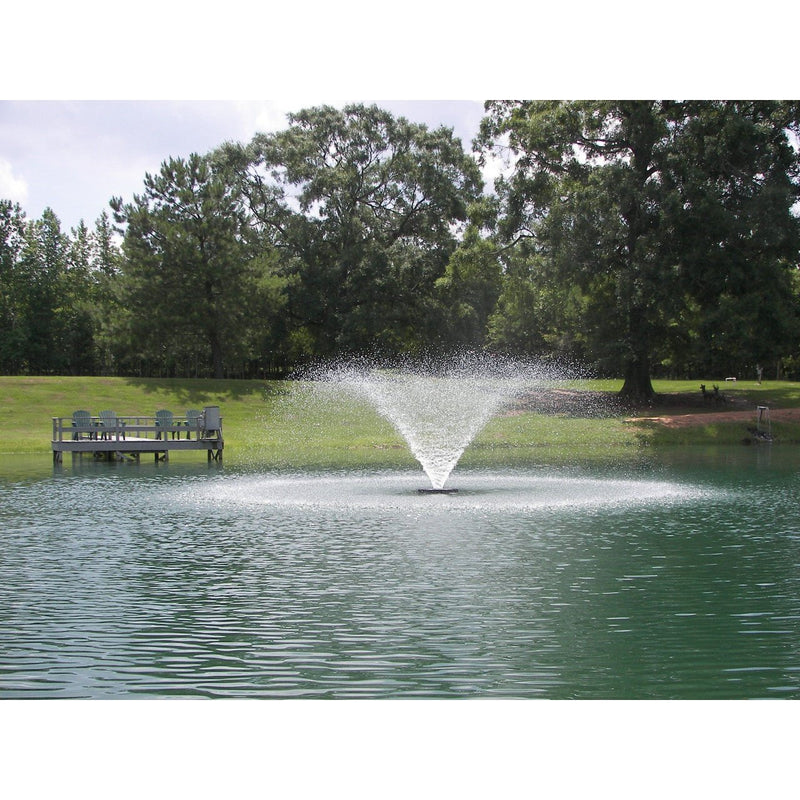
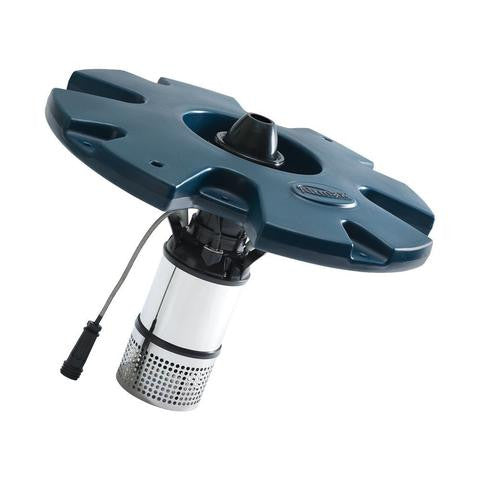
| Surface Spray (Aspirators) | 1.8 – 3.2 | High-velocity spray and turbulence |
| Fine Bubble Diffusers | 2.0 – 4.0 | Increased surface area via small bubbles |
| Propeller Aspirator Pump | 1.8 – 2.5 | Subsurface air injection and mixing |
Benefits of Mobile Aeration Deployment
The primary advantage of a mobile unit is its ability to provide a "refuge of life" during a crisis. It is often mathematically impossible to aerate an entire 10-acre pond back to saturation in the middle of a disaster. Instead, MAUs create localized zones of high DO where fish can congregate to survive the night.
Rapid mobilization is a critical metric. High-quality surface aerators can be unpacked, assembled, and operational in under 20 minutes. This speed is vital because the transition from "stressed" to "mortality" often occurs within a 2-to-4-hour window once DO drops below 2.0 mg/L.
Furthermore, MAUs provide thermal destratification. During summer, ponds often separate into a warm, oxygen-rich top layer and a cold, anoxic bottom layer. A sudden storm or high wind can cause these layers to flip (turnover), mixing the oxygen-starved bottom water with the rest of the pond. Mobile paddlewheels and circulators force these layers to mix, preventing the shock of a sudden turnover.
Challenges and Common Deployment Mistakes
Operating heavy machinery in an aquatic emergency presents several mechanical and biological risks. One frequent error is the "late start." Waiting until fish are seen gasping at the surface (piping) means the system is already in a deep oxygen deficit. Monitoring protocols should trigger deployment when DO levels hit 4.0 mg/L, rather than waiting for 1.0 mg/L.
Fuel management is another bottleneck. A tractor-driven unit running at half-throttle consumes significant diesel. In an emergency that lasts 48–72 hours, maintaining a continuous fuel supply chain is essential. If the unit stops at 3:00 AM due to an empty tank, the resulting DO crash is often more severe because the fish have crowded into the aerator's zone and exhausted the local supply.
Mechanical stress on PTO shafts and differentials is high during continuous operation. These components are often pushed to their limit in emergency scenarios. Regular lubrication and inspection of the universal joints and gearboxes are mandatory to prevent mid-crisis failure.
Environmental and Operational Limitations
Mobile aeration is not a permanent solution for poor pond management. The cost per kilogram of oxygen transferred is significantly higher for mobile units than for fixed, grid-tied systems. Fuel costs, labor, and equipment wear make long-term reliance on MAUs economically unviable.
Depth also limits the effectiveness of many mobile surface units. Most paddlewheels and surface sprayers only influence the top 2 to 4 feet of the water column. In very deep lakes or reservoirs, these units may fail to address anoxia in the benthos, where decomposing organic matter continues to exert a high Biological Oxygen Demand (BOD).
Furthermore, high-velocity aeration can increase turbidity. If the aerator is positioned too close to the bottom or in shallow areas, it can kick up sediment. This sediment often contains high concentrations of phosphorus and organic matter, which can actually increase the oxygen demand and fuel further algae growth once the immediate crisis passes.
Practical Tips for Emergency Deployment
When a fish kill is imminent, the goal is efficiency over aesthetics. Follow these technical best practices for the best survival outcomes:
- Placement Geometry: Place aerators at the upwind end of the pond or in a configuration that creates a circular current. This ensures oxygenated water is distributed across the largest possible area.
- Intake Depth: If using a trash pump or mobile sprayer, keep the intake at least 24 inches off the bottom to avoid sucking up mud and anaerobic gases.
- Nighttime Operation: Always prioritize operation from dusk to dawn. This is when photosynthesis stops and the "oxygen sag" is most dangerous.
- Monitor Ammonia: In a fish kill, decomposing organic matter releases toxic ammonia (NH3). Converting 1 mg/L of ammonia to nitrate requires roughly 4 mg/L of oxygen. You must over-aerate to account for this chemical demand.
- The 25-Meter Rule: For paddlewheels, water velocity drops significantly beyond 25 meters. If using multiple units, space them to ensure overlapping current patterns.
Advanced Considerations: Pure Oxygen Injection
Serious practitioners may look beyond ambient air aeration to pure oxygen injection systems. Using Liquid Oxygen (LOX) or Pressure Swing Adsorption (PSA) generators, these systems inject 90–99% pure oxygen rather than the 21% found in atmospheric air.
Portable oxygen cones or venturi injectors can achieve nearly 98% transfer efficiency. Because pure oxygen does not contain nitrogen, there is no risk of gas bubble disease (nitrogen supersaturation), which can occur when atmospheric air is forced into water under high pressure.
LOX trailers are the ultimate emergency response for high-value crops like trout or sturgeon. While the logistics of sourcing liquid oxygen are complex, the ability to inject massive amounts of O2 without the massive energy footprint of splashing water is unparalleled in high-density environments.
Scenario: Emergency Sizing for a 5-Acre Pond
Consider a 5-acre pond with a moderate stocking density of 2,000 lbs of fish per acre (10,000 lbs total). The water temperature is 85°F (29.4°C).
At this temperature, the fish consume approximately 250 mg of O2 per kg of body weight per hour.
1. Total fish mass = 4,536 kg.
2. Hourly O2 demand = 4,536 * 0.250 = 1.13 kg O2/hr.
However, the "background" demand from bacteria and sediment often equals or exceeds the fish demand. A safety factor of 3x is generally applied.
Total required transfer = 3.39 kg O2/hr.
Looking at our SAE table, a 1-HP surface aerator provides about 1.3 kg O2/hr. Therefore, this 5-acre pond requires a minimum of 3 HP of aeration just to maintain status quo during a crash. To actually *increase* DO levels, 5 to 7 HP would be the recommended deployment.
Final Technical Synthesis
Mobile aeration units are the primary tool for mitigating acute hypoxia in aquatic environments. Their effectiveness is governed by the laws of gas solubility and mechanical efficiency. Success in an emergency depends on having the right horsepower-to-biomass ratio and deploying it before the DO curve hits the point of no return.
A proactive strategy involves pre-staging equipment and establishing clear monitoring thresholds. Operators must understand the SOTR of their units and the specific metabolic demands of their species at varying temperatures. Relying on visual signs of distress is a high-risk approach that often leads to significant loss of stock.
Ultimately, an MAU is a temporary bridge. Once the immediate crisis is averted, the focus must shift to identifying the root cause of the oxygen deficit, whether it be excessive nutrient loading, overstocking, or lack of redundant fixed aeration. Effective emergency management transforms a "deadly" situation into a "survivable" one, protecting the long-term viability of the aquatic investment.