

Improving Catfish Pond Water Flow
Static water is a tomb; moving water is a sanctuary. Which one are your catfish swimming in today? Nature never intended for water to stand still. In a static pond, toxins build up and oxygen flees. By introducing dynamic flow, you aren't just moving water—you're breathing life into the entire ecosystem. Your catfish will feel the difference in minutes.
Improving Catfish Pond Water Flow
Water flow in aquaculture refers to the intentional movement of water within a pond environment to maintain homogeneous chemical and physical properties. In catfish production, this involves moving water from the surface to the bottom or creating horizontal currents. Standard aquaculture practices often rely on static water, which leads to thermal stratification and the accumulation of metabolic waste at the pond floor.
Movement of water is critical because it facilitates the transfer of oxygen from the atmosphere into the liquid phase. Mechanical intervention replaces natural wind-driven mixing, which is often insufficient in high-density intensive ponds. Technical studies indicate that water velocity directly influences the metabolic efficiency of species like channel catfish (Ictalurus punctatus).
Engineered flow systems act as a transport mechanism for dissolved oxygen (DO) and as a flushing system for ammonia (NH3) and carbon dioxide (CO2). Without consistent circulation, ponds develop "dead zones" where oxygen levels drop below the threshold required for survival. Implementing a flow-based strategy ensures that the entire volume of the pond remains viable for fish occupancy.
How to Implement Effective Water Flow Systems
Achieving optimal circulation requires a combination of mechanical aeration and hydraulic design. The most common tool in catfish farming is the electric paddlewheel aerator. These units utilize a rotating hub with paddles that strike the water surface, creating both a vertical splash for gas exchange and a horizontal current for circulation.
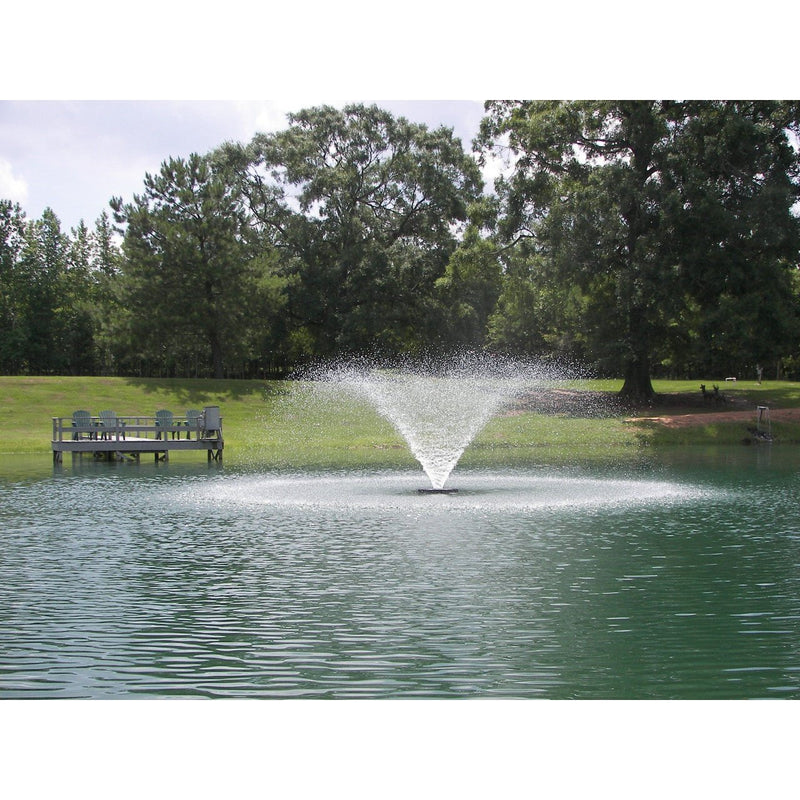
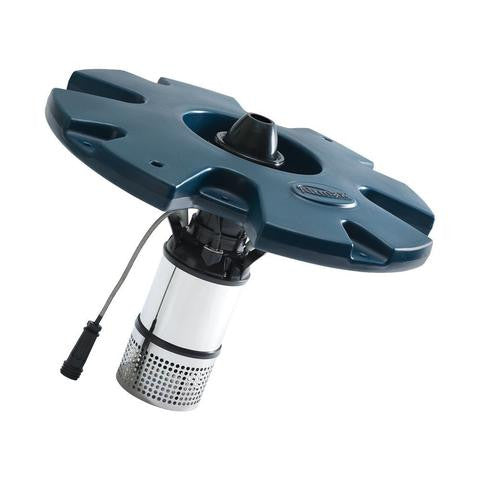
Vertical pump aerators offer an alternative for deeper ponds. These systems use a submerged motor and impeller to draw water from lower depths and spray it into the air. This process breaks the thermocline—the layer between warm surface water and cold bottom water—ensuring that oxygen-rich water reaches the pond floor where catfish often feed.
Airlift pumps are gaining traction in smaller or more intensive setups. These devices inject air at the bottom of a vertical pipe; as the bubbles rise, they pull water upward through the pipe. This method is highly effective for reducing ammonia concentrations and maintaining uniform temperatures within cages or small raceways.
Horizontal flow can also be achieved through the strategic placement of water inlets and outlets. Utilizing the natural slope of the land for gravity-fed flow is the most energy-efficient method for water exchange. If gravity is not an option, centrifugal pumps can be used to inject fresh water at one end of the pond while draining spent water from the opposite end.
Benefits of Dynamic Water Flow
Increased growth rates represent the primary economic benefit of moving water. Research demonstrates that channel catfish cultured in water velocities of approximately 4 cm/second show significantly higher weight gain compared to those in static environments. This velocity stimulates moderate exercise, which improves feed conversion ratios (FCR) and reduces body fat percentages.
Dissolved oxygen stabilization is a mandatory requirement for intensive production. Catfish require DO levels above 3.0 mg/L for basic survival, though 5.0 mg/L is preferred for optimal growth. Circulation systems ensure that oxygen produced by phytoplankton during the day is distributed throughout the water column, preventing nighttime depletions.
Ammonia mitigation occurs more rapidly in moving water. Nitrogenous waste is toxic to catfish at low concentrations, particularly at high pH levels. Consistent flow promotes the oxidation of ammonia into less harmful nitrites and nitrates by increasing the contact between water and nitrifying bacteria residing on the pond bottom and side slopes.
Thermal regulation is another advantage. Static ponds often suffer from extreme temperature fluctuations between the surface and the bottom. Circulation mixes these layers, creating a stable thermal environment that prevents the stress-induced immune suppression common in stratified ponds.
Challenges and Technical Errors
Energy consumption is the most significant operational challenge. Running 10-HP electric motors continuously throughout the summer months can drastically increase production costs. Failure to calculate the required Standard Aeration Efficiency (SAE) often leads to over-investment in equipment or insufficient aeration during critical nighttime periods.
Sediment suspension occurs when water velocity is too high or aerators are positioned incorrectly. Excessive current can scour the pond bottom, pulling silt into the water column. High turbidity interferes with the ability of catfish to find feed and can physically damage their gill lamellae, leading to secondary bacterial infections.
Mechanical fatigue is inevitable in aquatic environments. Corrosion of motor housings, paddle breakage, and electrical shorts in humid environments require a rigorous maintenance schedule. Operators often make the mistake of ignoring bearing lubrication or seal integrity, resulting in catastrophic equipment failure during an oxygen emergency.
Limitations and Environmental Constraints
Pond geometry dictates the effectiveness of any circulation strategy. Long, narrow ponds are easier to circulate than large, irregularly shaped bodies of water. In ponds exceeding 10 acres, a single aerator cannot provide sufficient current to reach all corners, leading to the formation of anaerobic pockets.
Budgetary constraints often limit the degree of automation possible. While advanced sensors can trigger aerators based on real-time DO readings, the initial capital expenditure is high. Many farmers rely on manual monitoring, which introduces human error and the risk of missing a rapid oxygen crash.
Water availability acts as a hard limit on flow-through systems. If the source well or river has a limited recharge rate, the farmer cannot rely on water exchange to maintain quality and must instead focus on internal mechanical circulation. High-volume pumping also carries the risk of introducing pathogens or unwanted fish species if the source water is not properly screened.
Comparing Circulation Methods
Selection of a circulation system depends on pond depth, stocking density, and energy costs. The following table compares the two most common mechanical approaches based on technical performance metrics.
| Feature | Paddlewheel Aerator | Diffused Air System |
|---|---|---|
| Standard Aeration Efficiency (SAE) | 1.0 – 2.0 kg O2/hp/hr | 2.0 – 4.5 kg O2/hp/hr |
| Primary Mechanism | Surface splashing/Current creation | Bottom-up bubble columns |
| Ideal Pond Depth | 3 – 6 feet | > 8 feet |
| Maintenance Needs | High (Moving parts in water) | Low (Shore-mounted compressor) |
| Horizontal Circulation | Excellent | Moderate |
Practical Best Practices
- Position aerators to create a circular flow pattern within the pond. This prevents stagnant water in the corners and assists in gathering waste in the center for easier removal.
- Monitor dissolved oxygen at the pond bottom, not just the surface. Stratification can mask dangerously low levels at the depths where catfish reside.
- Schedule aeration for the late night and early morning hours when photosynthetic oxygen production has ceased and community respiration is at its peak.
- Maintain a water velocity of at least 2 cm/s to ensure waste flushing, but keep it below 10 cm/s to prevent fish exhaustion and sediment erosion.
- Use Variable Frequency Drives (VFDs) on large pump motors to adjust flow rates according to fish size and water temperature, reducing energy waste.
Advanced Considerations in Hydraulic Design
Computational Fluid Dynamics (CFD) is increasingly used to model water movement in large-scale aquaculture. These models simulate how different aerator placements affect the distribution of dissolved oxygen and the velocity of currents. Utilizing CFD allows for the optimization of pond layouts before construction begins, ensuring that "short-circuiting"—where fresh water flows directly from the inlet to the outlet without mixing—is minimized.
Oxygen Transfer Coefficients (KLa) provide a mathematical basis for evaluating equipment performance. These values depend on water temperature, salinity, and the presence of organic surfactants. Serious practitioners should use the standard gas transfer equation to predict how changes in pond conditions will affect the oxygenation capacity of their systems.
Automated integration with SCADA (Supervisory Control and Data Acquisition) systems allows for precision management. These systems can monitor DO, pH, and ammonia levels simultaneously, adjusting water flow and aeration intensity in real-time. Such precision reduces the risk of mass mortality events and optimizes the electrical efficiency of the farm.
Example: 1-Acre Intensive Pond Setup
Consider a 1-acre intensive catfish pond with an average depth of 4 feet, containing approximately 1,300,000 gallons of water. Stocking density is 5,000 lbs of fish per acre. During peak summer temperatures (85°F), the total community respiration (fish + algae + bacteria) may exceed 1.5 mg/L per hour at night.
To offset this demand, a minimum of two 2-HP paddlewheel aerators is required. These units should be placed on opposite sides of the pond, oriented to push water in a clockwise direction. If the goal is to maintain a velocity of 4 cm/s, the total pumping capacity must be calculated against the cross-sectional area of the pond. In this scenario, the aerators must move approximately 3,000 gallons of water per minute to maintain sufficient current and oxygen saturation levels above 4.0 mg/L.
Final Thoughts
Optimization of water flow is a non-negotiable aspect of modern catfish farming. Moving beyond static pond management requires an understanding of fluid dynamics, oxygen transfer physics, and the metabolic requirements of the fish. By transitioning to a dynamic flow model, producers can achieve higher stocking densities and better feed conversion ratios while mitigating the risks of toxic ammonia buildup.
Implementation of these systems requires careful calculation of energy needs and mechanical maintenance. While the initial investment in paddlewheels, pumps, or diffusers is significant, the reduction in mortality and increase in growth performance provide a measurable return on investment. Efficient water movement is the mechanism that transforms a high-risk pond into a stable, productive aquatic environment.
Practitioners are encouraged to monitor their water quality parameters rigorously and experiment with aerator placement to find the optimal hydraulic balance for their specific site. Future success in catfish aquaculture will depend on the integration of these technical principles with advanced monitoring technologies.